


You spend a minute arranging two or three chains, step out of the door feeling pulled together, and by lunch they have wound themselves into a single knotted rope at your throat. Anyone who layers necklaces knows the small frustration of untwisting them in a shop window reflection.
The good news is that stopping layered necklaces tangling comes down to a few simple habits. Space your lengths a couple of inches apart, mix a fine chain with a slightly heavier one, use a layering clasp to hold them together, and fasten the chains when you put them away. Get those right and the look you set in the morning is the look you keep all day.
Why do layered necklaces tangle in the first place?
Layered necklaces tangle because chains that sit at similar lengths swing across the same space and cross over each other as you move. The closer two chains are in length, the more time they spend in the same place, which is exactly where they twist together.
Fine, lightweight chains tangle more easily because they have little weight to keep them hanging straight, so they drift and loop with every turn of your head. Once you understand that tangling is really about chains sharing the same space, the fixes below make sense, because each one keeps the chains apart or weighs them down.
How far apart should layered necklaces sit?
Leave roughly a couple of inches between each chain so they sit at clearly different points on the chest and rarely meet. A common, easy combination is 16, 18 and 20 inches, which gives each piece its own space to hang.
If two chains are only a few millimetres apart in length, they will share almost the same line and tangle constantly, so it is worth choosing lengths that step down noticeably. When you are picturing a new combination, our necklace length guide helps you see where each piece will fall before you buy, which makes spacing them far easier.
Does mixing chain weights stop tangling?
Mixing chain weights helps a great deal. Pairing a fine chain with a slightly heavier or more textured one means the heavier chain hangs straighter and the two are less likely to wrap around each other, because they no longer move in the same way.
A beaded or textured chain also adds a little friction, so it tends to stay put instead of sliding against a smooth chain beside it. Beyond the practical benefit, a mix of weights looks more considered than two near-identical chains, giving a layered set easy dimension while keeping it tidy.
What is a layering clasp and does it work?
A layering clasp, sometimes called a necklace layering connector or spacer, is a small piece that joins two or more chains at the back and holds them at fixed distances apart. You clip your chains into it, then fasten the single clasp, so the chains can no longer cross over one another.
It is the most reliable fix for stopping layered necklaces tangling, because it removes the movement that causes the problem in the first place. A spacer with two or three loops set a little apart keeps each chain on its own line all day. For more ways to build a layered look that stays neat, our guide to layering necklaces covers the styling side.
How should you store layered necklaces?
Store each necklace fastened, so the clasp is done up and the chain forms a closed loop that cannot thread through itself. An open chain is free to slither through a tangle of others in a jewellery box, which is how most knots are born overnight.
Hanging necklaces individually on hooks keeps them straight and visible, and laying them flat in separate compartments works just as well. For travel, fastening each chain and threading it through a drinking straw or a soft pouch stops it knotting in a bag. A little care at the storage stage saves the untangling later.
What if my necklaces still tangle?
If chains still twist after spacing and weighting them, the lengths are probably too close together, so try stepping one of them up or down by a couple of inches. A larger gap almost always settles a stubborn pair.
To free a knot without damage, lay the chains flat in good light and work gently with a pin or a fine needle, easing the loops apart instead of pulling. A tiny drop of oil can help a fine chain slide free. Patience matters more than force, since pulling tightens the knot and can stress the links.
If a particular pair tangles every single time you wear them, it is usually a sign the two should not be layered together at those lengths. Saving them for separate days, or wearing one with a third chain that sits well clear, often solves it for good. A little trial and error early on tells you which of your pieces are happy companions and which are better worn alone.
Which chains tangle least when layered?
Some chain styles resist tangling better than others, which helps before you even think about spacing. Heavier curb and rope chains hang straight and have enough weight to hold their line, so they twist less. Beaded or satellite chains add texture and a little friction, which keeps them from sliding against a neighbour.
Very fine cable and snake chains look lovely but are the most prone to looping, so they reward a layering clasp or a clear gap in length. A practical approach is to pair one chain with a bit of body against one finer chain, giving you the delicate look you want while the heavier piece keeps the pair settled. Choosing chains with this in mind makes every other tip easier to apply.
A simple morning routine for tangle-free layers
A small habit when you get dressed saves most of the trouble. Fasten the shortest chain first and let it settle, then add the next length, and the longest last, so each one sits on its own line as you build the stack. Giving the chains a gentle shake before you leave lets them find their natural position.
If you use a layering clasp, clip the chains into it before fastening so they are held apart from the start. Checking the order in the mirror takes a few seconds and means the look stays as you set it. Pairing the routine with tangle-free storage the night before makes the morning quicker still.
Frequently asked questions
How do you keep layered necklaces from tangling?
Space the chains a couple of inches apart, mix a fine chain with a heavier one, use a layering clasp to hold them together, and fasten each necklace when you store it. These four habits stop most tangling.
What is the best length gap for layering necklaces?
Around two inches between each chain works well, such as 16, 18 and 20 inches. The gap gives each piece its own line on the chest so they rarely cross over.
Do layering clasps actually work?
Yes. A layering clasp joins your chains at fixed distances apart and fastens as one, which removes the movement that causes tangling. It is the most reliable fix for keeping layers separate.
How do I store necklaces so they do not tangle?
Fasten each necklace before storing so it forms a closed loop, then hang it on a hook or lay it flat in its own compartment. Fastened chains cannot thread through each other.
How do you untangle a knotted necklace?
Lay it flat in good light and ease the loops apart with a pin or fine needle. A drop of oil helps a fine chain slide free. Work gently, as pulling only tightens the knot.
Related pieces
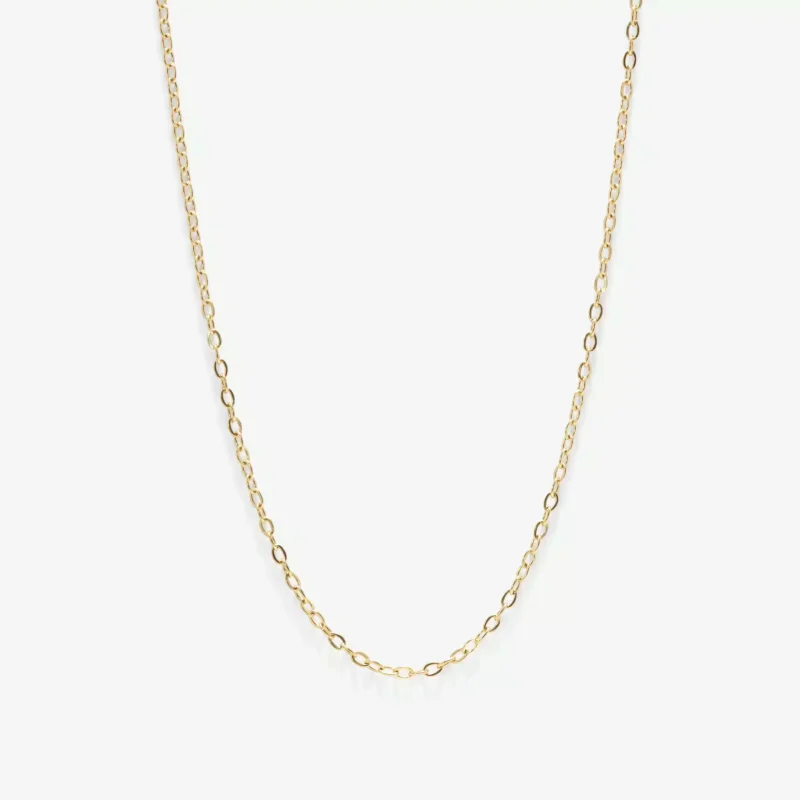
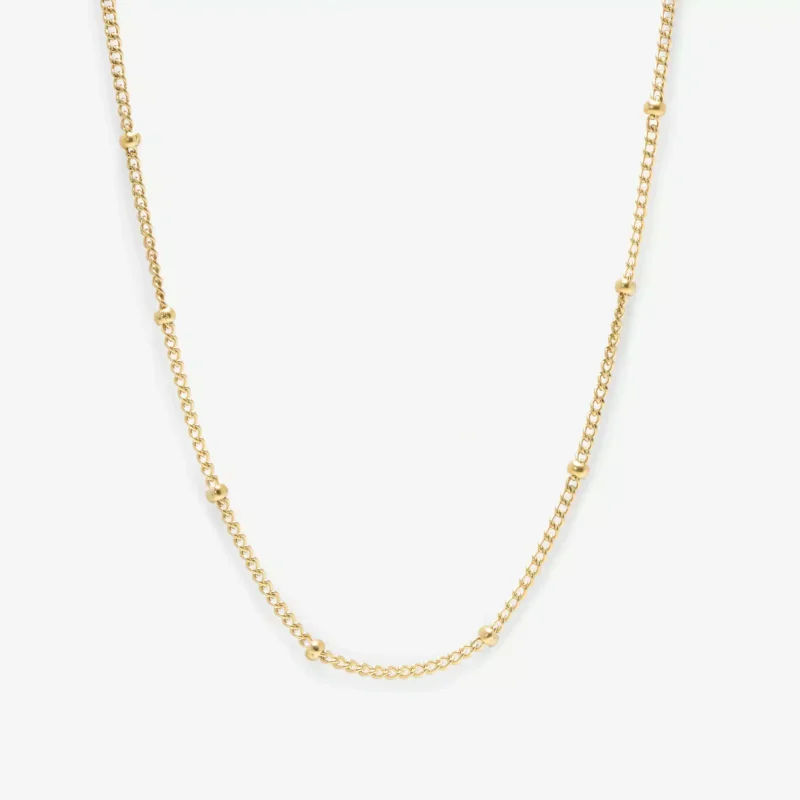
For a layered look that stays put, the Dainty Chain gives you a fine base length, and the Satellite Bead Chain adds a little weight and texture so the two hang at different lengths and resist tangling. Choosing chains that differ in weight is half the trick. Both are made for daily wear in waterproof, tarnish-free 14k gold PVD over recycled stainless steel, and both are skin-friendly.