

Most of us have picked up a piece in a shop or scrolled past one online and felt that small flicker of doubt: it looks lovely, but will it still look lovely in six months? Telling the difference between a piece that lasts and one that fades by the weekend is a skill worth having, and it is more learnable than it seems.
Knowing how to spot quality jewellery comes down to a handful of honest signals: the materials a piece is actually made from, how it feels in the hand, the security of its clasp, the evenness of its finish, and how openly the maker describes all of that. Once you know what to look at, you can judge most pieces in under a minute.
What does good-quality jewellery actually mean?
Good-quality jewellery is made from materials that hold up to daily life and finished in a way that keeps it looking right over time. That covers the metal underneath, any coating on top, and the small working parts like clasps and hinges that take the most strain.
Quality and price are linked, though they are not the same thing. A piece can be expensive and still be poorly made, and a sensibly priced piece can be built to last for years. What matters is whether the materials and the construction match what you are being charged, and whether the maker is clear about both.
It also helps to separate quality from style. A piece can be exactly to your taste and still be flimsy, or plain in design and beautifully made. The checks here are about how a piece is built and how it will hold up, which is a question you can answer regardless of whether the design is to your liking. Get the build right first, then choose the look you love within it.
Start with the materials a piece is made from
The single most useful habit is to check what a piece is actually made of before anything else. Solid gold, sterling silver and surgical stainless steel behave very differently from unnamed base metals, and the description should say which one you are getting.
Be cautious when a listing only describes colour, as in gold-tone or silver-coloured, without naming the metal. That phrasing often points to a cheap alloy with a thin coating. Stainless steel, by contrast, is a strong everyday choice: 316L stainless steel generally does not turn skin green, because its chromium content keeps it stable against skin acids and moisture.
Coatings matter just as much as the core metal. Thin electroplating wears through quickly on a piece you wear often, while a PVD coating bonds into the surface and lasts far longer. A clear description of both the base metal and the finish is one of the strongest signs of a maker worth trusting.
As a quick test, try comparing two gold-tone chains side by side. One lists its make-up as 14k gold PVD over 316L stainless steel; the other simply says gold plated with no base metal named. The first tells you what wears, how it wears and roughly how long it will hold its colour. The second leaves you guessing, and guesswork rarely favours the buyer. The more a description tells you, the less risk you are carrying.
How weight and solidity give the game away
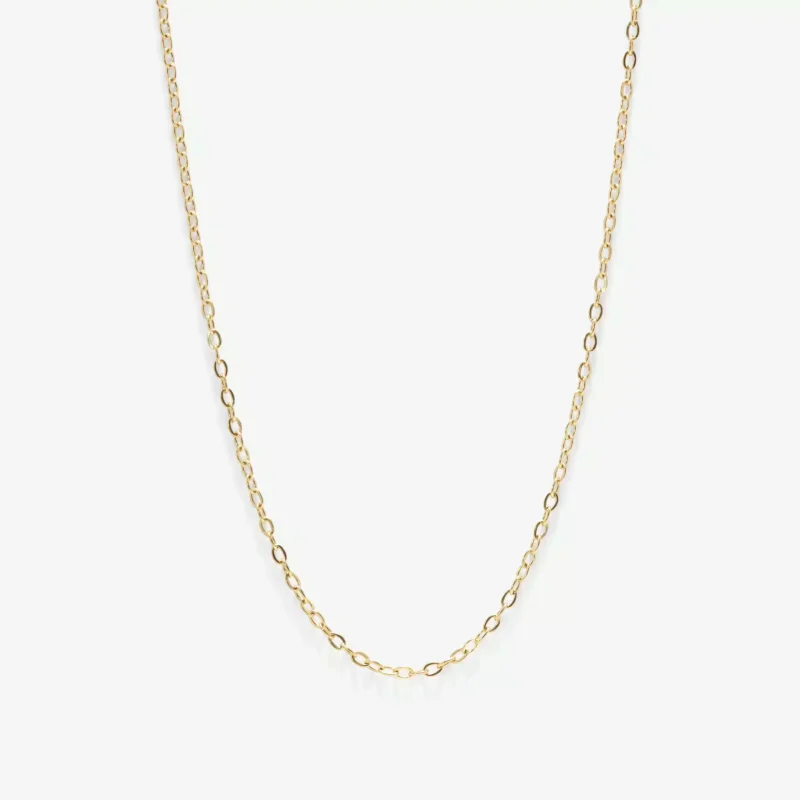
Pick a piece up if you can. Quality jewellery tends to have a reassuring weight and feels solid in the hand, with no hollow or flimsy give. A chain should move smoothly and sit evenly, with links that are properly closed instead of gapping open.
Hollow or very light pieces can still be perfectly fine for occasional wear, so weight on its own is not the whole story. It becomes telling when a piece claims to be substantial and feels like air, or when a chain kinks and twists the moment you lift it. Run a chain through your fingers and watch how it falls; a well-made one drapes cleanly.
Check the clasp, the hinges and the working parts
The clasp is where cheaper pieces tend to fail first. A secure lobster or spring clasp that clicks shut firmly is a good sign, while a clasp that feels loose, sticks, or springs open is a daily annoyance waiting to happen. On earrings, posts and hinges should move cleanly without grinding.
These small parts take more handling than any other part of a piece, so they reveal a lot about how carefully it was built. If the clasp feels like an afterthought, it usually is, and a chain you love is worth little if it keeps slipping off.
Look closely at the finish
A good finish is even all over, with no patchy colour, dull spots or rough edges where a piece has been cut or joined. Hold it to the light and turn it slowly. Plating that looks thin or uneven at the clasp and edges often wears through there first.
On a piece you plan to wear daily, an even, durable finish such as PVD over stainless steel is what keeps the colour true through showers, hand-washing and the general friction of real life. A finish that already looks tired in the shop will only look more tired on you.
Why transparency from the maker is the clearest signal
Honest information is one of the easiest quality signs to read. A maker confident in their pieces will state the materials plainly, explain the finish, and be clear about care and any guarantees. Vague language, missing material details and stock-photo styling are all quiet warnings.
It helps to weigh price against how long a piece will realistically last. Cost per wear, which is the price divided by the number of times you actually wear something, often tells a kinder story for a durable everyday piece than its sticker price suggests. A sturdy bangle worn most days can work out cheaper over a year than a flimsy one replaced twice.
None of this needs a loupe or a jewellers eye. Run through the same short list every time: name the metal, feel the weight, work the clasp, study the finish in good light, and read what the maker is willing to tell you. A piece that passes all five is very likely to still look right in a year, and that quiet confidence is what spotting quality really buys you.
Frequently asked questions
How can you tell if jewellery is good quality?
Check the named materials first, then the weight and solidity, the clasp and working parts, and the evenness of the finish. A clear, honest description from the maker is one of the strongest signs of a well-made piece.
Does heavier jewellery mean better quality?
Often, but not always. A reassuring weight usually points to solid construction, though some quality pieces are deliberately light. Use weight alongside the materials, clasp and finish, not as a test on its own.
Is stainless steel jewellery good quality?
Surgical 316L stainless steel is a strong everyday material. It resists tarnish, generally does not turn skin green, and holds a PVD coating well, which makes it a sensible choice for pieces you wear often.
What is a sign of cheap jewellery?
Listings that only describe colour while leaving the metal unnamed, very light or hollow pieces, loose clasps, and patchy or thin plating are common signs. Missing material details from the seller is another.
Is expensive jewellery always better quality?
No. Price and quality are linked but not identical. A fairly priced piece in good materials with a durable finish can outlast a costly one that is poorly made, so judge the construction first and the price tag second.
Related pieces
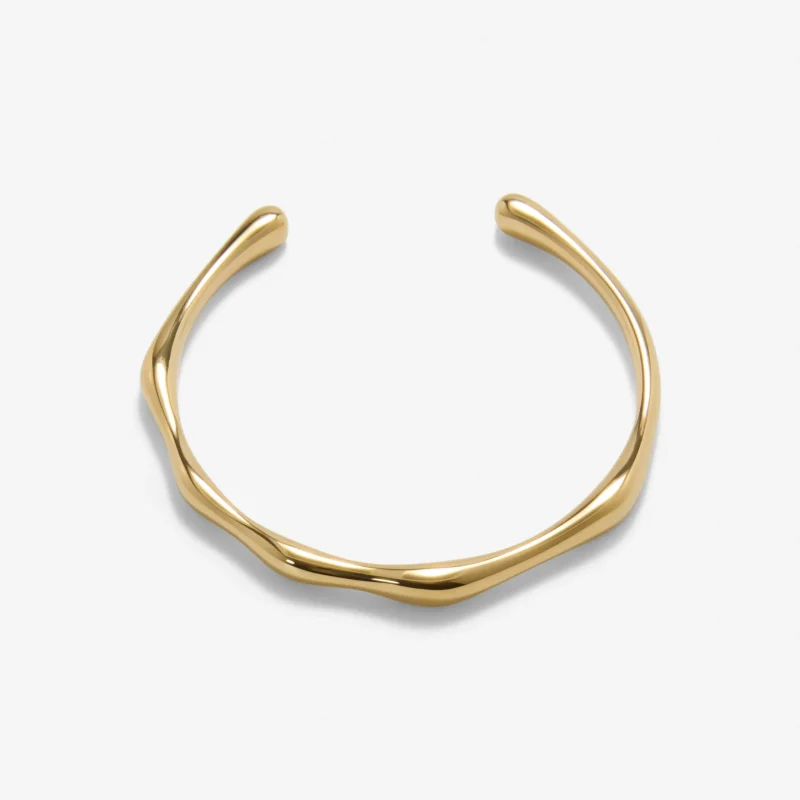
If you want pieces that pass these checks without much thought, the best sellers are a good place to start, made from recycled stainless steel with a 14k gold PVD finish so the colour holds through daily wear. The Molten Bangle is a good example of solid weight and an even finish, the kind of everyday piece that earns its keep over time.