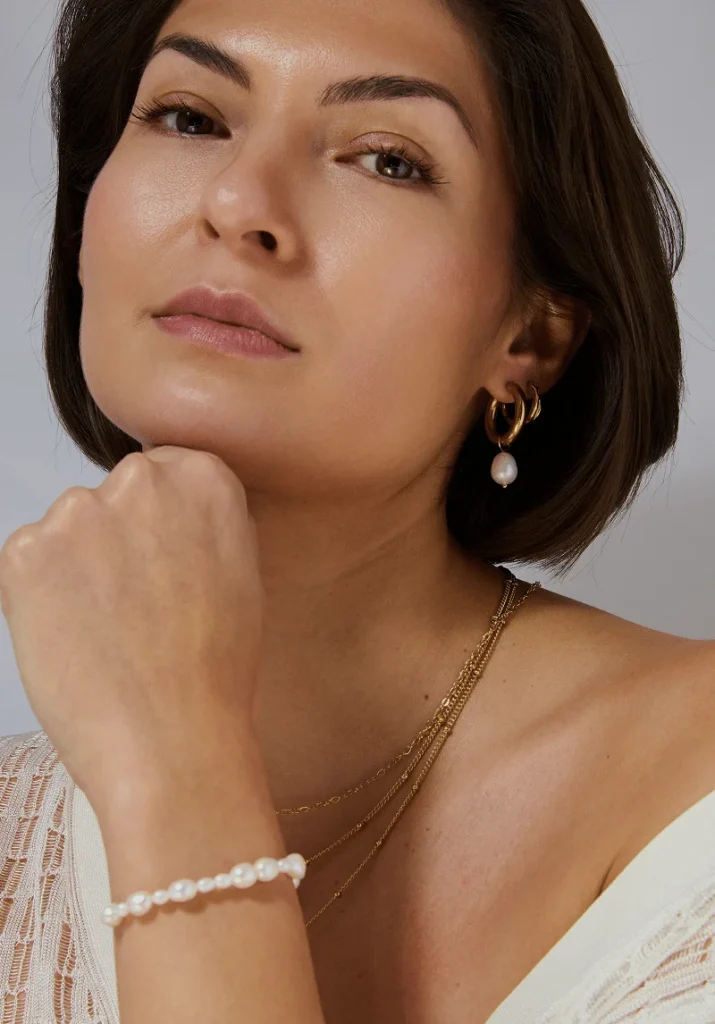


You catch yourself in the mirror on the way out, a single fine chain at your collarbone, one pair of earrings, and nothing else. It looks settled, like you meant it. Another morning the same restraint can feel like you simply ran out of time. That gap is the whole subject. Minimal jewellery styling feels intentional when each piece is clearly chosen: matched in metal tone, proportioned to the wearer, and worn for a clear reason.
The difference between minimal and merely sparse is that sense of choice. It shows in how pieces relate to each other, to the clothing, and to the body. Getting it right has more to do with how you select than how much you own. The sections below cover what intentional minimal styling looks like, why it is easy to confuse with carelessness, how proportion and quality carry a small set, and how to keep it personal.
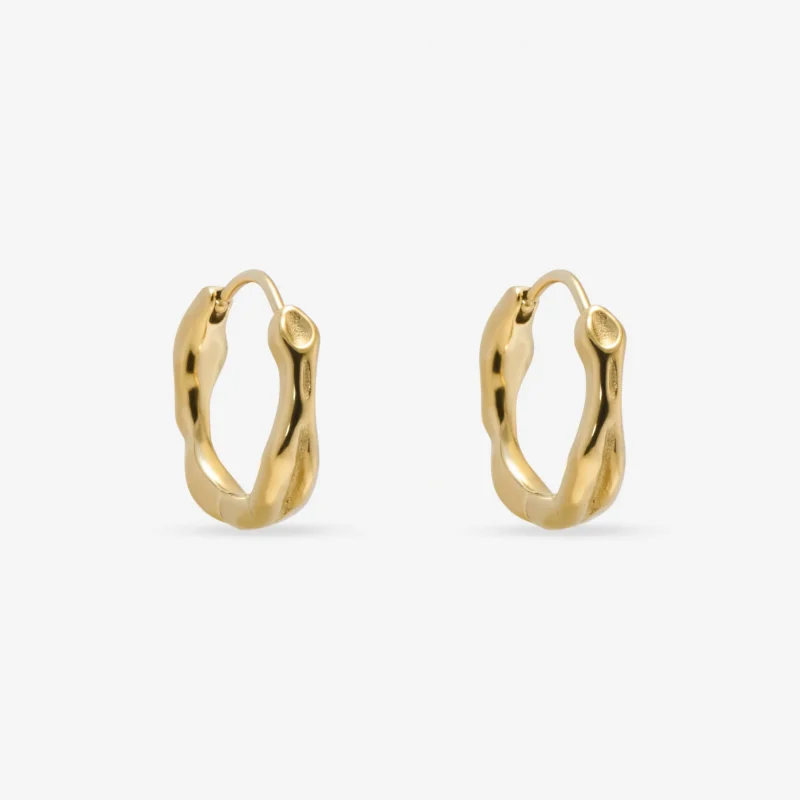
What does intentional minimal styling actually look like?
Intentional minimal styling looks like a small set of pieces that clearly belong together and serve a purpose. The pieces share a visual language, sit in proportion to the wearer, and read as a single composition, with the cohesion of pieces chosen for each other. The viewer experiences the jewellery as chosen, because each piece occupies its space for a reason.
This comes from wearing less by design. Intentional minimalism rests on a clear sense of what you are doing and why: which pieces you have chosen and how they relate to the person you are presenting. The confidence it carries comes from knowing exactly what you have on. A modern minimal look in jewellery describes a considered restraint, where what is absent does as much work as what is present.
Why are minimal and careless so easy to confuse?
Minimal and careless styling both involve wearing few pieces, so they look similar in count while differing sharply in effect. Careless pieces feel incidental, chosen with little regard for how they sit against each other or the clothes, with a quality of accident to them. Minimal pieces have cohesion: they work together or stand alone in a way that feels complete, the metal tones align, and the scale suits both the clothing and the wearer's frame.
The distinction matters because clothing and jewellery communicate. A viewer reads the same small amount of jewellery differently depending on whether it looks intentional or careless. Intentional minimalism suggests clarity and self-awareness, while careless minimalism can read as indifference. The number of pieces is identical, and the impression is entirely different.
Negative space is part of what makes the difference. In visual design, the area around and between elements is active, shaping how the pieces themselves are perceived. In styling, the bare skin and clothing around a single chain give that chain room to read clearly. Crowding the space removes that effect, which is why one well-placed piece can feel more resolved than several competing ones.
How does considered selection create visual coherence?
Considered selection creates coherence through consistency, because in a small set every piece is visible and open to scrutiny. When you wear few pieces, a clash in metal tone is obvious and an awkward scale has nothing to hide behind. The burden falls on the pieces themselves and how they relate.
A necklace and a pair of earrings worn together should share something: metal tone, finish, or aesthetic lineage. They also have to work with the clothes. A piece that is too formal reads as overdressed against casual fabrics, and a piece that is too delicate gets visually overwhelmed by heavier ones. Considered selection goes beyond liking a piece in isolation. It is understanding how that piece functions as part of a whole.
Consistency across days matters as much as consistency within one look. A minimal aesthetic is the visual coherence of your approach over time, built across many mornings. When pieces share a metal tone, a finish, and a weight range, they combine intuitively, and the result feels collected. A warm 14k gold tone running through a small set is one simple way to hold that coherence.
How does proportion make a few pieces feel complete?
Proportion makes a small set feel complete when each piece is sized in relationship to the wearer and the clothing. The same necklace reads very differently on a small frame than on a larger one. A delicate bracelet paired with a chunky earring creates tension, because the two pieces compete where they should complement each other.
When you wear minimal jewellery, proportion becomes more critical because there is no other ornamentation to balance an awkward scale. If a necklace is your only piece, it has to have the right proportion for your frame and your neckline. A single bracelet can feel complete on its own when it has enough substance and presence, while one that is too delicate can read as unfinished, as though the rest of the set were forgotten. Well-proportioned earrings anchor the face in a way that feels resolved.
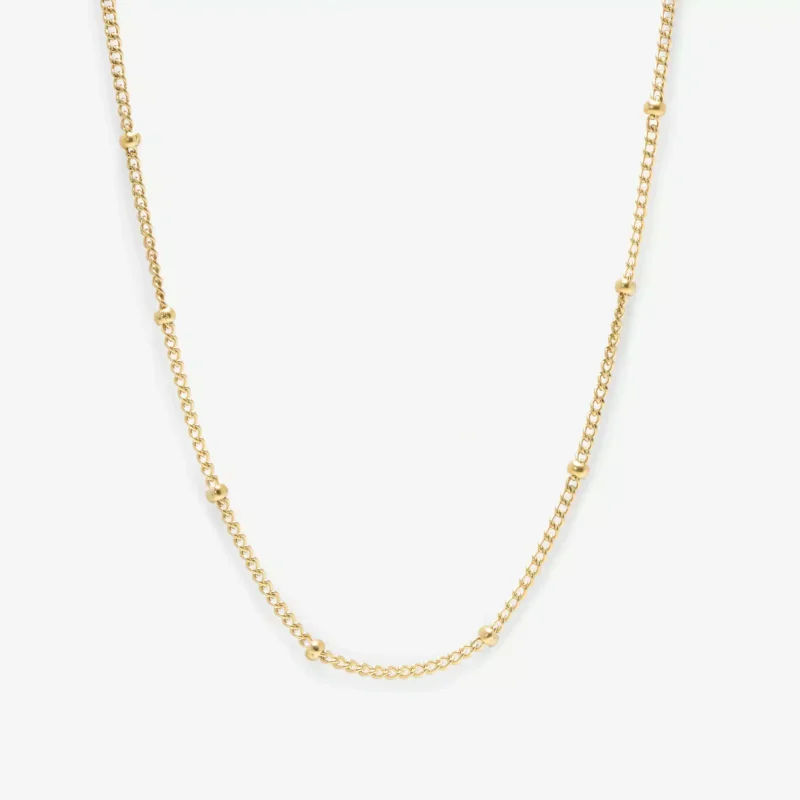
The aim is the impression of completeness with as few pieces as possible, and that impression rests on getting the proportions right. A bead chain with a little visible texture, for instance, can hold a neckline on its own where a finer chain might ask for company.
Why does the quality of each piece matter more when you wear fewer?
Quality matters more in minimal styling because every piece is visible and weak design or construction has nowhere to hide. In a busy stack, a single mediocre piece can be lost among the others. Worn alone or in a pair, a necklace is examined closely: its construction, its finish, and the care in its design are all apparent. A poorly made piece pulls the whole look down, and a well-made one holds it up.
Quality here means both materials and design. A piece in a sound material ages well, and considered design keeps it looking settled across seasons. These qualities let a minimal approach work over years instead of dating after a season. Recycled stainless steel with a 14k gold PVD coating suits this, because it is waterproof, tarnish-free, and skin-friendly, so a piece worn constantly keeps its finish.
There is also a quieter payoff. A look that depends on a few good pieces costs less attention to maintain than one that depends on many. The pieces hold their own, so you stop adjusting and start trusting them.
How do you keep a minimal approach personal?
Keep minimal styling personal by choosing pieces with specific character, holding the count steady while raising the interest. The risk in a pared-back approach is that it reads as sterile if the pieces are too generic. The answer is specificity: a chain with a particular texture, an earring with a distinct finish, a charm that carries personal meaning. Each expresses personality while keeping the restraint intact.
The pieces to look for have character without being fussy: made with intention, specific enough to be memorable, yet familiar enough for regular wear and easy to combine with everything else. A piece with that balance becomes a default you reach for, more than an experiment you wear once.
Personality also comes from how you wear the pieces. The same necklace worn daily becomes an extension of how people recognise you, in a way an occasional piece never quite does. That association builds through consistent wear, which is another argument for choosing a small set of durable pieces and committing to them.
Frequently asked questions
What is minimal jewellery styling?
Minimal jewellery styling is wearing a small, deliberately chosen set of pieces that share a visual language and sit in proportion to the wearer. The aim is for a few pieces to read as intentional and complete, never sparse or accidental.
How do I make minimal jewellery look intentional instead of plain?
Match your pieces in metal tone, get the proportions right for your frame and neckline, and choose pieces with specific character. Consistency across the set, and across days, is what reads as intentional.
What jewellery is best for a minimal look?
A simple chain, a textured bead chain, minimal earrings, and one understated bracelet in a single metal tone cover most minimal looks. Pieces with sound design and a durable finish hold up to the close attention a small set invites.
Does minimal jewellery have to be only one piece?
No. Minimal styling is about coherence, with no strict count. Two or three pieces that share a metal tone and weight range can read as a considered set, as long as each one strengthens the whole.
Why does proportion matter so much in minimal styling?
Because there is nothing else to balance an awkward scale. With few pieces, a necklace, bracelet, or earring that is too large or too delicate stands out, so sizing each piece to the wearer and the clothing is what makes a small set feel complete.
Related pieces
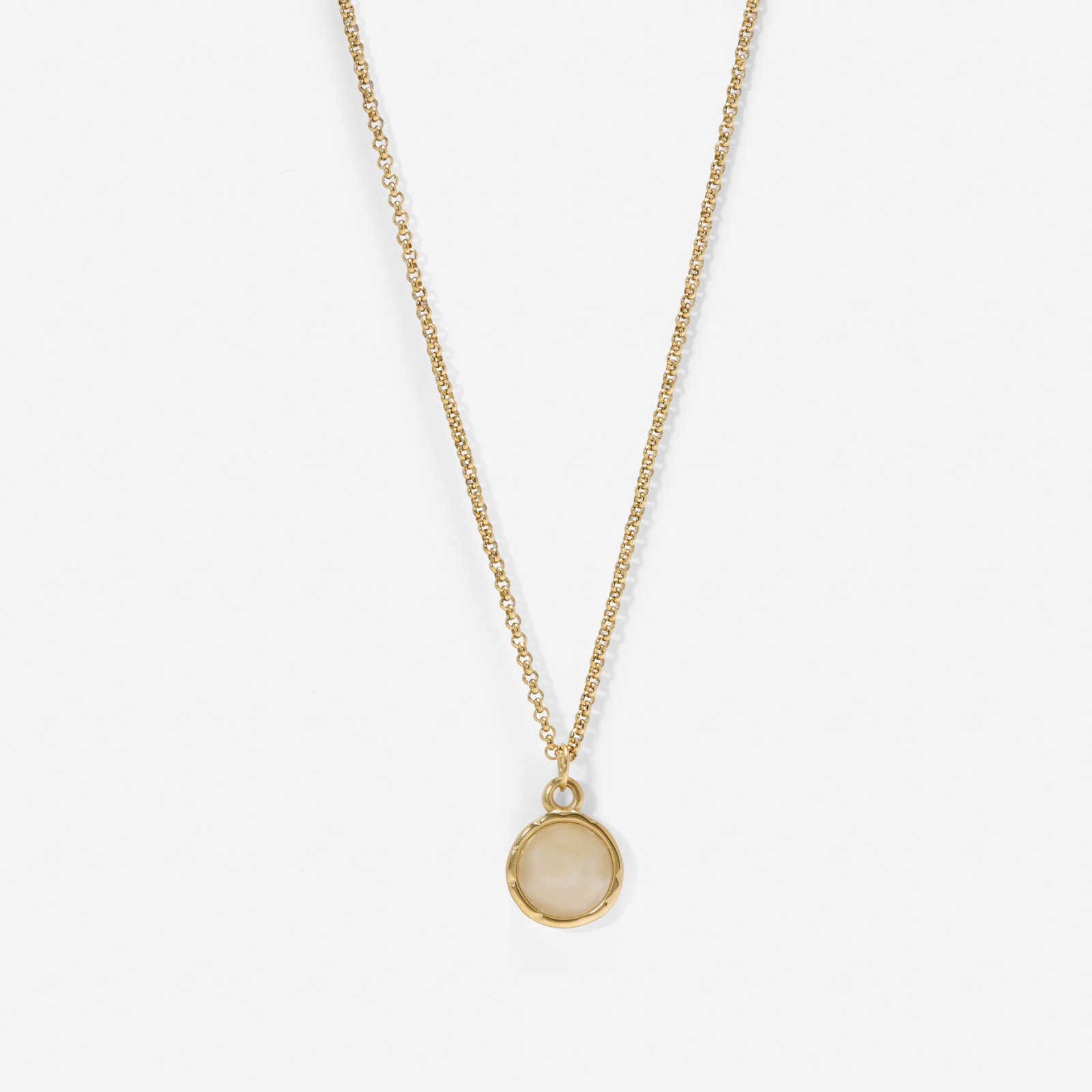
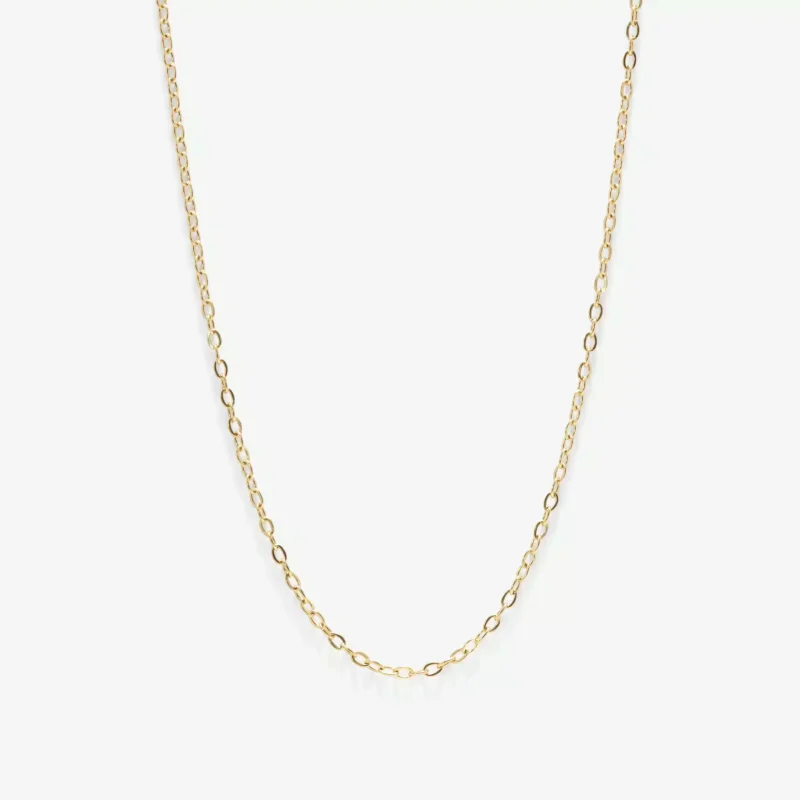
The Dainty Chain is a clean, fine necklace that suits a minimal set worn alone or as a quiet anchor for a small composition. The Satellite Bead Chain adds gentle texture along its length, which gives a minimal look character and lets a single chain hold a neckline on its own. Both are made in recycled stainless steel with a 14k gold PVD coating, so they are waterproof, tarnish-free, and skin-friendly, and they keep their finish under the close attention a pared-back look invites.