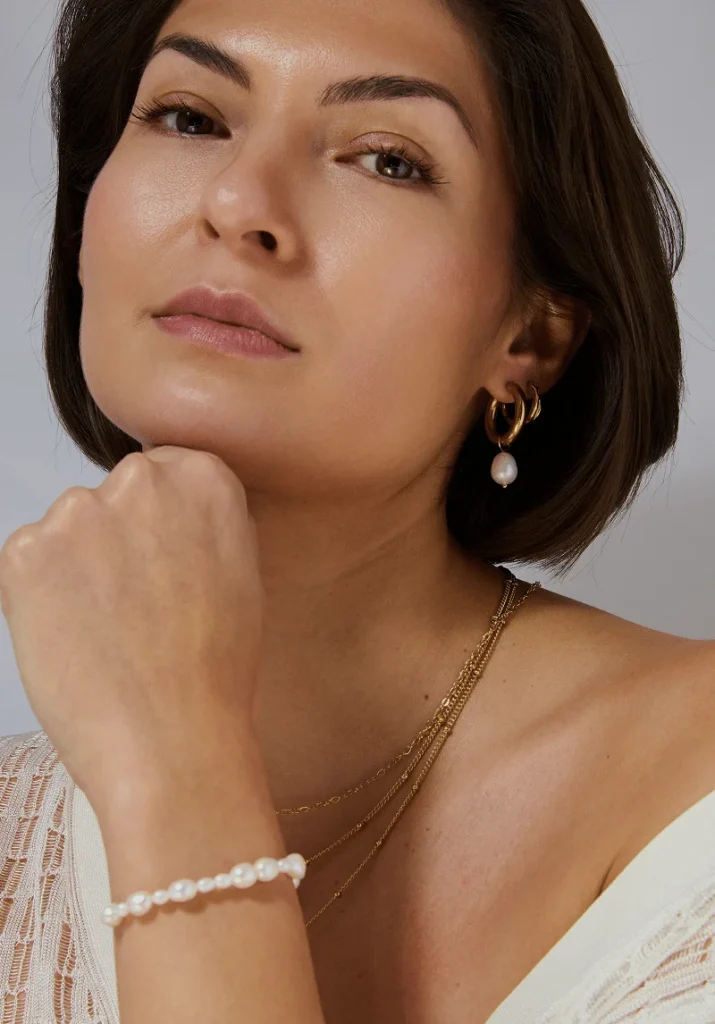


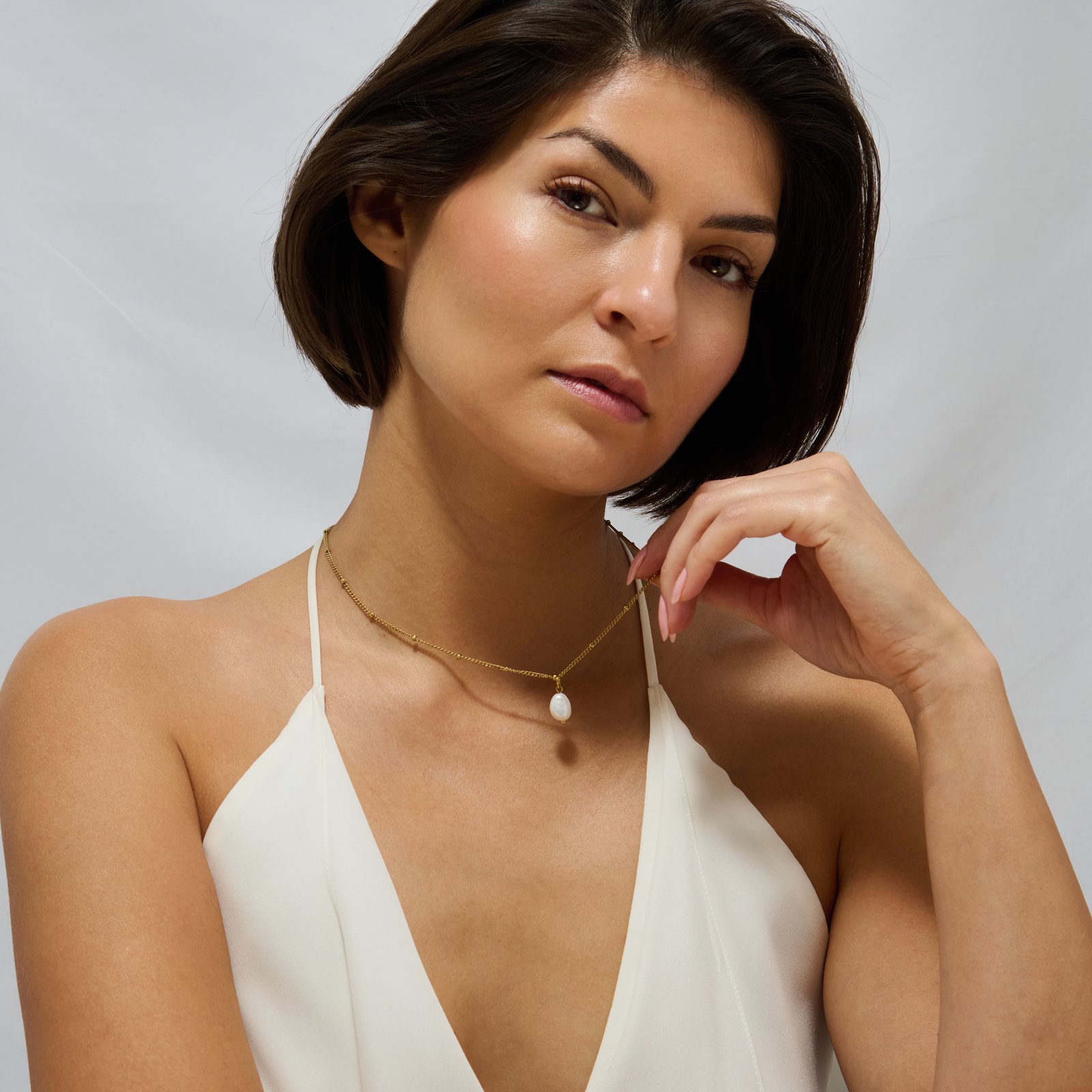
There is a small moment that happens when you fasten a piece marked with something that belongs only to you. A glance down, a quiet recognition, and the day carries on. Personalised jewellery is any piece carrying something specific to the wearer, a name, a date, an initial, or a symbol chosen for a reason. That mark is what separates it from purely decorative pieces, because the content comes to matter as much as the craft. This guide looks at what personalisation adds, how names differ from initials, why a subtle mark often feels stronger, and how to choose a personalised piece you can live with for years.
What does personalisation actually add to a piece?
Personalisation anchors an object to a particular person or moment. The instant you add an initial, a name, or a date, the piece stops being interchangeable. A bracelet becomes this particular bracelet, the one carrying the date you chose to mark. That shift from generic to specific is the main thing personalisation does, well ahead of any change to how the piece looks.
A personal mark tends to work in two directions at once. Outwardly, it tells other people something about you. Inwardly, it confirms something you already know about yourself or someone close to you. A necklace carrying a child's initial often does both, though for many people the private function is the deeper one. You wear it so that you are reminded each time you put it on, more than so that others know you are a parent. Worn often, the mark settles into daily life until you barely register it, yet the knowledge that it is there keeps working in the background.
What is the difference between a name and an initial?
A name declares; an initial implies. A necklace carrying a full name is explicit and legible to anyone who looks. A necklace carrying a single letter holds the same meaning more privately, because the letter stands in for the name and the name stands in for the person. Both carry meaning, and they differ mainly in how much of it they share with the world.
Name pieces have a long history, made in various forms across cultures for well over a century. A full name leaves no ambiguity, which is part of the appeal. A parent wearing a child's full name carries something unmistakably that child. Name pieces also tend to work well as commemorative objects, since a name holds a different weight from a letter: it is how a person was actually known and called.
Initial pieces work through suggestion. A single letter points toward a name without spelling it out, which many wearers prefer because it keeps the meaning close while staying private. A well-rendered letter also has a graphic simplicity that suits understated styling, and initials tend to be more adaptable: you can layer your own letter alongside a child's or a partner's in a way that a row of full names rarely allows.
Both forms are genuine. People also move between the two across a life. A full name can suit the early stage of a relationship, while a single initial can feel right once the meaning has settled into everyday wear. The form matters far less than the intention behind it.
Why does subtle personalisation often feel stronger?
Subtle personalisation often feels stronger because the meaning stays primarily with the wearer. A small initial set inside a bracelet, a date on the back of an earring, a mark you have to look for: these create a kind of private knowledge. You know the piece carries something significant. Others stay unaware of it, unless you choose to tell them.
There is a familiar parallel in how we share things generally. Telling a close friend something private tends to feel intimate in a way that announcing the same fact to a room does not. The difference is audience. Subtle personalisation directs the personal statement inward, where an obvious mark sends it outward. The private version stays entirely yours.
This is also why subtly personalised pieces often enjoy longer wearing lives. Their significance does not depend on others noticing or commenting, so it tends to stay stable. A piece whose meaning is rooted in the wearer usually keeps its place in a collection. When you decide how to mark a piece, asking who the personalisation is for tends to clarify how visible it should be.
What happens to a personalised piece after the moment passes?
Personalised pieces are often made to mark a specific moment: a new baby's initial, a wedding date, a child's name. The moment passes, the occasion recedes, and the jewellery remains. How a piece handles that passage depends partly on how the mark was framed in the first place.
A date or a full name fixes the piece to a particular occasion, and as that occasion becomes historical, the association tends to deepen. A necklace bearing a child's name becomes something different once that child is grown, the meaning layering with each year. An initial or a simple symbol tends to feel more open, staying loose enough to apply across time. A necklace carrying your own initial comes unmoored from any single context and turns into a personal emblem. These pieces age into themselves, and time tends to deepen the claim they have on you.
Does design still matter when meaning is the priority?
Design tends to matter more once a piece is personalised, despite a common assumption that meaning excuses a weaker object. Marking something with your name raises how much its quality and durability matter to you, because the piece can no longer be casually replaced. Once it carries your initial or a date, you cannot simply swap it for another similar one. If the design is sound and the construction is good, the piece becomes something you can wear for years. A poorly made base object tends to carry that emotional investment badly.
There is also the question of how the personalisation itself ages. A mark is permanent, so its style has to travel well. A clear, simple script in a classic letterform tends to look as settled in fifteen years as it did at purchase, while the most fashionable script of the moment announces its age by the end of a decade. Restraint helps here, because you cannot change an engraving once your taste moves on.
How do you choose a personalised piece that lasts?
Start with content that will still feel true to you in years. A single initial or one significant date tends to travel better across time than elaborate customisation, since the simpler the content, the less it leans on the exact circumstances that prompted it. Keep the style of the mark restrained, since the personalisation is permanent and the rest of the piece will be read alongside it for as long as you own it.
Then weigh the base piece as you would any jewellery you mean to keep. Personalisation tends to increase attachment, attachment usually means frequent wear, and frequent wear demands a piece that holds up. Recycled stainless steel with a 14k gold PVD coating suits this kind of everyday personalised piece. It is waterproof, tarnish-free and skin-friendly, so a marked piece can be worn through ordinary life without being treated as fragile.
Frequently asked questions
What is personalised jewellery?
Personalised jewellery is any piece marked with something specific to the wearer, such as a name, a date, or an initial. The mark anchors the object to a particular person or moment and makes it difficult to replace with anything else.
Is personalised jewellery the same as custom jewellery?
Not quite. Personalised jewellery adds a personal mark to an existing design, such as an initial or date. Custom jewellery is made to a bespoke design from the start. Personalisation is the lighter, more common option and usually costs less.
Should I choose a name or an initial?
Choose a name when you want the meaning explicit and legible. Choose an initial when you prefer it kept private and adaptable. Initials also layer more easily if you want to combine letters for different people.
Does personalised jewellery date?
It can if the lettering follows a current trend, since the mark is permanent. A clear, simple letterform on a well-made piece tends to stay looking settled across years.
How do I keep a personalised piece looking good with daily wear?
Choose a durable, tarnish-resistant material so frequent wear does not wear the piece down. Recycled stainless steel with a 14k gold PVD coating is waterproof, tarnish-free and skin-friendly, which suits a piece worn every day.
Related pieces
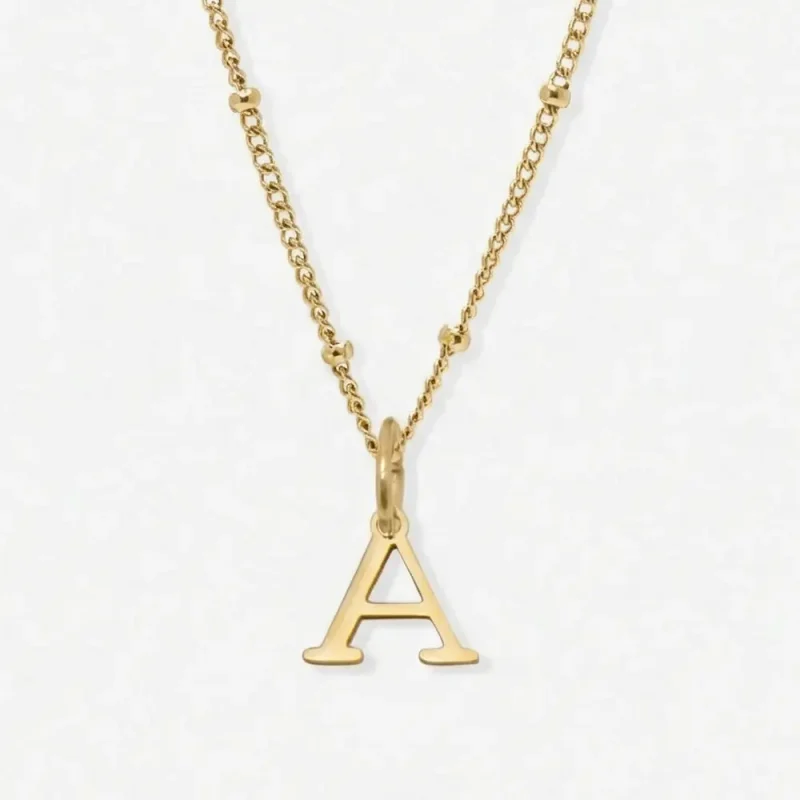
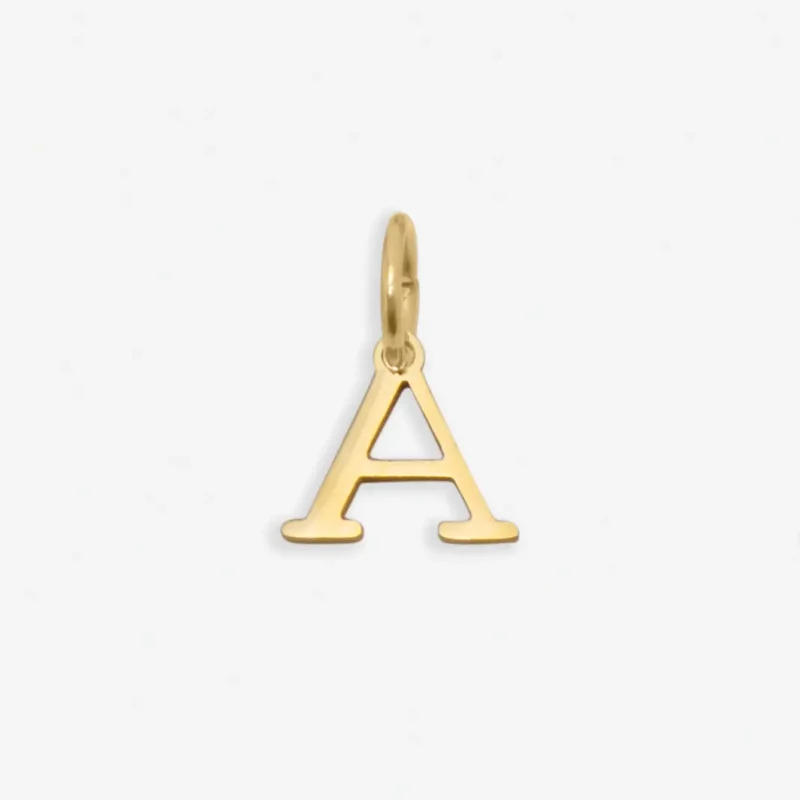
The Alphabet Necklace carries a single initial in a clean, simple letterform, which makes it well suited to subtle, lasting personalisation that reads as a design element as much as a mark. Alphabet Charms let you build a personal piece from individual letters, layering your own initial alongside a child's or a partner's as your meaning grows. Both are made in recycled stainless steel with a 14k gold PVD coating, so they are waterproof, tarnish-free and skin-friendly, which matters for a personalised piece you intend to wear for years.