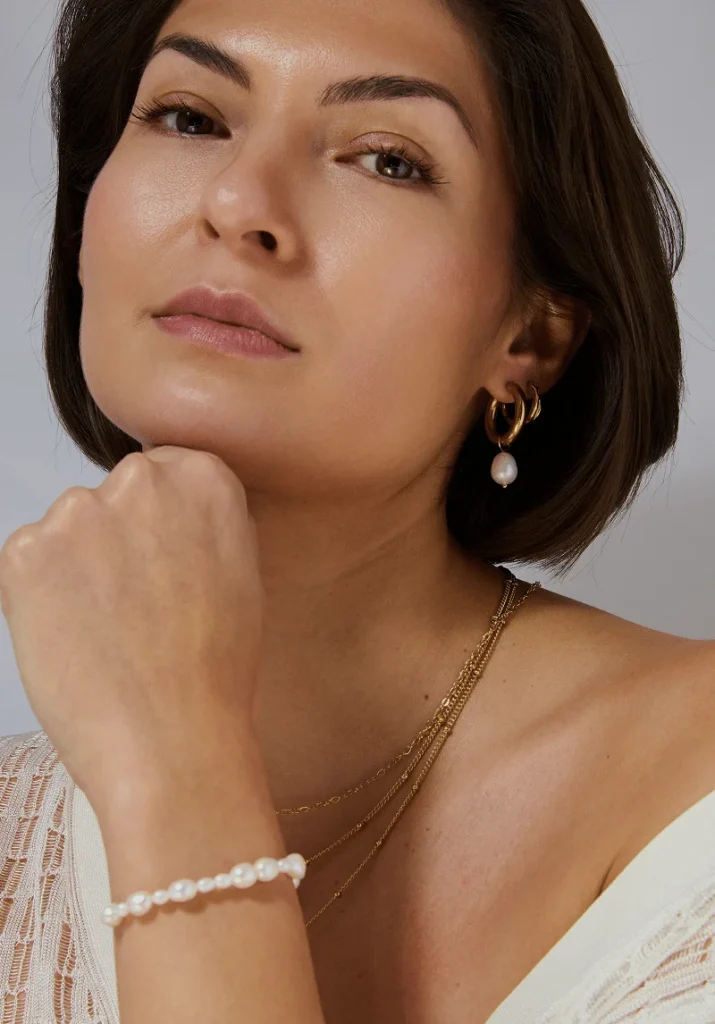


You add a second chain, then a third, and somewhere along the way the look tips from interesting to fussy, the chains crossing and knotting at your collarbone. Most of us have stood at the mirror trying to untangle exactly that. Knowing how to layer necklaces well comes down to wearing two or three of clearly different lengths, varying the chain weights, letting one piece lead, and stopping once the look reads cleanly.
Necklace layering looks deliberate when each piece sits in its own space and supports the others. It looks cluttered when the pieces are too similar and compete for the same spot. The difference comes down to a few specific choices, more than the number of necklaces you own. The sections below walk through each one.
What makes necklace layering work, and what makes it look cluttered?
Layering works when the pieces sit in distinct visual zones and one of them clearly leads. Two or three necklaces of different lengths create depth and interest. The same pieces without that separation read as a tangle.
Cluttered layering usually happens when necklaces share a length, a weight, and a style, so the eye cannot tell them apart. A short chain and a medium chain of the same thickness will cross, knot, and blur together. Necklaces that work sit in their own space: one at the collarbone, one on the upper chest, one lower down. Each occupies a clear zone.
The guiding idea is differentiation. When layered pieces differ in length, thickness, tone, or texture, the combination looks chosen. When they are near-identical, it looks accidental. You can build that contrast through any of those qualities, as long as the difference is easy to see.
How do you layer necklaces without tangling?
The reliable way to layer necklaces without tangling is to space the lengths clearly, leaving at least an inch or two between each chain so the pieces fall at different points. Length is the main organising tool. A short necklace sits at the collarbone, a medium one reaches the upper chest, and a long one rests near the sternum. Those three zones stay separate as you move.
Intermediate gaps cause most of the trouble. A chain that lands just past the collarbone next to one at the upper chest gives almost no separation, so the two slide together and knot. Clear gaps in layered necklace lengths give each piece room to settle and keep them legible through the day.
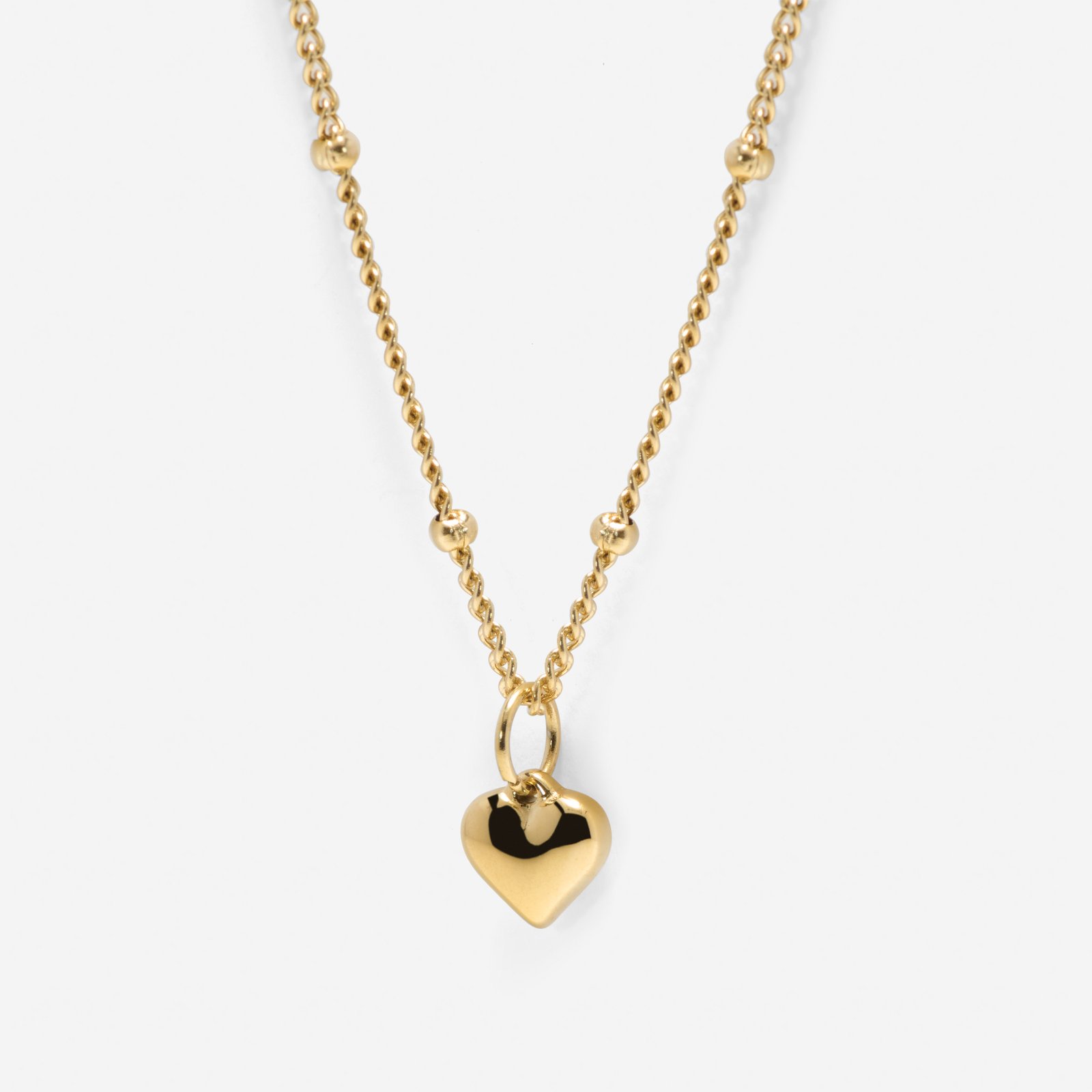
Mixing chain styles helps too. Chains of different constructions, a flat snake chain with a beaded chain, for example, catch on each other less than two identical ones. Varying the texture keeps the layers moving independently and cuts down on tangling.
How do chain weights and textures interact?
Weight gives a layered look its hierarchy. A delicate chain next to a heavier one creates a clear order: the heavier piece leads, the lighter one supports it. Layer several chains of the same weight and they read as equals, so the eye finds no anchor and the effect turns busy.
Texture works the same way. A smooth fine chain reads quietly against a twisted or beaded one, and that contrast is what keeps two pieces from merging into a single band of metal. Pairing a plain chain with a textured one gives the combination something to hold the attention without adding bulk.
Weight also matters for comfort. A heavy necklace pulls at the neck, and several heavy pieces compound that pull. Layering sits more comfortably when one piece carries the visual weight and the rest stay light. That keeps the look interesting and the wear easy across a long day.
Which piece should anchor the combination?
One piece should lead. That might be a pendant, a textured chain, or simply the heaviest link in the group. The focal piece gives the eye somewhere to rest, and the others become supporting layers around it.
Without a clear lead, three necklaces compete and the result feels confused, since no single piece takes priority. Once you decide which piece leads, keep the others quieter so the focal piece stays in front. A distinctive chain paired with two plainer ones reads as one composition, three separate decisions held together by a single anchor.
Many people do this without naming it. They reach for one piece they like and add simpler chains around it. That instinct is the principle in action: choose the lead first, then support it.
A worked example helps. Start with a fine chain at the collarbone as your base. Add a slightly longer chain with a small pendant on the upper chest as the focal piece. If you want a third, drop in a longer, lighter chain near the sternum so the spacing stays clear. Keep the three in the same tone for an easy match, give the pendant chain the most visual weight, and the set reads as one considered look, three loose pieces brought into order.
When should you stop layering?
Stop when adding another piece stops improving the look. Two necklaces are the most dependable layered combination: a shorter chain and a longer one give clear separation and easy balance. A third can work when all three lengths are distinct, the chains are light, and one piece clearly leads. Beyond that, the returns fall away for everyday wear.
Three necklaces ask more of you. They tangle more easily, the weight builds, and the space across the chest fills up. For a busy day, one or two layers usually give the dimension you want with little fuss. A relaxed evening or an event might carry a third comfortably.
Match the number to the effect you want, letting the look guide you in place of a rule. If two necklaces give you what you are after, a third adds nothing. If one feels flat, a second solves it. A formal event might carry a fuller look, while a working day suits less. Wearing the combinations teaches you where your own limit sits.
How does neckline change a layered look?
Neckline sets the space you have to work with. A high crew neck leaves little room at the collarbone, so a single chain worn just above or below the fabric tends to read best. A V-neck opens the field and lets two or three lengths sit distinctly. A scoop neck gives moderate room, and an open neckline gives the most.
Outfit context shapes the choice as well. With a t-shirt and jeans, one chain or two delicate ones look considered. A more polished outfit can carry slightly more. A formal look often reads best with a single piece, since heavy layering can feel too casual against it. Matching the lengths to the neckline, and the amount to the occasion, is most of the work. For more on building a daily set, see how to style jewellery for everyday wear.
FAQ
How many necklaces should you layer?
Two is the most reliable number, with a short and a longer chain. Three can work when the lengths are clearly different, the chains are light, and one piece leads.
What lengths work best for layered necklaces?
Choose lengths with clear gaps: one at the collarbone, one on the upper chest, one near the sternum. Aim for at least an inch or two between each chain.
How do you keep layered necklaces from tangling?
Space the lengths well and mix chain styles. Different constructions, such as a fine chain with a beaded one, catch on each other far less than two identical chains.
Can you layer necklaces with a high neckline?
Yes, though the space is limited. A single chain worn just above or below the collar usually reads better than several visible layers.
Should layered necklaces match in metal?
Matching tones is the simplest route to a cohesive look, and mixing gold and silver can read as deliberate once the lengths and weights are well chosen.
Related pieces
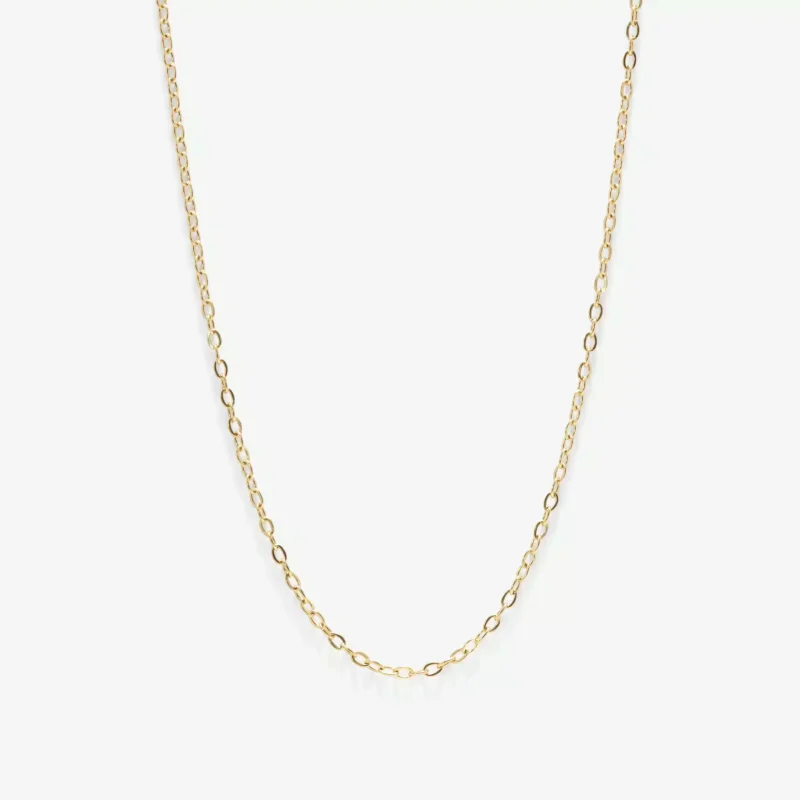
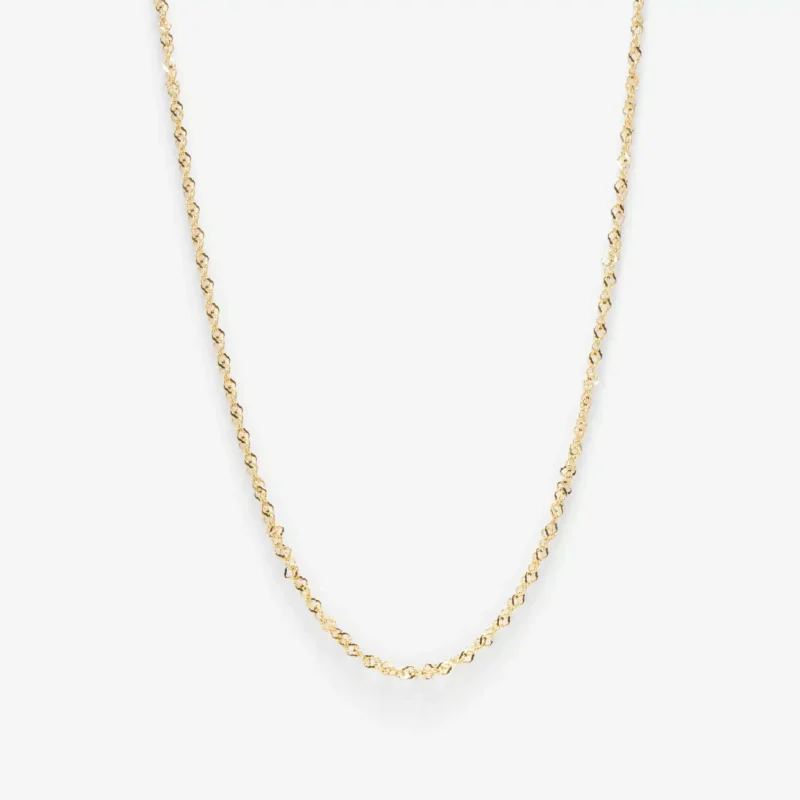
A fine chain makes a dependable base layer that sits close to the collarbone, and a Dainty Chain works well as the quiet supporting piece in a two-necklace set. For contrast and a clear focal point, a Singapore Twist Chain adds texture and a little more weight to lead the combination. Both are made in recycled stainless steel with a 14k gold PVD coating, so they stand up to everyday wear without tarnishing.