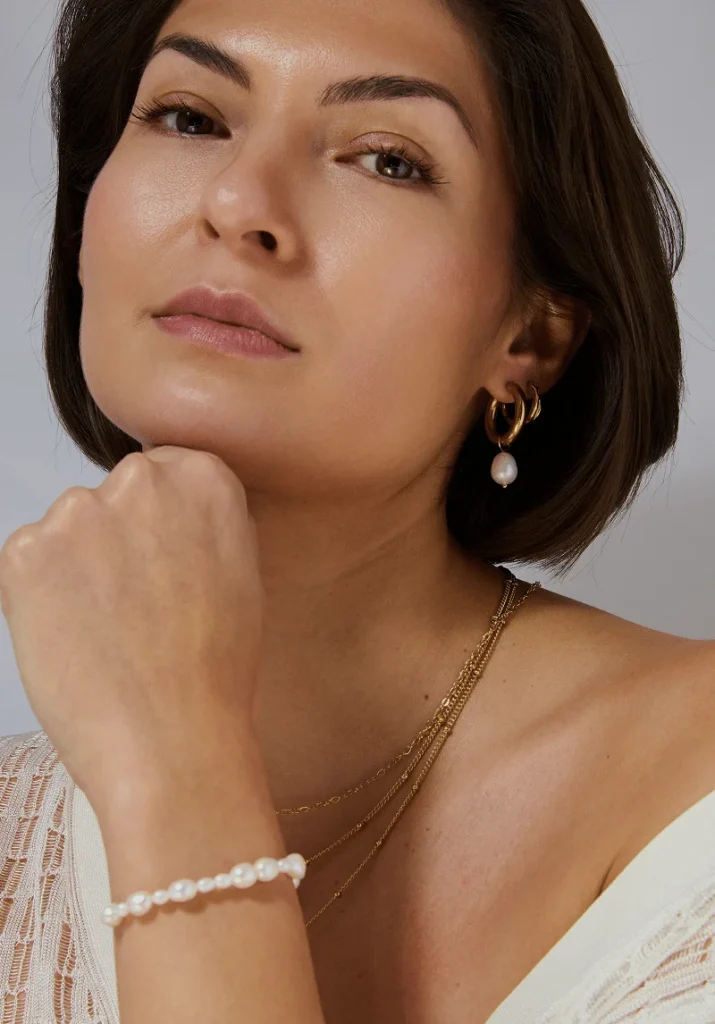


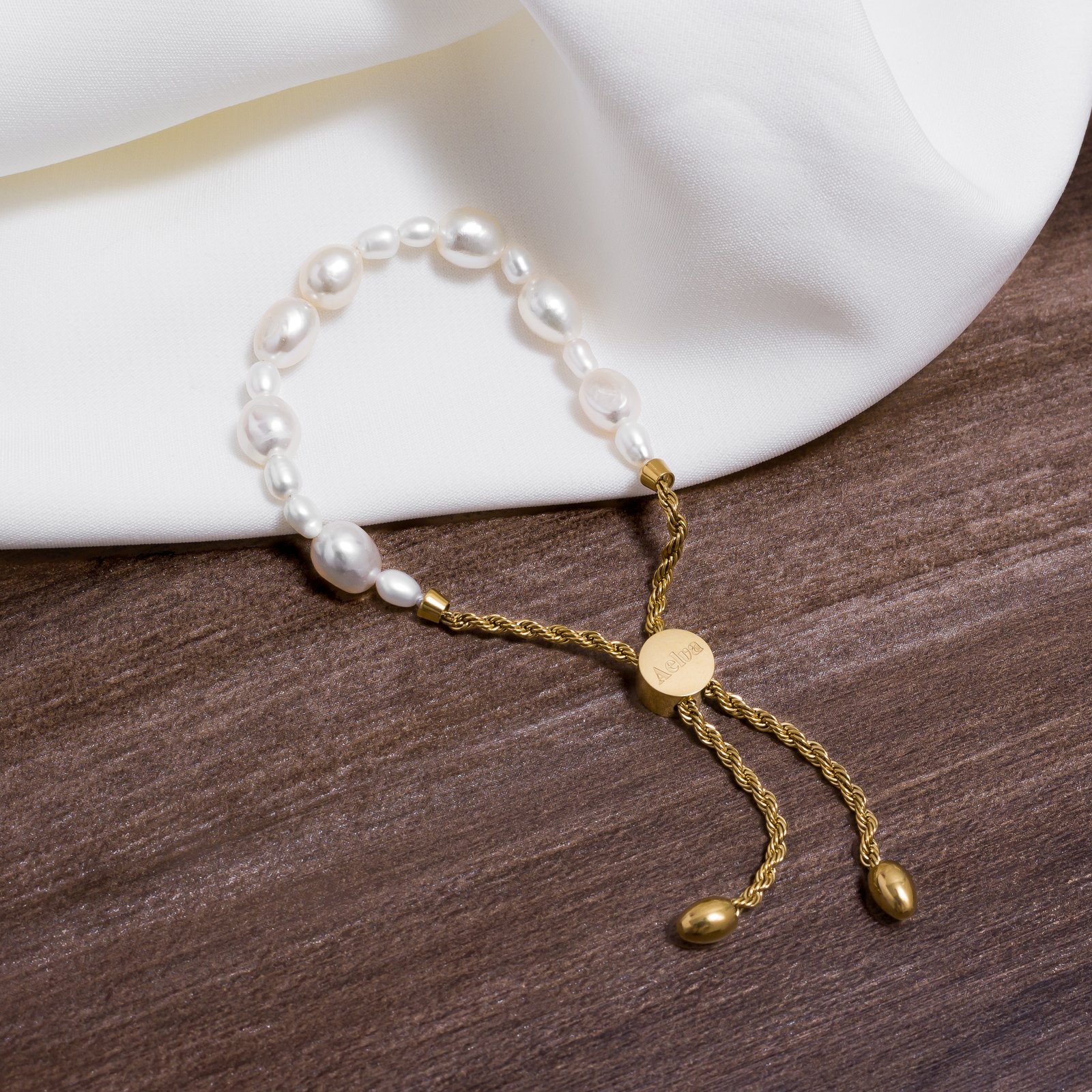
When the day is over and the dress is packed away, there are still a handful of people you want to thank in a way that lingers, the ones who drove for hours, calmed the nerves, steadied the morning, or simply showed up and made it easier. The best wedding thank-you gifts acknowledge a specific person and the role they played, and jewellery does this well when it is chosen to suit the recipient. A thank-you gift carries several messages at once: gratitude, recognition of a real contribution, and a sense of how much the giver values the relationship. This guide covers what these gifts are meant to communicate, how to choose for the individual, and how to make sure the piece gets worn long after the wedding.
What is a wedding thank-you gift meant to communicate?
A wedding thank-you gift acknowledges someone's presence and participation, and thanks them for what they gave, whether that was time, money, or emotional support. Beyond that practical function, it signals how the giver values the relationship. It is a small statement about what the giver believes the recipient deserves as recognition, which is why the choice carries more weight than its price suggests.
The thank-you gifts that land best feel proportional and considered. They show that the giver thought about the specific person, and they respect the recipient's part in the event. Done well, the gift also creates a lasting marker of the occasion that is centred on the recipient, which is part of what makes it feel generous.
These gifts sit within a long social pattern. The anthropologist Marcel Mauss described gift exchange as a system of reciprocal obligations that binds people together, and a gift handed to someone who played a role at a wedding does exactly that kind of work. It acknowledges a contribution and signals that the contribution was seen. A piece that can be worn and kept makes that recognition durable.
Why does jewellery work differently from other thank-you gifts?
Jewellery behaves differently from most thank-you objects. A monogrammed mug or a decorative item stays obviously a thank-you gift; it carries the occasion with it wherever it sits. Jewellery, especially a piece made for regular wear, blurs that line. Given as thanks, it can eventually become simply jewellery that someone owns and wears, with the thank-you context fading quietly from view.
That shift is the valuable part. The piece moves from commemoration into actual adornment. It stops being a thing kept out of obligation and becomes a thing worn because the person likes it and it suits her. A decorative gift can sit on a shelf for years, and each dusting becomes a reminder of the duty to appreciate it. A worn piece is woven into daily life instead, which is a kinder afterlife for a gift.
Lasting usefulness also says something. A piece a recipient will wear for years suggests the giver expects the thank-you to do real work in her life, and it respects her autonomy, since a gift made to be used trusts her to fit it into her life as she sees fit. Each time she wears it, she carries a quiet reminder of the day and the relationship it honoured, with no active effort required to keep the occasion alive.
How do you choose jewellery that acknowledges the person and their role?
Start with how the person actually dresses and adorns herself, which matters more than what she might theoretically like. A bridesmaid who wears minimal jewellery should not receive a statement piece, however fashionable. Someone who wears gold should not receive silver. Observation gives you the answer: the metal she already wears, how much jewellery she puts on, whether she layers pieces or wears one at a time.
The role itself also guides the choice. A bridesmaid or groomsman might receive something different from a parent, and someone who handled the practical organisation might receive something different from a relative who came simply to celebrate. The gift can acknowledge the person and what they actually did, which sharpens the sense that their specific contribution was noticed.
Acknowledging the individual means resisting the pull towards uniformity. The easy habit is to give identical gifts to everyone in the same role, so all the bridesmaids get the same necklace. A set of people in the same role are still different people, with different tastes and different ways of wearing things. Pieces chosen specifically for each person, even within one category, communicate more thought. Recipients tend to value that thoughtfulness above the cost of the gift, and at a wedding the gifts are often quietly compared across the group, which makes the difference more visible.
Should you give matching gifts or individual ones?
The choice between identical gifts and individual ones depends on what you want to say. Uniform gifts communicate that the role matters more than the individual. They are efficient and even-handed, and they make sure no one feels they received something lesser. Individual gifts communicate that each person matters as a person, and is not interchangeable with anyone else in the same role. They ask for more thought, and sometimes more cost, while carrying genuine acknowledgement.
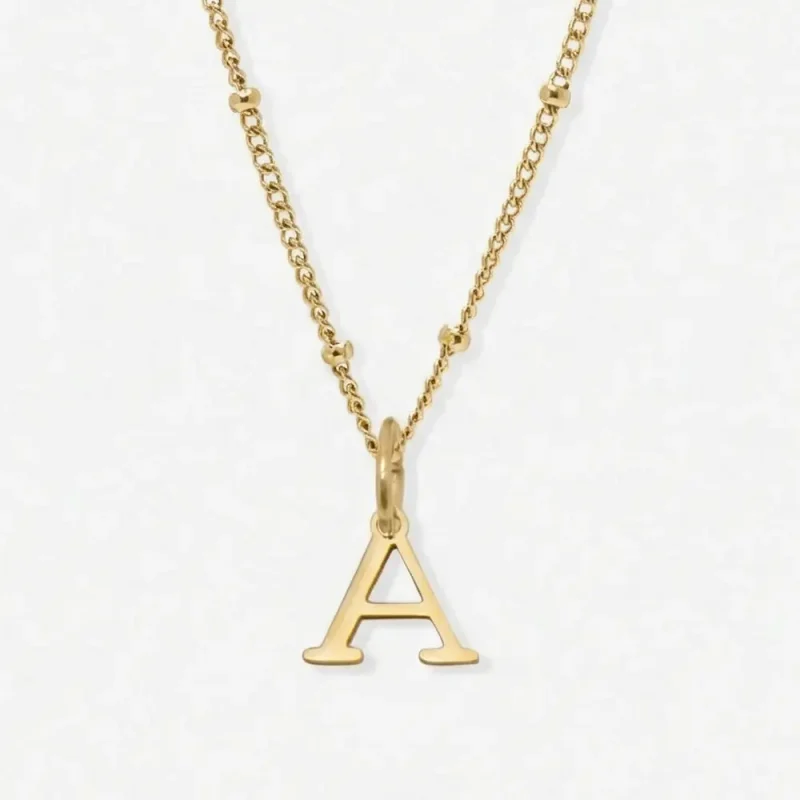
With jewellery, individual choices are often less expensive than they sound. An initial necklace is individualised simply through the choice of letter. Different lengths or metals accommodate different tastes. A simple chain can be given in a length that suits each wearer. These are minor variations, and they show that thought went into the choice.
To my mind the strongest approach is usually a middle path: a coherent category of gifts, so they cohere as a set, with individual variation inside it. Everyone receives a piece of jewellery, but each piece is chosen with an understanding of what suits that person. A consistent metal tone or a shared design family gives the group coherence without sameness, and acknowledges both the role and the individual at once.
How do you make sure the gift gets worn after the wedding?
Whether a piece gets worn again is the practical question that decides its long-term value. A gift worn only on the day has a short emotional life; a piece that enters the recipient's regular rotation carries the memory of the occasion into ordinary time, deepening its meaning over years. Objects tend to accumulate relational meaning through use, so the worn piece keeps the connection live in a way the stored one cannot.
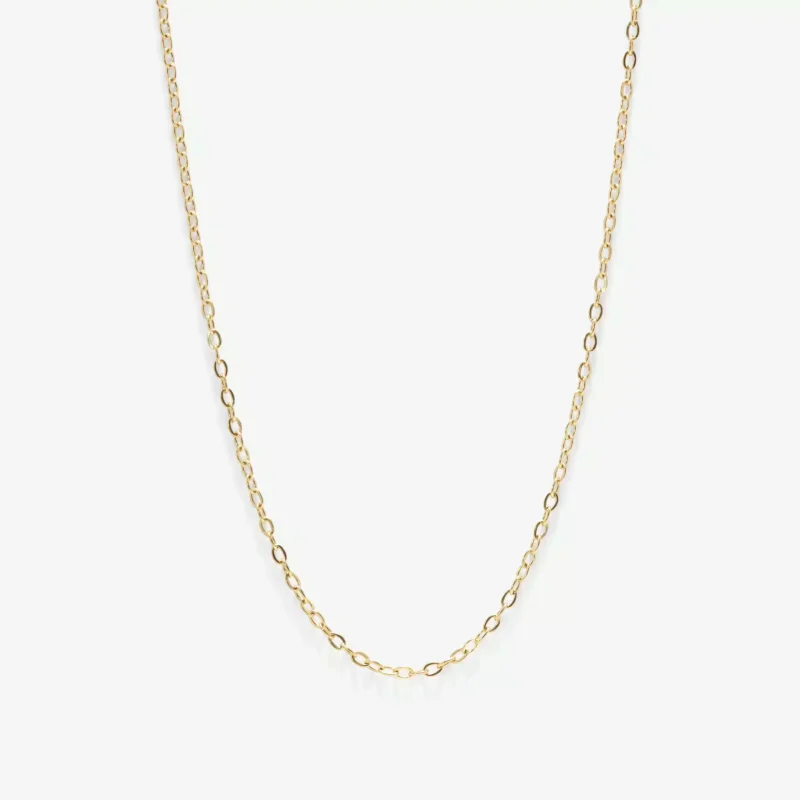
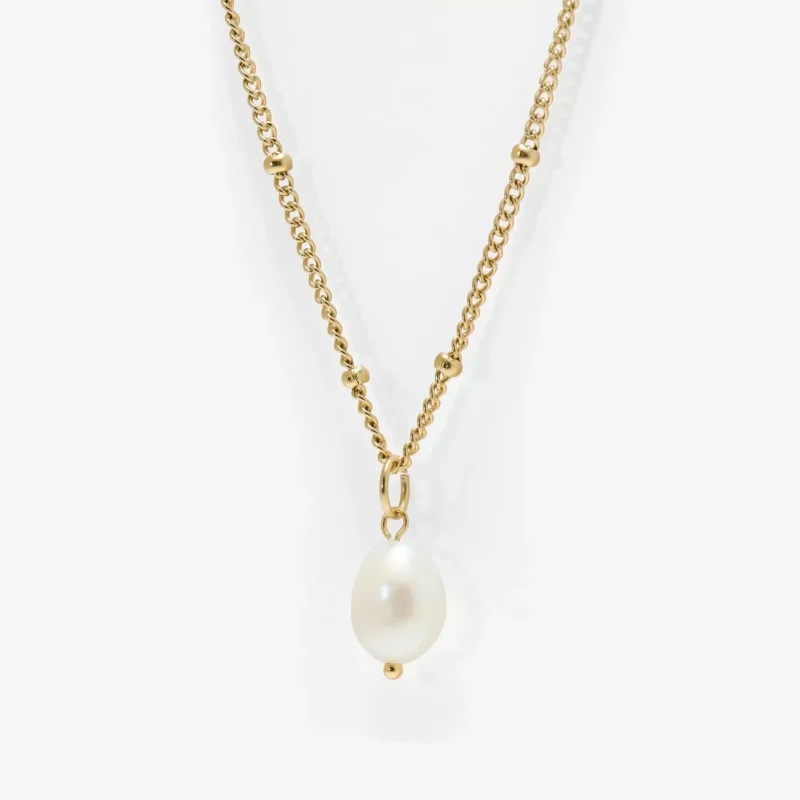
The design criteria for everyday wearability are well established. Pieces with minimal ornamentation, clean lines, and neutral metal tones settle into everyday wardrobes more readily than heavily bridal styling. Fine chain necklaces, delicate bracelets, and small stud or drop earrings tend to have longer active lives than statement pieces tied tightly to a formal context. A dainty chain, plain enough to wear with anything, is a reliable example.
Material quality protects that everyday life. A piece made from recycled stainless steel with a 14k gold PVD coating resists tarnish, survives water, and holds its appearance through regular wear, which is what allows it to move from keepsake box to wardrobe. It is also skin-friendly, so it stays comfortable to wear all day. Choosing carefully at the outset, with attention to who the recipient is and the likelihood she will wear the piece, is the condition that lets all of this happen. The gift that sits in a box achieves none of it.
Frequently asked questions
Is jewellery a good wedding thank-you gift?
Yes. Jewellery can be worn on the day and kept afterwards, and a well-made piece eventually becomes everyday jewellery. It works best when chosen to suit the recipient's own style.
What should you give bridal party members as a thank-you?
Simple, wearable pieces in each person's preferred metal and style. Coordinating loosely on metal tone keeps the group's gifts coherent while letting each piece suit the individual.
Should wedding thank-you gifts be the same for everyone?
Not necessarily. A coherent category with individual variation, such as the same style of necklace in each person's chosen initial or length, acknowledges both the shared role and each person.
How do you personalise a wedding thank-you gift?
An initial necklace individualises a gift through the choice of letter, and differences in length or metal suit different tastes. The most meaningful personalisation pairs a form the recipient genuinely wears with a small detail tied to the occasion.
Will a thank-you gift actually be worn again?
It is far more likely to be worn if it is simple, neutral in metal tone, and made from durable, tarnish-free materials. Pieces styled heavily for the wedding tend to stay in storage.
Related pieces
The Alphabet Necklace individualises a thank-you gift through the choice of initial, so a group can receive coherent pieces that are each specific to the person wearing them. The Dainty Chain is a simple, neutral option that moves from the wedding into everyday wear without effort. Both are made in recycled stainless steel with a 14k gold PVD coating, waterproof, tarnish-free and skin-friendly, which helps the gift last well beyond the day.