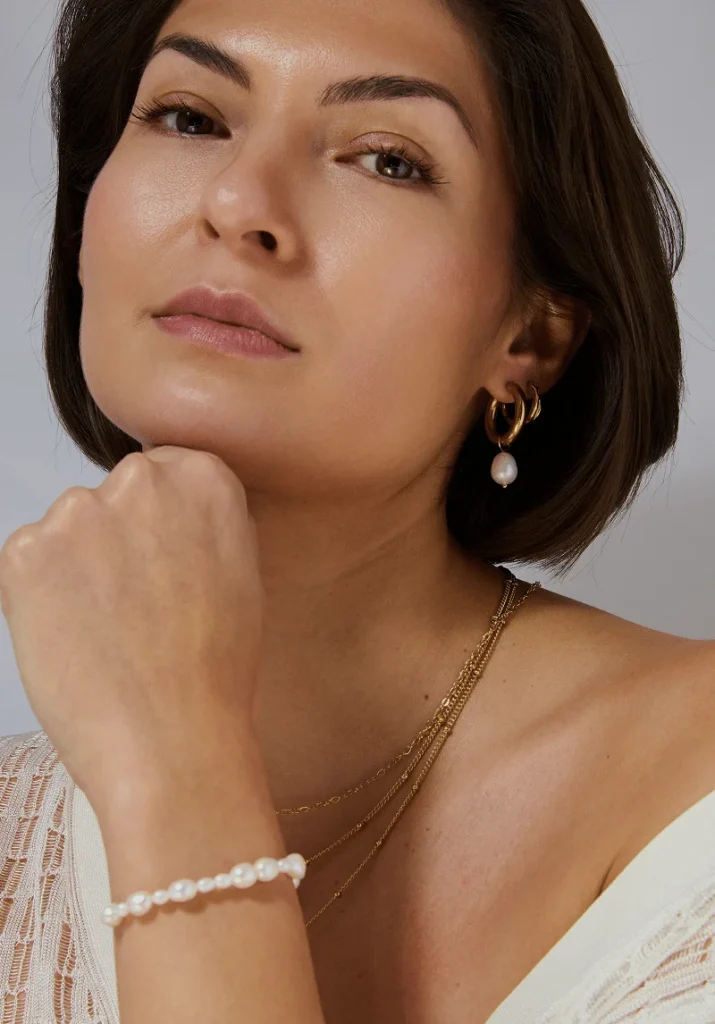


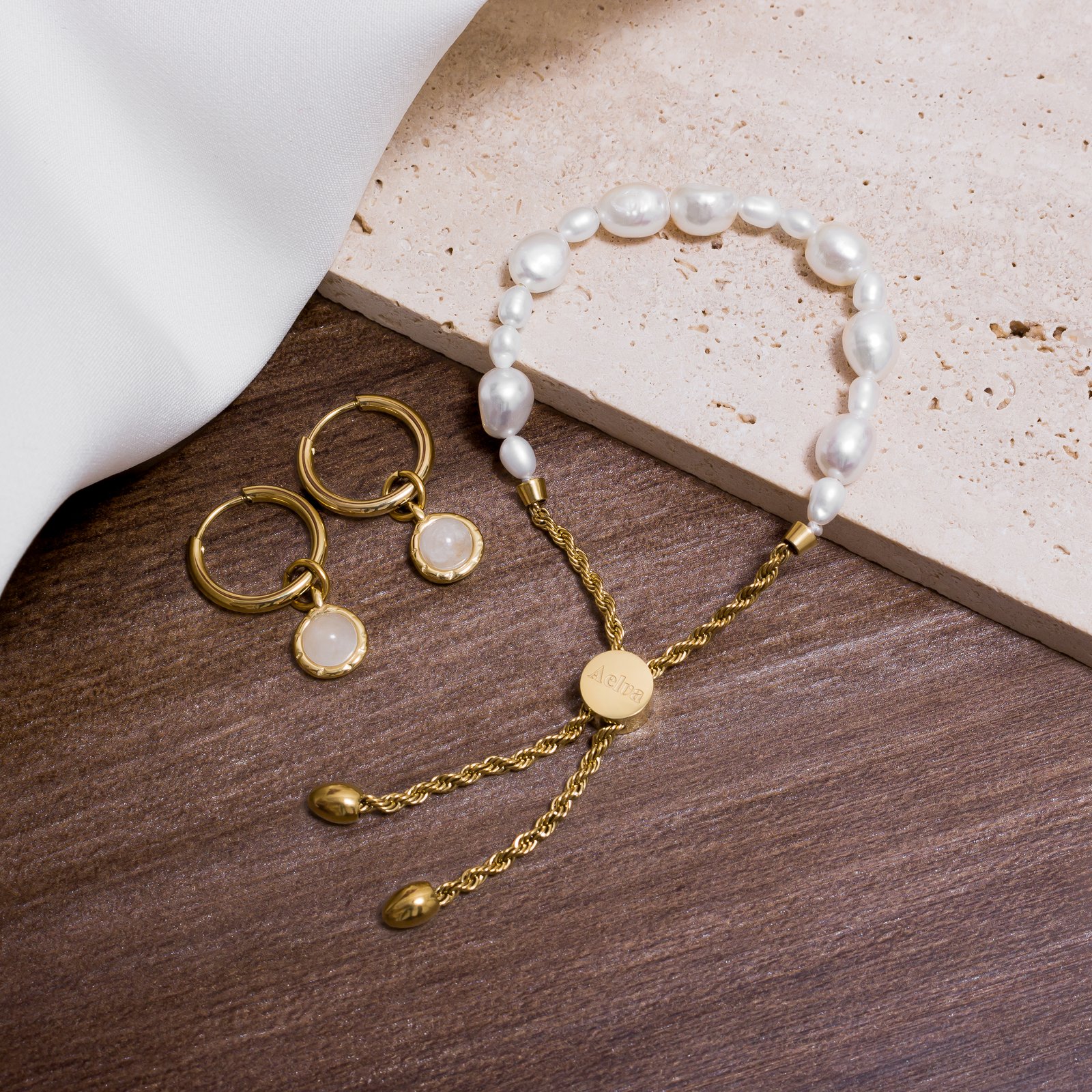
The honeymoon photos are uploaded, the thank-you cards are written, and the jewellery from the day is back in its little box on the shelf, waiting for an occasion grand enough to deserve it. That occasion rarely comes. To wear wedding jewellery after the wedding, start by treating each piece as a single component of your everyday wardrobe instead of recreating the bridal look. Take one piece, wear it with the clothes you already own, and see how it feels. Most wedding jewellery sits in a drawer for weeks, largely because moving it from one context into another feels uncertain. The piece was chosen for a specific day, and now it faces ordinary Tuesdays. Restyling it is a practical question with practical answers, and the sections below work through them.
What should you do with bridal jewellery after the wedding?
The most useful thing to do with bridal jewellery after the wedding is to begin wearing it in ordinary life, soon and without ceremony. The simplest start is to treat each piece as one option in your regular rotation, as ordinary as anything else you own. A necklace with a jumper. Earrings with a weekend outfit. A bracelet through an ordinary week. Most people find this easier than expected: the piece fits their life more readily than anticipated, and the link to the wedding day feels like a pleasant reminder that settles in quickly.
Begin small. In the week after the wedding, wear one or two pieces in everyday settings. This early, repeated wearing does two things. It builds new memories of the piece in ordinary situations, which gradually settle over the original memory of it as bridal. It also gives you practical experience of how the piece actually behaves day to day, which usually confirms it works better in ordinary contexts than you imagined. The more unremarkable you make its everyday wearing, the faster it stops feeling like occasion jewellery.
How do you restyle wedding jewellery for everyday clothes?
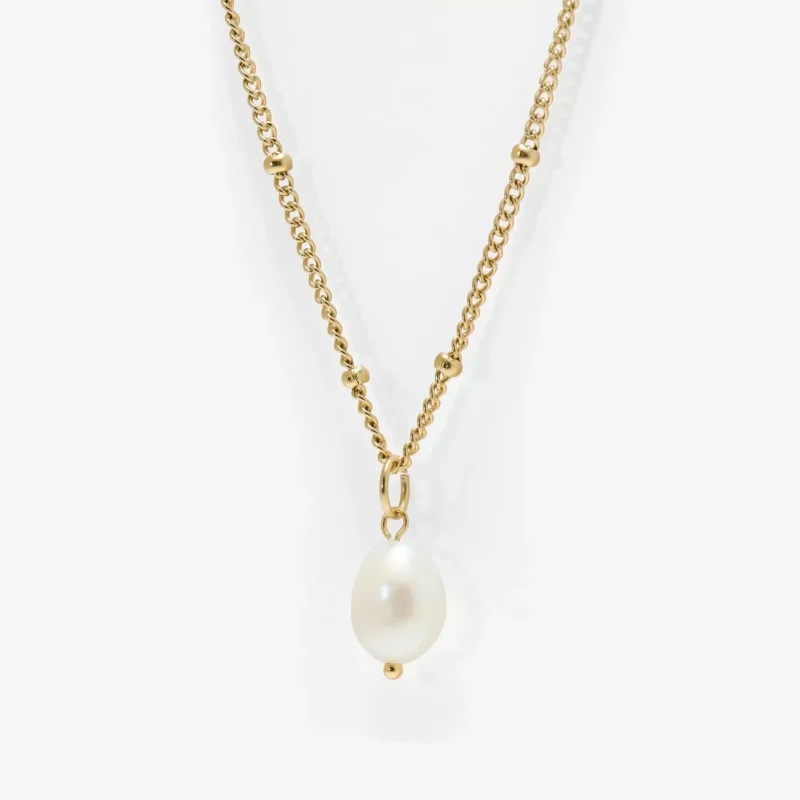
Restyling wedding jewellery works best through contrast: place a refined piece against simpler clothing so it reads as considered and deliberate. A fine pendant from the ceremony takes on a new character with a plain linen shirt and trousers, where the simplicity of the clothing gives the piece room to be present. The same piece worn with another formal outfit competes with the surrounding formality. Small scale, fine construction, and clean design all help a piece sit within varied settings without insisting on where it came from.
Small adjustments to how a piece relates to your appearance also create distance from the bridal context while keeping the piece itself unchanged. A necklace styled with your hair up on the day can be worn with your hair down. A bracelet worn over long sleeves can be worn alone. Experiment with outfit combinations too: a piece that feels off with jeans and a t-shirt may feel right with a casual dress or with work clothes, and each pairing builds an association with your ordinary life.
Why does wedding jewellery feel different once you start wearing it?
Wedding jewellery feels different over time because the intense charge of the original day softens as life accumulates around it. In the weeks just after the wedding, a piece is saturated with the memory of the occasion. As months and years pass, you gather other experiences, and the wedding settles into your wider story. This is a change in how the value is felt, and the value itself holds. The piece becomes less tied to one afternoon and more woven into ordinary life.
Worn pieces develop differently from stored ones. A piece kept aside stays fixed to its original context, because it takes part in no new experiences. A piece worn regularly gathers associations with conversations, working days and quiet moments that have nothing to do with the ceremony. It also changes physically, with a faint patina and the marks of use that record the years. When you look at it later, you tend to remember the years of wearing it as much as the wedding itself. The original occasion becomes the origin point, one part of a larger meaning.
How does wearing wedding jewellery build meaning over time?
Wearing builds meaning because, for many of us, attachment to objects grows through use and repetition, and preservation does little for it. A bracelet worn regularly becomes part of your morning routine, present while you work and move through your day. That steady presence, accumulated across many ordinary days, is what creates emotional weight. The meaning is built by the act of wearing. The more a piece appears in your life, the more it carries.
Wearing a piece again also brings the day back in small, low-key ways. The weight of a bracelet settling on the wrist or the glimpse of an earring in the mirror can prompt a quiet sense of connection without demanding that you stop and remember. This works because a piece worn on the day shares sensory features with the day, so handling it again offers a gentle pathway back to how it felt. The pieces that hold these associations best are the ones worn most often, because frequent wearing keeps the connection within reach and slows its fading.
When does a piece stop feeling bridal and start feeling like yours?
A piece stops feeling bridal once you wear it often enough that you reach for it simply because you like it, with honouring the occasion no longer the reason. This shift usually happens gradually, and it can arrive surprisingly quickly when a piece is worn regularly. Within months, you may catch yourself thinking of it as your favourite necklace first, and the necklace you wore at your wedding second. The endpoint is reached when neither you nor anyone looking at you reads the piece as bridal at all. It simply reads as jewellery that suits you.
This integration is the goal, and it depends partly on the piece having been chosen well in the first place. A piece picked specifically for the bridal context, at odds with how you usually dress, will always feel slightly foreign elsewhere. A piece chosen for its genuine appeal, in the metal you favour and a form you would choose for yourself, transitions naturally from occasion-specific to personal. The wedding becomes a fact about the piece's history, no longer the thing that defines it, and the piece becomes more important as something you wear and live with.
Why does a worn piece carry more than a preserved one?
A worn piece carries more than a preserved one because it keeps gathering associations, while a stored piece holds only the original. There is a common assumption that you protect what you love by keeping it safe and bringing it out rarely. For jewellery suited to daily wear, the opposite tends to hold. Meaning develops through the accumulation of small marks, familiar weight, and the contexts a piece passes through. A necklace worn through a marriage becomes a record of that marriage, holding the years as well as the day it began.
For this to work, the piece needs to be comfortable, versatile and suited to your daily life, which is worth considering when you choose it. A piece kept in a separate case is easily overlooked; one kept among the rest of your jewellery, visible on the same surface, is considered each morning. Moving a piece from a box to the everyday collection is sometimes enough to change how often it is worn.
Frequently asked questions
How soon after the wedding should I start wearing the jewellery?
Soon, even the week after. Early, repeated wearing in ordinary settings builds new associations with daily life and helps the pieces stop reading as occasion-only. There is no need to wait for a special enough day.
How do I style a formal wedding piece with casual clothes?
Use contrast. Pair a refined piece with simpler clothing so it becomes the considered element of the outfit. A fine necklace with a crisp shirt and jeans reads as polished, while the same piece with another formal outfit competes with it.
Is it wrong to wear my wedding jewellery every day?
No. Daily wear builds attachment and lets a piece gather meaning beyond the wedding. Some people prefer to reserve a significant piece for occasions that feel worthy of it, which is also fine; the right rhythm is a personal matter.
Will wearing wedding jewellery regularly damage it?
Well-made pieces in durable, tarnish-free materials hold up to regular wear. Small marks and a soft patina that develop over time are signs of a piece being lived with, and they tend to make it feel more personal.
What if a piece feels too bridal to wear in everyday life?
Restyle it. Change how it sits with your hair, your sleeves, and your outfits, and pair it with simpler clothes. These adjustments build new associations and usually dissolve the sense that the piece belongs only to the wedding.
Related pieces
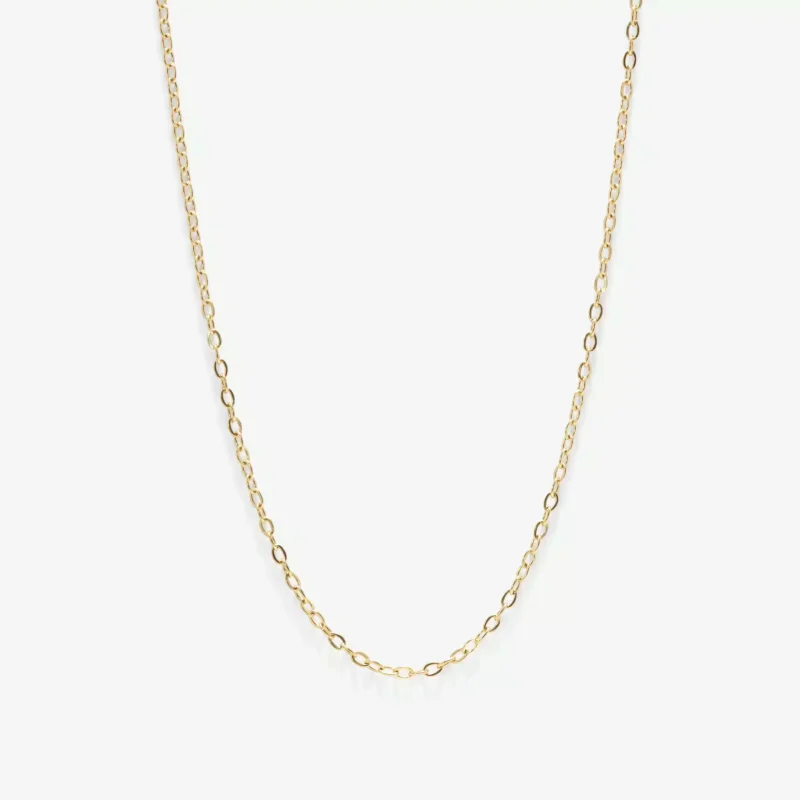
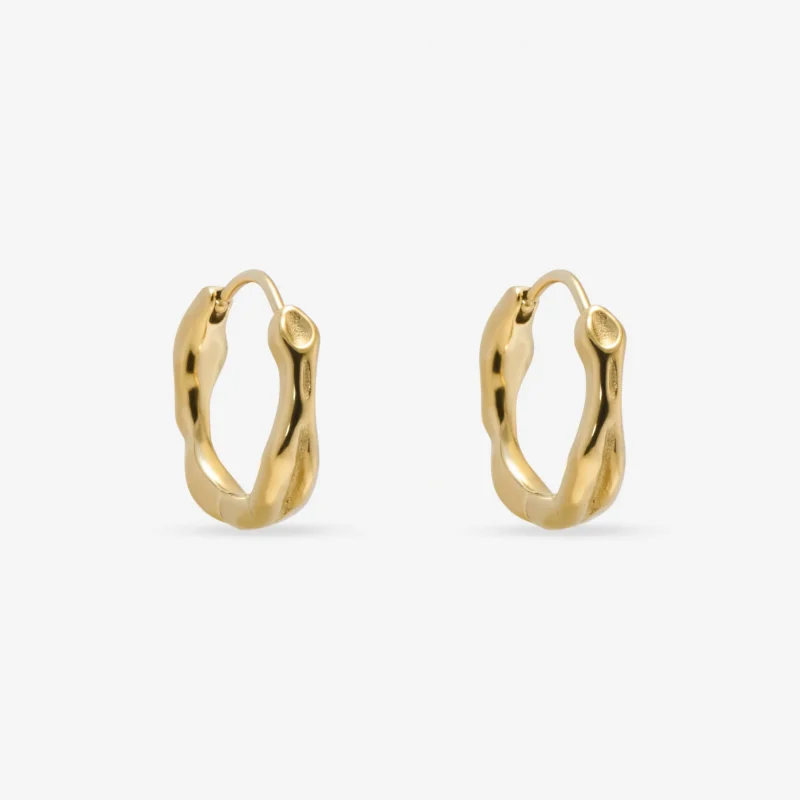
A Dainty Chain is an easy way to keep a wedding piece in daily rotation, fine enough to layer with other necklaces and plain enough to read as everyday instead of occasion-only. Molten Hoop Earrings work the same way: comfortable for long days, simple to pair with ordinary clothes, and suited to the contrast styling that lets a refined piece sit naturally in casual settings. Both are made in a waterproof, tarnish-free material designed for everyday rewear, which is what allows a wedding piece to move from the drawer into the life that follows the day.