

We have all unwrapped a piece that looked lovely in the photo, only to feel its weight in the hand and sense something was off. A few weeks later the colour has gone patchy and the clasp has stopped gripping. Learning the signs of cheap jewellery saves you that small disappointment, and saves the money you spend replacing pieces that were never built to last.
The clearest signs of cheap jewellery are plating that fades or peels, green marks left on the skin, a hollow or very light feel in the hand, weak clasps, fast tarnishing, and a seller who offers no information about what the piece is made from. Once you know what to look for, you can tell within a minute or two whether something is worth wearing every day, and you stop being swayed by a flattering photo alone.
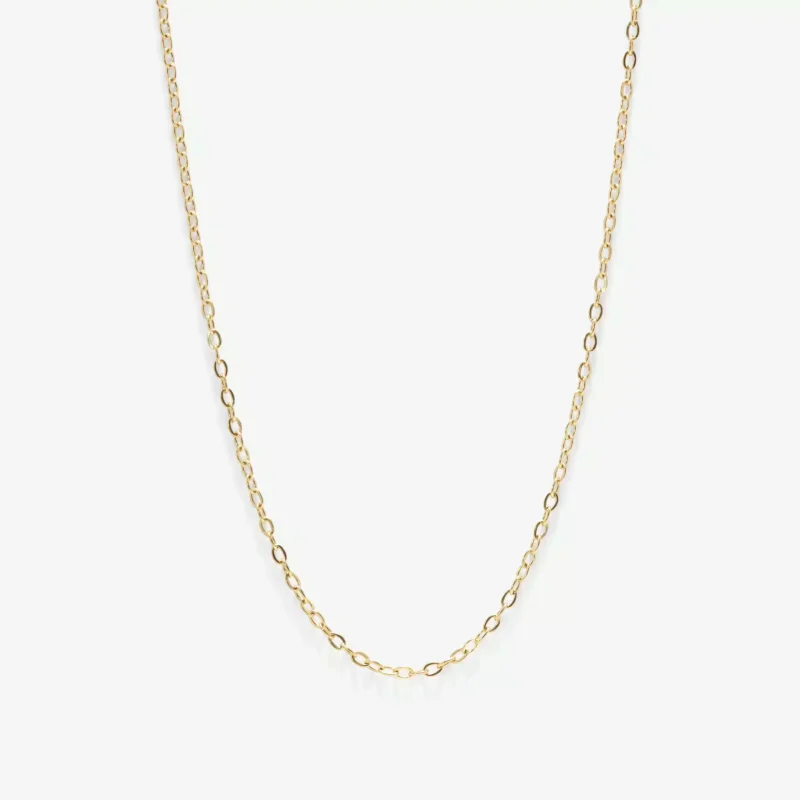
What does cheap jewellery actually mean?
Cheap jewellery, in the sense that matters, is a piece made to look like more than it is. The price might be low or it might be inflated, so cost alone is not the giveaway. What gives it away is the build: a thin layer of colour over a base metal chosen to keep manufacturing costs down, light fittings, and finishing that has been rushed.
None of that shows in a product photo, which is why so many of us have been caught out. The signs appear once a piece is in your hand and on your skin. The good news is that those same signs are easy to read once you know the pattern, and a well made everyday piece announces itself just as quickly. The rest of this guide walks through each sign in turn so you can check a piece in seconds.
Does the plating fade, peel or wear off?
Fading and peeling plating is one of the most common signs of poor quality jewellery. Cheaper gold-tone pieces are usually electroplated with a very thin layer of colour that wears through at the points of most contact: the inside of a bangle, the back of a pendant, the edge of an earring. You will often see the base metal show through within weeks of regular wear.
A more durable finish behaves differently. PVD coating, short for physical vapour deposition, bonds the colour into the surface of the metal at a molecular level, so it holds up to showers, hand cream and daily knocks far better than standard plating. If a seller describes a piece as PVD coated on stainless steel, that is a sign it has been made to keep its colour. A quick way to judge an unknown piece is to look at its busiest edges: if the colour there already looks thin or patchy, the plating is doing its job poorly.
Why does cheap jewellery turn skin green or cause irritation?
Green marks on the skin are a classic sign of cheap jewellery, and they usually point to the base metal underneath. Many low-cost pieces use copper or brass alloys, which react with moisture, sweat and skincare to form compounds that tint the skin green. The reaction is harmless, but it tells you the metal is reactive and the plating is thin enough to let it through.
Irritation is a related warning. Once thin plating wears away it can expose a nickel-containing base, and nickel is one of the most common causes of contact reactions. A piece built on a hypoallergenic base such as surgical stainless steel or titanium, or a PVD-sealed steel finish, is far less likely to leave a mark, because there is no reactive metal waiting to surface. If a piece you wore happily for a month suddenly starts to itch, worn plating exposing the base is a likely cause.
How should quality jewellery feel in your hand?
Weight is one of the most honest signals you have. Quality everyday jewellery has a quiet density to it. A solid stainless steel bangle or a well made chain feels substantial without being heavy, and it settles against the skin. A hollow or very light feel often means thin metal or air pockets, which also tend to dent and bend more easily.
Pay attention to the moving parts too. Run your fingers over the clasp and the links. On a good piece the clasp closes with a clean, confident click and holds firm, and the links sit evenly with no sharp edges or gaps. Weak, floppy clasps and uneven joins are reliable signs that corners were cut where you cannot see them in a photo. A clasp that slips open on its own is one of the fastest ways to lose a piece you liked.
What should a seller tell you about the materials?
One of the quietest signs of cheap jewellery is silence about what it is. A seller confident in their materials will tell you the base metal, the finish, and whether a piece is suitable for sensitive skin. Vague descriptions like gold-tone or fashion metal, with nothing about what sits underneath, usually mean there is a reason the detail has been left out.
Look for specifics. Terms like recycled stainless steel, 14k gold PVD coating, hypoallergenic and waterproof tell you the maker understands the piece and expects you to wear it every day. Clear care guidance is another good sign, because it shows the finish is meant to survive real life, not just a single night out. A maker who explains how to look after a piece has usually built it to be worn often.
How fast does it tarnish, and does that matter?
Fast tarnishing is a sign you can test over a week or two of normal wear. Cheaper pieces dull, darken or develop a film quickly once they meet water, sweat and air, and they often need polishing after only a few outings. That is the metal oxidising, and it tends to speed up as any protective layer wears thin.
A tarnish-free finish is one of the surest signs of a piece built for daily life. Stainless steel sealed with a PVD coating is designed to resist tarnish and keep its colour through showers, workouts and washing up, which is exactly why it suits jewellery you would rather never take off. If colour holds steady over weeks of wear, you are holding something made properly. Buying one well made piece you keep for years usually works out cheaper than replacing a string of cheap ones.
Frequently asked questions
Does cheap jewellery always turn your skin green?
Not always, but green marks are a strong sign of a reactive base metal such as copper or brass under thin plating. A hypoallergenic base or a PVD-sealed steel finish is far less likely to leave any colour on the skin.
Is expensive jewellery always better quality?
No. Price is an unreliable guide on its own. Some inexpensive pieces are well made on a solid steel base, and some costly fashion pieces are thinly plated. Judge by weight, finish, clasp and the materials information instead.
How can I tell if jewellery will tarnish before I buy it?
Check the materials. Pieces described as stainless steel with a PVD coating, or labelled waterproof and tarnish-free, are made to hold their colour. Unspecified gold-tone or fashion metal is more likely to dull quickly.
What is the most reliable sign of cheap jewellery?
A combination tells you most: a thin, easily worn finish, a hollow or very light feel, a weak clasp, and no clear information about the materials. Any one of these is a warning, and several together is a clear answer.
Can good everyday jewellery be affordable?
Yes. A solid recycled stainless steel base with a 14k gold PVD finish gives lasting colour and a hypoallergenic feel at an everyday price, which is what makes it sensible for pieces you wear daily.
Related pieces
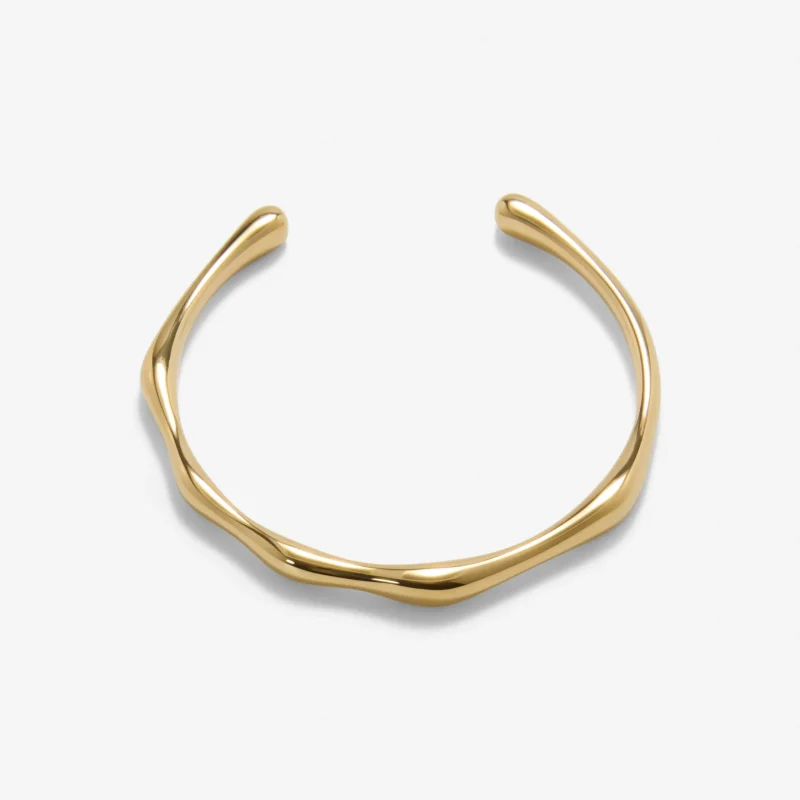
If you would rather buy once and wear it for years, the best sellers are a good place to start, since they are the everyday pieces people reach for again and again. The Molten Bangle is a good example of how quality reads in the hand: a solid recycled stainless steel form with a 14k gold PVD coating that holds its colour through daily wear, hypoallergenic and waterproof, with the kind of weight and clean finish that tells you a piece was made to last.