


It is one of those phrases that sounds good and explains little. You picture old jewellery melted down, or perhaps you wonder whether recycled just means the box it came in. The word turns up everywhere, and the actual meaning is rarely spelled out on the product page.
Recycled jewellery is made from metals that have been reclaimed and reprocessed, putting reused material to work in place of freshly mined ore. The point is straightforward: using recycled metal reduces demand for new mining, which is where most of jewellery's environmental cost sits. Understanding what is genuinely being recycled is what separates a real claim from a label, and it is worth a moment to know what you are actually buying.
What is recycled jewellery?
Recycled jewellery is made wholly or partly from metals that already existed in another form. Those metals are gathered, refined and reprocessed into new pieces, so the same gold, silver or steel can have several lives. Recycled stainless steel and recycled precious metals are common starting points.
Crucially, recycling does not lower the quality of the metal. Refined recycled gold is the same gold; recycled stainless steel performs like any other steel of its grade. The recycled label refers to where the material came from, and it carries no compromise in what the metal can do. That is why recycled metals work perfectly well as the base for everyday jewellery.
The sources are varied too. Reclaimed metal can come from old jewellery, offcuts from manufacturing, and metal recovered from other industries. Once refined, all of it returns to the same pure starting point, which is part of why metals lend themselves to recycling so well in the first place.
Why does recycled metal matter?
The environmental weight of jewellery sits mostly in mining. Pulling new gold and other metals from the ground carries a heavy footprint, so reducing how much new metal is needed is the most direct way to lower a piece's impact. Recycled metal does exactly that: it meets demand without sending fresh ore through a mine.
Because metals can be reclaimed again and again without losing their properties, recycling keeps material in use across many lifetimes. For everyday pieces made in large numbers, choosing recycled metal is one of the clearest ways a brand can reduce the impact behind what it sells.
It is also one of the more honest claims a brand can make, because it points to a concrete material choice that can be checked. Our guide to sustainable jewellery in the UK sets this in the wider context of how responsible jewellery is made and sold.
Is recycled jewellery actually better for the environment?
Used genuinely, recycled metal lowers the demand for new mining, and that is a real environmental benefit. It is also an honest one to make, since it points to a concrete material choice you can check. The benefit is strongest when recycled metal is the main material in a piece.
It helps to keep expectations grounded. Recycled jewellery is a meaningful improvement, though not a zero-impact product, since refining and manufacturing still use energy. The point is to reduce harm where it is largest, and mining is where the largest share sits.
Be cautious of invented certifications and tidy statistics offered without a source. The most trustworthy claims are specific about what is recycled and by how much, and modest about what that achieves. A brand confident in its practice tends to make claims it can stand behind.
Does recycled jewellery last as long?
Recycled materials match the durability of newly mined ones, because the metal itself is unchanged by being reprocessed. A chain in recycled stainless steel is as strong as one in virgin steel of the same grade, and recycled gold behaves like any other gold. Quality comes down to construction and finish, not to the metal's history.
This matters because longevity is itself a form of sustainability. A piece that lasts for years avoids the impact of being replaced, so recycled materials and durable construction work together. A waterproof, tarnish-free finish such as 14k gold PVD on recycled stainless steel is designed to keep a piece in use for the long term.
Put simply, the greenest piece is often the one you keep wearing. Recycled metal lowers the footprint of making it, and durable construction keeps it out of the bin. Our piece on what makes jewellery last covers the details that decide this, from the clasp to the finish.
How do you tell genuine recycled jewellery from marketing?
The clearest sign is specificity. A genuine claim names the recycled material and gives a sense of how much of the piece it makes up, going beyond the word recycled on its own. Recycled stainless steel or recycled precious metals stated plainly carry more weight than a green-tinted slogan.
Look for the wider picture too: recycled materials alongside durable construction and honest information about how a piece is made. A brand that recycles its metal and builds pieces to last is telling a consistent story, and consistency is a good sign.
Be wary of unverifiable certifications and round-number environmental claims with nothing behind them. Brands doing the work tend to be comfortable explaining exactly what they mean, while vague language often signals there is less to say than the label suggests.
What materials are commonly recycled in jewellery?
Stainless steel is one of the most widely recycled metals, and recycled stainless steel makes a strong, affordable base for everyday jewellery. It is durable, holds a finish well, and reduces the need for newly mined raw material. For pieces meant to be worn daily, it is a practical and responsible starting point, and it is skin-friendly, so it stays comfortable all day.
Precious metals recycle well too. Recycled gold and silver are refined back to full purity and reused without any loss of quality, which is why they appear in everything from fine pieces to plated and bonded finishes. When recycled metals are paired with a hard, long-lasting finish, you get a piece that is both lower impact to make and built to stay in use, which is the combination worth looking for.
Frequently asked questions
What is recycled jewellery?
Jewellery made from metals that have been reclaimed and reprocessed, putting reused material to work in place of freshly mined ore. The same gold, silver or steel is refined and reused to make new pieces.
Is recycled jewellery better for the environment?
Used genuinely, yes. Recycled metals reduce demand for new mining, which is where most of jewellery's impact sits. It is a meaningful improvement, though not a zero-impact product.
Does recycled metal affect quality or durability?
No. Recycling does not change the metal's properties. Recycled stainless steel and recycled gold perform like newly mined material of the same grade, so durability depends on construction and finish.
Is recycled gold real gold?
Yes. Refined recycled gold is chemically identical to newly mined gold. The recycled label describes where the material came from, not its quality.
How can I tell if a recycled claim is genuine?
Look for specific detail about what is recycled and how much, alongside durable construction and honest sourcing information. Be cautious of vague slogans, invented certifications and unsourced statistics.
Which metals are commonly recycled in jewellery?
Stainless steel and precious metals such as gold and silver all recycle well. Recycled stainless steel is a popular, affordable base for durable everyday pieces.
Related pieces
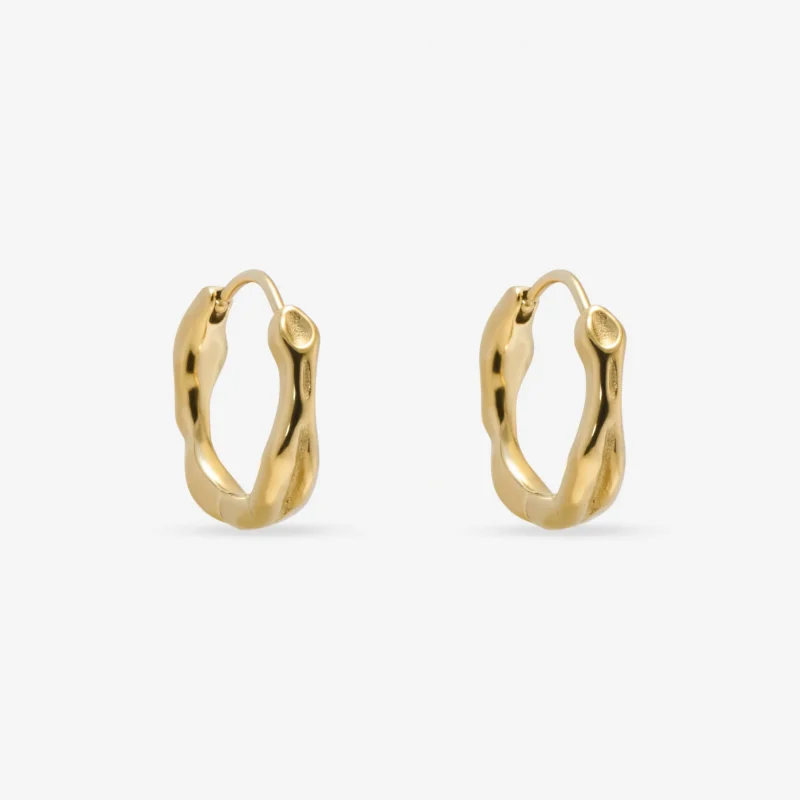
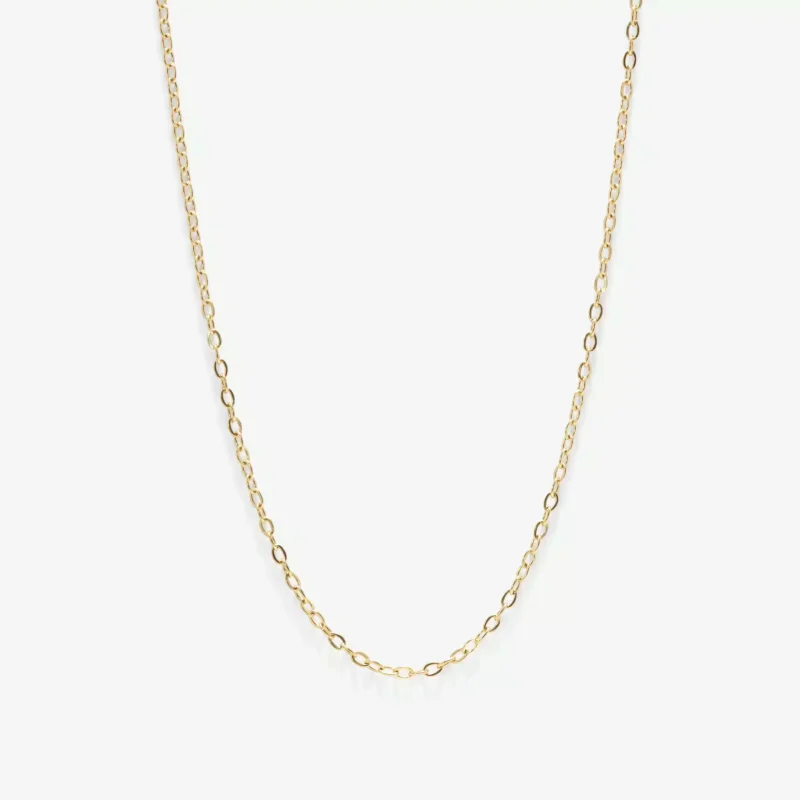
If you want everyday pieces built on these ideas, our best sellers are made from recycled stainless steel with a 14k gold PVD finish: waterproof, tarnish-free, skin-friendly and made to stay in use for years.
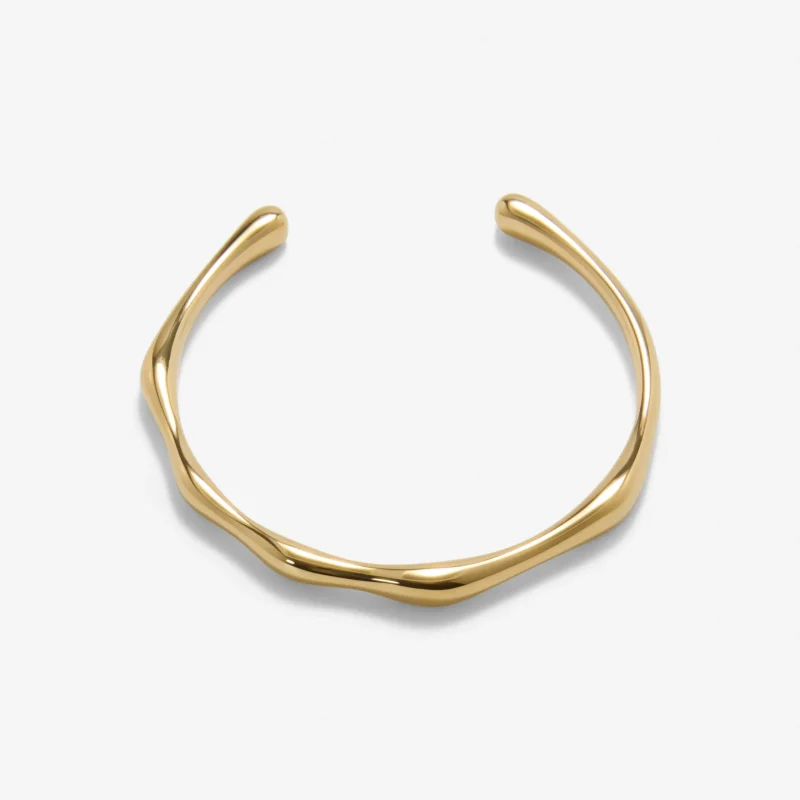
The Molten Bangle shows how recycled metal and durable design come together, a smooth, solid form that holds its colour through showers, workouts and ordinary wear.