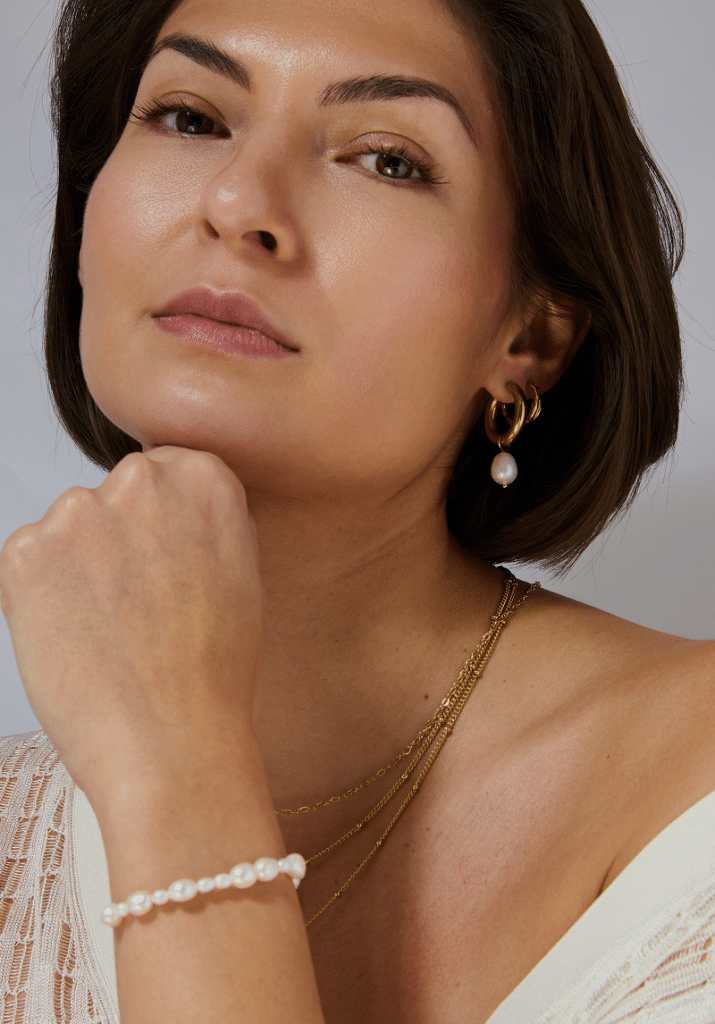


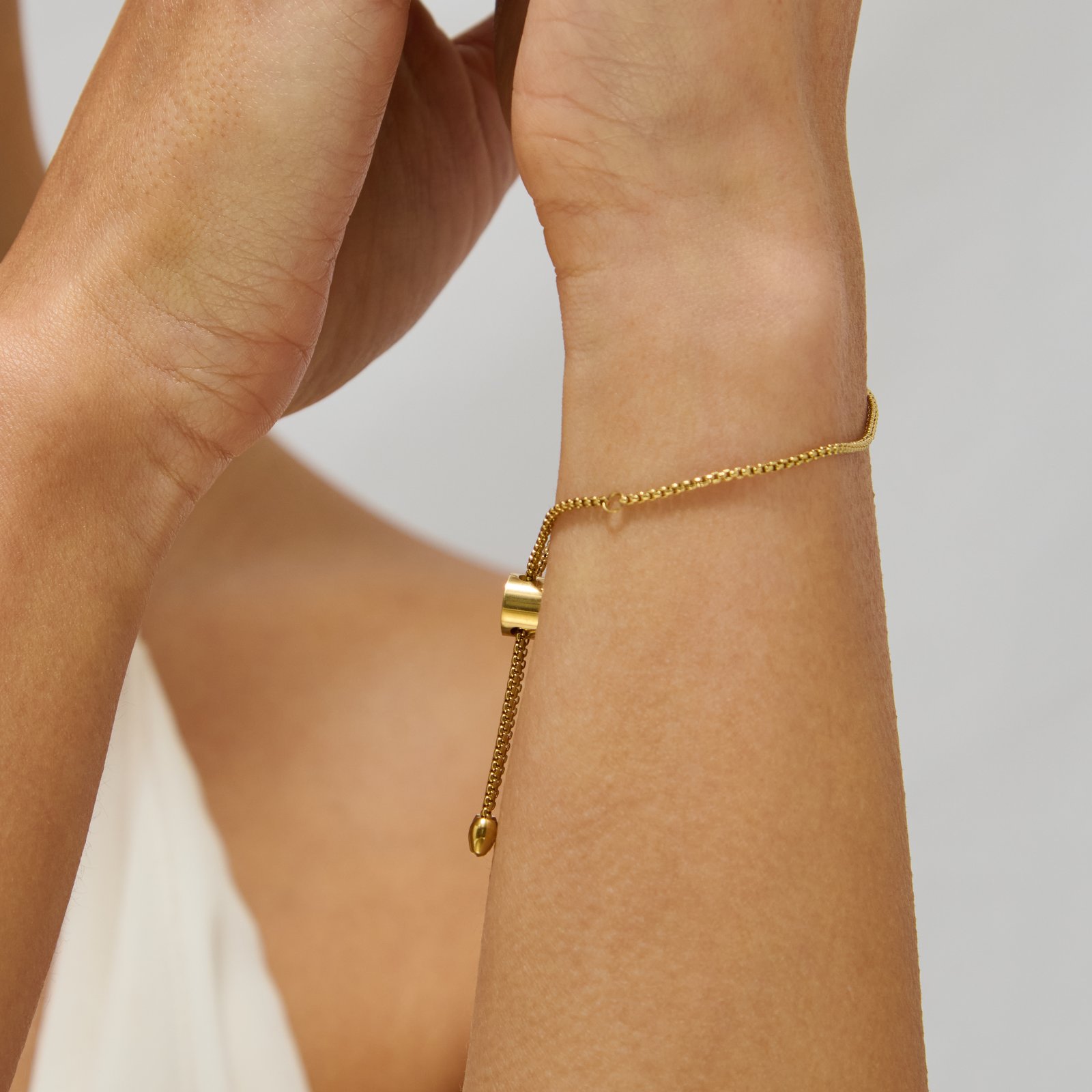
Most of us have one piece we would reach for first if the house were on fire, and it is rarely the most expensive one. That instinct says a great deal. Jewellery is meaningful because it does something most possessions cannot: it stays close to the body, moves through ordinary days, and gathers associations with the people, moments and changes that shape a life. A necklace or a bracelet marks transitions, holds memory and becomes part of how a person understands themselves. This guide looks at where that meaning comes from, why we wear jewellery, and how an everyday piece gathers emotional weight over time.
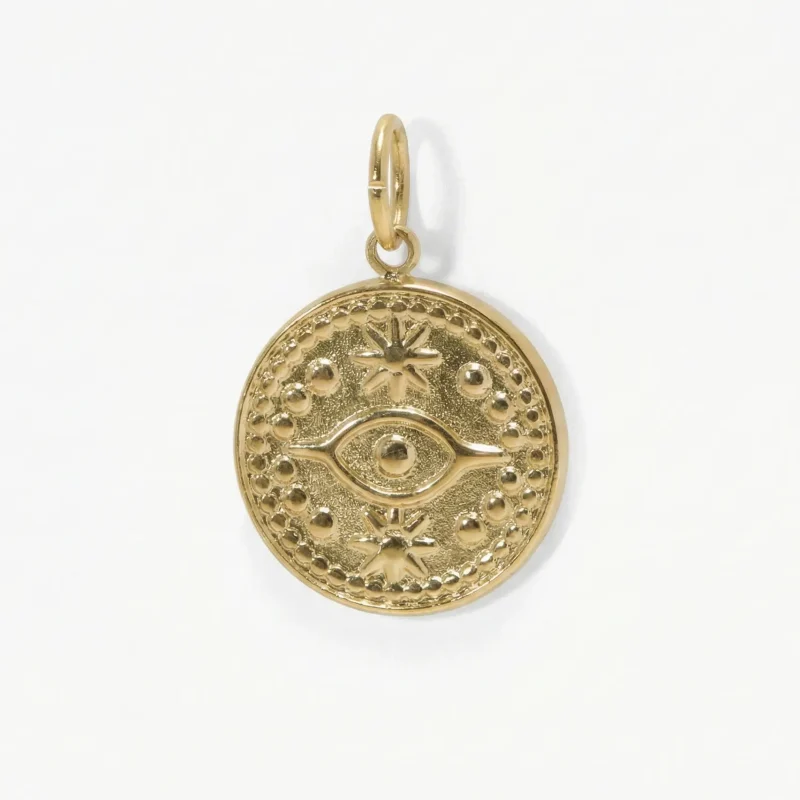
Why do objects carry meaning at all?
Objects tend to carry meaning because the mind reaches for something physical when it wants to hold on to a feeling, a moment or an identity. Jewellery is well suited to this. Clothing covers and protects, furniture serves a structural purpose, while a necklace or a bracelet is almost entirely about meaning. It marks, it declares, it remembers.
This marking function has appeared across cultures and centuries. Small wearable objects have long served as carriers of personal and social significance, from shells to gold to carved bone, while the function has stayed the same. The things people treasure often carry associations that are hard to put into words. They hold memories and relationships in a portable, repeatable form. You can return to an object and re-enter a feeling, which is part of what makes jewellery so persistent.
Why do we wear jewellery?
We wear jewellery for several reasons at once: to mark who we are, to communicate something to other people, and, often, simply because a piece feels right. Most choices about what we wear carry some awareness of how we will be seen, and jewellery is no exception. The pieces a person wears say something about their relationship to tradition, sentiment, practicality or attachment, and they do this at a glance, through the overall impression a person gives.
This communicative function is usually quiet. A delicate necklace worn every day says something different from a statement piece worn occasionally. The frequency and consistency of wear are themselves part of the message, suggesting that the piece is woven into identity. A plain band suggests partnership. An initial necklace suggests personal identity or attachment to someone specific. A charm bracelet suggests a history of accumulated moments.
There is also a private reason for wearing jewellery, one that has nothing to do with an audience. A familiar piece can be a source of physical reassurance: the weight of it against the skin, the small habit of touching a necklace during a difficult conversation. Steady tactile contact from a worn object is often said to have a settling effect, a sense that something stable and known is present. A piece worn for comfort tends toward simplicity, with clean lines and a smooth surface that give a steady sensory experience.
How does jewellery mark the stages of a life?
Jewellery tends to mark life stages because a transition often feels incomplete without something physical to anchor it. Throughout history, pieces have appeared at moments of passage: wedding bands, christening gifts, graduation pieces, jewellery inherited from someone who has died. These reflect a steady human need to attach something tangible to a change.
Significant transitions are often described as moving through three phases: leaving an old state, an in-between period, and arriving into a new one. Jewellery tends to appear at the point of arrival, marking a change once it is complete. A wedding band worn thirty years later still holds the moment of the ceremony, and the transition lives in the object, accessible each time the piece is worn or seen.
Identity shifts over a life, and what we want to wear shifts alongside it. A necklace chosen as you start a new job, earrings bought before a move, a bracelet selected at the beginning of a relationship: these are material markers of a threshold being crossed. Some pieces are set aside once they no longer feel true. Others cross every chapter, holding a thread of continuity, and these tend to be the ones people reach for when their sense of self feels least certain.
Why does a meaningful piece often cost so little?
The price of a piece has little bearing on its emotional value. What matters is association: how often it is worn, who gave it, and which moments it was present for. People often report that the objects they would least want to lose are the ones that have been closest to them for longest, the ones carrying the most associative weight.
An object tends to gather this weight through use. A simple silver bracelet is, at first, just a well-made object. Worn every day for three years, through everything that happened in that time, it becomes something else. Proximity speeds this up: a piece on the wrist or at the collarbone is in near-constant contact, so emotional association deepens faster than it would with something seen only occasionally. An expensive piece kept in a box and worn only for occasions tends to stay an object of monetary value, while a modest everyday piece so often outweighs it.
Why do we gravitate toward certain pieces?
We gravitate toward certain pieces because preference, though it feels intuitive, is built from experience. Familiarity itself tends to increase liking: when we encounter something repeatedly, we usually come to prefer it, even without any new reason to. This shapes taste in jewellery in ways we rarely notice.
Much of it begins early. Jewellery worn by parents, visible in family settings, becomes familiar in childhood, and those early exposures tend to carry weight later. Someone who grew up around gold often gravitates toward gold as an adult, even when no one ever said gold was preferable. Preference keeps developing through adult choices too, building through repeated experience until a style starts to feel like something you simply prefer.
Preference also tends to follow identity. People often choose objects that feel consistent with how they understand themselves. Someone who thinks of themselves as restrained gravitates toward quieter pieces, and wearing those pieces reinforces the sense of restraint in turn. This is one reason the pieces we reach for most often reveal something consistent about us, and the habitual choice is usually the one most likely to become genuinely personal.
Why is meaningful jewellery often understated?
Meaningful jewellery is often understated because its value is internal, and internal value rarely needs to be demonstrated to anyone. When you look at what people treasure most, the quiet piece appears far more often than the striking one: a fine chain with a pendant, a slim bangle, a pair of plain studs in a good metal. The significance they carry is invisible in their appearance.
A piece chosen for personal reasons, because it marks something or connects to a story that belongs only to the wearer, has no audience to convince. That changes the criteria. What matters is the fit between the object and the meaning you want it to hold, and that fit is often better served by simplicity. A quiet piece can be appreciated on its own terms, its material and proportion perceptible in a way they cannot be when a piece is busy asserting itself. Wearing a piece consistently can even shape how a person understands themselves, so the pieces that become personally significant are part of how you build and maintain a sense of self.
Frequently asked questions
What makes jewellery meaningful?
Jewellery becomes meaningful through association more than price. A piece worn regularly, present during significant moments, or given by someone who matters gathers emotional weight over time and comes to feel irreplaceable.
Why do people feel attached to certain pieces of jewellery?
Attachment forms through proximity and repetition. Jewellery sits close to the body and is worn often, so it accumulates associations faster than objects seen less frequently, which is why some pieces feel like part of the person.
Does expensive jewellery mean more than inexpensive jewellery?
Not necessarily. Emotional value comes from contact, memory and association more than cost. An inexpensive piece worn for years often matters more than a costly one kept in a box for occasions.
Why is meaningful jewellery usually simple?
Simple pieces carry less stylistic noise, so they fold into everyday life and gather association easily. Their meaning is private, so they do not need to announce themselves to be significant.
Related pieces
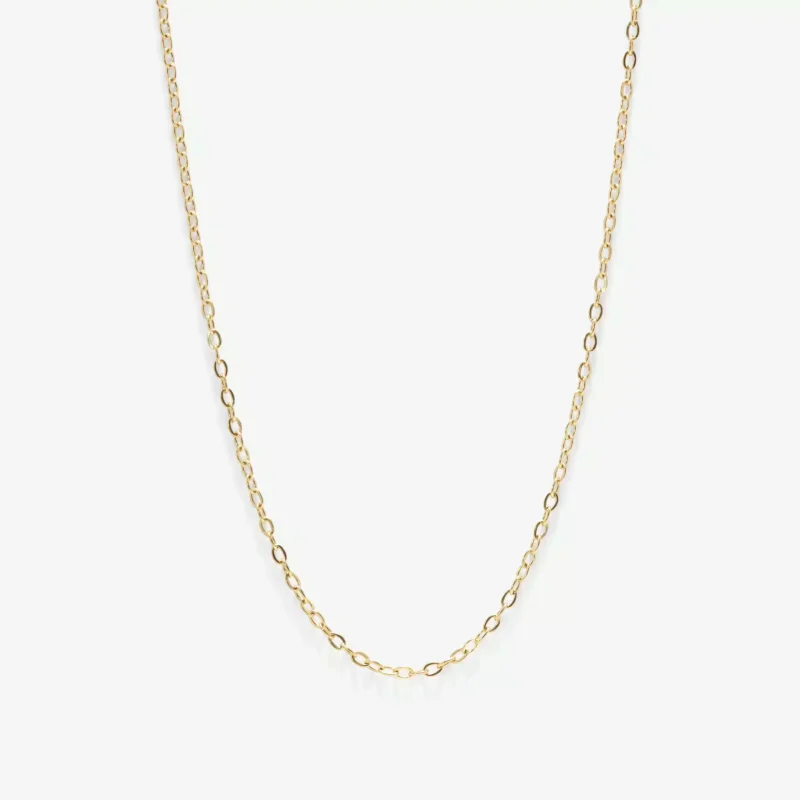
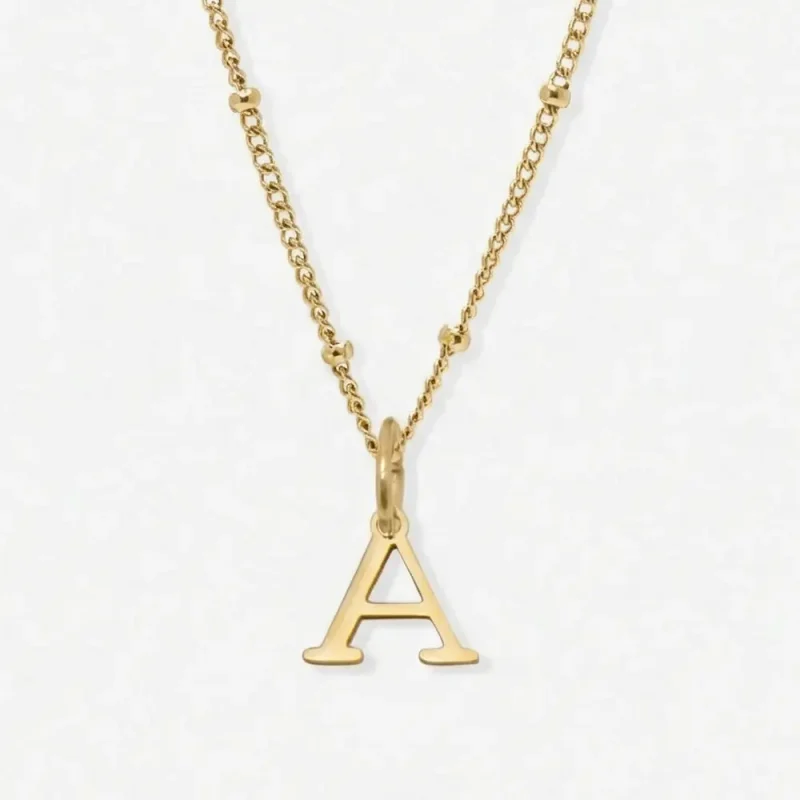
If you want a piece that can become meaningful through everyday wear, a quiet, well-made design tends to serve best. A Dainty Chain sits close to the skin and works across daily life, gathering association the more it is worn. An Alphabet Necklace adds a personal marker, an initial chosen for yourself or for someone specific, while staying minimal enough for every day. Both are made from recycled stainless steel with a 14k gold PVD coating, so they are waterproof, tarnish-free and hypoallergenic, suited to a piece meant to be lived in.