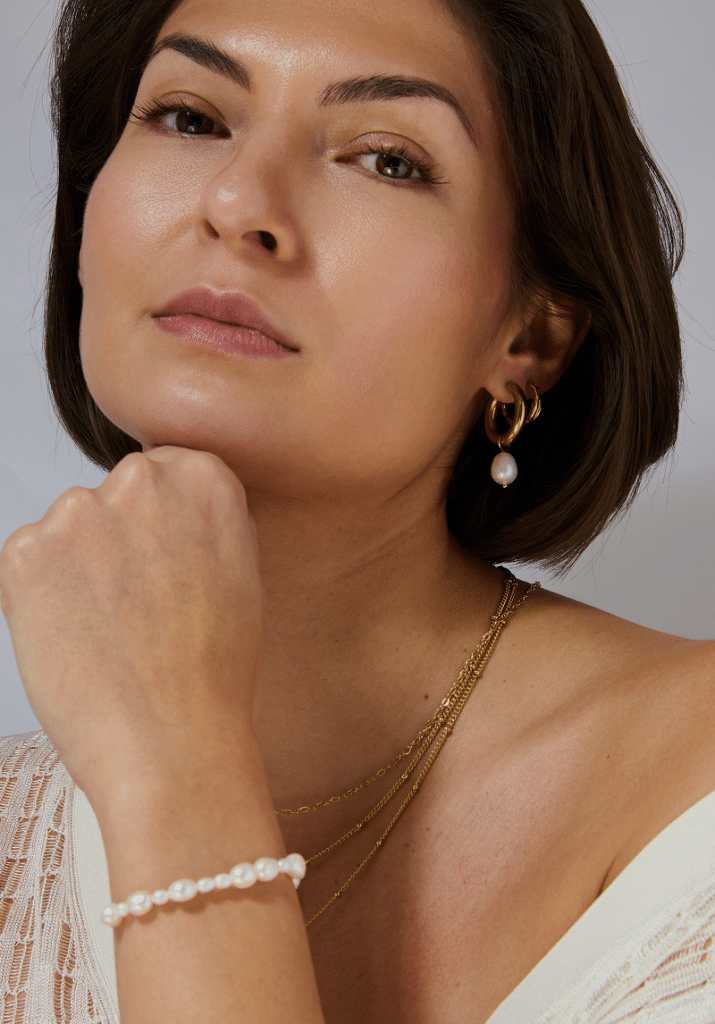


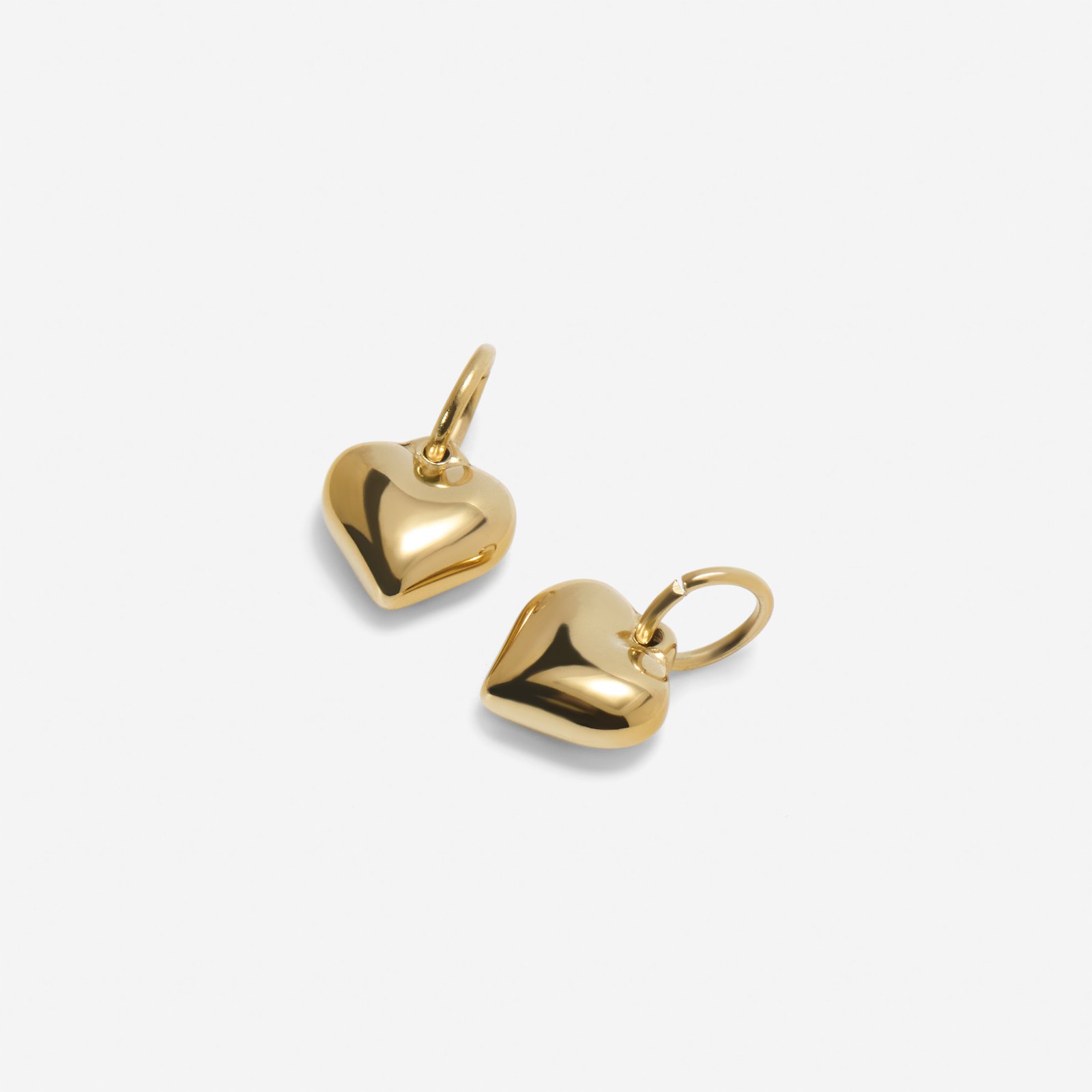
Somewhere along the way most of us picked up the idea that gold and silver should never meet, that a piece in one tone meant committing the whole look to it. Then you see someone wearing both, easily, and it looks modern and entirely on purpose. So, can you mix gold and silver jewellery? Yes, and it reads as deliberate once the pieces share a common thread and one of them clearly leads.
Mixing jewellery means wearing several pieces together, a necklace with earrings and a bracelet, so the eye has to make sense of them as a group. When the pieces relate to each other, the result looks assembled. When they each demand attention, it looks busy. A few specific choices decide which way it goes.
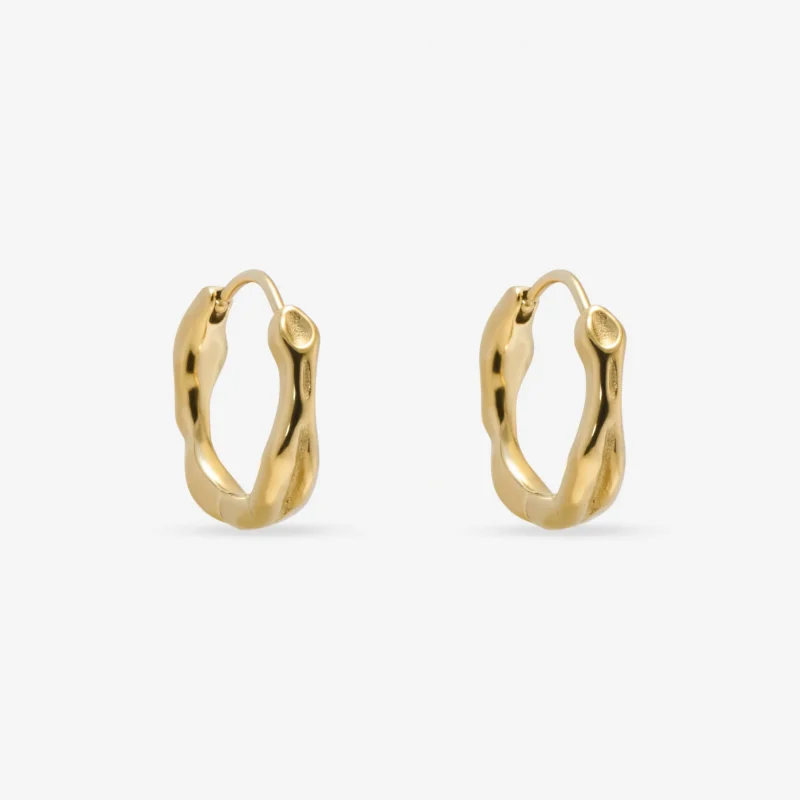
Can you mix gold and silver jewellery?
Yes. Mixing gold and silver jewellery is widely accepted now, and it can look modern and considered. The old habit of keeping every piece in one metal was a convention, with no fixed rule behind it. Worn with intention, two tones add depth that a single tone cannot.
The reason a mismatch sometimes looks careless is that metal tone is one of the first things the eye registers. A silver chain next to gold earrings creates a contrast that is hard to ignore. When that contrast is chosen, it reads as a decision. When it is accidental, it reads as an oversight. The way to make mixed metals work is to repeat each tone deliberately, so the gold appears in more than one place and the silver does too. A gold and silver chain worn together, or a two-tone piece that already carries both, gives the eye a reason to accept the mix.
If two tones feel like too much to manage, sticking to one is the simplest route to a cohesive look. Choosing a primary tone and building most of your pieces around it means almost anything you add will sit together at the level of metal.
What does a common thread do for a combination?
A common thread is the single element that repeats across the pieces and tells the eye they belong together. That thread might be metal tone, finish, or a shared design feeling. At least one of them needs to carry through.
When the pieces share a tone, they read as a set even if their styles differ. A finish does the same: several pieces with a brushed, textured surface hold together despite different shapes. A shared design feeling also works, so a group of pared-back, minimal pieces sits comfortably together even across different metals. The repeating element is what signals that the pieces were chosen with each other in mind.
How do you mix metals across different pieces?
To mix metals across jewellery, anchor the combination so each tone appears more than once and let one tone lead. A single gold piece lost among silver ones looks stray. The same gold echoed in earrings and a chain looks planned. Repetition is what turns a mix into a decision.
A practical way in is to start from a piece that already holds both tones, then build outward from it. That piece does the bridging work, so the rest of the combination has permission to mix. Keeping the styles fairly close in feeling helps too, since matched tones across wildly different styles can still read as scattered. Mixing metals is easier when the pieces share something beyond the metals themselves.
How do you balance weight across several pieces?
Weight here means both how heavy a piece is and how much visual presence it has. A small piece can still read as heavy if it is bold. When you mix several pieces, distributing that weight on purpose is what keeps the look settled.
Three heavy pieces together can feel like too much, and the eye tires of the information. Three very light pieces can feel like not quite enough. A dependable balance gives one piece more presence and keeps the rest delicate. Even weight can work when it is chosen, so three medium pieces can balance through repetition. What reads as messy is weight scattered without intent. Decide whether you want one clear focal piece or an even spread, then build to it.
When does mixing tip into clutter?
Mixing tips into clutter when the individual pieces stop being legible. If someone has to look closely to pick out each piece, and the overall impression is a mass of metal with no distinct items, the combination has gone too far. The threshold shifts with the person, the outfit, and the occasion: a look that reads as elegant at an event can feel like too much in a quiet setting.
A second sign is competition. When every piece is pulling for attention, none of them holds it, and the eye bounces around without settling. The fix is usually to edit. Removing one piece, or swapping it for a lighter version, often makes the rest readable again. The aim is always that each piece can be seen and understood in relation to the others.
Why edit a combination down instead of building it up?
Most people add pieces until a look feels finished: necklace, then earrings, then a bracelet, then perhaps a second chain, stopping once it seems like enough. Editing down works better. Start with everything you might wear, then remove pieces until the combination feels right.
Editing forces a choice about what stays. Each piece has to justify its place, with nothing riding along by default. You often end with fewer pieces than expected, and the ones that remain feel deliberate because you removed whatever added noise without adding sense. This is also how a stack comes together over time: begin with one piece you understand, add a second only when you can say what it brings, and stop when the next addition would just fill a gap. A combination built that way carries its own logic. For a pared-back starting point, see minimal jewellery styling that feels intentional, and for necklaces specifically, how to layer necklaces without overdoing it.
A worked example shows how this plays out. Lay out a gold chain, a two-tone chain, silver hoop earrings, a gold bracelet, and a pearl piece. The two-tone chain carries both metals, so it bridges the gold and silver and earns its place. The gold bracelet echoes the gold in that chain. The pearl piece adds a calm focal point. The silver hoops, with nothing else silver to anchor them, are the piece to set aside. Five becomes four, each tone repeats, and the combination settles.
FAQ
Can you mix gold and silver jewellery?
Yes. Mixing gold and silver is widely accepted and can look modern. Repeat each tone in more than one place, or use a two-tone piece, so the mix reads as a choice.
How do you mix metals without it looking messy?
Anchor the combination so each tone appears more than once and let one tone lead. A piece that already holds both tones makes a useful bridge.
What holds a mixed jewellery look together?
A common thread: a shared metal tone, finish, or design feeling that repeats across the pieces. At least one element needs to carry through.
How many pieces is too many?
There is no fixed number. The limit is reached when the pieces stop being individually legible and read as a single mass of metal.
Is it better to add pieces or take them away?
Editing down tends to work better. Start with everything you might wear, then remove pieces until each one earns its place.
Related pieces
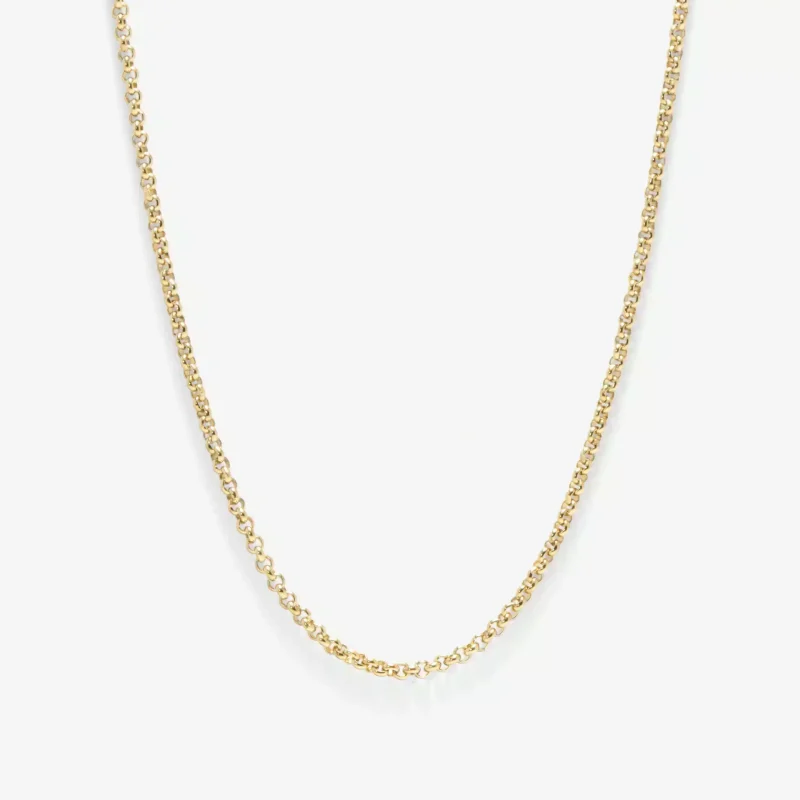
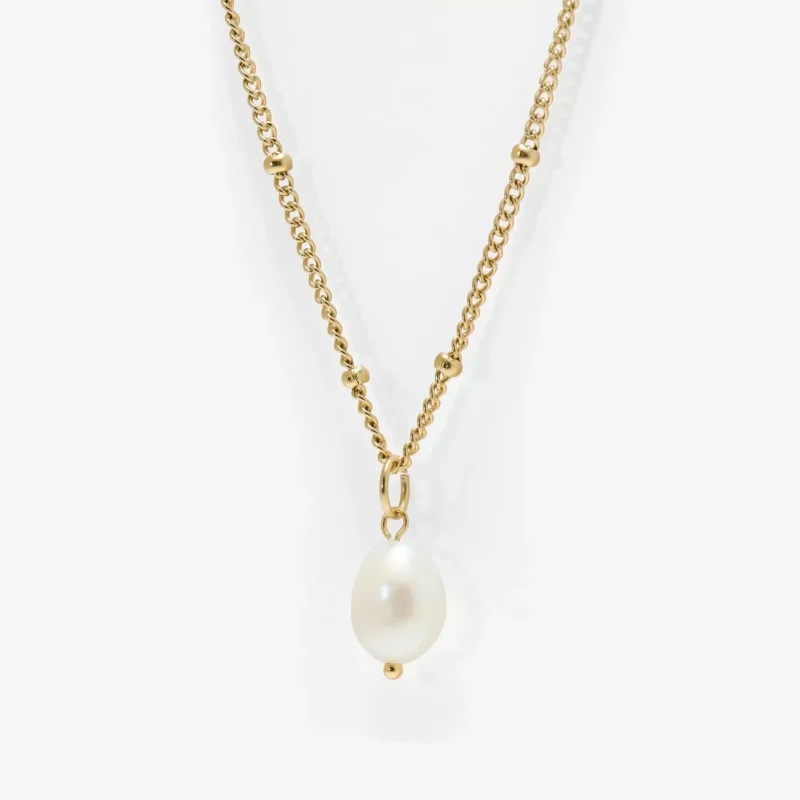
A Rolo Chain gives a mixed combination a steady, even base that pairs easily with other chains and earrings. For contrast in texture and a softer focal point, a Baroque Pearl Necklace brings a different material into the mix while keeping the look calm. Both are made in recycled stainless steel with a 14k gold PVD coating, hypoallergenic and built for everyday wear, so they hold up whether you keep to one tone or mix two.