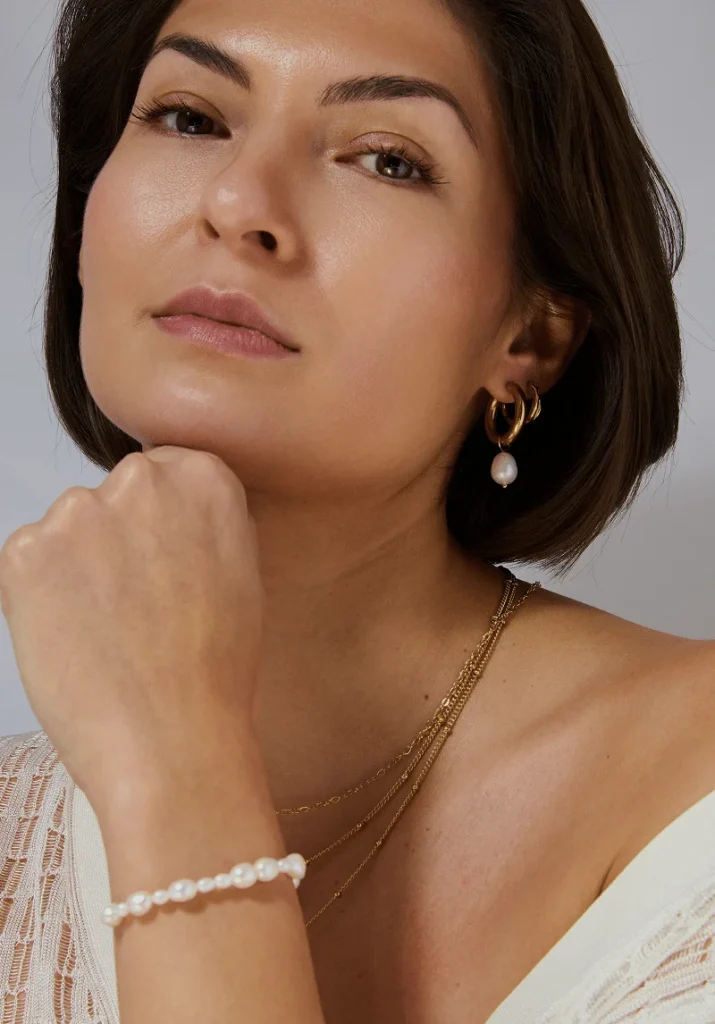


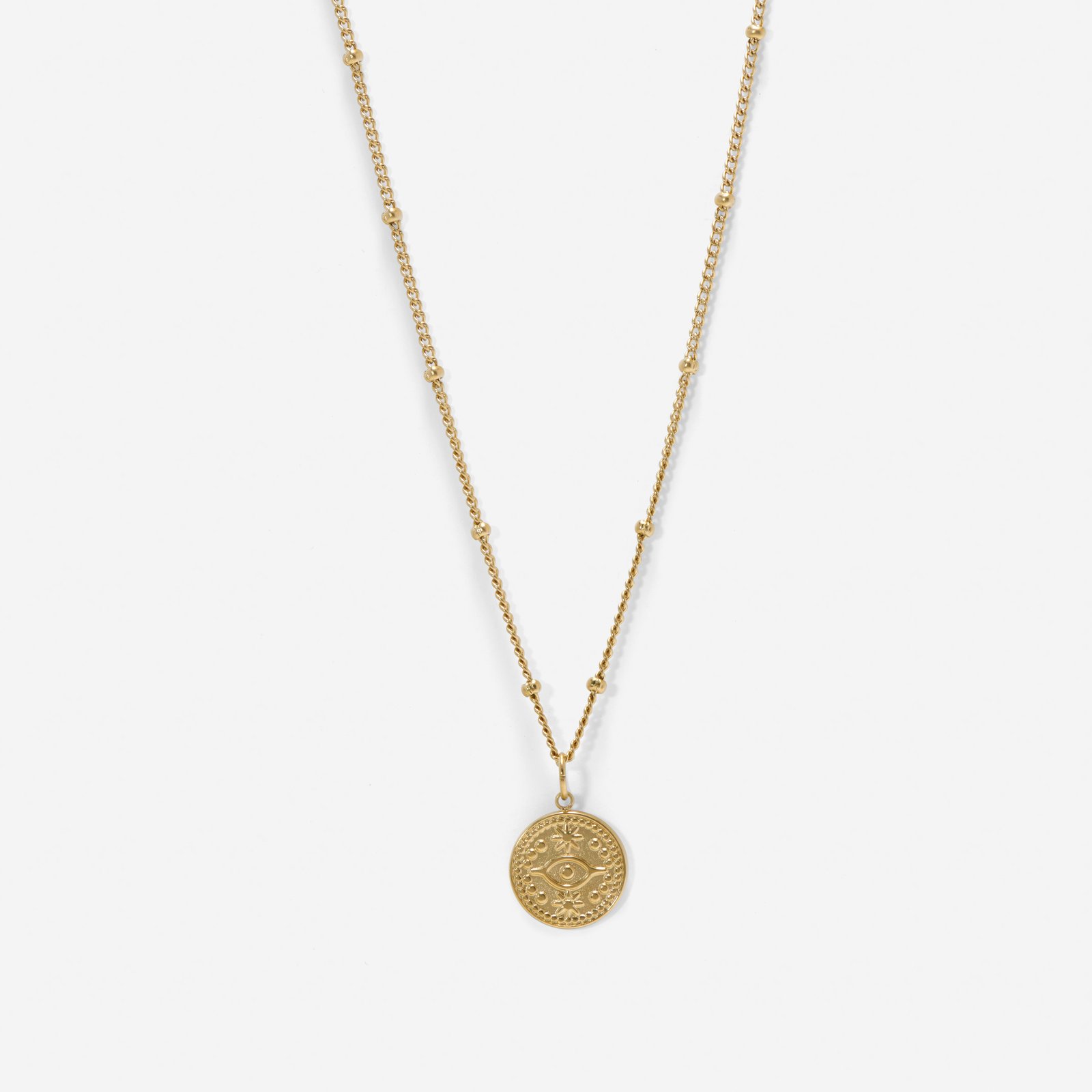
There is a particular comfort in wearing something that feels like it is looking out for you. The evil eye has offered that comfort for a very long time, turning up today on a fine chain at the school gates, on a charm tucked under a work shirt, and on a bracelet passed quietly from one person to another. People reach for it for reasons they do not always say out loud.
In jewellery, the evil eye's meaning is usually described as protection: a charm worn to deflect envy and ill intent. What it represents tends to shift from one wearer to the next, and that openness is part of why it has stayed with us for thousands of years.
An ancient idea, worn close
The belief in the evil eye is old, far older than any of the pieces we wear today. Versions of it appear across the Mediterranean, the Middle East, North Africa and South Asia, and historians trace written references back thousands of years. The core idea has stayed remarkably steady. Envy or ill will, sometimes thought to travel in a glance, is believed to affect a person's luck or wellbeing, and a watchful symbol is worn to guard against it.
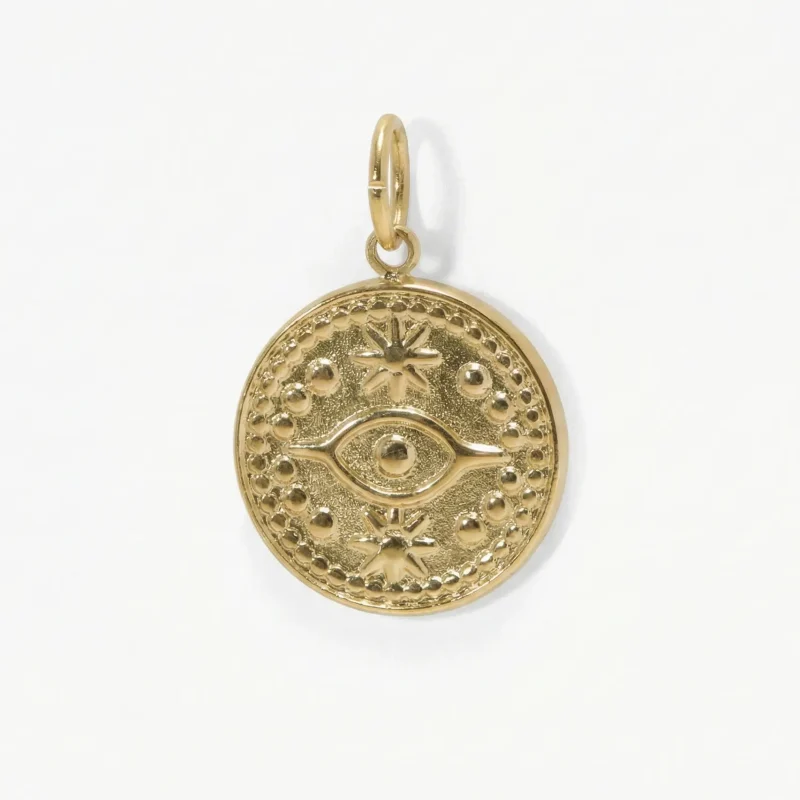
The most familiar form is the nazar, the blue glass bead with concentric circles of dark blue, white and pale blue that seem to gaze back at the world. The same eye motif is worked into gold, enamel and stones, which is how it most often reaches us as everyday jewellery. Keeping it as something you wear is what makes the idea personal. On a chain at the collarbone or a charm at the wrist, it sits quietly through the day, close enough to notice when you want to.
What the evil eye is believed to protect against
Traditionally, the evil eye is worn to turn away envy and unkind intent aimed at the wearer. In many cultures it is seen as a guard for the things people feel most protective of: their relationships, their good fortune, their peace of mind.
It helps to think of it as a reminder as much as a charm. For some people the meaning is spiritual and tied to family or heritage. For others it is gentler, a small daily nudge to stay grounded and let other people's opinions weigh a little less. Both readings sit comfortably together, and many wearers hold a bit of each.
Is the evil eye religious, cultural, or simply beautiful?
The evil eye belongs to many traditions at once, with no single one able to claim it. The belief appears in Greek, Turkish, Middle Eastern, North African and South Asian cultures, among others, and it has been woven through several faiths over the centuries without being owned by one.
That breadth is why people wear it so differently. For some it is a genuine spiritual safeguard, tied to family and the people who gave it to them. For others it is a cultural connection, a link to where they or their loved ones come from. And for many it is simply a motif they find beautiful and quietly reassuring. None of these readings is more correct than the others, which is a large part of the symbol's appeal.
Why people wear it at the chest or wrist
There is a reason so many evil eye pieces are necklaces and bracelets. Worn at the chest, near the heart, the symbol is often said to look after the emotional side of life, the parts of us that envy is thought to find. On the wrist it stays in view as you move, a quiet companion you catch sight of through the day.
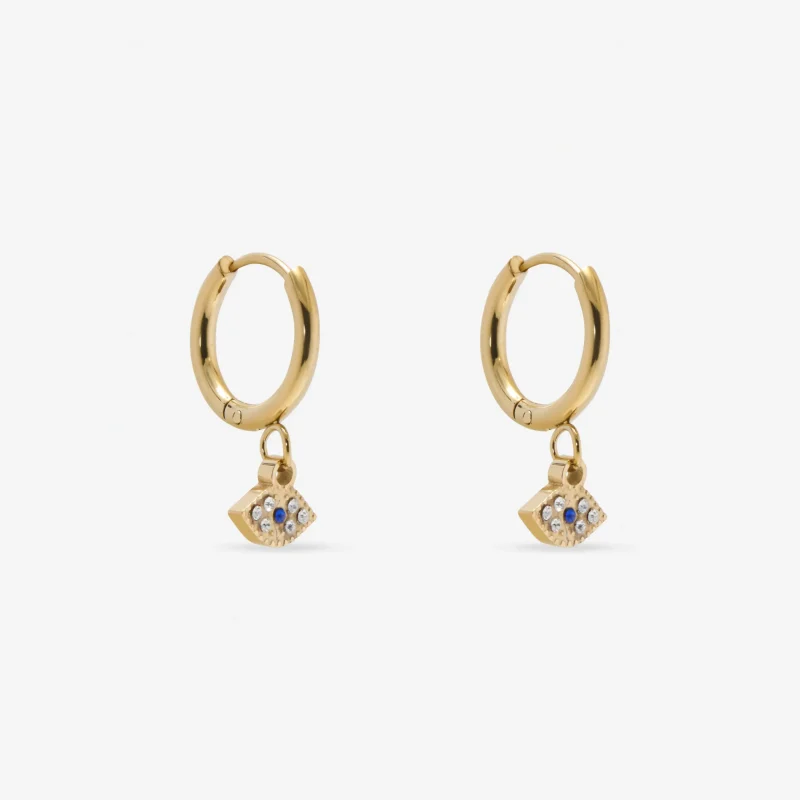
The placement is partly practical and partly personal. A necklace tucks neatly under clothing and layers with other chains, while a bracelet or a huggie earring keeps the meaning visible. Most people simply settle on what feels right for them. Some people wear more than one, a charm at the throat and a matching huggie at the ear, so the symbol shows up wherever their eye happens to fall during the day.
What the colours are said to mean
The classic evil eye is deep blue, and blue is the shade most associated with protection. Other colours carry their own associations in popular tradition. Lighter blue is often linked with calm and focus, while green, red and purple are sometimes tied to luck, courage or clarity.
These meanings vary from one source to another, so they are best treated as a layer of intention you can choose to read into, or leave aside. In practice, picking a colour you are naturally drawn to tends to be meaning enough. If you are giving or choosing a piece for someone else, a colour can also be a quiet way to fold in a wish for them, calm for a stressful season, courage for a new chapter, without saying any of it out loud.
The evil eye as a gift
The evil eye has long been given as much as worn. In many families it is offered at moments that feel hopeful or a little exposed, a new baby, a new home, a fresh start, as a way of wishing someone well and watching over them from a distance.
That is part of what makes it such a thoughtful piece to give. It carries a warmer message than most jewellery: I am thinking of you, and I want you looked after. A small charm on a fine chain or a pair of huggie earrings makes the gesture easy for someone to wear every day, which is usually when these pieces mean the most.
How to choose an evil eye piece you will actually wear
A symbol kept in a drawer looks after nothing, so the most useful thing is to choose a piece that fits your everyday life. A small evil eye charm on a fine chain slips under a collar and layers easily with other necklaces. A huggie earring or a delicate bracelet suits people who like their meaning subtle and close.
Because these are pieces made to be lived in, material matters more than it first seems. A waterproof, tarnish-free finish such as 14k gold PVD on recycled stainless steel keeps its colour through showers, workouts and long days, so the piece stays with you through exactly the moments it is meant for. The point of an everyday talisman is that you never have to take it off.
Frequently asked questions
What does an evil eye necklace mean?
It is traditionally worn as a symbol of protection, believed in many cultures to guard against envy and negative intent. For many wearers it also works as a personal reminder to stay grounded.
Is the evil eye actually protective?
The evil eye has long been worn as a protective charm, though this is a cultural and personal belief, not a proven effect. People wear it for the meaning and reassurance it carries.
What colour evil eye should I choose?
Deep blue is the most traditional and the one most linked with protection. Other colours carry their own popular associations, so choosing one you are drawn to is a good guide.
Can anyone wear an evil eye?
Yes. It is worn widely across cultures and is generally seen as a welcoming, protective symbol. Many people wear it simply for the meaning and reassurance it offers.
Is it better as a necklace or a bracelet?
Both are popular. A necklace sits near the heart and layers well, while a bracelet stays in view through the day. It comes down to how you like to wear meaning.
Related pieces
If the idea appeals, an Evil Eye Protection Charm on a fine chain is an easy way to keep it close, and the Evil Eye Huggie Earrings carry the same meaning in a subtler, everyday form. Both are made from recycled stainless steel with a 14k gold PVD finish, so they hold their colour through daily wear.