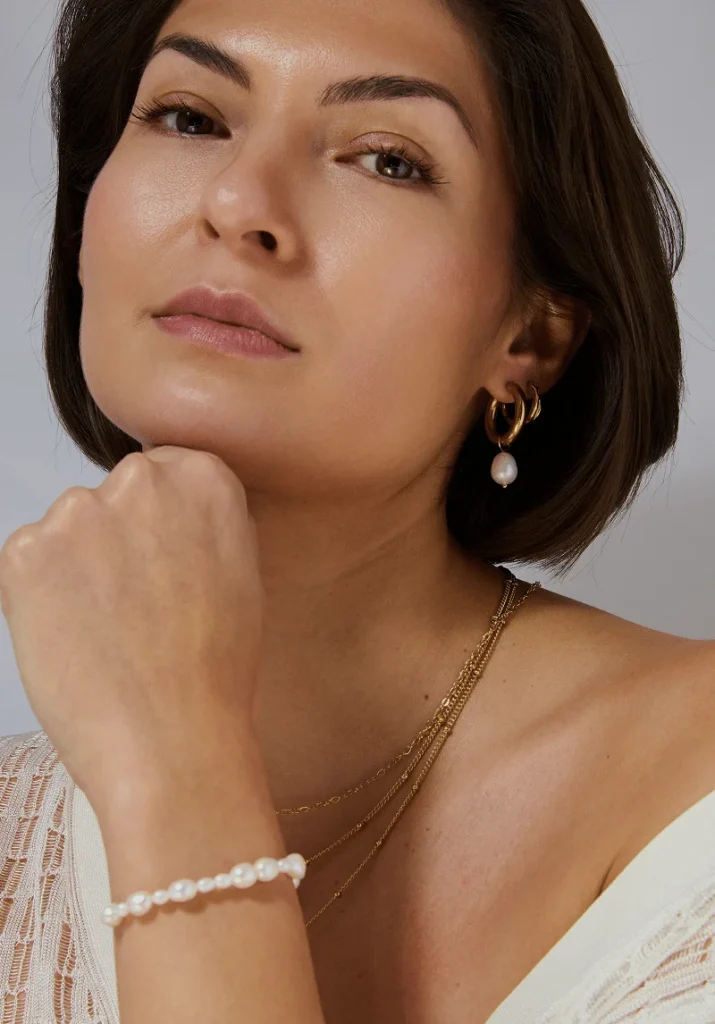


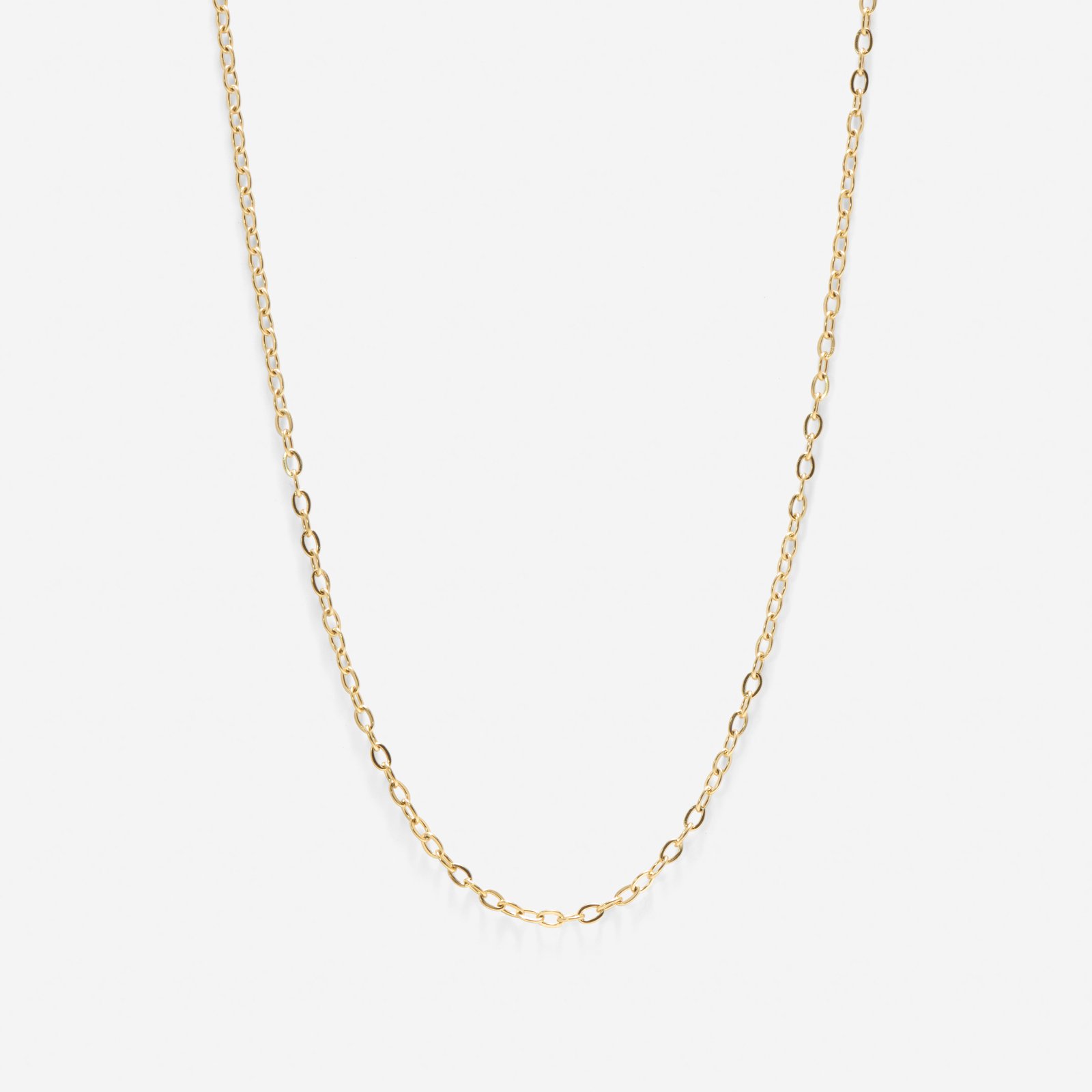
Stand in front of two gold chains in a shop and they can look identical, the same warm colour, the same shine, sometimes a similar price. The difference shows up months later, when one still glows and the other has dulled at the clasp. That difference is what these three terms are really describing.
When comparing gold vermeil vs gold plated vs gold filled, the answer comes down to how much gold sits on the piece and how firmly it is held there. Gold vermeil is sterling silver with a gold layer of at least 2.5 microns. Gold plated is a thin gold layer, often under 0.5 microns, over a base metal such as brass or steel. Gold filled bonds a thick gold layer to the base mechanically, making up at least 5 percent of the total weight. Gold filled lasts longest of the three, vermeil sits in the middle, and standard plating wears soonest. PVD-coated stainless steel is a separate route built for everyday and waterproof wear, which we cover below. Since all four can look near identical in the shop, knowing what sits under the colour is the only reliable way to judge how long a piece will hold up.
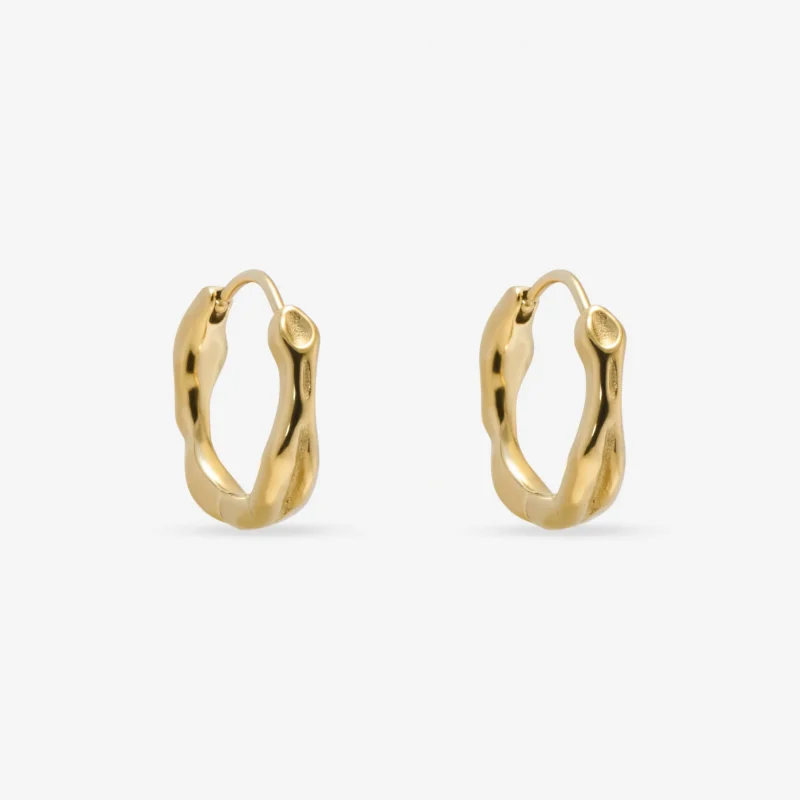
What is gold vermeil?
Gold vermeil is a sterling silver base coated with a layer of gold at least 2.5 microns thick. The 2.5 micron figure is a regulated minimum in several markets, which is part of why vermeil carries more trust than the word plated on its own. The silver underneath gives the piece some value of its own, and the thicker gold layer holds its colour longer than a thin flash of plating. A micron is a thousandth of a millimetre, so a regulated vermeil layer can be several times the thickness of a cheap flash of plating, and that shows directly in how the two age.
The gold layer sits on the surface and is held by adhesion, so vermeil can wear over years of heavy daily use, particularly at points that rub against clothing or skin. Worn occasionally and looked after, a vermeil piece keeps its finish well. The silver base does mean vermeil struggles with constant water exposure, since silver can tarnish where the gold layer thins. Kept dry, stored away from other pieces, and saved for occasions, vermeil offers a genuine gold finish over a precious base at a reasonable price.
What is gold plated jewellery?
Gold plated jewellery is a base metal, usually brass or steel, with a thin gold layer applied by electroplating. Standard fashion plating is often under 0.5 microns, and that thinness is the whole story of how it wears. An electric current pulls gold ions from a solution onto the surface, where they form a soft layer held by adhesion. The amount of actual gold involved is very small, which keeps the price low and explains why the colour fades under steady use.
The thin layer looks identical to richer finishes in the shop, and for a piece worn now and then it does the job at a low price. Worn every day, the coating tends to wear through at high-contact spots first, such as a clasp or the back of an earring, and the reactive base metal underneath then shows and discolours. Plating can be reapplied, though for inexpensive pieces re-plating usually costs more than the item is worth. For a fuller comparison of how plating behaves over time, see PVD and gold plating compared.
What is gold filled jewellery?
Gold filled jewellery has a thick layer of gold mechanically bonded to a base metal under heat and pressure, and that gold must make up at least 5 percent of the total weight. This is a far heavier gold content than plating, and the bonding method means the layer holds firm where thin plating can flake away. It is the most durable of the three traditional finishes here, and it is often marked with a karat figure such as 14k gold filled or the fraction 1/20 14k, which states the proportion of gold by weight.
In practice a gold filled piece can hold its colour for many years of regular wear and often outlives the wearer's interest in it. The trade-off is price, since the higher gold content costs more than plating or vermeil. Gold filled also responds well to gentle cleaning and asks nothing of the re-plating that thin pieces need, so once bought it asks little of you beyond keeping it clean and dry.
Which gold finish lasts longest?
Of the three, gold filled lasts longest, followed by gold vermeil, with standard gold plating wearing soonest. The ranking follows the amount of gold and how firmly it is held. Gold filled has the thickest, mechanically bonded layer. Vermeil has a regulated minimum thickness over silver. Thin plating has the least gold and the weakest hold, so it is the first to show wear at the points that take the most handling.
How a piece is worn matters as much as the finish. A vermeil necklace kept for occasions can outlast a daily-worn plated chain by years, simply because it faces less friction, water and handling. The honest way to judge longevity is to match the finish to how often, and how roughly, you plan to wear the piece. Cost per year of wear tells you more than the price on the label, and on that measure a durable finish worn for years usually beats a cheap one replaced every few months.
Where does PVD-coated stainless steel fit in?
PVD on stainless steel is a separate process from all three gold finishes, and it is built for everyday and waterproof wear. PVD stands for physical vapour deposition: in a vacuum chamber the coating material is turned into a vapour that settles onto the metal and bonds with it at a molecular level, forming a hard, dense layer. The result resists abrasion and tarnish far better than electroplated gold, which is why it suits pieces that face water, sweat and constant handling.
The base matters too. Stainless steel, especially 316L, is hard and corrosion-resistant, so it supports the coating and holds up in water and sweat. A gold-toned PVD coating over recycled stainless steel reaches close to the everyday durability of solid metals at a lower price, which suits a chain or pair of earrings you wear most days and take into the shower. If you want the process in full, read what PVD jewellery is. For pieces kept for occasions, vermeil or gold filled remain strong choices, while PVD on steel earns its place on the pieces you never take off.
How to read a product listing
Listings do not always spell out the finish, so a few terms tell you what you are buying. Gold filled, with a karat marking such as 14k gold filled, points to the thick bonded layer and the longest wear. Vermeil tells you 2.5 microns of gold over sterling silver. Gold plated or gold flash with no stated thickness usually means a thin electroplated layer. A listing that names PVD and a stainless steel base signals a finish made for daily and waterproof wear.
When a seller states the base metal, the method and, where relevant, the thickness or karat, you can match the piece to your life. Ask if the page is vague, since a maker who knows the answer tends to share it, and an answer of we are not sure is a useful signal in itself. Pairing the finish to your habits, daily or occasional, wet or dry, is what turns a sensible purchase into one that still looks right years later.
Frequently asked questions
What is the difference between gold vermeil and gold plated?
Gold vermeil is sterling silver with a gold layer at least 2.5 microns thick, a regulated minimum. Gold plated is a thin gold layer, often under 0.5 microns, over a base metal such as brass or steel. Vermeil has more gold and a silver base, so it holds its colour longer.
Is gold filled better than gold plated?
For durability, yes. Gold filled has a thick gold layer bonded to the base under heat and pressure, making up at least 5 percent of the weight, so it lasts far longer than thin plating that wears through at contact points within months of daily wear.
Which gold finish lasts longest?
Gold filled lasts longest, then gold vermeil, then standard gold plating. The order follows the amount of gold and how firmly it is held. For everyday and waterproof wear, PVD on stainless steel is a hard-wearing alternative to all three.
Does gold vermeil tarnish?
The gold layer itself does not tarnish, but vermeil sits over a silver base that can tarnish where the gold wears thin, especially with frequent water exposure. Keeping it dry and storing it well helps the finish last.
Related pieces
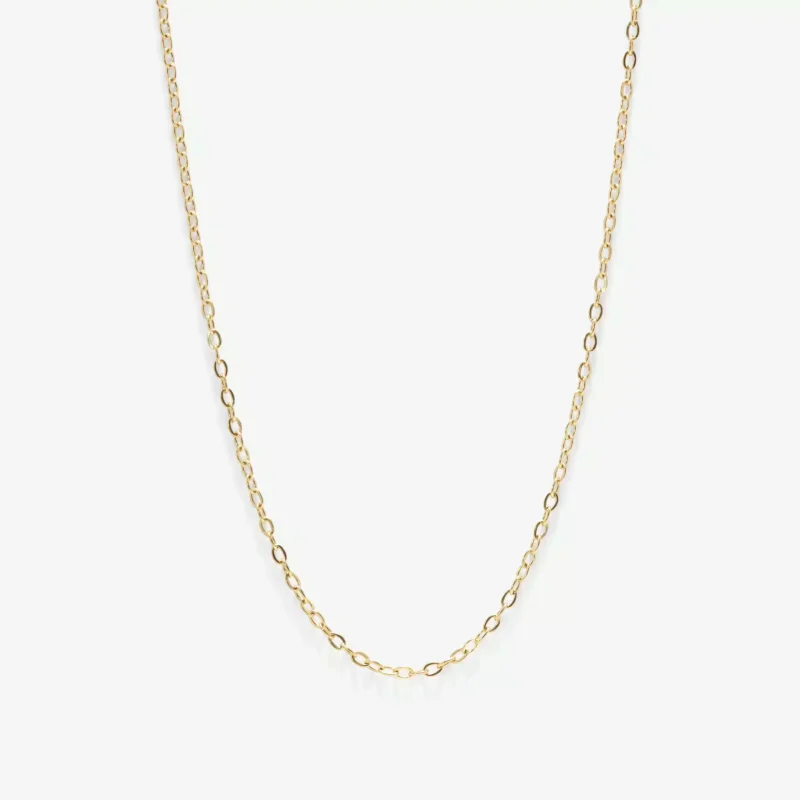
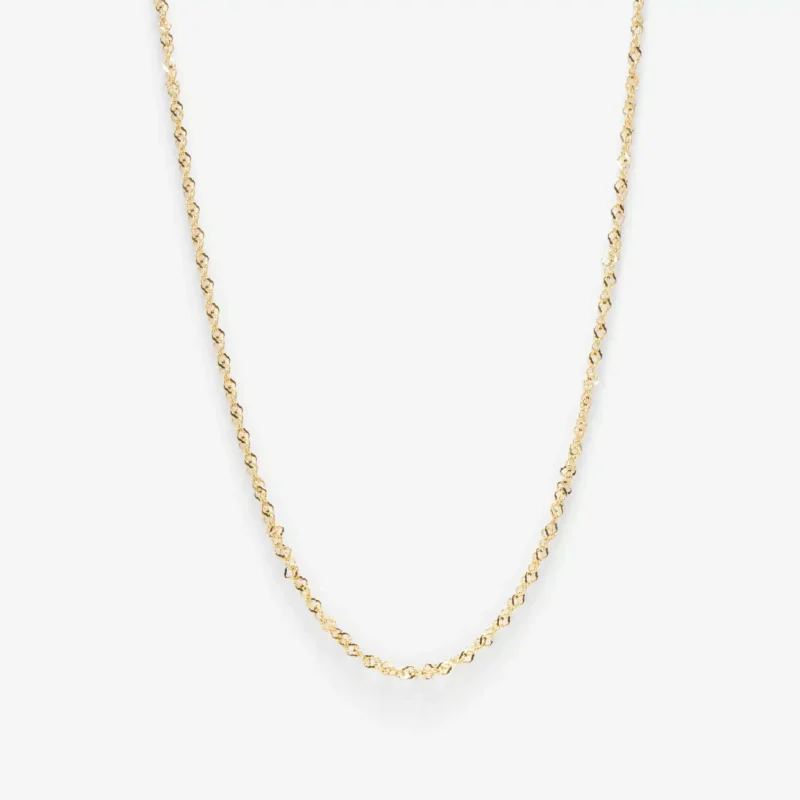
The right finish depends on how you plan to wear a piece. For chains worn most days, in and out of water, the Dainty Chain and the Singapore Twist Chain are made from recycled stainless steel with a 14k gold PVD coating: waterproof, tarnish-free and skin-friendly, built to hold their colour through years of daily wear. For occasional pieces, vermeil and gold filled remain good options.