

You have found the piece, the price is kind, and the listing says gold plated. It looks the part in the photos, so you hover over the buy button and wonder whether it will still look like that in six months, or whether you are buying something destined for the back of a drawer.
So, is gold-plated jewellery worth it? It can be, for occasional wear or trying a trend cheaply, though the thin gold layer means it tends to wear within months on daily use. Whether it suits you depends on how often you will wear it and what you expect it to last.
What is gold-plated jewellery?
Gold plating is a thin layer of gold applied over a base metal such as brass. The gold is often under 0.5 microns thick, which is a fraction of the coating on higher grades like gold vermeil or gold filled. A micron is a thousandth of a millimetre, so plating is a genuinely fine surface coat.
That construction is what keeps the price low. You are paying for the look of gold over an inexpensive core, with only a small amount of actual gold on the surface. It explains both the appeal of gold-plated jewellery and its main limitation, which is how long that thin layer can survive being worn.
You will see a few related terms on labels. Gold flash or gold wash means an even thinner coat than standard plating. Vermeil and gold filled, by contrast, use much thicker gold over better bases. Knowing roughly where a piece sits on that scale tells you a lot about how it will age.
How long does gold-plated jewellery last?
On daily wear, gold plating often starts to wear through within months. The thin gold layer rubs away first at the points of most contact, such as the back of a pendant, a clasp, or the parts of a chain that move against skin and clothing. Once it wears through, the base metal beneath shows.
Lifespan depends heavily on use. A plated piece worn now and then, kept dry and away from friction, lasts considerably longer than one worn every day through showers and workouts. Water, perfume, lotions and sweat all speed up wear.
There is no fixed expiry date, since it comes down to how hard you wear a piece. Earrings worn occasionally might keep their colour for a year or more, while a bracelet worn daily can fade much faster. The thin gold layer sets the ceiling, and your habits decide where within it the piece lands.
Does gold-plated jewellery fade or change colour?
Gold plating fades as the thin gold layer wears thinner, letting the base metal show through. You may notice the colour dulling, patches where the gold has gone, or a change in tone at the edges and contact points. With some base metals, exposed areas can discolour or react with skin.
This is the main thing to expect from plating over time. It is a feature of how thin the coat is more than a fault in any one piece. If a piece keeps its colour beautifully for years, the odds are it is a heavier finish than standard plating, such as vermeil, gold filled or a bonded PVD coating.
Reactions on the skin are worth a mention too. As the gold wears and the base metal is exposed, some people find the area turns their skin slightly dark or green, depending on the alloy underneath. It is harmless, though it is a sign the plating has worn through and the piece is near the end of its good looks.
When is gold-plated jewellery worth buying?
Gold plating makes sense in a few situations. It is a low-cost way to try a trend you are not sure about, to wear something for an occasion or two, or to have a piece you only reach for occasionally. For light, infrequent wear and a modest budget, plating can be perfectly worthwhile.
Where it disappoints is as an everyday piece you expect to last for years. If you want something to wear most days, through water and movement, the thin gold layer works against you, and the cost of replacing it adds up over time.
It is worth doing the simple sums. A cheap plated piece replaced two or three times can cost as much as one durable piece that lasts for years, with more waste along the way. Our piece on whether cheap jewellery is worth it weighs up that wider value question.
What lasts longer than gold plating?
Several finishes outlast standard plating. Gold vermeil uses a sterling silver base with a gold layer of at least 2.5 microns. Gold filled bonds a thick gold layer to a base core, with at least 5 percent gold by weight, which makes it very durable. Both keep their colour far longer than plating.
For everyday wear specifically, a PVD finish is one of the most hard-wearing options. PVD bonds a hard gold-toned layer onto stainless steel in a vacuum, giving a surface that is waterproof, tarnish-resistant and built to survive daily life.
A 14k gold PVD finish on recycled stainless steel holds its colour through showers, swimming and workouts in a way plating cannot. Because the coloured layer is bonded into the surface, it does not flake or peel like a soft surface coat. Our guide to PVD versus gold plating compares the two directly.
How do you choose between plated and a more durable finish?
Match the finish to how you will wear the piece. If you want to follow a trend cheaply, or you only wear a piece occasionally and keep it dry, plating gives you the gold look for very little outlay. There is nothing wrong with buying plated jewellery with clear eyes about how long it will last.
If you want a piece for daily life, worn through water and movement without being taken off, a more durable finish earns its keep. A waterproof, tarnish-free 14k gold PVD coating on stainless steel is hypoallergenic and built for exactly that kind of wear. The honest answer to whether plating is worth it is that it depends on the job you are asking the piece to do.
Frequently asked questions
Is gold-plated jewellery worth it?
For occasional wear, trying a trend or a tight budget, it can be. For everyday pieces meant to last years, the thin gold layer wears through within months, so a more durable finish is usually better value.
How long does gold-plated jewellery last?
On daily wear, the thin gold layer (often under 0.5 microns) often wears through within months at the points of most contact. Light, occasional wear lasts considerably longer.
Does gold-plated jewellery fade?
Yes. As the thin gold layer wears thinner, the base metal shows through, dulling the colour and sometimes discolouring at the edges and contact points.
What is the difference between gold plated and PVD?
Gold plating is a thin gold layer over base metal that wears within months. PVD bonds a hard, gold-toned layer onto stainless steel in a vacuum, giving a waterproof, tarnish-resistant finish that lasts far longer.
Is gold-plated jewellery good for everyday wear?
It is best suited to occasional wear. For everyday pieces worn through water and movement, a bonded finish such as PVD on stainless steel holds up much better.
Does gold-plated jewellery turn your skin green?
It can once the thin gold layer wears through and the base metal is exposed. It is harmless, but it is a sign the plating has worn out.
Related pieces
If you want the gold look with a finish made to last, our best sellers use a 14k gold PVD coating on recycled stainless steel: waterproof, tarnish-free and hypoallergenic, so they hold their colour through everyday wear.
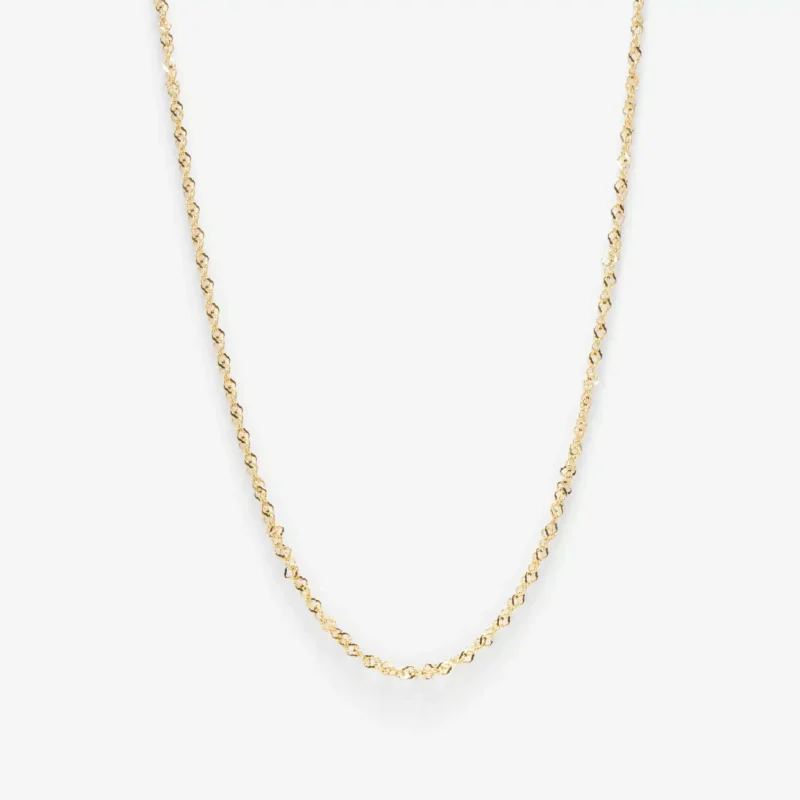
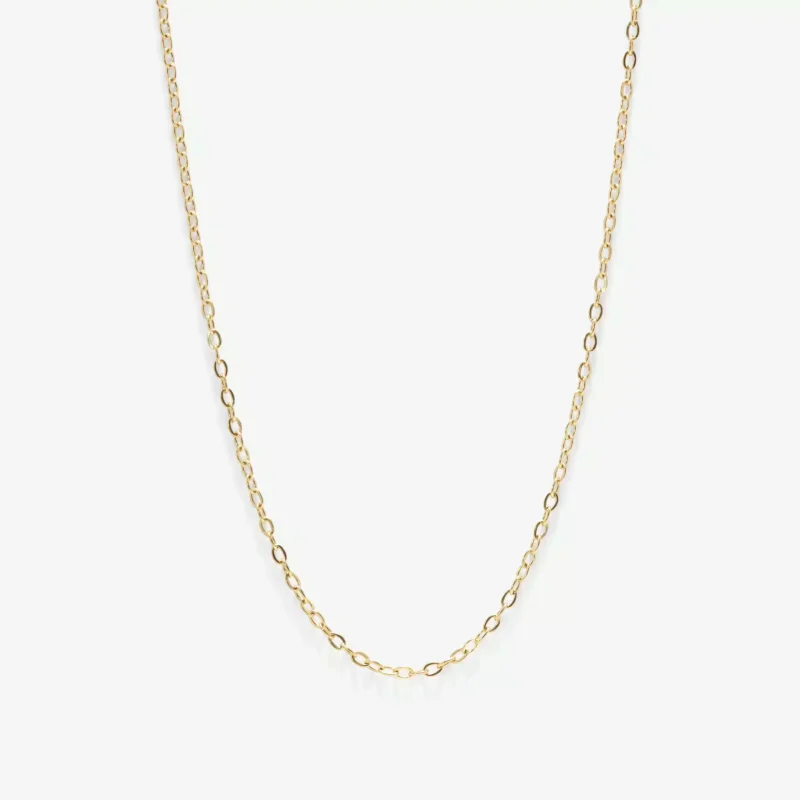
The Singapore Twist Chain is a good everyday example, a fine, light-catching chain in the same durable finish that you can wear through showers, workouts and long days without taking it off.