


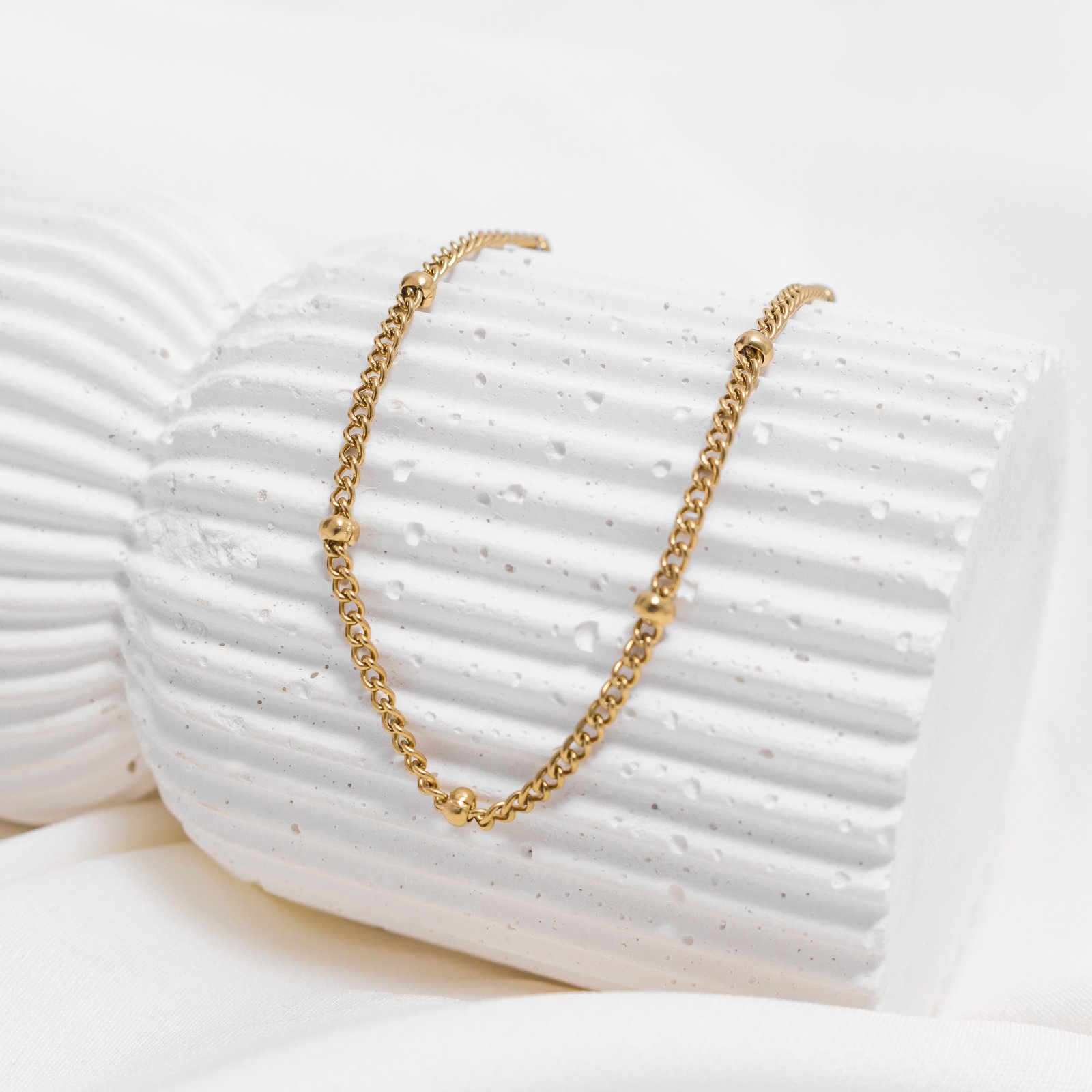
You take a necklace off after a long day, glance in the mirror, and there it is: a faint green tide line where the chain has been sitting. It is a familiar worry, and it puts a lot of people off wearing jewellery close to the skin at all.
So does stainless steel jewellery turn skin green? In most cases, no. Stainless steel generally does not leave green marks, because the chromium in it keeps the metal stable against the acids and moisture on your skin. Green stains usually come from a different culprit, and once you know what it is, choosing pieces that stay clean becomes much simpler.
What actually turns skin green?
Those green marks are a chemical reaction, most often between copper in a metal and the natural acids, salts and moisture on your skin. The copper oxidises, forms green copper salts, and a little of that transfers onto you. It is harmless, though it is annoying and looks alarming the first time you see it.
Cheap alloys are the usual source, because copper is a common filler in inexpensive jewellery. Sweat, hand cream, perfume and humidity all speed the reaction along, which is why marks tend to show up more in summer or after a workout.
Why stainless steel usually does not turn skin green
Stainless steel is an alloy built around iron and chromium, and that chromium is the key. It forms a thin, stable protective layer on the surface that resists corrosion, so the metal stays put and does not react with your skin. As a result, surgical 316L stainless steel generally does not leave green marks.
This is one reason stainless steel has become so popular for everyday pieces. It tolerates water, sweat and daily handling without the reactivity you get from copper-heavy alloys, so a stainless steel chain worn most days tends to stay clean against the skin.
The grade is worth a glance when you can find it. The 316L grade, sometimes called surgical stainless steel, is the one used in body-safe applications because it is so stable, and it is the grade you want for jewellery that sits against the skin all day. When a maker names 316L specifically, it is a useful sign they have chosen the material with daily wear in mind.
Where green marks really come from
Two situations cause most green marks. The first is cheap costume jewellery made from copper-rich base metals with little or no protective layer. The second is worn plating: a thin gold or silver coating over a reactive base metal, where the coating rubs through with wear and exposes the metal underneath to your skin.
That second case is the more deceptive one, because the piece looks fine to begin with. The plating wears thinnest at the edges, the clasp and anywhere that rubs against clothing, which is exactly where green marks first appear. A piece can behave perfectly for weeks, then start marking as the coating gives way. The thicker and better bonded the surface layer, the longer that day is held off, which is the whole point of choosing a quality finish.
If an old favourite has started to mark, it is usually a sign the plating has worn through to a reactive base. There is no harm in still wearing it, though a thin coat of clear barrier lacquer on the inside can buy some time. The longer-term answer is to choose a replacement in a non-reactive material so the problem does not return.
How a PVD coating changes the picture
PVD stands for physical vapour deposition, a process that bonds a fine layer of metal, such as gold, into the surface of the steel at a molecular level. It produces a much harder, more durable finish than ordinary electroplating.
Because a PVD coating is bonded and sealed into the surface, it resists the wear that exposes a reactive base metal, and it limits direct contact between any underlying metal and your skin. On a stainless steel base, that gives you a piece that holds its colour and stays clean against the skin through everyday wear.
This is also why a stainless steel piece can keep up with a life that involves water. Showers, hand-washing, the gym and the occasional swim are exactly the situations that bring out green marks on copper-rich pieces, and they are the situations a sealed PVD finish on stainless steel is built to take in its stride. The piece you can forget you are wearing is usually the one that stays cleanest.
Does a green mark mean an allergy?
A green mark and a skin allergy are two separate things. The green colour is a harmless stain from the metal reacting and transferring onto your skin, and it washes off. An allergy is your immune system reacting, most often to nickel, and it tends to show as redness, itching or a rash, with no green tint involved.
If a piece leaves you red, itchy or sore, with no green tint, that points towards a sensitivity instead of a staining issue. Hypoallergenic materials such as titanium, surgical stainless steel and high-karat gold are the usual choices for sensitive skin, since nickel is the common irritant.
How to choose jewellery that will not mark your skin
Start by reading the materials. Look for named metals such as surgical or 316L stainless steel, titanium or solid gold, and treat colour-only descriptions like gold-tone with caution. A sealed, durable finish such as PVD is a strong sign a piece will stay clean.
A little care helps any piece last longer. Putting jewellery on after perfume and lotion, and drying it after heavy sweat or swimming, slows down reactions on cheaper metals and keeps better ones looking their best. With stainless steel and a PVD finish, though, most people find they can wear their pieces through showers and workouts without a second thought.
If you have been burned before by a piece that marked your skin, it is worth giving stainless steel a fair trial. Buy one well-described piece, wear it through your normal week including the gym and the shower, and see how your skin gets on. Most people find the green tide line they used to dread simply does not appear, which makes everyday jewellery feel possible again.
Frequently asked questions
Does stainless steel jewellery turn skin green?
Usually not. Surgical 316L stainless steel contains chromium, which keeps it stable against skin acids and moisture, so it generally does not leave green marks the way copper-rich alloys do.
Why did my jewellery turn my finger green then?
Most green marks come from copper in cheap alloys reacting with your skin, or from worn plating exposing a reactive base metal. Genuine stainless steel is far less likely to do this.
Is it bad if jewellery turns my skin green?
No, the green stain itself is harmless and washes off. It is a metal reaction, not a health problem. Redness, itching or a rash is different and points to a possible allergy.
Does PVD-coated jewellery turn skin green?
PVD coating bonds into the surface and resists wear, so it limits metal contact with the skin and helps prevent the green marks that come from worn plating or reactive metals.
What jewellery does not turn your skin green?
Surgical stainless steel, titanium and solid high-karat gold are reliable choices. A durable PVD finish over stainless steel also stays clean against the skin through everyday wear.
Related pieces
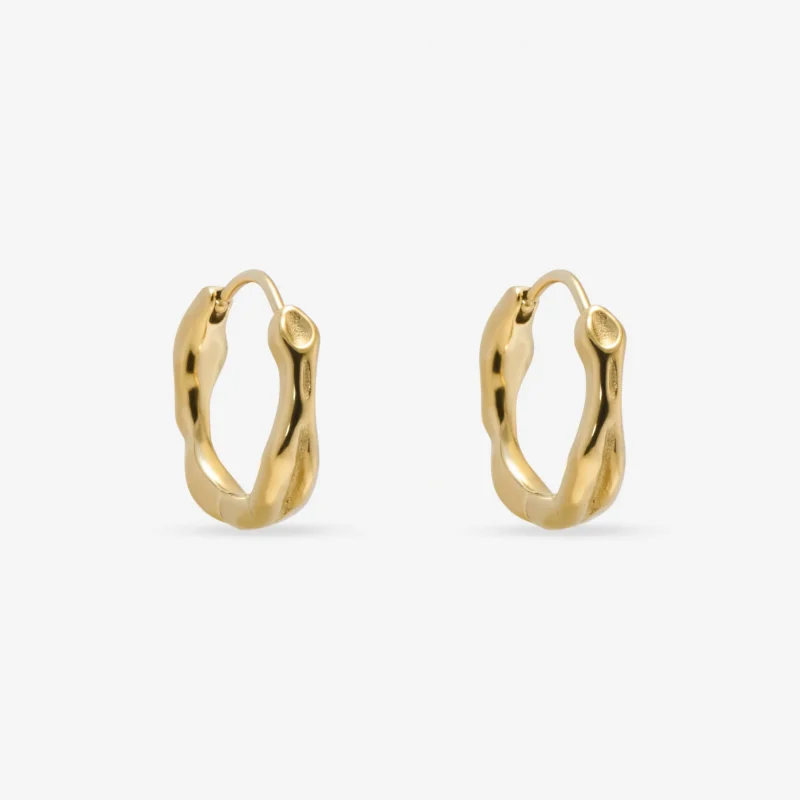
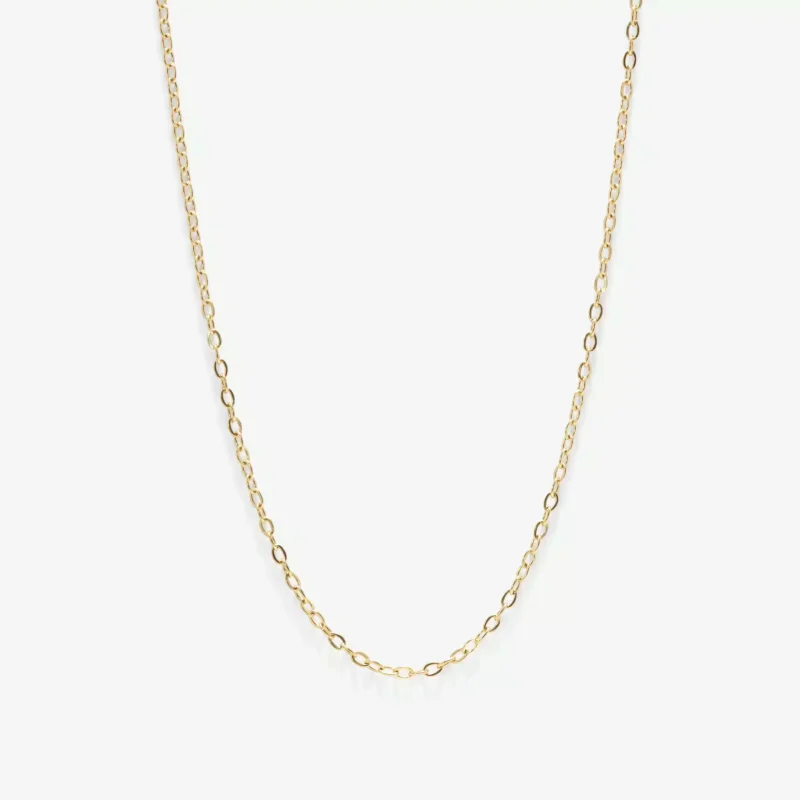
If you want pieces you can wear without watching for green marks, the Molten Hoop Earrings and the Dainty Chain are both made from recycled stainless steel with a 14k gold PVD finish. The sealed surface holds its colour through showers and workouts and stays kind to the skin through daily wear.