

Look closely at the necklaces you reach for most days and there is a good chance the chain holding them together is a quiet workhorse you have never thought to name. It carries the pendant, layers under a jumper, and survives years of being pulled over your head, all without asking for attention.
A cable chain is the most classic chain style of all: a run of uniform round or oval links, each one connecting to the next at a right angle, the same simple loop repeated end to end. That even, balanced construction is what makes the cable chain strong, versatile and so well suited to pendants, which is why it turns up on more necklaces than almost any other design.
What does a cable chain look like?
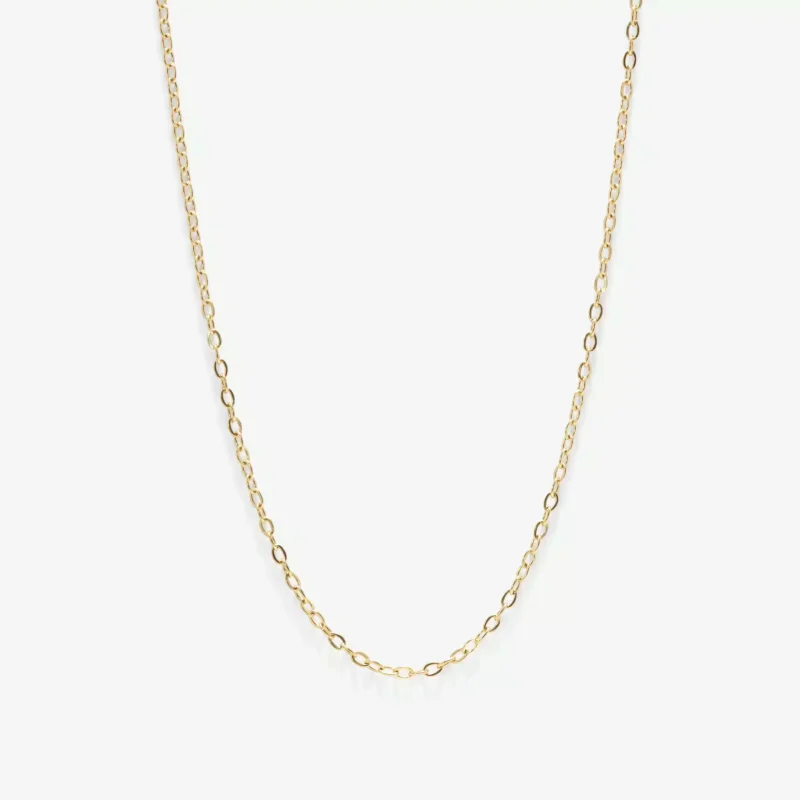
A cable chain is made of identical links, usually round or slightly oval, joined in a single line so that every loop lies flat against the one before it. The links are uniform in size and shape, which gives the chain a clean, regular rhythm along its length.
Because the links are open and evenly spaced, the chain has a light, fluid drape and moves easily with you. It is the style most people picture when they imagine a plain gold or silver chain, and it works just as happily on its own as it does carrying a charm or a pendant. The look is simple in the best sense, which is part of why it has stayed in fashion for so long.
How is a cable chain made?
Each link in a cable chain is a separate loop of wire that is shaped, closed and then soldered or fused so it holds. The links are connected one at a time, with every loop turned ninety degrees to the one beside it, so the chain sits flat and does not twist. That alternating pattern is what gives a cable chain its familiar, orderly appearance.
The thickness of the wire and the size of the links decide how the finished chain feels. A fine cable chain made from thin wire reads as dainty and delicate, while a heavier gauge gives a more substantial, everyday-solid piece. The construction is the same either way, which is why you will see cable chains at every weight from barely-there to bold.
Cable is also one of the oldest chain patterns in continuous use, which is part of why it reads as so classic. Because the design is simple and the links are open, it is straightforward to repair, resize and add a clasp or pendant bail to, so a cable chain tends to be one of the most practical pieces in a collection. That ease of working with it is one reason jewellers reach for it again and again when a pendant needs a home.
Is a cable chain strong enough for everyday wear?
Yes. A cable chain is one of the more durable everyday styles because each link is a closed, soldered loop and the load is shared evenly along the whole chain. There is no single weak point that takes all the strain, so a well-made cable chain stands up to daily wear, layering and the constant on-and-off of real life.
Strength does come down to two things: the gauge of the links and the quality of the metal. Thicker links resist bending and pulling better than very fine ones, so if you want a chain you barely have to think about, a slightly heavier cable is a safe choice. The material matters too. A chain built on recycled stainless steel with a hard-wearing finish keeps its shape and colour far longer than soft, thinly coated alternatives.
Why does a cable chain suit pendants so well?
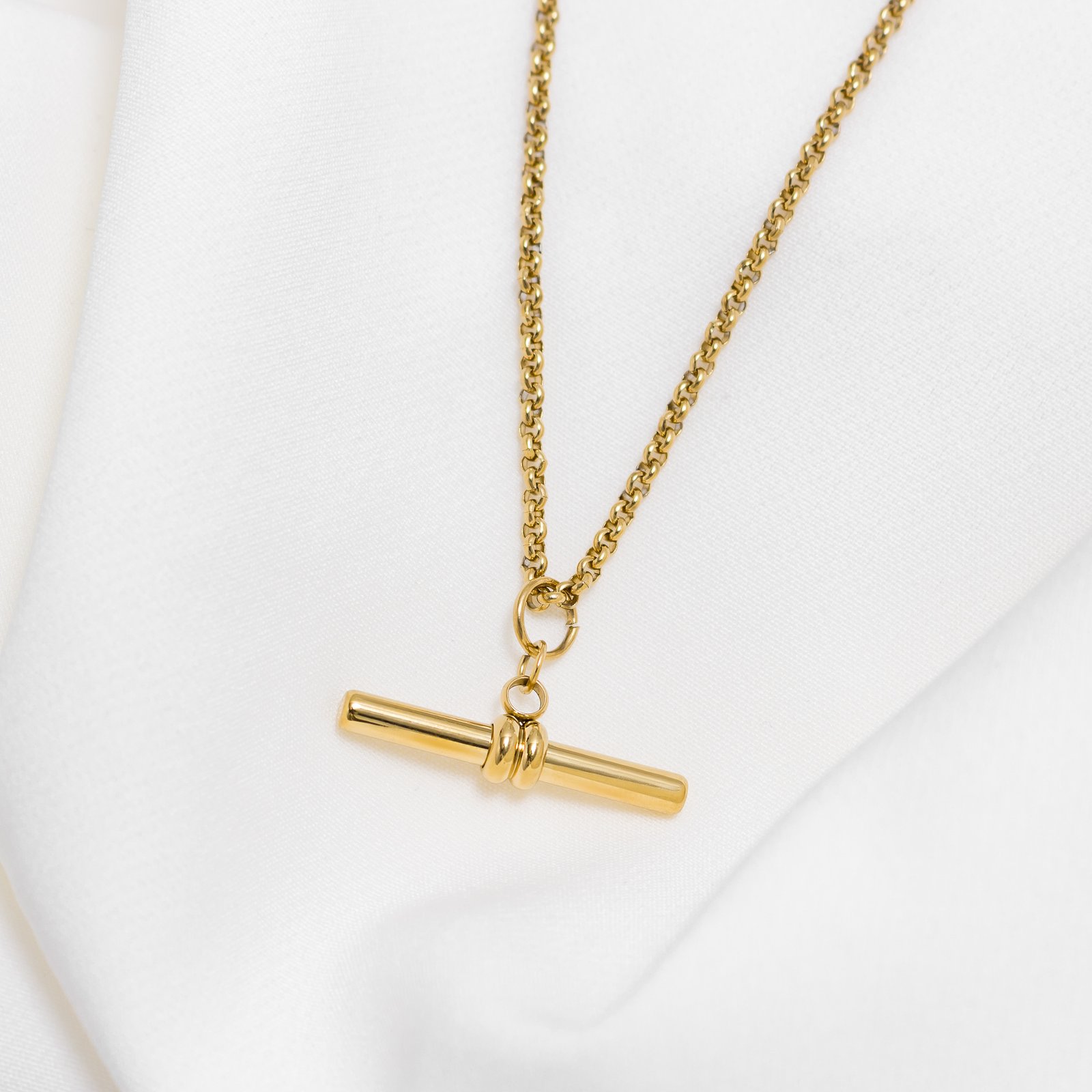
A cable chain is the natural home for a pendant. Its even links let a charm or pendant sit centred and hang straight, instead of drifting to one side or getting caught up the way more textured chains sometimes can. The smooth, uniform surface also means a pendant slides freely and settles where it should.
There is a visual reason too. A plain cable chain stays in the background and lets the pendant do the talking, so the piece you have chosen to wear, an initial, a birthstone, a meaningful charm, reads clearly against it. If you like to swap pendants on and off a single chain, a cable is one of the easiest and most reliable styles to build around.
How does a cable chain compare to other chain types?
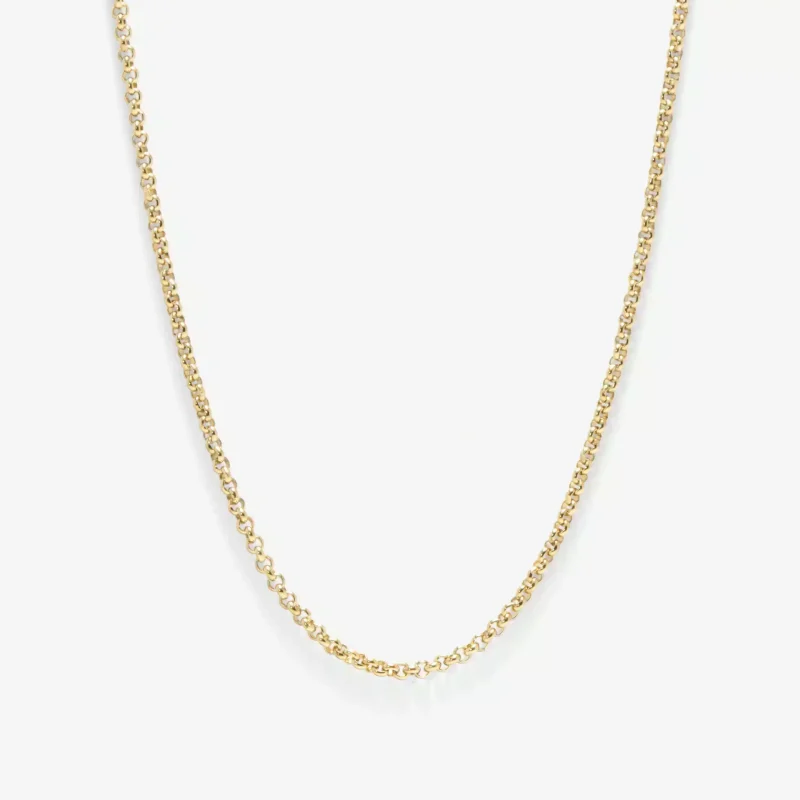
A cable chain is the baseline that other styles are measured against. A rolo chain is a close relative, also built from uniform round links, but the links sit wider and rounder for a slightly chunkier, more textured look while keeping the same easy versatility. A rope chain twists many small links together to look like rope, which catches the light beautifully and reads as more decorative. A curb chain has links that are flattened and interlocking so they lie flush, giving a sleeker, heavier feel.
If you want a fuller picture of the options, our guide to the types of jewellery chains walks through each style and what it suits. For most people, though, a cable chain is the sensible starting point: classic, strong, and ready for whatever pendant you want to hang on it.
How do you choose and care for a cable chain?
Start with length, because that decides where the chain sits and how it layers. A shorter chain lands high on the neck and works well alone, while a longer one drops toward the chest and gives a pendant room to breathe. Our necklace length guide is the quickest way to find the measurement that suits you. Next, think about gauge: finer for delicate, layered looks, heavier for a chain you want as the main event.
Care is mostly about the finish. A cable chain made from recycled stainless steel with a 14k gold PVD coating is waterproof and tarnish-free, so it holds its colour through showers, workouts and daily wear without needing to be taken off. A hypoallergenic finish like this also suits sensitive skin. Give it an occasional wipe with a soft cloth to keep it bright, store it flat or hung so the links do not knot, and it will keep its clean, even look for years.
If you like to layer, a cable chain is one of the easiest styles to build a stack around. Its slim, flat profile sits close to the skin, so a fine cable can act as the base layer beneath a pendant chain or a shorter choker without adding bulk. Mixing a couple of cable chains at different lengths is a simple way to get a put-together look that still feels effortless, and because the style is so neutral it pairs happily with rope, rolo and other chains in the same stack.
Frequently asked questions
What is a cable chain?
A cable chain is a classic chain made of uniform round or oval links joined in a single line, with each link turned at a right angle to the next. It is strong, versatile and the most common style used for pendants.
Is a cable chain strong?
Yes. Each link is a closed, soldered loop and the strain is spread evenly along the chain, so there is no single weak point. A heavier gauge and a good-quality metal make it even more hard-wearing.
What is the difference between a cable chain and a rolo chain?
Both use uniform round links. A rolo chain has wider, rounder links for a slightly chunkier, more textured look, while a cable chain reads as flatter and more classic. Both suit pendants well.
Can you wear a pendant on a cable chain?
Yes, and it is one of the best chains for the job. The even links let a pendant hang straight and centred, and the plain surface keeps the focus on the pendant itself.
Does a cable chain tarnish?
A cable chain made from recycled stainless steel with a 14k gold PVD finish is waterproof and tarnish-free, so it holds its colour through everyday wear. Cheaper, thinly plated chains are more likely to fade.
Related pieces
If you want a clean, classic chain to wear alone or to build pendants around, the Dainty Chain is a fine cable style that layers beautifully and lets a charm sit front and centre. For something with a little more presence, the Rolo Chain keeps the same easy versatility with wider, rounder links and a touch more texture. Both are made from recycled stainless steel with a 14k gold PVD finish, so they stay waterproof, tarnish-free and gentle on sensitive skin through daily wear.