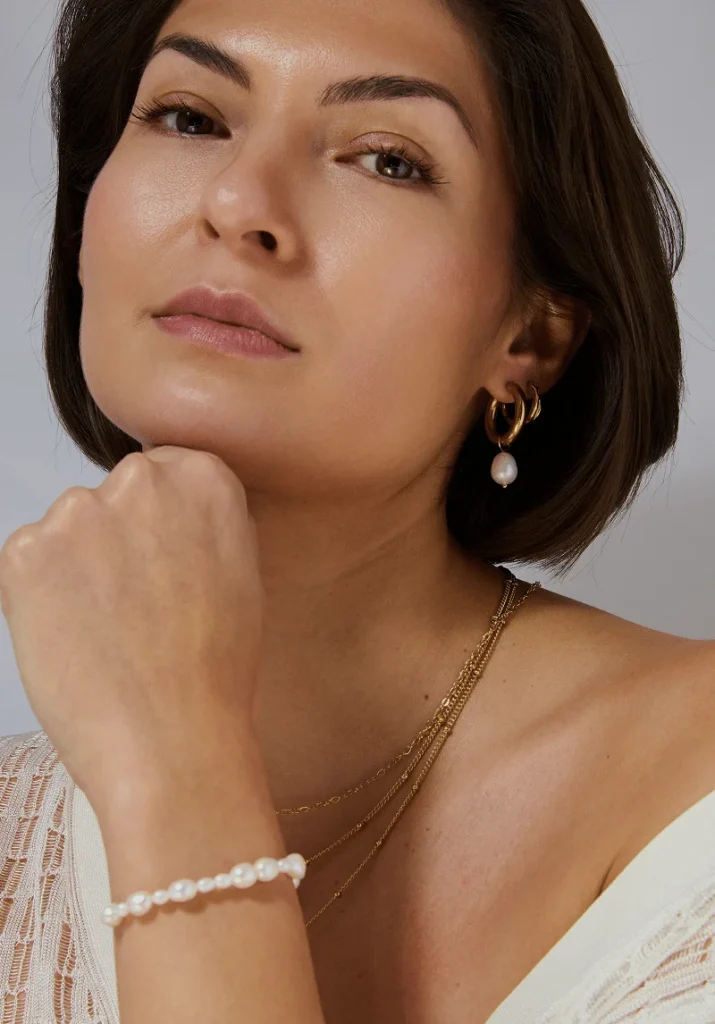


Some necklaces get worn once and forgotten in a drawer. Others go on every morning without a second thought, the clasp found by feel, the pendant settling into the same spot it always does. The difference is rarely the price. Meaningful necklaces are the ones that carry something personal, a name, a date, a symbol, a memory, so the piece does a little more than finish an outfit.
A meaningful necklace is any piece chosen for what it represents. Initials, symbols, birthstones and lockets are the most common ways that meaning gets built in, and each one carries a personal or cultural story for the wearer. The best ones earn their place by being worn, which is why everyday comfort and a finish that lasts matter as much as the design itself.
What makes a necklace meaningful?
A necklace becomes meaningful when it points to something beyond itself. That can be a person, a moment, a belief or a quality you want to keep in mind. The piece works as a small reference you carry, and the meaning is set by you, with the metal as the vessel for it.
Jewellery historians and writers tend to group meaningful necklaces into a few familiar types: initials and names, recognised symbols, birthstones tied to a month, and lockets made to hold something. Each gives meaning in a slightly different way. An initial points to a person. A symbol points to an idea. A birthstone points to a date. A locket points to a memory you keep with you. Many people end up wearing more than one at once, layered together, so the necklaces tell a fuller story.
What turns a piece from pretty into meaningful is usually the moment behind it. A necklace bought to mark a new job, given by a friend who moved away, or chosen in the first weeks of a new chapter gathers feeling simply by being worn through that time. The longer it stays on, the more it holds. That is why the most meaningful necklaces are often the plainest ones, worn so constantly that they become part of how the wearer feels like themselves.
What do initial and name necklaces represent?
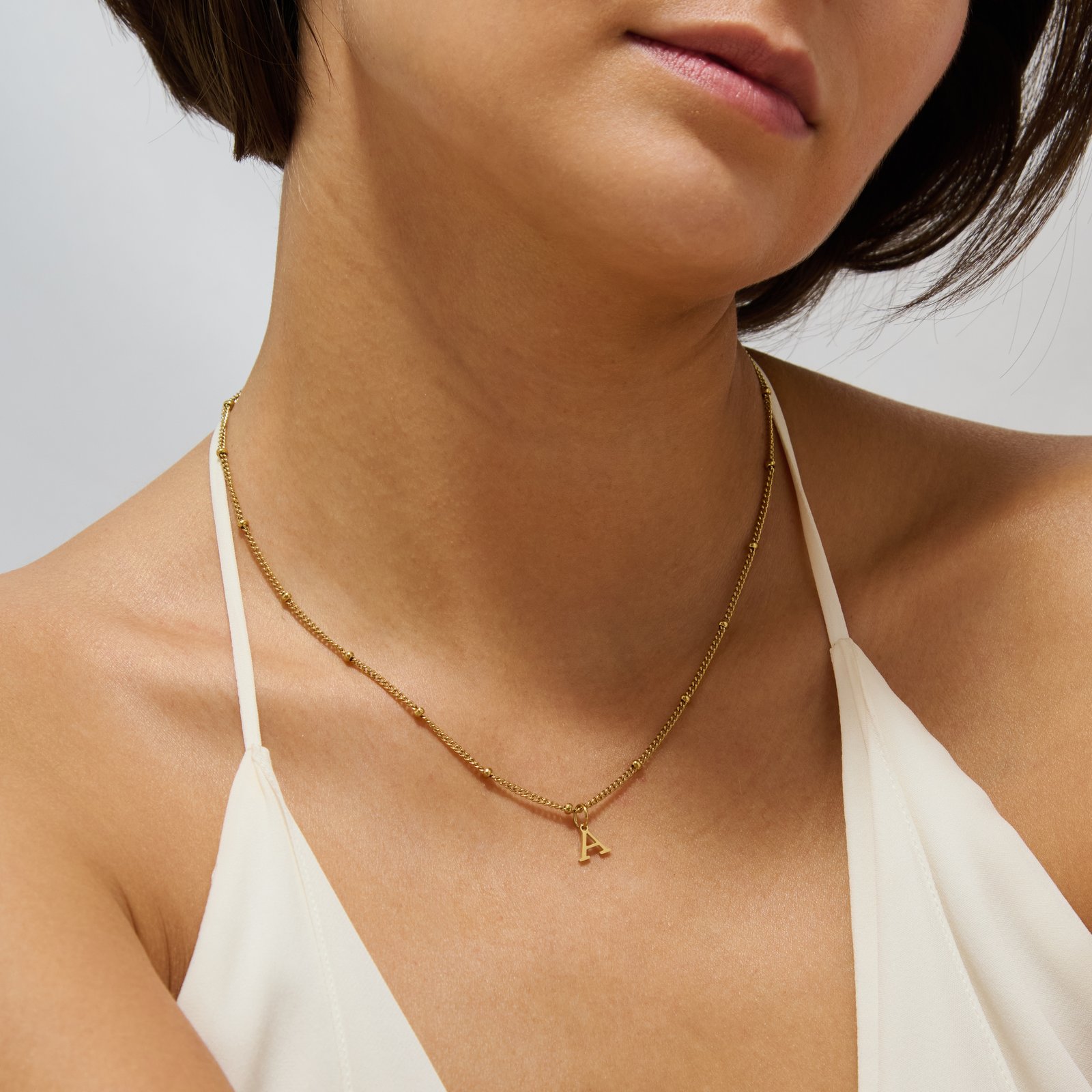
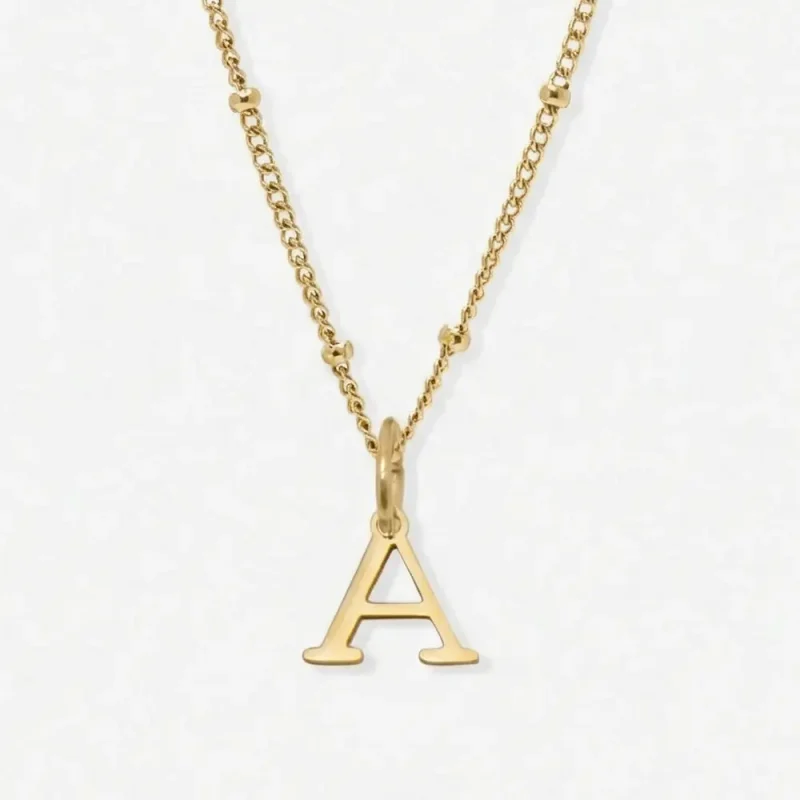
An initial or name necklace stands for a person, most often the wearer, a partner, a child or someone they have lost. It is the most direct way to make a necklace personal, because the letter names the meaning out loud. You can read more in our guide to initial necklace meaning.
People wear their own initial as a quiet mark of identity, a way of feeling like themselves on days when that feels harder to hold onto. Others wear a loved one's letter to keep that person near. Layering two or three letters together is a popular way to gather a small family onto one chain, with the option to add more as life changes. The meaning lives in the letter itself, so an initial reads the same whether it is worn alone or stacked with other pieces.
What do symbol necklaces mean?
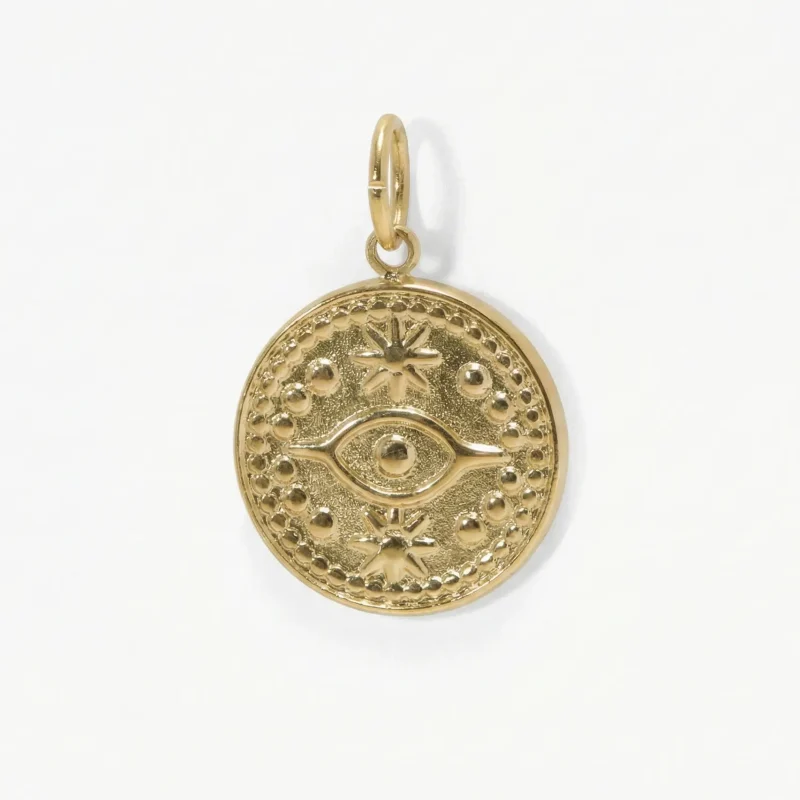
Symbol necklaces carry meaning through a recognised motif, a heart, a star, a moon, an evil eye, a coin, each associated with feelings or ideas that many cultures share. The symbol does the talking, so the necklace can stay small and still say a lot. Our guide to what jewellery symbols mean covers the most common ones in detail.
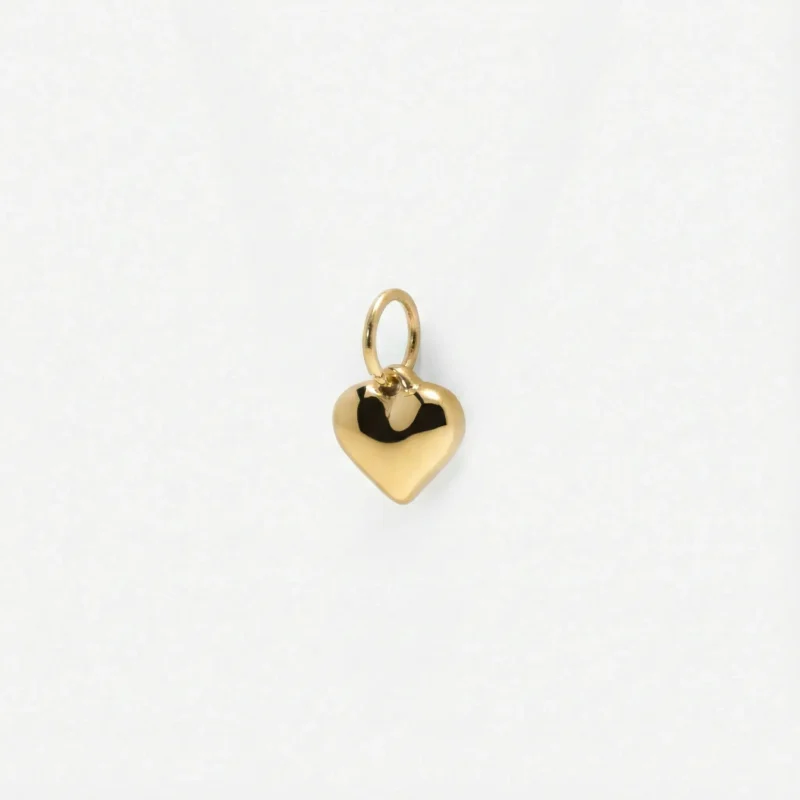
A heart is usually read as love or affection. A star is often tied to hope, guidance or a person you look up to. A moon is commonly associated with change and intuition, marking phases and fresh starts. The evil eye has long been worn, in many cultures, as a charm believed to guard against envy and ill will. These readings are popular associations built on tradition, so a symbol leaves room for your own interpretation, which is part of why symbolic necklaces feel so personal. Two people can wear the same motif and mean entirely different things by it.
How do birthstones and lockets add meaning?
Birthstones tie a necklace to a specific month, and through it to a person or a date worth remembering. Each month has a traditional stone, so a single coloured gem can stand for a birthday, an anniversary or a child, with no name needed. Some people wear their own stone, while others gather the stones of the people they love onto one chain.
Lockets work differently. A locket is made to hold something, a photograph, a tiny note, a lock of hair, so the meaning sits literally inside the piece. That hidden quality is the appeal. The necklace looks complete from the outside, while the wearer knows what it keeps. For a gift marking a birth, a loss or a long friendship, a locket gives the meaning somewhere to live, and it can be updated over the years as the photograph or keepsake inside changes.
How do you build a layered set of meaningful necklaces?
Layering lets you wear several pieces of meaning at once, which is why it has become such a popular way to style meaningful necklaces. The trick is to vary the lengths so each pendant has its own space, usually starting with a shorter chain near the collarbone and adding one or two longer pieces beneath it. Keep the metal tone consistent across the stack so the layers read as one considered look.
For meaning, think about pairing pieces that say different things: an initial for a person, a symbol for an idea, a birthstone for a date. Built that way, a layered set becomes a small portrait of what matters to you, and you can add to it over time as life gives you new things to mark. Start with one piece you love, then let the collection grow at its own pace.
How do you choose a meaningful necklace you will actually wear?
The most meaningful necklace is the one that stays on, so start with your everyday life and let the occasion come second. A piece you can shower in, sleep in and wear to work will gather far more memory than one saved for special days. Think about chain length, weight and how it layers with anything you already wear.
Material decides whether a piece survives daily life. A waterproof, tarnish-free finish such as 14k gold PVD on recycled stainless steel keeps its colour through water, heat and long days, and a skin-friendly base keeps it comfortable all day. A necklace meant to carry meaning should be able to go everywhere the meaning matters, which means choosing something built to be lived in and worn daily.
Frequently asked questions
What is a meaningful necklace?
It is a necklace chosen for what it represents to the wearer, such as an initial, a symbol, a birthstone or a locket. The meaning is personal and set by you, with the design as the vessel for it.
What are the most meaningful necklace symbols?
Hearts, stars, moons, evil eyes and coins are among the most common. Each carries popular associations, from love and hope to protection and heritage, so the symbol you choose can reflect what you want to keep in mind.
Are initial necklaces a good gift?
Yes. An initial necklace names a person directly, which makes it a warm and personal gift for a partner, a parent or a friend. Letters also layer well, so the piece can grow over time.
Do meaningful necklaces have to be expensive?
No. The meaning comes from what the piece represents. A well-made everyday necklace in a lasting finish often holds more meaning than a costly piece kept in a box.
Can you layer meaningful necklaces together?
Yes, and many people do. Layering an initial with a symbol or a birthstone lets you carry more than one piece of meaning at once, building a small story across the chains.
Related pieces
If you want a necklace that names someone close, the Alphabet Necklace turns a single letter into a piece you can wear every day and layer with others as life changes. For meaning of a different kind, the Evil Eye Protection Charm carries a symbol worn across many cultures as a quiet safeguard. Both are made from recycled stainless steel with a 14k gold PVD finish, so they hold their colour through daily wear and suit sensitive skin.