

A heart at the collarbone, a tiny crescent moon, an eye worked in blue glass. We recognise these shapes long before anyone explains them, and we reach for them again and again across generations. So what do jewellery symbols mean? The honest answer comes in two parts: a settled cultural meaning that most people recognise, plus a private meaning the wearer adds on top. A heart, a star, a moon, an evil eye or an anchor each carries a long history, while what any one means to the person wearing it is filtered through their own reasons for choosing it. This guide walks through the common symbols, why some last for centuries, and how personal meaning quietly takes over.
Why do certain symbols keep appearing in jewellery?
Symbols persist in jewellery because a symbol is a compressed form of meaning. It communicates something complex or emotional in a single image, worn on a necklace or bracelet without needing words. Hearts, stars, moons, anchors and crosses have appeared in personal adornment across centuries and cultures, and they are all still in use.
Most jewellery symbols also resemble what they stand for, which is part of why they read so easily. The heart is a stylised version of love's supposed physical seat. The anchor looks like the object associated with holding fast. The shape itself carries the meaning, so the symbol communicates at a glance and translates cleanly to small scale. Simple, recognisable forms are practical to make as well as easy to read, which helps explain why the same handful of motifs keeps returning.
There is a deeper reason the durable symbols last. They tend to refer to experiences that stay relevant across lives: love, aspiration, stability, protection, continuity, loss. Fashion can decide which symbols feel current in a given decade, though it struggles to displace a symbol attached to something that does not date. A form can fall briefly out of favour and still be worn by people for whom its meaning outweighs its currency.
What does a heart symbol mean today?
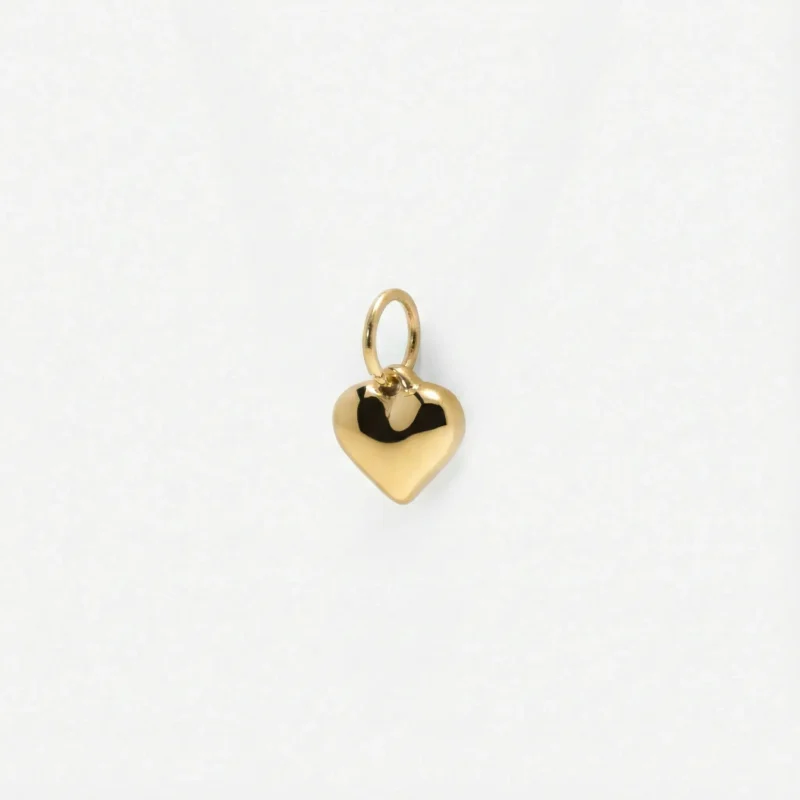
The heart is the most widespread symbol in contemporary jewellery, and its meaning has broadened well past romantic love. A heart pendant can mean romantic attachment, and it can equally stand for love of a child, care for a family member, affection for a friend, or a general warmth the wearer wants to carry. The romantic reading is one possibility among several.
People who wear jewellery symbols often assign personal meanings that depart from the conventional one. A heart worn by a mother may be mostly about her children. A heart given by a friend may be mostly about that friendship. This flexibility is what makes the heart durable. It is almost universally recognised and roomy enough to hold many kinds of emotional meaning, so a wide range of people can wear it for a wide range of reasons.
What do stars, moons and the evil eye mean?
Stars and moons carry associations with navigation, the passage of time, protection and the rhythms of nature, though in modern wear their meanings are usually more personal. A crescent moon might be chosen for a sense of connection to night, to cyclical change, or to a particular tradition. A star might stand for aspiration, the memory of a specific night, or simply a form the wearer likes. These motifs have enough cultural presence to feel meaningful and enough openness to take on individual meaning.
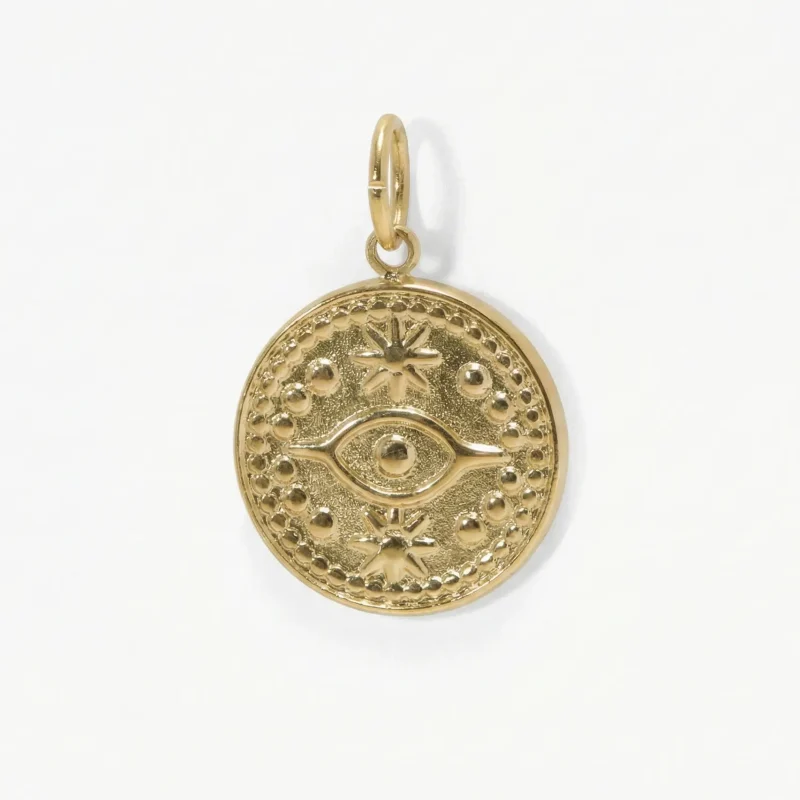
The evil eye is one of the oldest protective symbols, found across Mediterranean, Middle Eastern and other cultures for thousands of years. It is traditionally worn to guard against ill will, often shown as a blue and white eye. As a piece of jewellery, it works on two levels at once: a recognisable symbol of protection, and a private reminder the wearer carries through the day. Its long history is part of why it reads clearly, while its meaning is general enough to be worn by almost anyone who finds it meaningful.
Celestial and protective symbols also suit everyday jewellery because their forms stay legible when small. A simple star, crescent or eye is recognisable at the size of a pendant or charm, without elaborate detail. That makes them practical for daily wear, which in turn lets them build the habitual associations that make a symbol personally significant over time.
What does the anchor and other stability symbols mean?
The anchor stands for stability and groundedness. Its meaning comes straight from its function: an anchor holds a vessel in place against the movement of water, so in jewellery it is believed to represent having something or someone that keeps you from drifting. That makes it a fitting gift to mark a steadying relationship, a friendship that held through difficulty, or a person who has been a reliable point of reference. The symbolism is clear while staying short of sentimental.
Other stability symbols, including various architectural and natural forms, do similar work. What they share is a reference to holding, to staying in place, to remaining steady as things shift around you. These are meanings that reach people at particular points in life, and the symbols carry them quietly into daily wear.
How does personal meaning take over from the original meaning?
Personal meaning can displace conventional meaning quickly. Someone given a moon pendant at a significant moment may come to associate the symbol mainly with that moment, with the moon's usual meaning fading into the background. The mechanism is associative memory: we store memories with their emotional and sensory context, so an object present at a meaningful moment becomes tied to it. Later, seeing the object brings the moment back.
This is why the meaning of a symbol often cannot be read from the outside. What looks like a moon necklace chosen for its looks may in fact hold the memory of one specific evening or one period of change. The conventional meaning stays in the background while the personal meaning becomes primary. A symbol gives you a legible form that you can then load with meaning belonging entirely to you, which is the most interesting thing symbols do in jewellery.
It also means you do not need to get the symbol objectively right. The useful question is whether it refers to something that matters to you and whether wearing it feels right, more than what a moon officially represents. A symbol with broadly shared meaning, such as a heart, a star, a moon or a simple geometric form, is available to anyone who finds it meaningful. Symbols tied closely to a specific religion or culture ask for more care, though most jewellery symbols in general use can be worn by anyone they speak to.
Frequently asked questions
What does the evil eye mean in jewellery?
The evil eye is a protective symbol traditionally worn to guard against ill will, used across many cultures for thousands of years. As jewellery it works as both a recognisable symbol of protection and a private daily reminder for the wearer.
What does a heart symbol mean in jewellery?
A heart can mean romantic love, and it just as often stands for love of a child, care for family, or close friendship. Its meaning is broad, which is part of why so many people wear it for different reasons.
Do jewellery symbols have fixed meanings?
No. Most symbols have a settled cultural meaning plus whatever personal meaning the wearer adds. Personal meaning often becomes the stronger of the two, especially once a piece has been worn through a significant period.
What do star and moon jewellery symbols mean?
Stars and moons are linked to navigation, time, protection and nature, though in modern wear they are usually personal. A star can stand for aspiration or a memory; a moon for cyclical change or a particular tradition.
Can I wear a symbol without knowing its full history?
Yes, for symbols with broadly shared meaning such as hearts, stars and moons. Symbols sacred to a specific religion or culture deserve more consideration, though most jewellery symbols in general use are open to anyone who finds them meaningful.
Related pieces
The Evil Eye Protection Charm carries one of the oldest protective symbols, recognisable to others while working as a quiet daily reminder for the wearer. The Chubby Heart Charm offers a simple, rounded heart that can stand for romantic love, family or friendship, depending on the reason you choose it. Both are made in recycled stainless steel with a 14k gold PVD coating, so they are waterproof, tarnish-free, and hypoallergenic, which suits a symbolic piece worn every day while it gathers personal meaning over time.