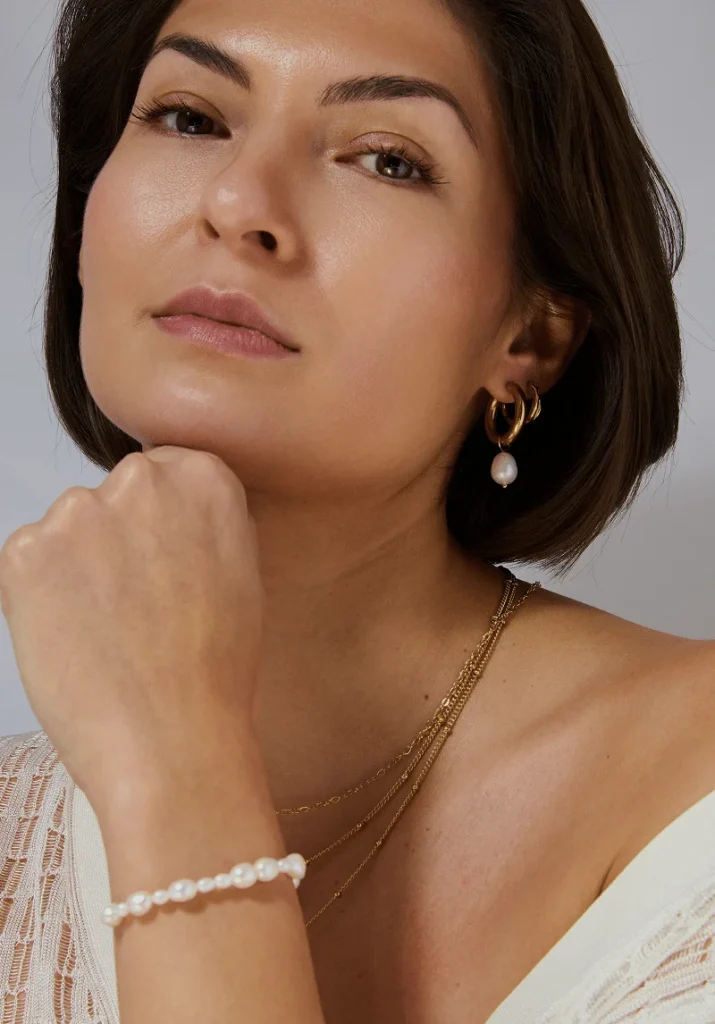


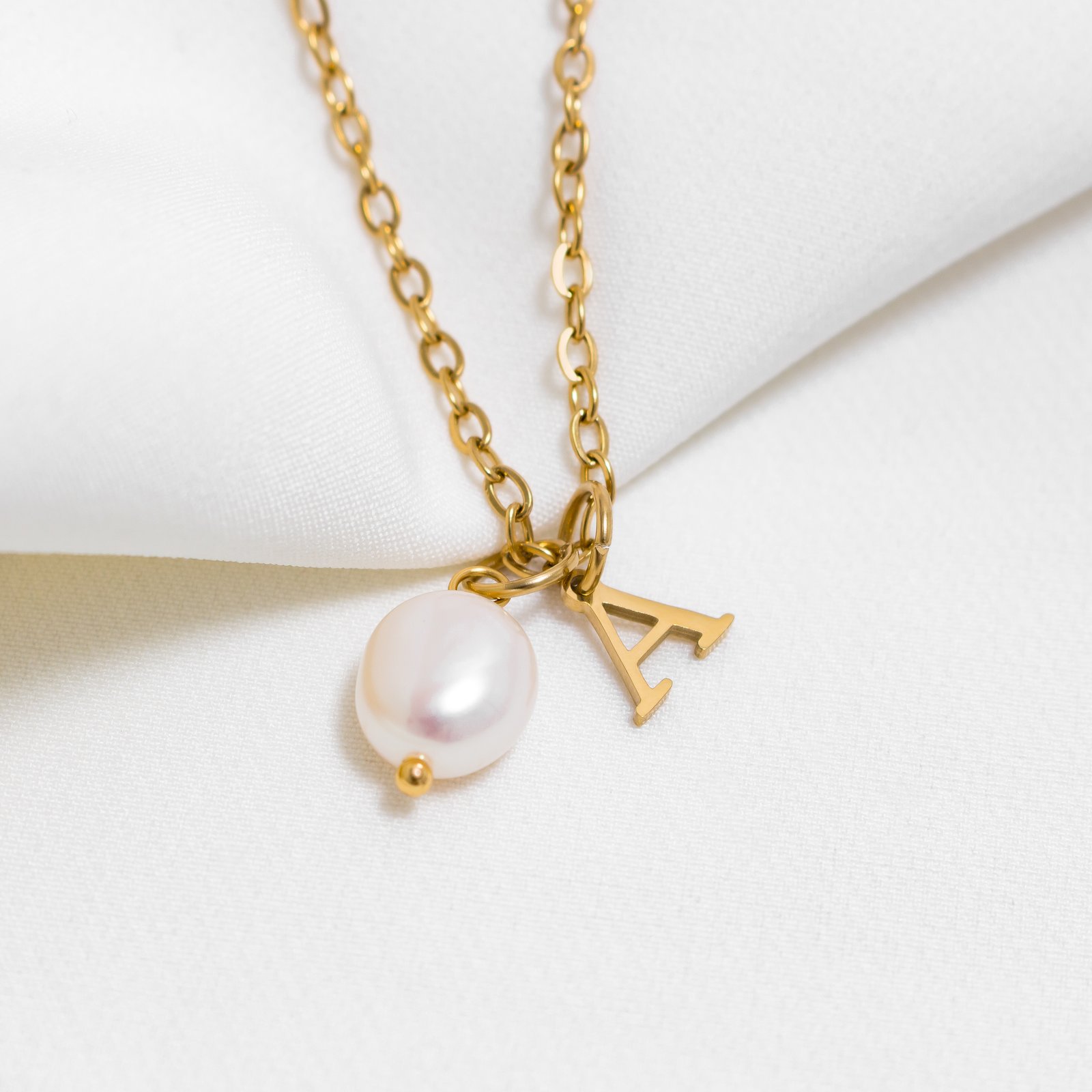
It is the small daily decision that trips a lot of us up. You are about to step into the shower, you glance down at the necklace you have had on all day, and you pause: take it off, or leave it on? Do it wrong often enough and you start treating good jewellery as something to keep dry and protect, which rather defeats the point of an everyday piece you wanted to live in.
So, can you wear stainless steel jewellery in the shower? In most cases yes, and coated stainless steel in particular is made for it. The one thing worth doing is a quick rinse and dry afterwards, which clears any soap residue and keeps the piece looking bright. Here is how it works, why the soap matters more than the water, and where the sensible limits are.
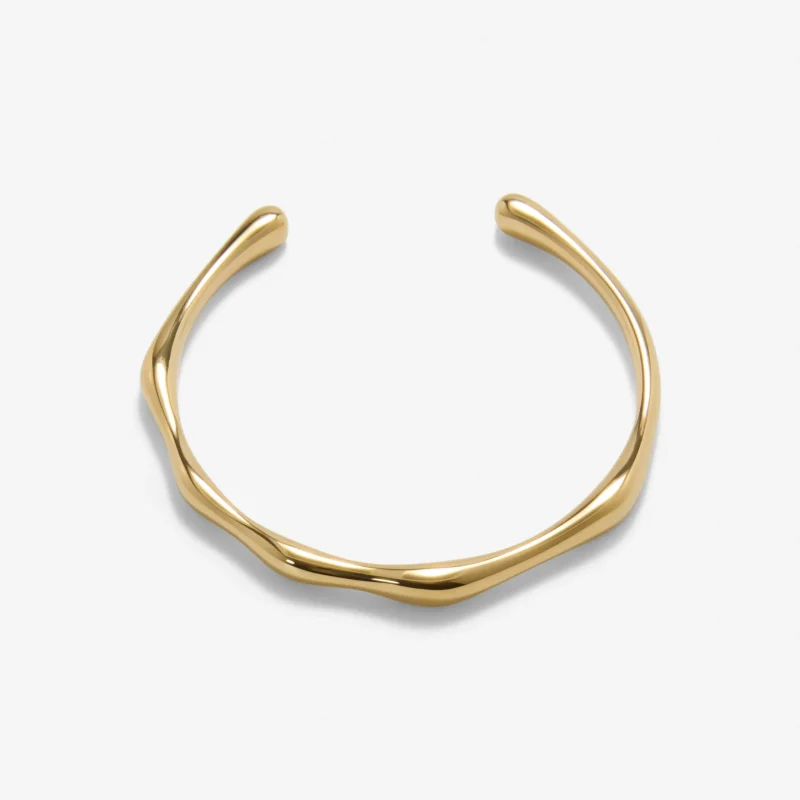
Can you wear stainless steel jewellery in the shower?
Yes. Stainless steel is highly resistant to water and does not rust the way ordinary steel does, which is why it holds up to daily contact with water far better than many materials. A shower now and then, or every day, will not harm a well-made stainless steel piece.
PVD-coated stainless steel, the kind used for waterproof, tarnish-free everyday jewellery, is designed with exactly this in mind. PVD, short for physical vapour deposition, bonds a thin layer of colour to the metal at a molecular level, which is what gives the gold tone its staying power. You can wear it in the shower, and the sensible habit is to rinse it under clean water afterwards and pat it dry, so soap and shampoo residue does not dry on the surface and leave it looking cloudy.
Why does soap residue matter more than the water?
Water itself is rarely the issue with stainless steel. What dulls a piece over time is everything else in the shower with you: shower gel, shampoo, conditioner and hard-water minerals. These leave a thin film that settles into links and around earrings, and as it builds up the shine goes flat and the colour looks tired.
That is why the rinse afterwards does the real work. A few seconds under clean water lifts the residue before it dries on, and a soft cloth takes off the rest. Done as a habit, it keeps a piece looking the way it did when it was new, with almost no effort. Think of it the way you would a quick rinse of a favourite glass: it is the leftover film, not the water, that you are clearing.
Does stainless steel jewellery tarnish or rust?
Good-quality stainless steel is highly resistant to rust and tarnish, which is a large part of why it suits everyday wear. The chromium in the alloy forms a thin protective layer on the surface that keeps moisture from corroding the metal underneath, and that layer renews itself with exposure to air.
On coated pieces, the PVD layer that gives the gold tone is bonded to the surface at a molecular level, so it wears far more slowly than traditional plating, which simply sits on top. Tarnish-free is the realistic description for daily wear: with normal care, including a rinse after chlorine or salt water, these pieces hold their colour and shine for a long time. No polishing cloths or special dips required for ordinary use.
Can you wear stainless steel earrings in the shower?
Stainless steel earrings handle a shower in the same way a necklace does, and the same rinse-and-dry habit applies. Coated studs and hoops are comfortable to leave in, and stainless steel is a popular choice for sensitive ears because it is hypoallergenic and unlikely to cause a reaction in most people.
One practical point: take care that hoops or any dangling style do not catch as you wash or dry your hair, since tugging is what bends posts and pulls at a piercing over time. Studs sit closest to the ear and tend to be the easiest to keep in. If you want more on what causes a reaction, and how to tell the metal apart from the cause, see our guide on why ears react to earrings.
What water should you still be careful with?
An ordinary shower is gentle. The water to watch is chlorinated pool water and salt water, both of which are harsher and can wear at a coated surface if they are left to dry on it and concentrate. You can still swim in waterproof stainless steel pieces; the step that protects them is rinsing in fresh water and drying with a soft cloth as soon as you are out of the pool or the sea.
Very hot water, steam rooms and harsh chemical cleaners are worth avoiding too, since heat and strong chemicals are tougher on any finish than a normal shower. For a fuller picture of what waterproof actually covers, including swimming and the gym, our guide on what waterproof jewellery really means walks through each one and what to expect.
How do you keep stainless steel jewellery bright over time?
The routine is short. Rinse a piece in clean water after a shower, swim or workout, then pat it dry with a soft cloth. Put jewellery on after perfume and lotion have settled, so product does not coat the surface. And store pieces apart so they do not rub or tangle when they are off.
That is genuinely most of it. Because the colour on a PVD piece is bonded into the surface, you are mostly keeping the outside clean, with tarnish rarely an issue, which is the part that makes coated stainless steel so suited to a busy life. A few seconds of care now and then keeps it looking new for years.
Why is stainless steel a good choice for everyday wear?
Beyond coping with water, stainless steel earns its place as an everyday metal in a few ways. It is hard and resists scratches better than softer metals, so it takes the knocks of daily life without showing them. It is hypoallergenic, which makes it comfortable for sensitive skin and sensitive ears. And in recycled form it carries less of an environmental cost than newly mined metal, which matters to a lot of people choosing jewellery now.
Add a PVD gold coating and you keep all of that while gaining the warm gold tone many people prefer, in a finish built to last. The result is a piece you can wear in the shower, at the gym and in the sea, then again to dinner, without swapping it out or babying it. That is the real answer to whether you can wear it in the shower: the material is made for a life that does not stop at the bathroom door.
Frequently asked questions
Can you shower with stainless steel jewellery on?
Yes. Stainless steel resists water and does not rust like ordinary steel, so a shower will not harm it. Rinse the piece in clean water and dry it afterwards to clear any soap residue.
Will stainless steel jewellery rust in the shower?
Good-quality stainless steel is highly resistant to rust thanks to the chromium in the alloy, so everyday showering will not cause it to rust.
Does the gold coating come off in water?
On PVD-coated pieces the gold tone is bonded to the surface at a molecular level and holds up well to water. A rinse and dry after chlorine or salt water keeps it looking its best.
Can you wear stainless steel earrings in the shower?
Yes, and stainless steel is a popular choice for sensitive ears because it is hypoallergenic. Take care that hoops or dangling styles do not catch as you wash your hair.
How do you keep stainless steel jewellery shiny?
Rinse it under clean water after a shower, swim or workout to clear soap, chlorine or salt residue, then pat it dry with a soft cloth. That simple habit keeps the surface bright.
Related pieces
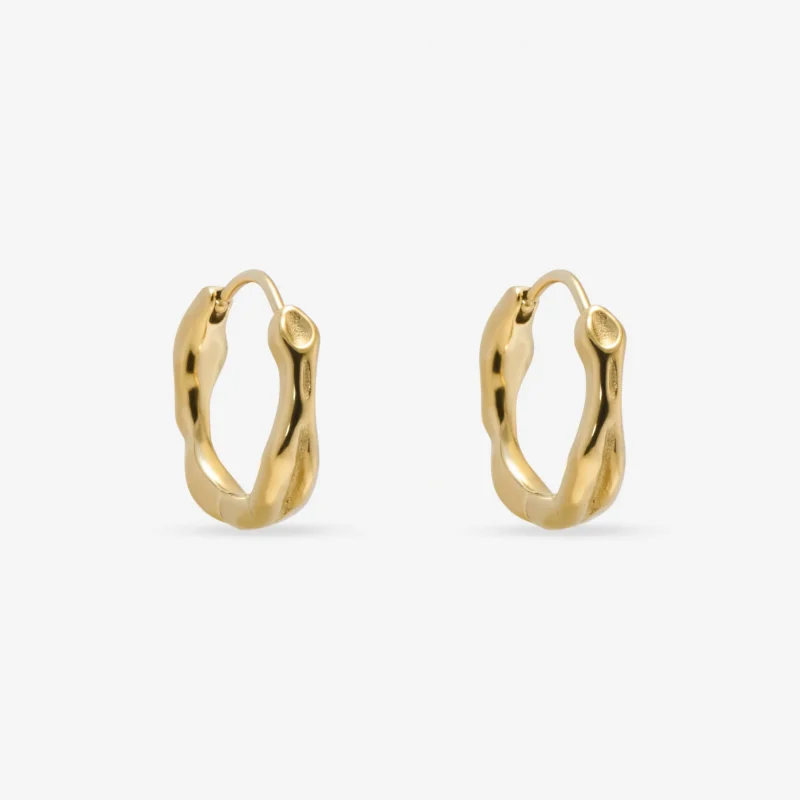
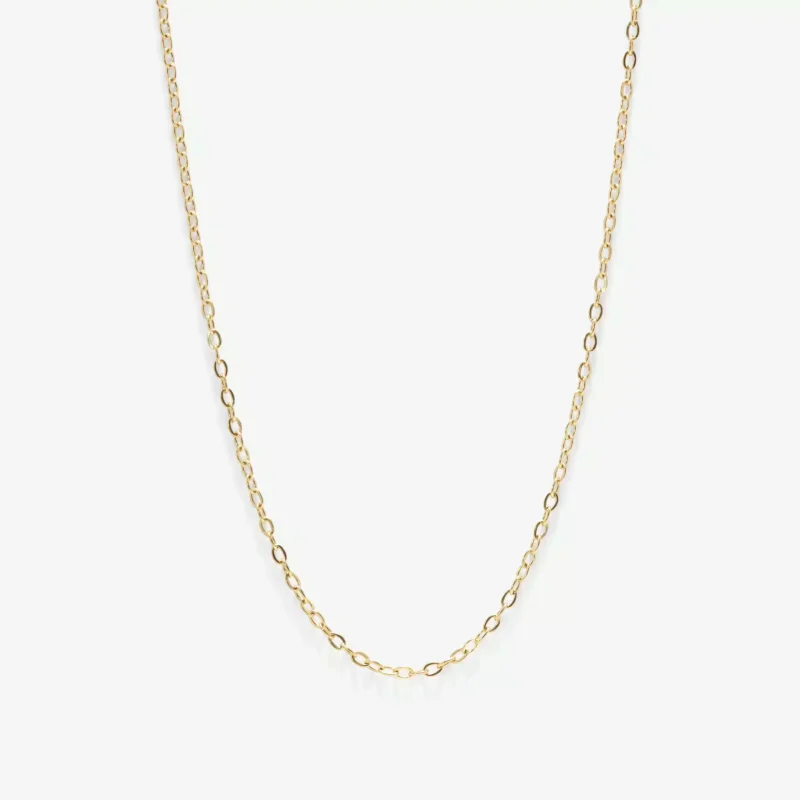
If you want jewellery you can keep on through the shower, the gym and a swim, our Molten Hoop Earrings and Dainty Chain are made for it, in waterproof, tarnish-free 14k gold PVD over recycled stainless steel. Both are skin-friendly and happy in water, with just a rinse and dry to keep them looking new.