

You put in a pair of earrings, get on with your day, and by evening your lobes are sore, itchy or red. It is one of the more disheartening little frustrations, especially when it happens with a pair you really wanted to wear. The instinct is to assume your ears are simply difficult, when usually there is a clear and fixable reason behind it.
If you are wondering why your ears react to earrings, the most common cause is a nickel allergy, where nickel in cheaper metal alloys irritates the skin. Friction, unhealed piercings and trapped moisture can all play a part too. The good news is that switching to hypoallergenic metals helps most people a great deal. Here is what tends to be going on, and what you can do about it. This is general guidance, so for any reaction that persists it is best to see a professional.
Why do my ears react to earrings?
In most cases, the answer is nickel. Nickel is a metal used in many inexpensive alloys, and it is one of the most common causes of skin allergies. When it sits against the skin of a pierced ear, especially with a little warmth and moisture, it can trigger redness, itching, swelling or a weepy patch around the piercing.
Beyond an allergy, a reaction can also come from friction, an unhealed or irritated piercing, or moisture trapped against the skin. Working out which it is usually points you to the fix. If the soreness is more about discomfort and pressure than itching or rash, our piece on why earrings hurt looks at that side in more detail.
Could it be a nickel allergy?
A nickel allergy is the most likely explanation if the reaction shows up as itching, redness or a small rash that appears with certain earrings and settles when you take them out. People who react to the metal button on jeans or to cheaper watch backs are often reacting to nickel there too, which is a useful clue.
A nickel allergy tends to be consistent: the same cheaper pairs cause trouble while better-quality metals are comfortable. It can also develop over time, so earrings you once wore happily may start to bother you. The reliable way forward is to choose earrings made from metals that keep nickel away from the skin, which the next section covers.
When it's friction, healing or trapped moisture
Sometimes the metal is fine and something else is the trouble. Heavy earrings, or backs done up too tightly, can rub and press on the lobe until it feels sore, which is friction at work, separate from any allergy. The fix there is lighter pieces and a looser, comfortable fit.
A newer piercing that has not fully healed is naturally more sensitive and more prone to reacting, so it pays to stick to gentle, body-safe metals while it settles. Moisture is another quiet culprit: water, sweat or product trapped between the earring and the skin can irritate the area and encourage bacteria. Drying your ears properly after showering and washing your hair, and giving earrings an occasional wipe, often calms things noticeably.
Which metals are kinder to sensitive ears?
Hypoallergenic metals are the ones that tend to help, because they keep common irritants like nickel away from the skin. Titanium is a popular choice for sensitive and freshly pierced ears, as it is body-safe and very low in reactivity. Surgical or 316L stainless steel is another widely recommended option, valued for being hard-wearing and gentle.
A quality PVD coating can help too. PVD bonds a layer such as 14k gold into the surface of the metal at a high temperature, sealing the base and giving a finish that stays put through daily wear, where thin plating can rub off over time. Earrings made from recycled stainless steel with a gold PVD finish bring those qualities together: hypoallergenic, waterproof and tarnish-free. Our guide to jewellery materials for sensitive skin goes further into what to look for.
How to settle and prevent a reaction
If your ears are reacting right now, take the earrings out and give the area a rest. Keep it clean and dry, avoid reinserting the same pair, and let any irritation calm before trying a gentler metal. Cleaning earrings before you wear them and keeping the backs comfortably loose both help going forward.
To prevent reactions, stick to hypoallergenic pieces, dry your ears well after washing, and avoid leaving heavy earrings in for very long stretches. If a reaction keeps coming back, lingers, looks infected or spreads, it is worth seeing a pharmacist, GP or another professional, who can advise properly and, if helpful, confirm whether a nickel allergy is behind it. None of the above is a diagnosis, so professional advice is the right next step for anything persistent.
What to do before you wear a new pair
A little care before you put earrings in goes a long way. Give a new pair a gentle wipe with a soft cloth to clear any residue from packaging or handling, and make sure your ears are clean and dry first. If the pair is new to you and you are at all unsure how your skin will respond, start by wearing them for a shorter stretch and see how the lobes feel before committing to a full day.
It also helps to check what a pair is actually made from before buying. Descriptions that mention nickel-free, hypoallergenic, titanium, surgical or 316L stainless steel, or a sealed gold PVD finish are good signs for sensitive ears. Vague labels such as fashion metal or gold-coloured alloy give no such reassurance, and those are often the pairs that cause trouble.
Earrings and a fully healed piercing
Once a piercing has healed properly, your ears generally become more tolerant, though a true nickel allergy will still react to nickel whatever the state of the piercing. If your ears settled down after the healing period and then started reacting again later, that points more towards the metal of a particular pair than the piercing itself.
Either way, sticking to body-safe, hypoallergenic metals removes the most common variable. If you have switched to gentle metals, kept your ears clean and dry, and a reaction still keeps returning or will not settle, that is the point to get it looked at by a professional instead of carrying on guessing.
Frequently asked questions
Why do my ears react to cheap earrings?
Cheaper earrings often contain nickel in their alloy, and nickel is a common cause of skin allergies. When it sits against a pierced ear it can cause itching, redness or swelling, which usually settles once you switch to a hypoallergenic metal.
How do I know if it's a nickel allergy?
A nickel allergy typically shows as itching, redness or a small rash that appears with certain earrings and eases when you remove them. Reacting to jeans buttons or cheap watch backs is a common related clue. A professional can confirm it.
What earrings are best for sensitive ears?
Hypoallergenic metals such as titanium and surgical or 316L stainless steel are kinder to sensitive ears. A good gold PVD coating over stainless steel also helps, as it seals the surface and keeps its finish through daily wear.
Can my ears suddenly react to earrings I used to wear?
Yes. A nickel allergy can develop over time, so pairs you once wore comfortably may start to bother you. Switching to hypoallergenic metals usually helps, and a professional can advise if it persists.
When should I see a professional about my ears?
See a pharmacist, GP or other professional if a reaction keeps returning, does not settle, looks infected or spreads. This guidance is general and not a diagnosis, so persistent problems should be checked properly.
Related pieces
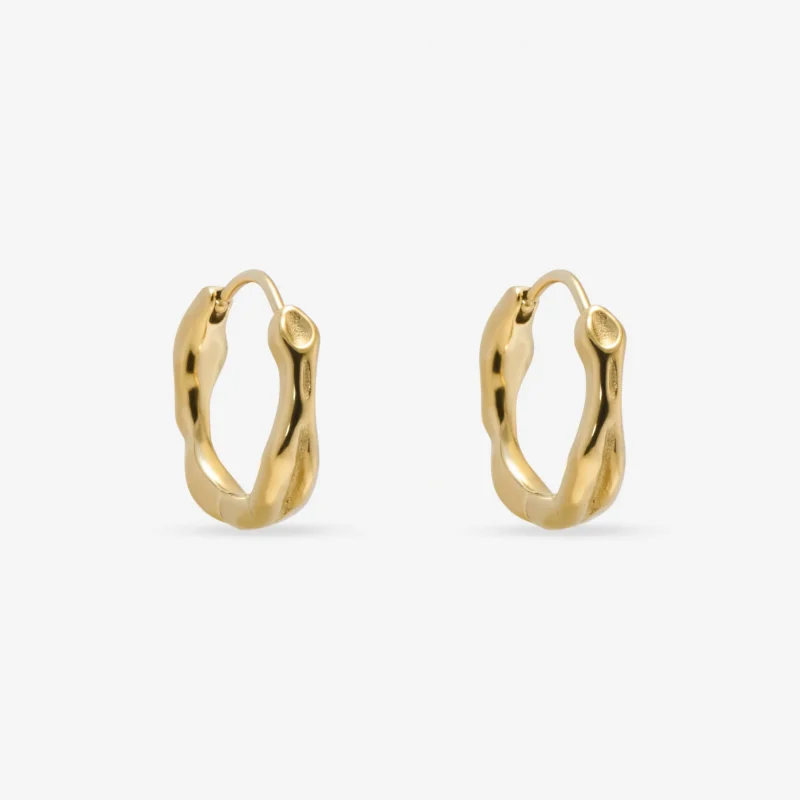
The Molten Hoop Earrings are made in recycled stainless steel with a 14k gold PVD coating, a hypoallergenic, waterproof and tarnish-free finish chosen with sensitive ears in mind. If you would rather start somewhere tried and tested, our best sellers gather the most loved everyday pieces, all in the same skin-kind materials made to be worn day after day.