

There is always that small hesitation at the edge of the pool, in the shower, or as the kettle steams and your hands are full. You glance at the chain you forgot to take off and wonder whether it will be fine. The short answer to whether you can wear gold-plated jewellery in water is that the occasional splash will rarely ruin a piece, though gold-plated jewellery is best kept out of prolonged water, because the plating wears faster when wet.
That is the honest version. A few seconds under the tap is one thing, and a daily swim, a long bath or a season of showers is another. Knowing the difference helps a favourite necklace last, and it explains why some everyday pieces are made to cope with water far better than others. The way a piece is made, and the water it meets, both decide how long the colour holds.
Can you wear gold-plated jewellery in water at all?
Yes, briefly and occasionally, with care. The thin layer of gold sits on top of a base metal, and water gradually works at that layer, especially where the piece rubs against skin or clothing. Gold-plated jewellery should be kept out of prolonged water so the surface keeps its colour and shine for as long as possible.
Think of it the way you might think of a good leather bag. A light shower will not undo it, but leaving it soaking will. The aim is to limit how often and how long your gold-plated pieces sit in water, so the plating stays put.
Why does water wear gold plating faster?
Plating is a fine coating measured in microns, and water speeds up the way it thins. Moisture lets the layer wear at the points of friction, and once enough of it has gone the base metal beneath begins to show through. This is why a plated chain can keep its colour for a long time when it stays dry, then fade more quickly once it is worn wet day after day.
Chlorine and salt water are harsher again. Pool chemicals and the sea both work at plated surfaces more aggressively than plain tap water, so they are the two to be most careful with. If a plated piece has been in either, rinse it in clean water and pat it dry before you put it away.
Is any gold jewellery actually water resistant?
Yes. PVD-coated stainless steel is water resistant, which is what sets it apart from standard gold plating. PVD, short for physical vapour deposition, bonds a hard gold-tone layer into the surface of the metal under high heat, so it holds up to moisture far better than a plated coating that sits on top.
That difference is the reason everyday waterproof jewellery is usually built from PVD-coated recycled stainless steel in place of gold plating. The colour stays gold, the surface stays sound through showers and washing-up, and the metal underneath does not rust. For a fuller comparison of the two finishes, our guide to PVD versus gold-plated jewellery walks through how each one is made and how long it tends to last.
What about showers, swimming and the sea?
For gold-plated pieces, the kindest approach is to take them off before a shower, a swim or a soak in the bath. Warm water, soap and shampoo all speed up wear, and repeated exposure is what shortens a plated piece's life. A single forgotten shower is not a disaster, though a daily habit will show in time.
Swimming pools and the sea ask for more caution because of the chlorine and salt. If you would rather not think about any of this, water-resistant PVD pieces are the easier choice for a life that involves the gym, the shower and the odd dip. Our guide to waterproof jewellery sets out which materials genuinely hold up to daily water.
How do I protect gold-plated jewellery from water?
A few simple habits make plating last. Put jewellery on last, after moisturiser, perfume and hairspray have dried, and take it off first when you get home. Keep plated pieces away from prolonged water, chlorine and salt water. If something does get wet, dry it gently with a soft cloth and avoid leaving it damp in a dish.
Store pieces somewhere dry, ideally a lined box or a soft pouch, so humidity is not working at them while they sit unworn. Keep them apart from harder items too, so the surfaces are not rubbing together in a drawer. None of this is fussy once it becomes routine, and it keeps a gold-tone piece looking its best for far longer. The pieces you reach for daily, in particular, repay a few seconds of after-wear care with a much longer life.
What about washing your hands and getting caught in the rain?
Everyday moments are gentler than they feel. A quick hand-wash with a plated chain or a bracelet on, or a short walk through a shower of rain, will not undo a piece. The wear that matters builds up from repeated, prolonged contact with water, so the odd splash is well within what a plated piece can take, especially if you dry it afterwards.
Where care helps most is with the things that combine water with chemicals: washing-up with hot soapy water, cleaning the bathroom, or hours by a chlorinated pool. For those, slipping a plated piece off first is the simplest protection. Build the habit around the big exposures and stop worrying about the small ones, and a gold-tone piece stays looking its best for far longer.
How long does gold-plated jewellery last with water exposure?
There is no single number, since it depends on how thick the plating is, how often a piece is worn wet, and what that water contains. A lightly worn plated piece kept mostly dry can hold its colour for a long time, while the same piece worn in the shower every day will fade much sooner. The points that rub against skin and clothing, such as the back of a chain or the inside of a bangle, tend to show wear first.
This is worth keeping in mind when you choose what to wear and where. A plated piece you save for occasions will outlast one you treat as an everyday item that goes everywhere with you. For jewellery you genuinely want to wear all the time, including in water, a water-resistant material such as PVD-coated stainless steel removes the guesswork, because its colour is bonded into the metal.
Frequently asked questions
Can gold-plated jewellery get wet?
It can handle the occasional splash, but it should be kept out of prolonged water because plating wears faster when wet. Dry it gently if it does get damp.
Will water ruin gold-plated jewellery straight away?
A one-off splash will rarely ruin a piece. The wear comes from repeated or prolonged exposure to water, and from chlorine and salt water in particular.
Can you wear gold-plated jewellery in the shower?
It is best to take plated pieces off before showering, as warm water, soap and shampoo speed up how quickly the plating thins.
Is gold-plated jewellery waterproof?
Standard gold plating is not waterproof. PVD-coated stainless steel is water resistant by contrast, which is why everyday waterproof jewellery is usually made that way.
Can you swim in gold-plated jewellery?
It is better to take plated pieces off first. Chlorine in pools and salt in the sea are harsher on plating than plain water.
How do I dry gold-plated jewellery after it gets wet?
Pat it dry straight away with a soft, lint-free cloth, paying attention to clasps and links where water can sit. Leaving a piece damp in a dish speeds up wear, so dry it fully before storing.
Does gold-plated jewellery rust in water?
The thin gold layer itself does not rust, but the base metal beneath can be affected once plating wears through. PVD-coated stainless steel resists this far better, as the steel underneath does not rust.
Related pieces
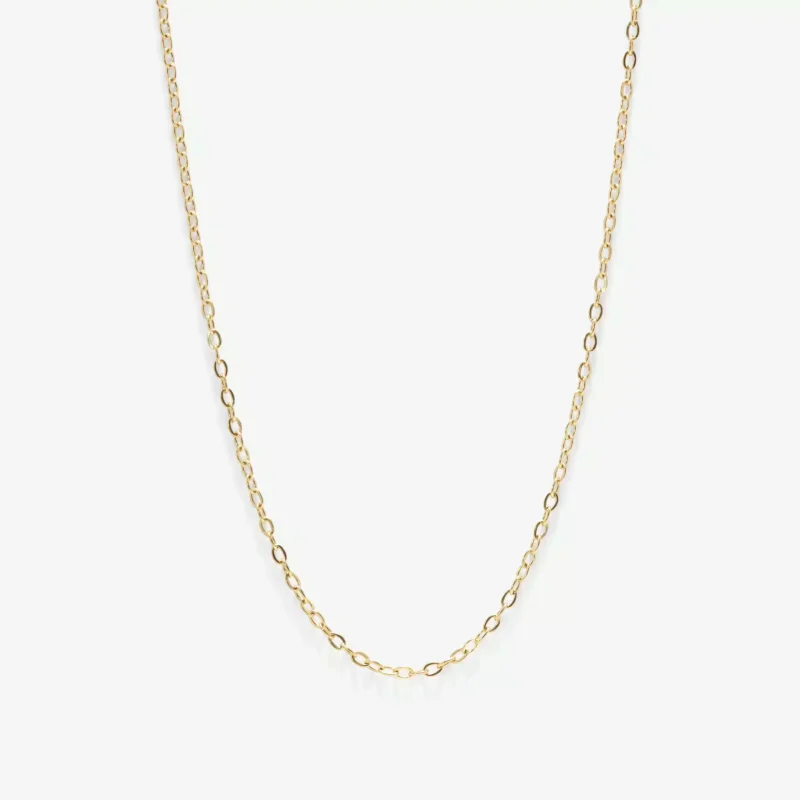
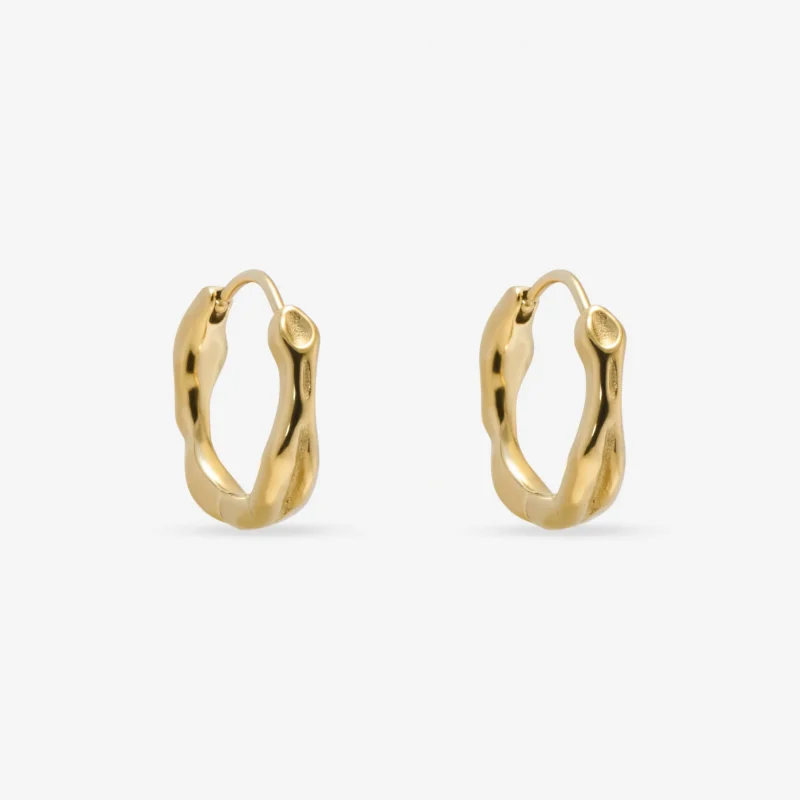
If you would rather not take a piece off every time you reach for the tap, the Dainty Chain and the Molten Hoop Earrings are made to keep up with everyday water. Both are waterproof and tarnish-free, finished in 14k gold PVD over recycled stainless steel, and the coating is hypoallergenic for sensitive skin.