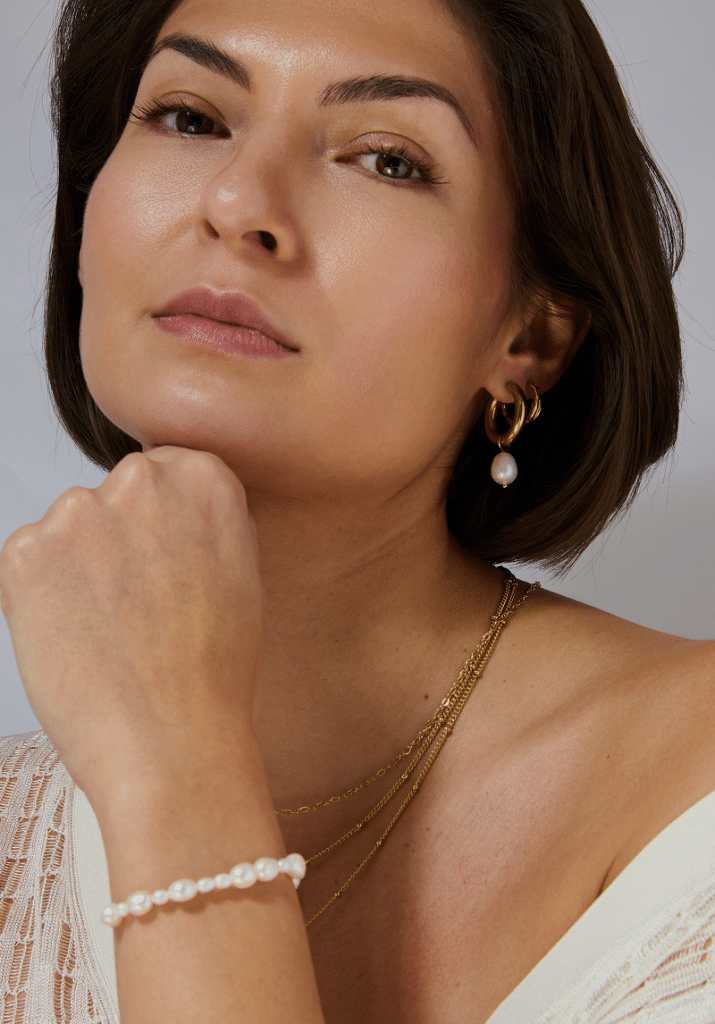


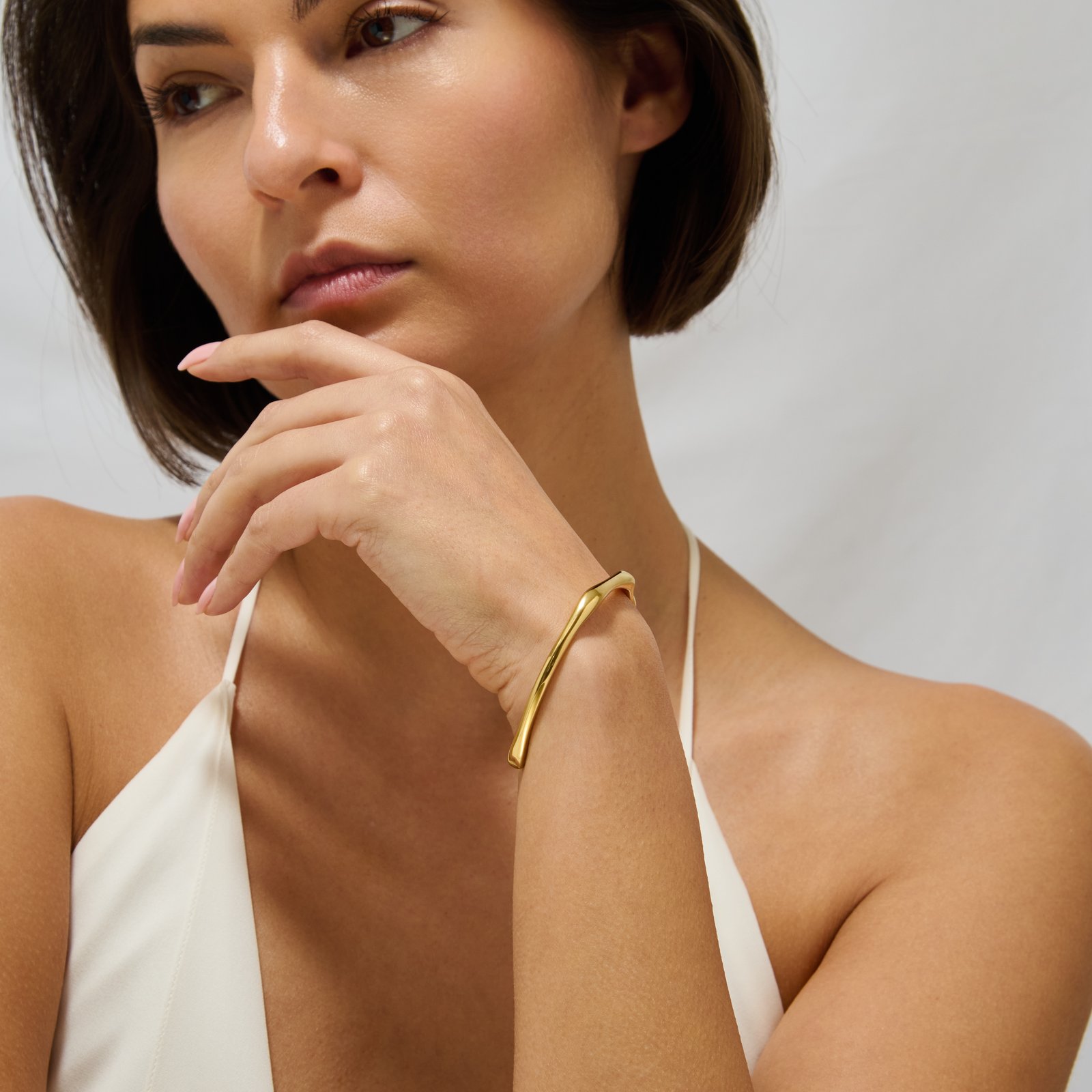
Stand at a jewellery counter and the words start to blur. Bangle, bracelet, cuff, all sitting in the same tray, all sliding onto the wrist, all apparently meaning something slightly different. If you have ever wondered which is which, the bangle vs bracelet question comes down to one thing above all: a bangle is rigid, and a bracelet is usually flexible.
That single difference shapes how each one fits, how it feels through the day and how you wear it. A bangle is a solid, rigid form that slips over the hand or hinges open to get on. A bracelet is generally a flexible piece, a chain or a cord, that fastens around the wrist with a clasp. Knowing which is which makes choosing far easier, so here is how they compare and how to decide between them.
What is the difference between a bangle and a bracelet?
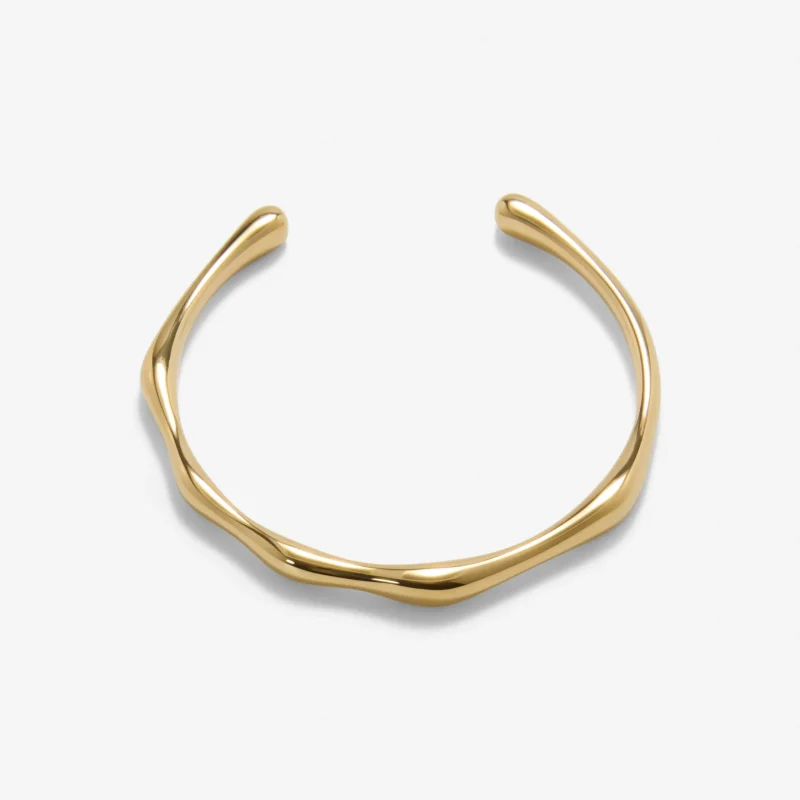
A bangle is a rigid bracelet. It holds its shape as a solid circle or oval and goes on either by slipping over the hand or by opening on a small hinge. A bracelet, by contrast, is usually flexible: a chain, a cord or a row of links that drapes around the wrist and fastens with a clasp.
So a bangle is one type of bracelet, the rigid kind, while bracelet is the broader word for almost anything worn around the wrist. The practical difference you feel day to day is movement. A bangle sits a little loose and can slide along the wrist, while a flexible bracelet follows the curve of your arm and stays closer to where you fasten it. Both have their place, and once you know which is which, choosing between them and pairing them becomes far more straightforward.
What is a bangle and how does it fit?
A bangle is a rigid band worn around the wrist. Because it holds a fixed shape, fit matters more than with a flexible piece: a slip-on bangle needs to be wide enough to pass over the widest part of your hand, while a hinged bangle opens to clasp closed and can sit closer to the wrist.
That rigidity gives a bangle its particular character. It moves a little as you do, with a gentle weight you notice in a pleasant way, and it keeps a clean, sculptural line on the wrist. A bangle can be worn singly for a quiet look or stacked with others, mixing widths and textures, which is part of why it has stayed popular.
What is a bracelet and how is it different to wear?
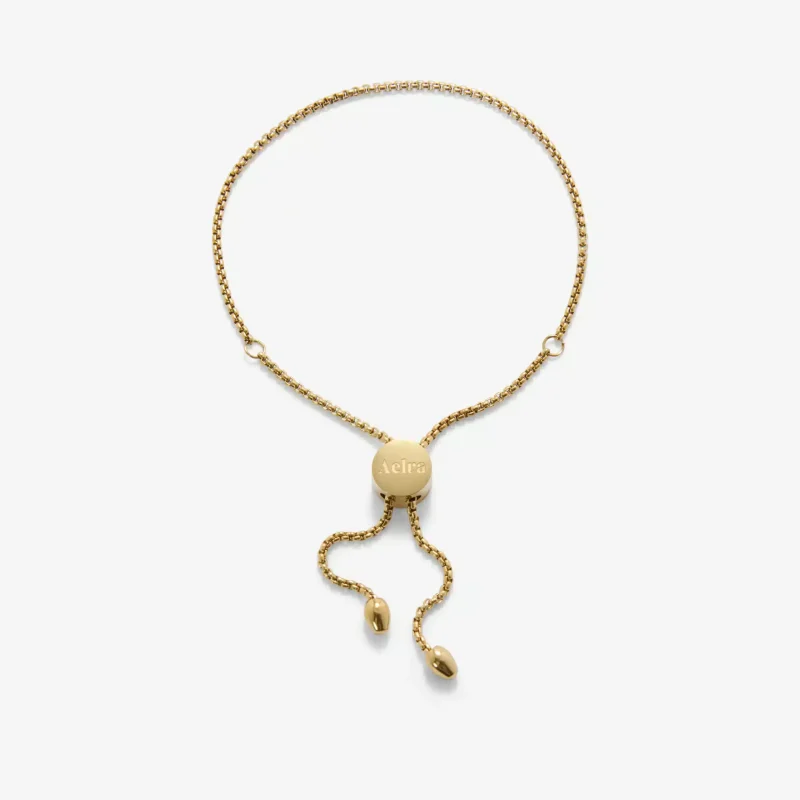
A bracelet, in the everyday sense, is a flexible piece that fastens around the wrist. Most use a clasp, which lets you size them more precisely so they sit where you want them. Chains, beaded styles and adjustable bolo designs all fall under this heading.
Because it bends, a flexible bracelet feels softer on the wrist and tends to stay put and stays close to where you fasten it. An adjustable style, such as a bolo bracelet that pulls to size, gives you control over the fit, which is useful if you want it snug for work and looser for the evening. This is the kind of bracelet many people find easiest to wear all day. Because the fit can be tuned so precisely, a flexible bracelet rarely needs to come off, which makes it a natural choice for a piece you want to live in through showers, workouts and everything in between.
Bangle or bracelet: which should you choose?
Choose a bangle when you want a clean, structured look and a piece with a little presence on the wrist. It suits anyone who likes the feel of something solid, enjoys a sculptural shape, and wants a piece they can wear alone or stack. A wider or textured bangle makes more of a statement; a fine one stays understated. Because a bangle holds its shape, it also keeps a tidy line on the wrist through the day, which suits anyone who likes a piece that stays looking neat from morning to evening.
Choose a flexible bracelet when comfort and a precise fit come first, or when you want something that moves with you and sits close to the wrist. An adjustable design works well if your wrist size sits between standard measurements. Many people own both and reach for one or the other depending on the day, and the two layer together beautifully, much as you might layer necklaces of different lengths.
How do you wear bangles and bracelets together?
The two combine well because their shapes contrast. A rigid bangle gives structure, a flexible bracelet adds softness, and worn on the same wrist they balance each other. Keep the metal tone consistent so the mix reads as one considered stack with a clear sense of order.
Start with two pieces you already like and add slowly, mixing widths and textures so each has its own role. A common approach is one bangle as the anchor with a finer bracelet alongside, leaving a little room so they can move without clashing. A tarnish-free finish such as 14k gold PVD over recycled stainless steel keeps a mixed stack looking even, which matters most when pieces sit side by side.
Do bangles and bracelets carry different meaning?
Neither word carries a fixed meaning on its own, and the symbolism comes from the design and from why a piece was chosen. A bangle has a long history across many cultures, where sets have traditionally marked occasions and milestones, and a stack of them can stand for a story built up over years. A flexible bracelet, especially a charm or initial style, often holds personal meaning through what is added to it.
For everyday wearers the difference is mostly practical, about fit and feel. Where meaning matters, it tends to live in the piece itself: a bangle gifted to mark a moment, or a bracelet built up with charms over time. Both can become keepsakes, and both gain a kind of significance simply through being worn day after day, which is true of most jewellery you keep close.
Frequently asked questions
Is a bangle the same as a bracelet?
A bangle is a type of bracelet, the rigid kind. Bracelet is the wider word for anything worn around the wrist, while a bangle specifically holds a fixed, solid shape that slips over the hand or hinges open.
What is the main difference between a bangle and a bracelet?
The main difference is rigidity. A bangle is rigid and keeps its shape; a bracelet is usually flexible and fastens with a clasp. That difference changes how each one fits and how it feels to wear.
Are bangles harder to put on than bracelets?
A slip-on bangle needs to pass over the hand, so the right size matters. A hinged bangle opens to make this easier. A flexible bracelet with a clasp is generally the simplest to put on and size.
Can you wear a bangle and a bracelet together?
Yes. Their contrasting shapes work well on one wrist. A rigid bangle gives structure and a flexible bracelet adds softness; keep the metal tone consistent and leave a little room so they move freely.
Which is more comfortable for everyday wear?
Many people find a flexible or adjustable bracelet most comfortable for all-day wear because it sits close to the wrist. A bangle suits those who like a little movement and a structured feel. It comes down to preference.
Can you stack bangles and bracelets?
Yes. Mixing a rigid bangle with one or two finer bracelets gives a stack both structure and movement. Keep the metal tone consistent, vary the widths, and leave a little room so the pieces sit comfortably side by side.
Related pieces
For the rigid look, the Molten Bangle has a soft, sculptural finish you can wear singly or stack with others. For an adjustable flexible style, the Dainty Bolo Bracelet pulls to your size and sits close to the wrist all day. Both are made in waterproof, tarnish-free 14k gold PVD over recycled stainless steel, and hypoallergenic, so they suit everyday wear and sensitive skin alike.