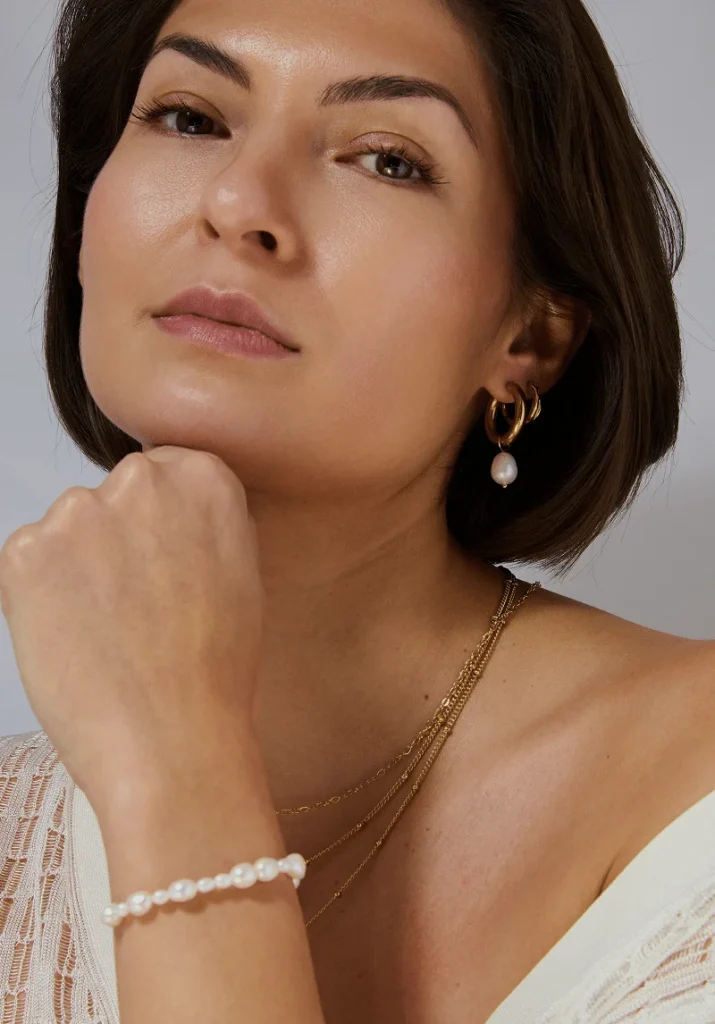


There is a small thrill in getting a second piercing, and then a slightly daunting moment in front of the jewellery drawer wondering what actually goes in it. The first hole you have worn for years, so it almost dresses itself. The new one feels like a blank page, and most of us hover over it for a while before committing. If you have only ever worn one pair of earrings, a second piercing can feel like learning a small new language of studs, huggies and placements.
The most flattering earrings for a second piercing are usually smaller and lighter than your main pair, with neat studs and snug huggies leading the way for the upper hole. Keeping the scale down lets the two piercings read as a considered pair, and gives a fresh hole the room it needs while it heals. The rest is styling, and that part is genuinely enjoyable once the worry is out of the way.
What earrings suit a second piercing?
For a second piercing, smaller studs and huggies tend to suit the upper hole best, while your original piercing can carry the larger or more decorative piece. The idea is balance: one anchor earring lower down, then something daintier above it, so the ear feels styled and uncrowded. A pair of large statement pieces in both holes can fight for attention, where a small-over-large arrangement settles into a clean line.
Studs are the easy starting point. A small ball, a tiny stone or a simple shape sits flat against the ear and works with everything from a jumper to an evening dress. Huggies are the natural next step, hugging close to the lobe with a low profile that stays put through a busy day. Both keep the weight light, which matters when a piercing is still settling in and you do not want anything pulling on it.
Which earrings are kindest while a new piercing heals?
While a piercing heals, the metal touching your skin matters more than the style. Hypoallergenic pieces are the comfortable choice for a fresh hole, and following your piercer's aftercare is the part that keeps it on track. Hypoallergenic jewellery is metal chosen to be low in common irritants, so it can sit against sensitive, healing skin with less chance of a reaction.
Recycled stainless steel with a 14k gold PVD coating is one option that suits everyday wear, since it is skin-friendly and the colour stays put through showers and daily life. Lighter pieces also help in the early weeks, because a heavy drop can tug on a hole that has not fully closed around the post. When in doubt, keep it small, keep it light, and let your piercer guide the timings, with no need to rush the look.
Studs or huggies for the upper hole?
Both work, and the choice comes down to the feeling you want. A stud in the upper hole keeps things quiet and tidy, which is lovely if your main piercing already has something with presence in it. A huggie in the upper hole adds a little more shape and a hint of movement, so it reads slightly bolder while still sitting close to the ear.
A reliable combination is a stud in one hole and a huggie in the other, so the ear has a point of focus without competing pieces. If you like symmetry, two small studs feel polished and easy. If you prefer interest, pair a plain stud with a patterned or textured huggie and let them play off each other. There is no wrong answer here, only the one you keep reaching for. Spacing helps too, since two holes set close together suit smaller pieces that will not knock against each other.
How do you style two piercings together?
Think of the two holes as a tiny composition. Most ears look balanced with the larger or shinier piece in the lower hole and the smaller one above, so the eye travels up the ear in a natural line. Keeping a shared thread between them, the same metal tone or a repeated motif, holds the whole look together even when the two earrings differ.
An easy formula is a hoop or a small drop in the first hole and a stud or huggie in the second. If you fancy a fuller curated stack across more piercings later, this two-hole pairing is the foundation everything else builds on. Start with pieces you already love, wear them for a few days, then add slowly once you can see what the ear is asking for. A second piercing tends to settle into a favourite combination after a few weeks of wearing, and that combination usually becomes the look you default to.
When can you change a second piercing earring?
Healing times vary by person and by where the piercing sits, so the safest answer is to follow the timeline your piercer gives you, which matters more than any fixed rule of thumb. A lobe piercing generally settles faster than cartilage higher up the ear, which can take several months. Changing too early can irritate the hole and set healing back, so a little patience pays off.
Once it has healed, swapping pieces becomes the fun part. Keep a small rotation of studs and huggies you love, all in a hypoallergenic metal, so changing your earrings becomes a quick everyday pleasure, with the worry behind you. A waterproof, tarnish-free finish means you can leave them in through showers and workouts without watching the colour fade.
How do you keep a second piercing comfortable day to day?
Once a piercing has healed, a little routine keeps it happy. Cleaning the earrings now and then, drying the ear after showers and giving the skin a break from anything that pulls all help. A lightweight, hypoallergenic pair is the kindest everyday choice, since it sits without weight and without the common irritants that can leave an ear feeling sore.
It also helps to keep your second-piercing pieces in a small, easy-to-reach spot, so changing them takes thirty seconds, with no hunt through a tangled drawer. A waterproof, tarnish-free finish means the same pair can stay in through the gym, the pool and the morning rush without the colour wearing thin, which is what makes everyday wear genuinely effortless.
Frequently asked questions
What earrings are best for a second piercing?
Smaller studs and snug huggies suit a second piercing best, especially in the upper hole, with the larger piece kept in your original piercing for balance.
Can you wear huggies in a second hole?
Yes. Huggies sit close to the ear with a low profile, which makes them comfortable for a second hole once it has healed. Choose a lightweight pair while a piercing is still new.
What metal is best while a second piercing heals?
A hypoallergenic metal is the comfortable choice while a piercing heals, as it is chosen to be low in common irritants. Always follow your piercer's aftercare for timings and cleaning.
How long before you can change a second piercing earring?
It depends on the person and the placement, with cartilage usually taking longer than the lobe. Follow the healing timeline your piercer gives you, which matters more than a set number of weeks.
Should both piercings match?
They do not have to. A shared metal tone or a repeated motif keeps two piercings looking like a pair, even when the actual earrings differ in size or shape.
Related pieces
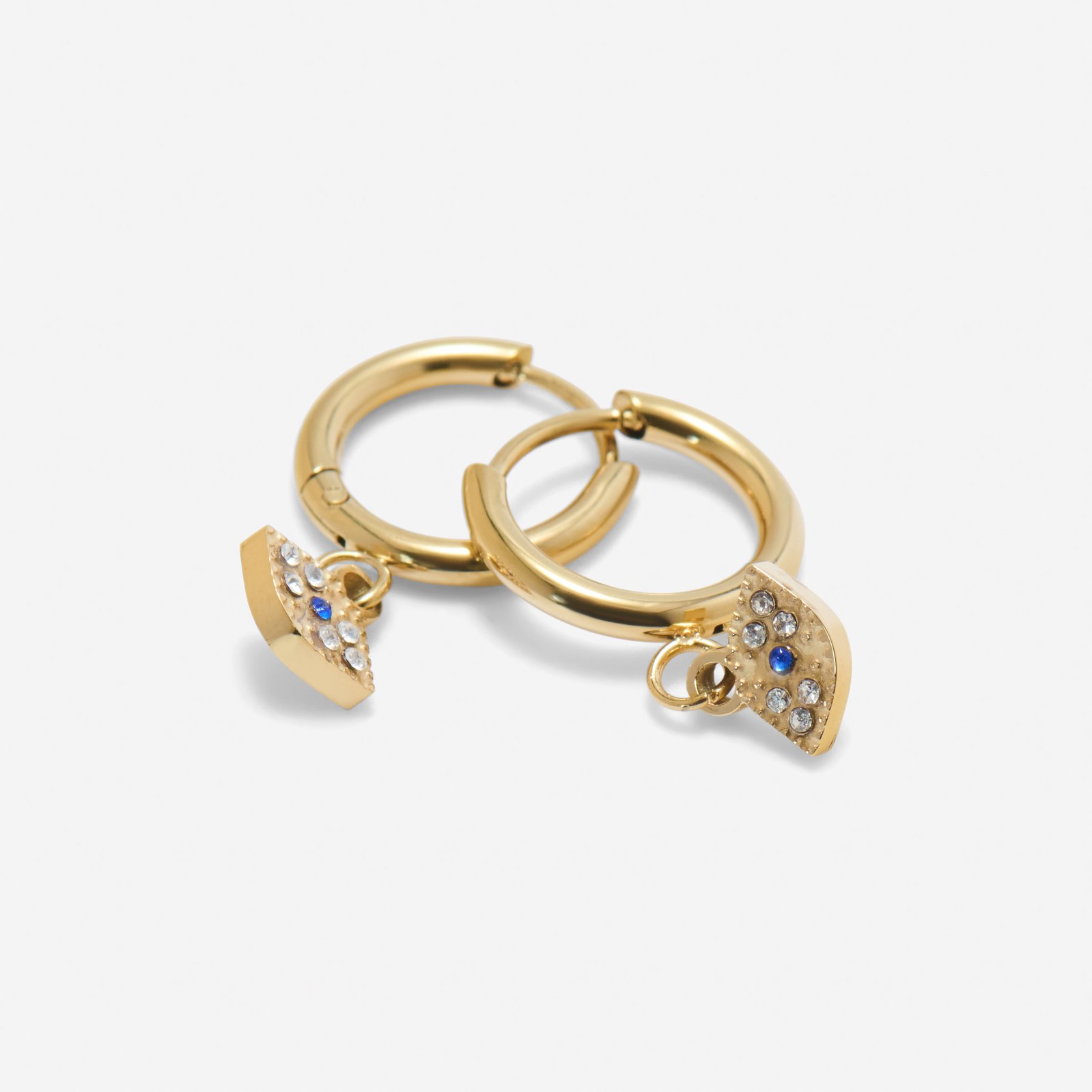
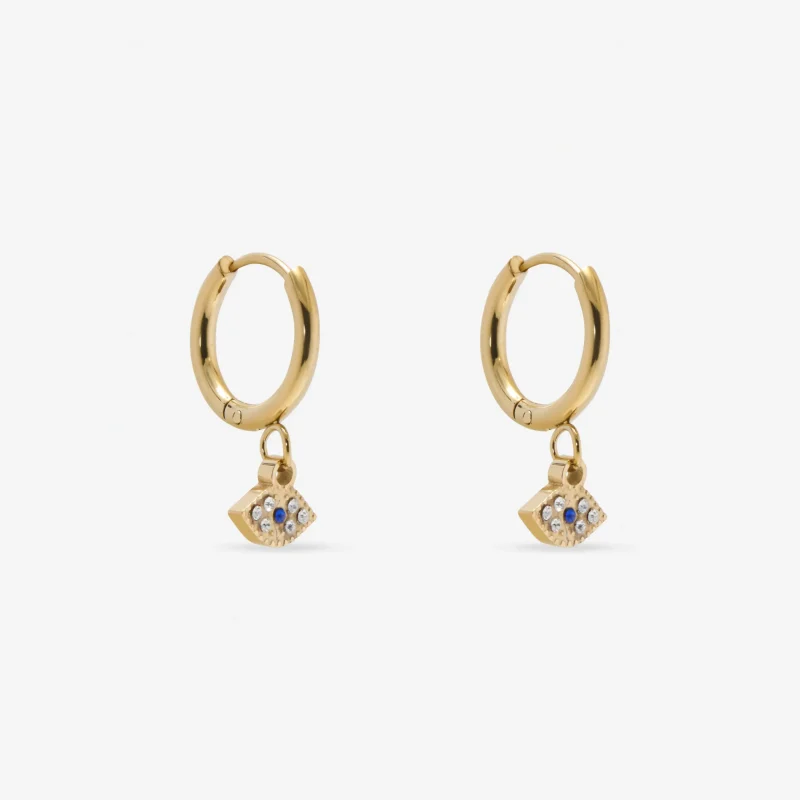
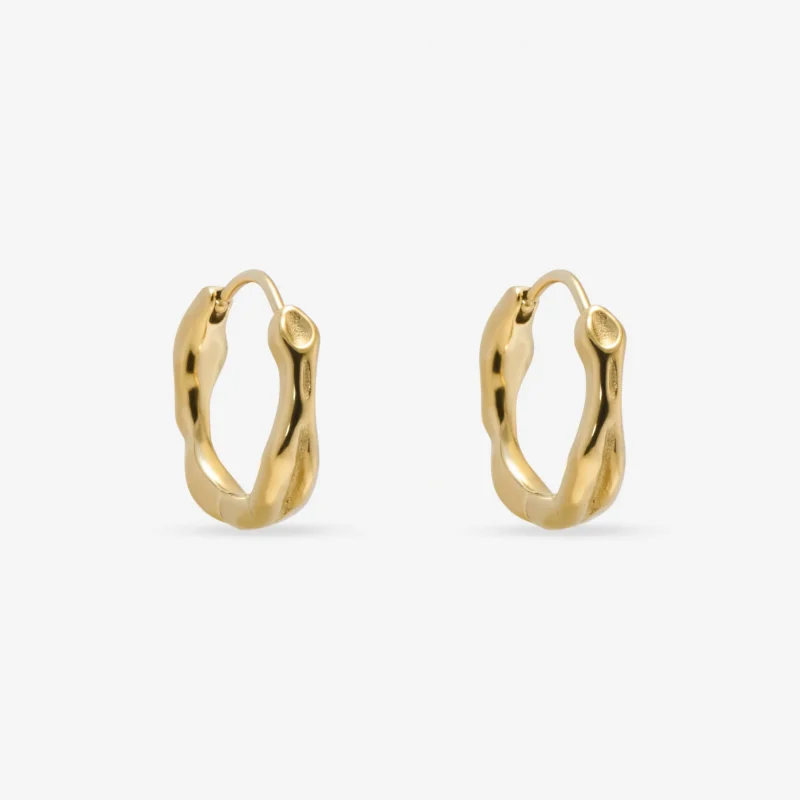
For a second piercing, the Evil Eye Huggie Earrings sit snugly in the upper hole and add a little meaning, while the Molten Hoop Earrings make an easy anchor piece for your original piercing. Both are made in skin-friendly, waterproof, tarnish-free 14k gold PVD over recycled stainless steel, so they suit everyday wear once your piercing has healed. If you are weighing up styles, our guide to what huggie earrings are explains how they sit on the ear, and our notes on earrings for sensitive ears cover what to look for in a kinder metal.