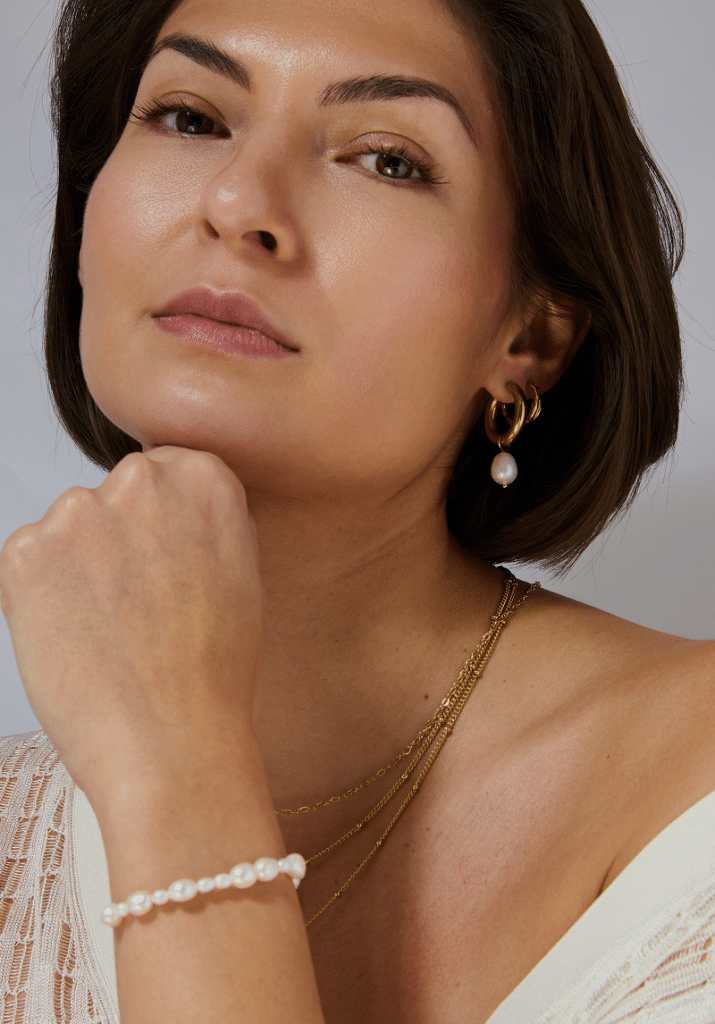


There is a particular morning most of us know well. You are half dressed, the day is already running ahead of you, and you reach into the drawer for whatever you wear without thinking. The pieces you grab are the ones that have quietly earned their place, the ones that go with everything and never ask for attention. Learning how to style jewellery for everyday wear comes down to choosing a few comfortable, durable pieces that share one metal tone, keeping the number low, and picking shapes that suit the day you actually have.
Everyday jewellery works under different demands from pieces saved for occasions. It has to stay comfortable for hours, survive constant movement, and combine without much thought each morning. The sections below cover what everyday jewellery needs to do, how to mix pieces, how to keep a look intentional, and how to make a small set carry you through a full schedule.
What does everyday jewellery actually need to do?
Everyday jewellery has to be comfortable, durable, and easy to combine, because you wear it for long stretches and across changing settings. A piece that leaves the house with you every day takes on demands that occasional jewellery never faces. It moves with you, it meets water and friction, and it has to read correctly in more than one context. Those are functional requirements before they are decorative ones.
A necklace you wear daily should sit comfortably under layers, resist tangling, and stay light enough not to tug. Earrings should hold whether you are moving through a busy day or resting your head against a seat. A bracelet should sit close to the wrist without catching on sleeves. Pieces made for formal events can be elaborate or fragile at little cost, because they come out rarely. Everyday pieces handle constant wear, so the standard has to be higher.
The material matters as much as the shape. Recycled stainless steel with a 14k gold PVD coating is waterproof, tarnish-free, and hypoallergenic, so a piece can stay on through washing up, exercise, and rain while being treated as something hard-wearing. PVD, short for physical vapour deposition, bonds the gold colour into the surface at a molecular level, which is why it holds up to daily handling far better than a thin plated finish. The best everyday pieces recede from attention and simply work.
How do you choose everyday pieces for the life you actually live?
Choose everyday pieces around what you genuinely do most days, around the real version of your routine. People tend to overestimate how much their habits will change, then buy delicate pieces for a still, formal life they rarely lead. A piece designed for stillness sits awkwardly against casual clothes and practical tasks, however well made it is.
Look at the plain evidence. Which clothes do you repeat most? Where do your hands and body move most freely? An everyday piece needs to survive that real day. Maintenance is part of this. Pieces that need frequent polishing, careful storage, or regular adjustment tend to stay in the drawer, because every morning they ask a question: does this match, is it secure, will today damage it. Each question costs a little energy. A good everyday piece removes the question.
This is design alignment, and it holds for travel too. Packing a small set teaches you quickly what you reach for and what you only thought you would wear. The pieces you keep choosing under constraint are the ones that have genuinely earned a place in your day.
How many pieces should you wear, and why does fewer often look more considered?
Fewer pieces usually read as more intentional because the eye can form a clear composition. When someone wears several pieces, the eye tries to group them into one picture. With no shared logic in metal tone, weight, or focal point, the result can look accidental, as though the pieces happened to land together. A clean pairing of two earrings in the same metal reads as a set, and a single pendant draws the eye to the neckline.
One piece is far from the only good answer. The point is that each piece you add should strengthen the overall look. A third necklace stacked on two others, plus a second bracelet and busy earrings, tends to add noise where you wanted depth. A piece earns its place when it serves a clear part of the composition.
Many people who wear a small, coherent set have learned through daily wear which combinations hold together and which fall apart. That comes from watching the results over time, more than from counting pieces against a rule.
How do you mix metals and pieces without it feeling messy?
Mix jewellery around a shared base, then add contrast only when it is clear and purposeful. Your eye reads coherence through consistency: pieces in the same metal tone look intentional, pieces of similar weight look like a set, and pieces with a shared design language look chosen. Start from a base that holds something in common, often a single metal tone or a shared minimal style. That base becomes your anchor.
Anything you add should either reinforce the anchor or contrast with it on purpose. Mixing metals works when one tone is clearly primary and the other clearly secondary. Mixing styles works when one style leads. Two pieces of equal weight from entirely different traditions tend to read as undecided, with neither one settling the look. A warm 14k gold tone makes a steady anchor because it sits well against most colours and skin tones.
The way to learn this is to try combinations and watch them across a few days. Notice which feel coherent and which feel scattered. Over time the judgement becomes intuitive, and you stop planning each morning.
How do you build a small set that works across a full day?
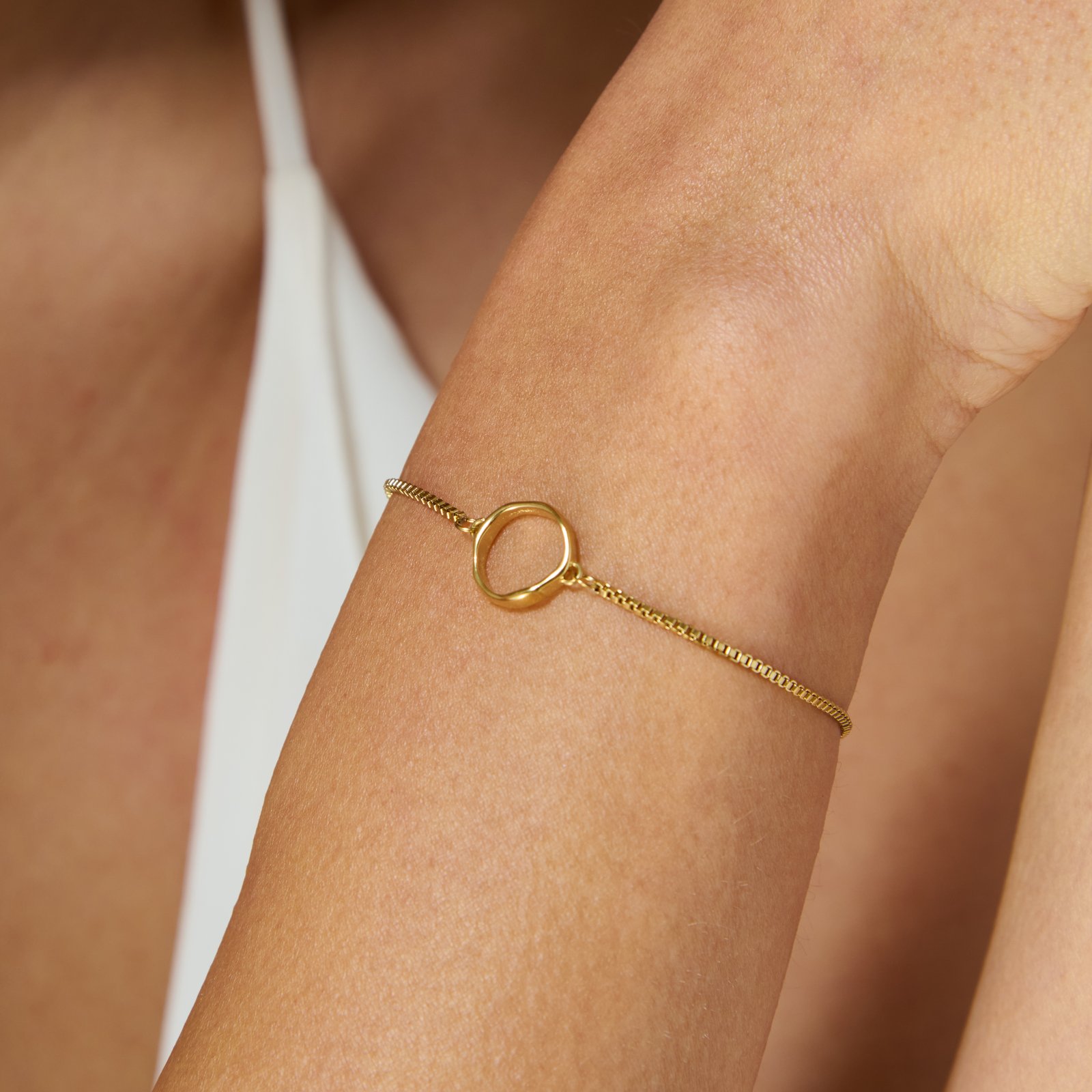
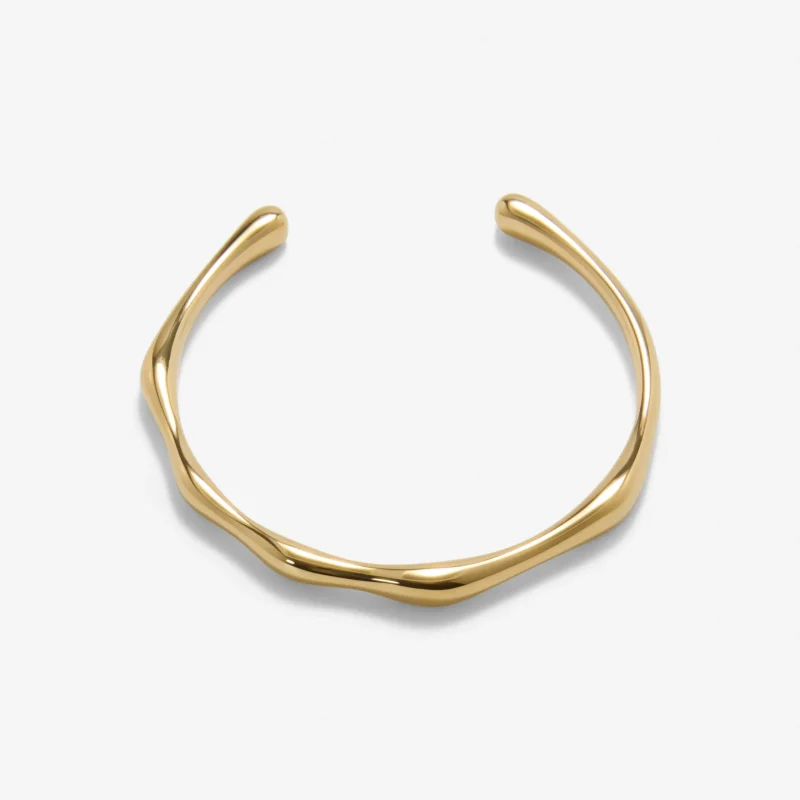
Build a small everyday set from versatile pieces that combine in many ways. A simple chain in a standard length works with most necklines. Minimal hoop earrings suit most outfits. A plain bracelet in your main metal extends the set without demanding coordination. These choices give you compositional flexibility, so you can reach into the drawer without a plan and have the pieces work.
A full schedule rewards this most. When your day runs from morning to evening with little pause, you dress once and the look has to hold across every context that follows. Pieces tied to a single setting force a swap when the context changes. Pieces that read correctly in casual, work, and evening settings carry you straight through. The friction of changing disappears because there is nothing to change.
Movement is part of the comfort. A pendant balanced against its chain stays centred as you lean and reach, and a hoop close to the ear stays put as you turn your head. Pieces that move quietly with the body, settling instead of catching or swinging, are the ones you forget you have on. The aim is jewellery that becomes part of the day: present, comfortable, and out of mind until you take it off.
Frequently asked questions
What jewellery is best for everyday wear?
The best everyday jewellery is comfortable, durable, and easy to combine: a simple chain, minimal hoop earrings, and a plain bracelet in one metal tone. Pieces in recycled stainless steel with a 14k gold PVD coating are waterproof, tarnish-free, and hypoallergenic, which suits constant wear.
How many pieces of jewellery should I wear each day?
There is no fixed number, though a small set usually reads as more intentional. Many people settle on a chain, a pair of earrings, and one bracelet. Add a piece only when it strengthens the overall look.
Can you mix gold and silver jewellery for everyday wear?
Yes, as long as one tone clearly leads and the other plays a supporting role. Mixing metals reads as deliberate when one is primary and one secondary, and unsettled when both compete equally.
Is everyday jewellery safe to wear in the shower or while exercising?
It depends on the material. Recycled stainless steel with a 14k gold PVD coating is waterproof and tarnish-free, so it can stay on through washing, exercise, and rain. Thin plated pieces wear faster and are better kept dry.
How do I keep everyday jewellery looking good?
Choose a tarnish-resistant material so constant wear does not dull it, then wipe pieces occasionally with a soft cloth. A waterproof, hypoallergenic finish means you can wear pieces through ordinary life without careful storage or frequent polishing.
Related pieces
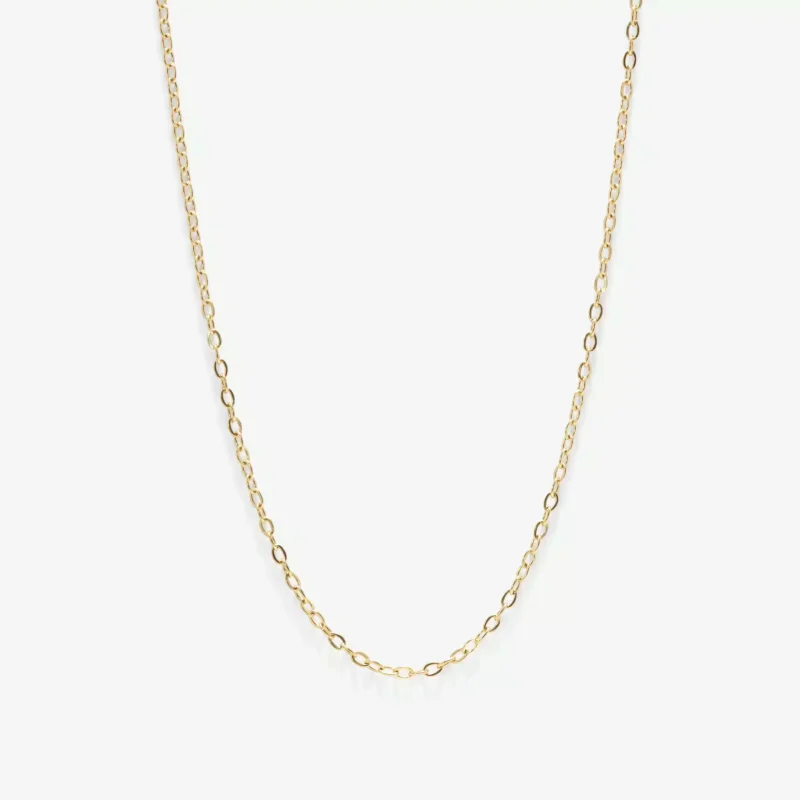
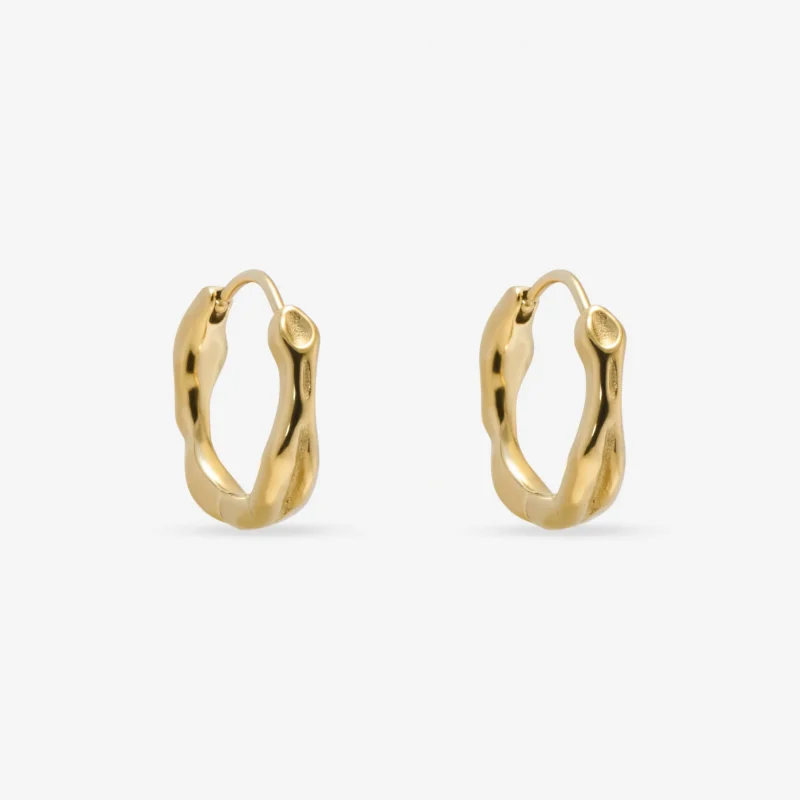
The Dainty Chain is a clean, standard-length necklace that anchors an everyday set and sits comfortably under layers or on its own. Molten Hoop Earrings stay close to the ear and read as intentional through a full day of movement, which makes them an easy default. Both are made in recycled stainless steel with a 14k gold PVD coating, so they are waterproof, tarnish-free, and hypoallergenic, ready for the kind of constant wear everyday jewellery has to handle.