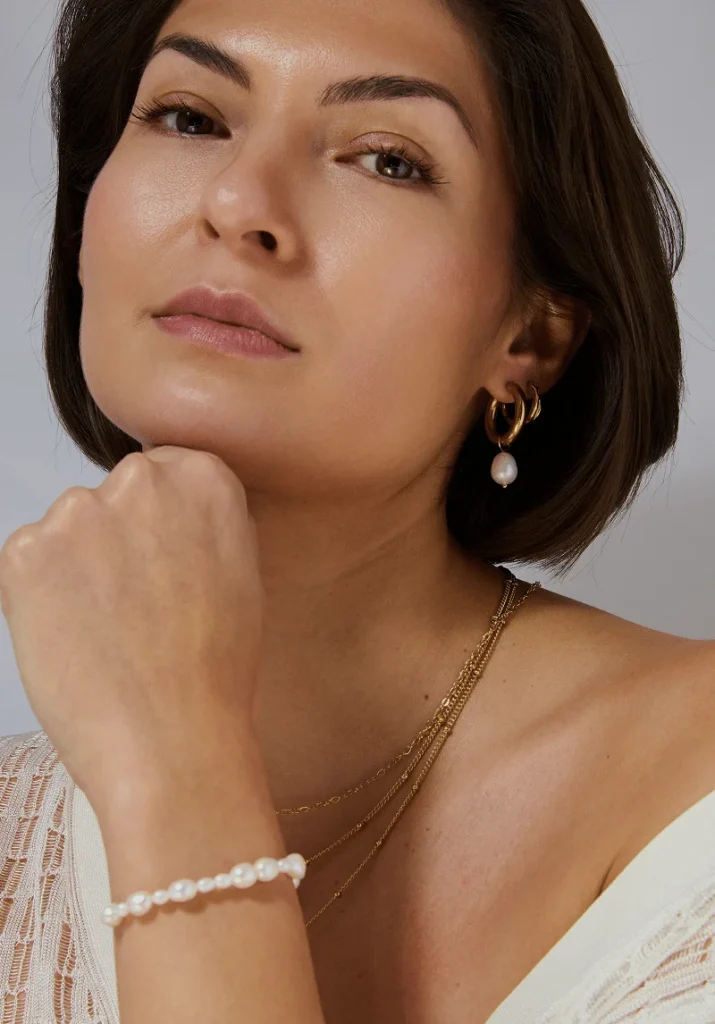


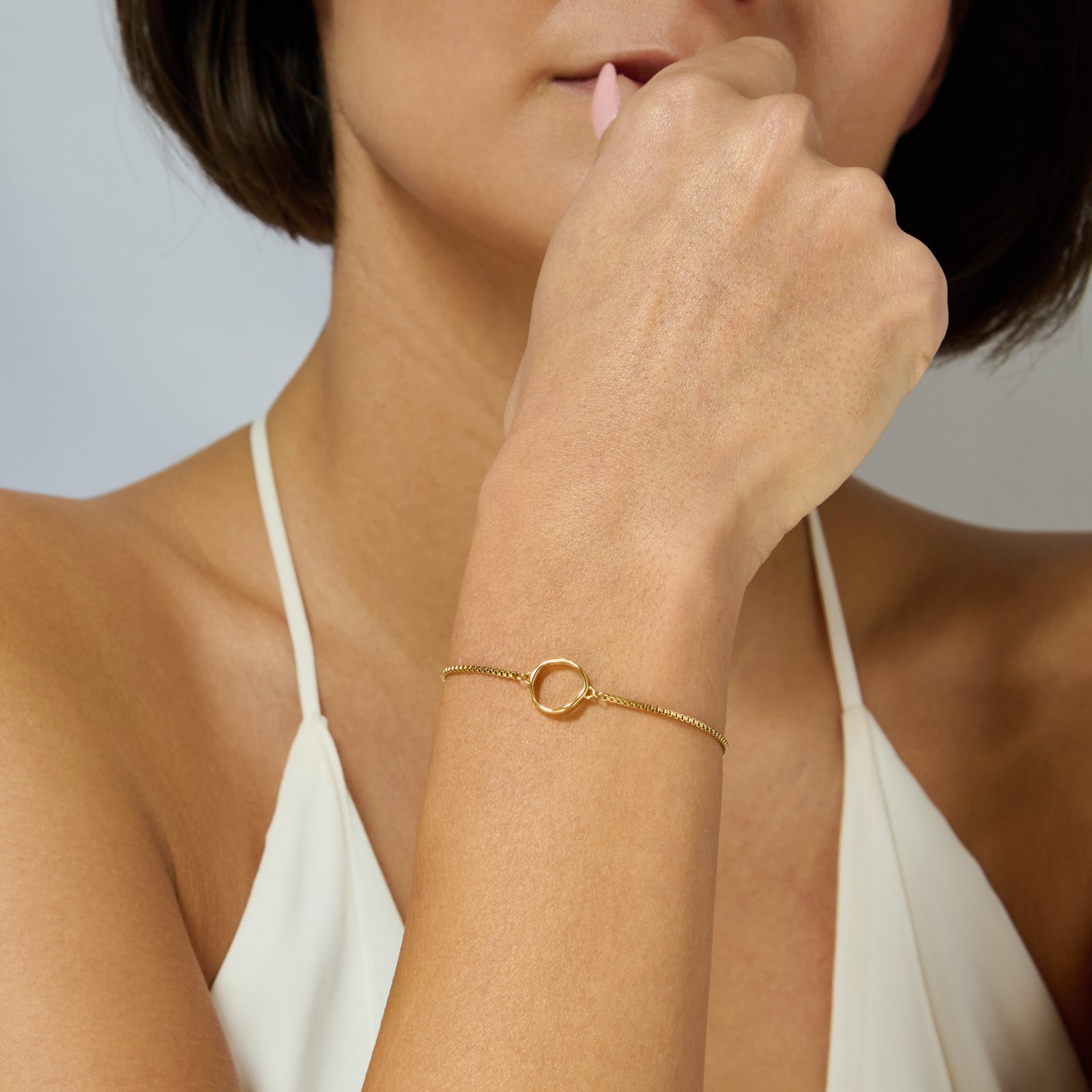
A necklace picked up almost on a whim can sit unremarkably in the first week, then turn up two years later as the one piece you would hate to lose. Most of us have watched it happen to something we own. Jewellery becomes more meaningful over time because its significance is not fixed at the moment of purchase. It builds gradually through wear, repeated contact, and the moments a piece is present for, until an ordinary necklace or bracelet feels difficult to part with. This guide looks at how that shift happens, why some pieces become sentimental while others stay static, and why we keep certain pieces for life.
Why is a piece rarely most meaningful at the point of purchase?
A piece is rarely most meaningful when you buy it, because meaning tends to be built over time, gathered through wear. We tend to assume significance comes from the occasion a piece belongs to, yet a person's relationship to an object usually deepens gradually, often quite separately from where or why it was first bought. The pieces people come to value most tend to be the ones bound up with relationships and lived experience more than cost.
This shift has little to do with the object changing. A piece you wear repeatedly becomes embedded in the texture of daily life, gathering small moments as it goes. The attachment builds through use, which means, simply, that the more you interact with something, the more it tends to matter. The process is gradual and largely unnoticed, which is why the significance of a piece can surprise you when you finally register it.
How does wearing a piece change how you feel about it?
Wearing a piece changes how you feel about it through familiarity. Repeated encounters tend to increase preference. When you wear a bracelet several times a week, your senses become attuned to its weight, its texture, and how it catches the light. Your hand knows where it sits before you look. Over months, this contact shifts your perception of the piece, since familiar objects ask less of you and so come to feel more comfortable, and comfort tends to register as preference. This happens whether or not you intend it.
Familiarity is only part of the story. A piece worn during charged moments tends to pick up emotional weight from them. The mind seems to store objects alongside the emotional and sensory detail of the situations they were present for. A necklace worn through your first month in a new city can become linked to the particular light of that winter and the quiet nervousness of that time. The necklace did not cause those feelings. The piece and the period became intertwined, so wearing it again tends to make that period more accessible.
How does a shared history build between a person and a piece?
A shared history builds through accumulation. Over several years, a single piece gathers a rich associative record. You wear it on ordinary days, during conversations that change things, while doing things you did not know you could do. The piece becomes a record of that passage through the accretion of moments, until people sometimes describe long-held pieces almost as companions.
Physical change in a piece is part of this. Jewellery worn daily begins to show fine wear: micro-scratches on a bracelet, a softened surface, small marks of handling. These changes tend to carry meaning. Visible signs of use often increase attachment, because the wear is evidence that the object has been part of your life, which can make it feel more irreplaceable. The pull comes from the mark of your particular use, more than from rarity.
This is one practical reason material quality matters in a piece you intend to keep. A design that holds up to daily wear can accumulate this kind of history without failing along the way. Recycled stainless steel with a 14k gold PVD coating resists tarnish and stands up to water and regular handling, so a piece can age into significance instead of wearing out first.
What is the difference between trend jewellery and meaningful jewellery?
The difference is that trend jewellery is chosen for a moment, while meaningful jewellery is chosen, and then re-chosen, over years. A trend piece tends not to gather personal associations, partly because it is often set aside before those associations can form. People tend to adapt quickly to things bought purely for their own sake, so the initial pleasure fades. A piece tied to experience and relationship resists that fading, because its value keeps being renewed each time it is worn.
A piece you choose yourself, with no obvious occasion attached, often takes longer to become significant. When it does, the significance tends to be more durable. You have chosen it many times over, and each time you put it on, you are choosing it again. This repeated choice builds attachment differently from significance assigned by a single occasion. It is quieter at the start and stronger in the end, which is why understated pieces so often become the ones people keep.
Why do we keep certain pieces for life?
We keep certain pieces for life because they cross a threshold from being liked to being part of us. At some point, a piece stops feeling like a choice you made and starts feeling like part of yourself. You reach for it without thinking, and leaving the house without it registers as a small lack. This tends to happen with pieces that have gathered enough use and emotional resonance to blur the line between preference and attachment.
Preference is a conscious choice, while attachment runs deeper and is not something you decide. Once an object carries strong association, the thought of parting with it can generate genuine resistance, out of all proportion to its market value. This is why a piece you no longer even wear can still feel impossible to give away. The attachment has accrued through repeated contact and through presence during moments that mattered.
This is also why jewellery is so often the last thing discarded. Clothes wear out and are replaced, furniture is changed, electronics become obsolete, while a necklace given at a significant moment may be kept for decades and passed on. Because a piece is small, durable and personal, it gathers association in a way that larger or more functional objects do not. When a piece carries a relationship or a moment, it becomes almost irreplaceable, which is the particular capacity of jewellery: to hold what matters in a form that can be worn, carried and passed on.
Why does jewellery feel different after a major life change?
Jewellery feels different after a major life change because the piece carries the context of who you were when you wore it. Memories tend to come back more readily when something about the present matches the time they were formed, and a familiar object can act as that cue.
A piece worn heavily through one chapter becomes bound to that chapter. After a move, a loss, or a change in how you see yourself, putting the piece on can return some of that earlier context, which is why a familiar necklace can suddenly feel weightier than it did. The object has not changed. What has changed is the distance between the person wearing it now and the person who wore it then, and the piece sits across that distance, holding both.
Frequently asked questions
Why does jewellery become more sentimental over time?
Because it gathers association through wear. Repeated contact and the moments a piece is present for become linked to it, so an ordinary piece slowly turns into a record of a period of your life.
Why do people keep jewellery they no longer wear?
Strong attachment forms through years of contact and memory, and that bond does not disappear when wear stops. Parting with such a piece can feel like a small loss of self, even when it no longer fits daily life.
Does jewellery need to be expensive to become meaningful?
No. Meaning comes from use and association more than price. A modest piece worn for years through significant moments usually carries more weight than a costly piece kept aside for occasions.
Why does old jewellery feel different after a big life change?
A piece worn through one chapter becomes linked to it. After a major change, wearing it again can bring back some of that earlier context, so the piece feels heavier with meaning than it once did.
Related pieces
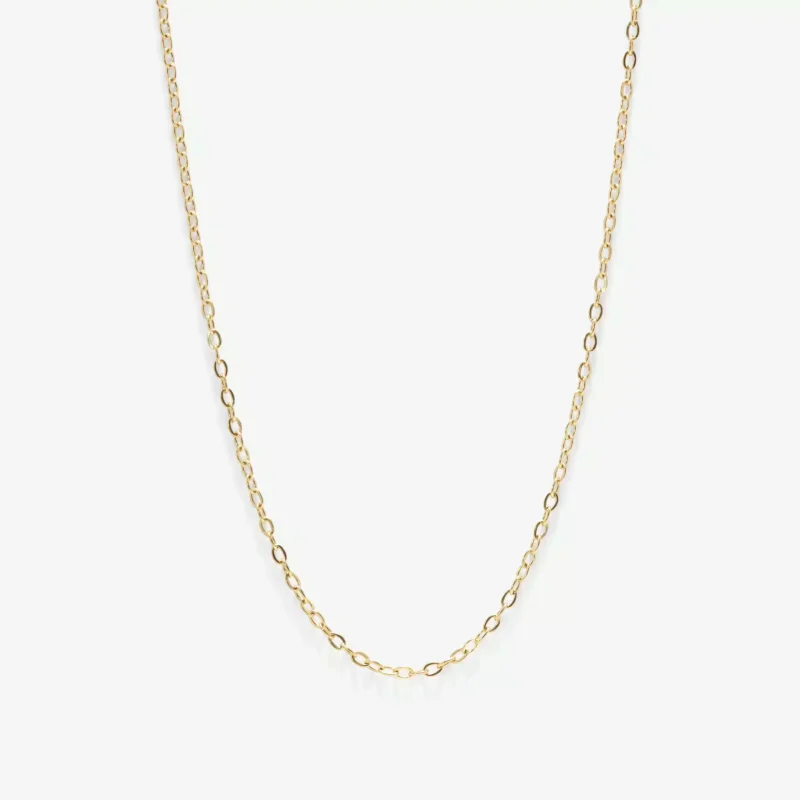
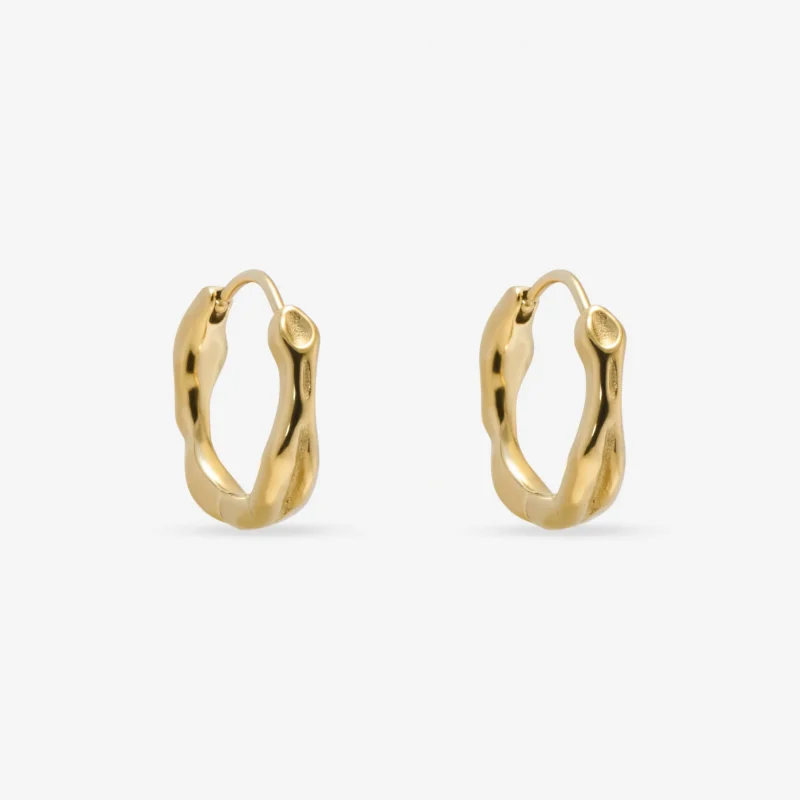
If you are choosing a piece with the intention of keeping it, look for something simple enough to wear constantly and made well enough to age gracefully. A Dainty Chain sits close to the skin and works across daily life, which gives it the steady contact that builds meaning over the years. A pair of Molten Hoop Earrings can become a daily constant in the same way, familiar enough to put on without thinking. Both are made from recycled stainless steel with a 14k gold PVD coating, so they are waterproof, tarnish-free and skin-friendly, built to accumulate history instead of wearing out before it forms.