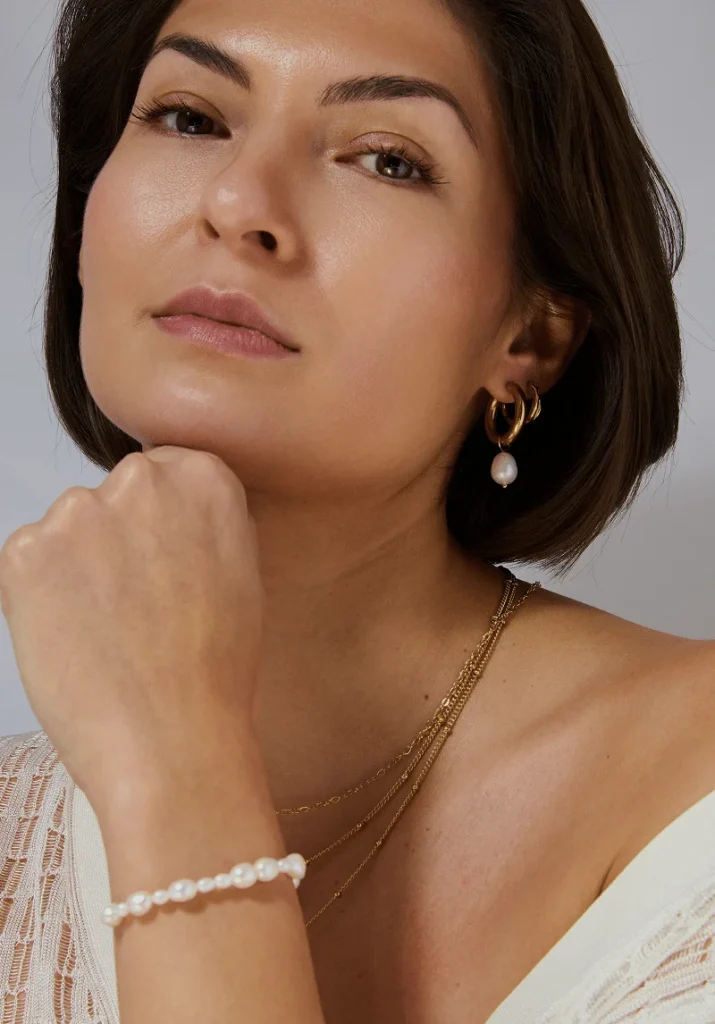


Most of us have caught sight of a single letter resting at someone's collarbone and wondered, just for a second, who it was for. That small curiosity is the whole point of it. The initial necklace meaning is rarely written on the surface, because the letter carries whatever significance the wearer has quietly given it. It stands for a name, and through that name for a person, a relationship, or a moment that mattered, and the rest of the meaning builds slowly, until the letter feels less like a label and more like part of the person wearing it.
What does an initial necklace mean?
An initial necklace means whatever the letter points to. Most often it stands for the wearer's own name, worn as a quiet form of self-recognition. It can just as easily stand for a child, a partner, a parent, a sibling, or someone who has died, worn as a way of keeping that person close through the day. The wearer gives the meaning, and the design simply holds it.
This is what sets an initial piece apart from something chosen purely for how it looks. A plain pendant invites people to judge it on appearance alone. A letter asks a different question. It is about something, and what it is about belongs to the inner life of the person wearing it. Someone who notices the necklace knows the letter means something, though they will not always know what. That gap, between the visible letter and its private reference, is where most of the meaning lives.
Why does a single letter carry so much weight?
A letter folds a great deal into very little. The initial stands in for the name, the name stands in for the person or the moment, and the moment stands in for everything it held. That compression is part of the appeal. The piece carries its significance while asking the wearer to explain nothing to anyone.
Specificity is what gives the piece its emotional weight. A design that refers to something particular, a certain person or a certain time, tends to mean more to its owner than one that is simply well made. A plain letter on a fine chain may look minimal, yet the reference is exact. It points to one name, which points to one person, and that narrowness is what makes the piece feel close, more than merely decorative.
Because the reference is so precise, the meaning is also durable. A letter does not go out of fashion. The name it stands for keeps its significance. The relationship it marks goes on mattering, even as it changes in character over the years.
How does an initial necklace become more personal over time?
At the moment it is bought or received, an initial necklace feels personalised in an applied sort of way. The letter has been chosen and made, so it carries intention, yet it still feels slightly formal. The wearer recognises their name there without the piece feeling saturated with meaning. Its significance is largely promised, still ahead of it: this is for you, and what it comes to mean will grow with wear.
Daily wear changes that. When the necklace is put on every morning, the deliberate sense of personalisation softens. The wearer stops consciously registering the letter, and it becomes simply part of what they wear, as unremarkable as a collar or a sleeve. The piece has been absorbed into ordinary habit. On the rare day it is forgotten, its absence is felt straight away.
It is often said that the possessions people hold closest are the ones tied to their sense of who they are and where they have been. An initial necklace meets that description almost by definition. The letter refers to someone particular, so the piece connects directly to identity and history, and that connection tends to deepen as the years gather around it.
Why does initial jewellery stay relevant across decades?
Initial jewellery sits in a category of design that survives changing taste, usually because the form has been reduced to its minimum: a letter, a metal, a fastening. There is nothing in it to date, nothing to tire of, no stylistic flourish to grow old-fashioned. A necklace with an initial chosen in 1990 reads as current as one chosen last year, because the form has no period style to fall out of.
The idea itself is far from new. Monograms appeared on textiles, leather and metalwork across European cultures for centuries, marking ownership and standing. Personal seals bearing initials have been worn as jewellery since at least the medieval period. The basic form, a letter in metal worn against the body, has changed very little, because it solves a clear need in a way that asks for nothing more.
Most personalised objects age because they are personalised through addition: a date printed on a case, a phrase stitched onto a bag. An initial works differently. It is a pure identifier, a letter and no more, so it cannot become a dated phrase. It stays current because it has always simply been constant.
Does the meaning of an initial necklace change as life changes?
The letter stays the same while the life around it keeps moving, and that contrast is part of what gives the piece its weight. A necklace bought to mark the birth of a child carries one set of associations at the time. Years later, after that child has grown and moved away, the same letter carries a different but connected meaning. The reference holds steady while what it anchors keeps developing.
People often choose initial jewellery at turning points, with little thought for fashion: a birth, a milestone birthday, a graduation, the start or end of a relationship, a move, a loss. The piece marks the occasion and anchors something that might otherwise pass without a physical record. Because the reason for choosing it comes from inside a life, the piece is largely insulated from fashion cycles. It still means what it meant, even in seasons when initial jewellery is quiet.
This is also why initial pieces tend to be kept far longer than pieces bought for their look alone. A letter tied to someone loved feels irreplaceable, because replacing it would mean replacing the connection. Many of these pieces stay in daily wear for decades, and a good number are passed on, gathering a second person's history alongside the first.
Why do people often own more than one initial piece?
It is common to own several initial pieces, and together they tend to map a set of relationships. A person might wear their own letter alongside a child's, or pair a sibling's letter with a parent's. Worn at different lengths, fine initial necklaces create a small composition that reads as personal without being legible to everyone. A stranger sees a stack of delicate chains. Someone who knows the wearer understands what each letter stands for.
That double reading is part of the appeal. The jewellery is present and visible, while its specific meaning stays with the wearer, shared only with those who already know the context. The same quality lets an initial piece work as a kind of signature, the piece a person becomes known for, worn so steadily that others come to associate it with them. Because the design is simple, it can be worn every day without coordinating with anything, which is exactly what allows it to become that constant.
Frequently asked questions
Is it strange to wear your own initial?
No. Wearing your own initial is the most common way to wear an initial necklace and reads as quiet self-recognition. The letter marks the piece as yours and tends to feel private even when others can see it. It is worn for the wearer, and the personal meaning matters more than any impression it makes.
What does it mean to wear someone else's initial?
It usually marks a close relationship. People wear the initial of a partner, child, parent, sibling or someone they have lost as a way of carrying that person with them through the day. The meaning is relational, and the focus sits on the other person.
Do initial necklaces go out of style?
Rarely, because the form is reduced to a letter, a metal and a chain, with no period detail to date it. Its value comes from what the letter means to the wearer, which sits outside fashion cycles.
Why does an initial necklace feel more meaningful over time?
Because it is present through ordinary days and significant ones alike. As the years gather around it, the piece becomes a record of continuity, and the letter holds steady while the life around it changes.
Related pieces
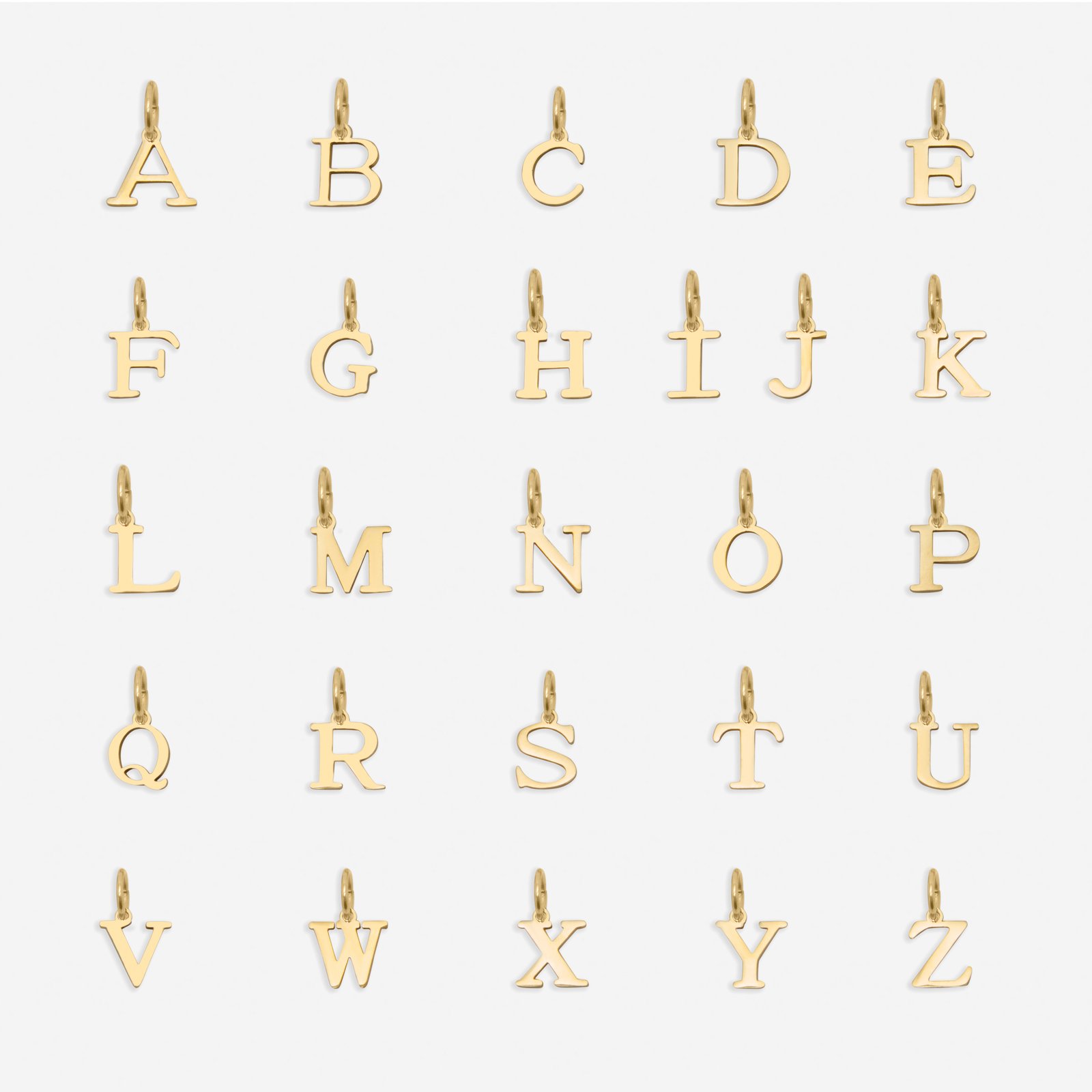
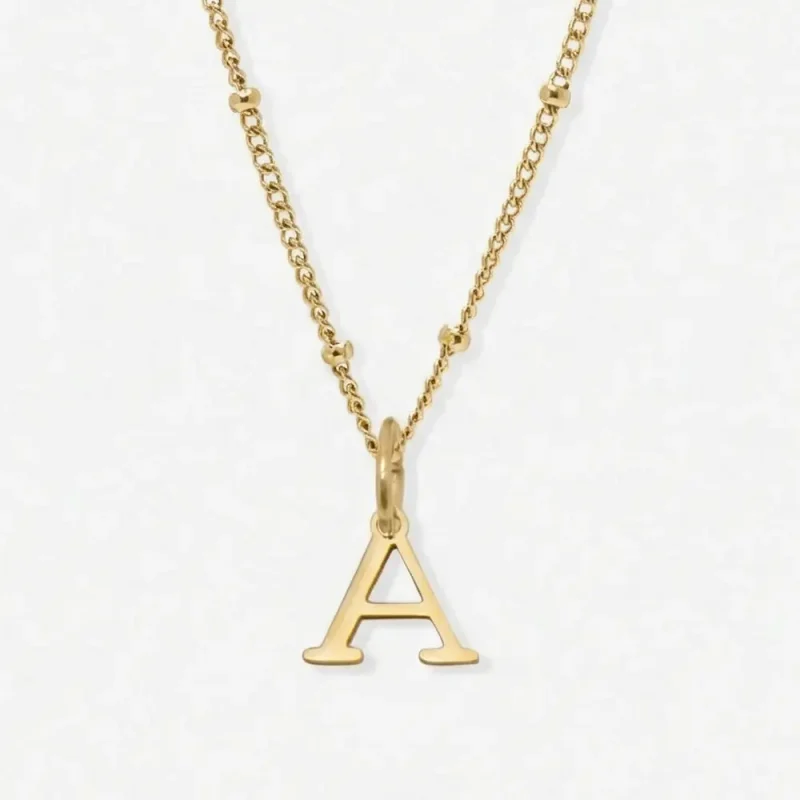
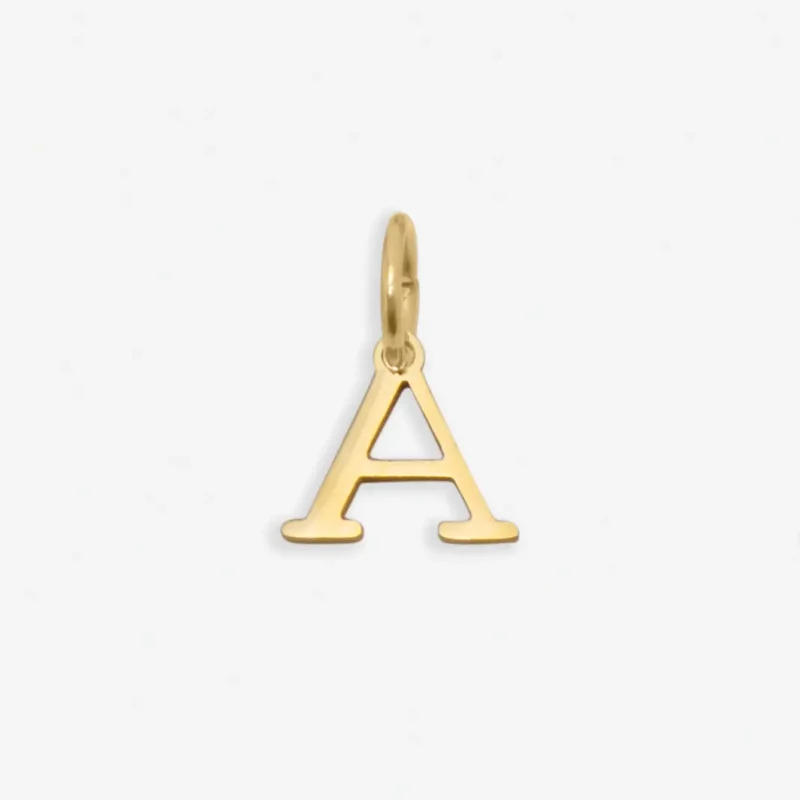
An Alphabet Necklace renders a single chosen letter in recycled stainless steel with a 14k gold PVD coating, waterproof and tarnish-free for everyday wear. Alphabet Charms let you add or layer more than one initial as relationships and moments accumulate over time. For more on choosing whose letter to wear, read our guide on whose initial to wear, and for why meaning often matters more than design, see our piece on personalised jewellery.