

Think of the spot where your jewellery lands at the end of the day. A dish on the bathroom shelf, a tangle at the back of a drawer, the edge of the basin. How to store jewellery comes down to keeping pieces dry, separated and away from damp and direct light. The pieces that gain most from good storage are the ones worn often, because they are taken off and put down many times, and those short in-between moments add up to how a piece looks months and years on.
Why storage matters even for pieces you wear often
Storage can seem like a concern only for jewellery kept in a box for long stretches. In practice, frequently worn pieces are removed several times a day, set down during washing or sleep, then put back on. Where they sit in those gaps has a cumulative effect on how they look over time.
The chemistry of tarnish treats an overnight rest much like a longer one. The factors are the same: moisture, reactive gases in the air and contact with other metals. A necklace left on a bathroom counter night after night meets damp conditions that a piece stored well never does, and the effect builds. Cleaning a piece before it goes away helps too, so it is worth pairing storage habits with a simple approach to how to clean jewellery.
None of this means storage has to be elaborate. The pieces worn most are the ones least likely to put up with a complicated system, because a fiddly routine gets skipped on a busy morning. A simple, convenient setup that gets used every day protects a piece far better than a careful one that gets ignored. The few seconds it takes to put a piece in its spot, instead of on the nearest surface, are what keep it looking new over months of regular wear.
How to store jewellery to prevent tarnish
Tarnish and surface dulling are driven by moisture and reactive gases in the air, so storing pieces somewhere dry and stable slows them down. Humidity is the main factor: water vapour gives these reactions the medium they need. Keeping jewellery out of bathrooms and kitchens, where the air is often damp, makes a measurable difference.
Make sure pieces are dry before they go away. Pat them gently after any water exposure so they are not adding their own moisture to the drawer. A lined box or individual pouches in a cool, dry spot keeps the air around each piece calmer. Anti-tarnish pouches and small silica packets help further with pieces that are more reactive, by taking up moisture and trapping the gases that cause tarnish.
Materials make a difference here as well. Stainless steel with a PVD coating is stable enough that it does not tarnish in the way more reactive metals do, so it asks little of its storage beyond staying dry and separated. More reactive pieces, silver in particular, gain the most from anti-tarnish pouches and a dry, enclosed spot, since they change surface more readily when left in open, humid air. Matching the storage to the material means each piece gets what it actually needs, with no extra effort spent on pieces that do not call for it.
Keeping pieces separated and tangle-free
Storing pieces apart does two jobs at once: it stops them scratching each other, and it avoids metal-to-metal contact that can speed surface change when any moisture is present. Individual pouches, a compartmented tray or dedicated hooks all keep pieces from jostling together in a dish or jumbled drawer.
It is also worth keeping jewellery away from rubber and latex, which give off sulphur compounds that tarnish silver quickly. A simple divided tray near where you undress is enough for most people, and because it is convenient, it actually gets used. The point is to make the right place the easy place, so the piece goes there by habit, with no effort to think about.
Separation pays off most for pieces that share a drawer. Harder pieces and textured chains can leave fine scratches on softer or polished surfaces when they shift against each other during handling. Giving each piece its own pouch or compartment removes that contact entirely, and it makes the morning quicker because nothing has to be untangled first. Earrings keep their pairs this way too, since a small divided section stops one half wandering off to the bottom of a drawer.
The best way to store necklaces and chains
Necklaces and fine chains are the pieces most prone to tangling and kinking, so they benefit from being stored either hung or laid flat. Hang a necklace on a hook or stand so it stays straight, or lay it flat in its own compartment with the clasp done up, which stops the chain working itself into a knot.
Fastening the clasp is the small step that prevents most tangles. A delicate chain looped loose in a drawer can knot tightly enough to be hard to undo without stressing the links. Done up and laid flat, or hung straight, the same chain stays ready to wear. Give each chain its own space, so several are not sharing one compartment.
For layered necklaces worn together, storing each one separately is what keeps them wearable as a set. Hung side by side on a row of hooks, or laid flat in their own slots, they stay at their set lengths and go straight back on the next day without a knot to work loose first.
Storing jewellery at home: a simple setup
For most people who wear jewellery daily, the most effective storage at home is also the simplest: a clean, dry, compartmented tray or individual pouches in a drawer, away from the bathroom and out of direct light. Direct sun adds heat and UV, which can fade some coloured stones and affect organic materials like pearls, so a spot out of the window's reach is a free precaution.
Temperature plays a part through humidity, since warmer air holds more moisture and shifts can bring condensation. A cool, steady spot is better than somewhere that heats and cools through the day. None of this needs special equipment. It needs a consistent place that keeps pieces dry, separated and shaded, which is what protects their look over the long run. Storage works alongside the rest of a routine, so it pairs naturally with knowing how to care for jewellery day to day.
Set up once, this kind of storage runs itself. A tray by the bedside or a drawer with a few pouches becomes the place pieces go without a second thought, and that consistency is the whole point. A piece that lands in the same dry, shaded, separated spot every evening keeps its look for years with no effort beyond putting it down where it belongs. Over the years you own a piece, that small daily habit does far more for its condition than any occasional deep clean ever could.
FAQ
How do I store jewellery to prevent tarnish? Keep pieces dry and store them somewhere cool and stable, away from bathrooms and kitchens where the air is damp. Pat pieces dry before they go away, and use a lined box or pouches. Anti-tarnish pouches or silica packets help with more reactive pieces.
What is the best way to store necklaces? Hang necklaces on a hook or stand, or lay them flat in their own compartment with the clasp fastened. Doing up the clasp and giving each chain its own space prevents the tangling and kinking that fine chains are prone to.
Can I store jewellery in the bathroom? It is best avoided. Bathrooms stay humid, and moisture in the air speeds up tarnish and surface dulling. A drawer or tray in a cooler, drier room protects pieces far better.
Should jewellery be stored separately? Yes. Keeping pieces apart in pouches, compartments or on hooks stops them scratching one another and avoids metal-to-metal contact that can speed surface change. It also keeps chains from tangling together.
Related pieces
Easy-to-store everyday pieces that suit a simple drawer or tray setup:
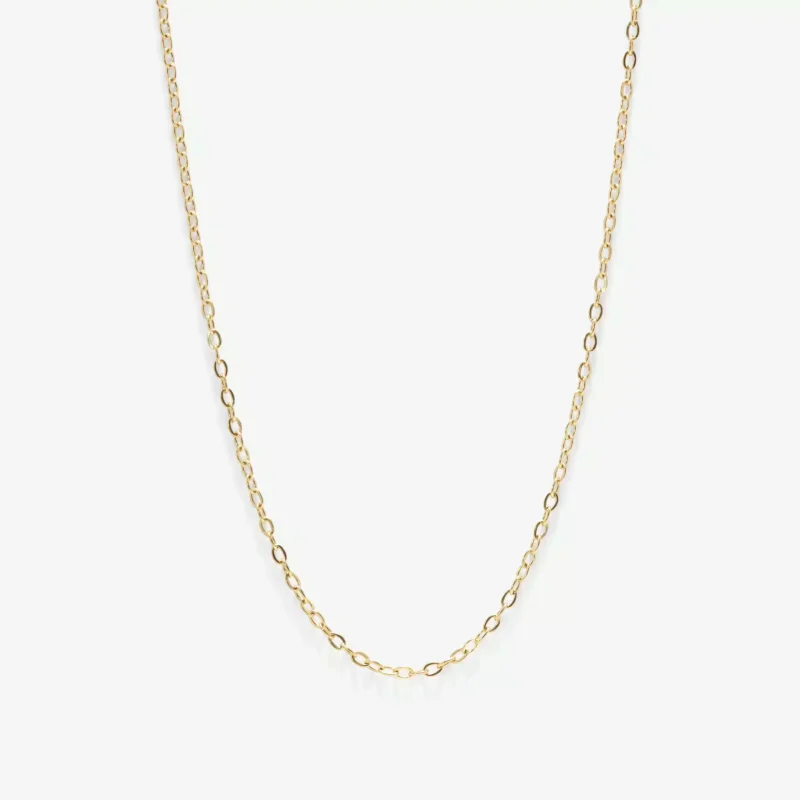
Dainty Chain
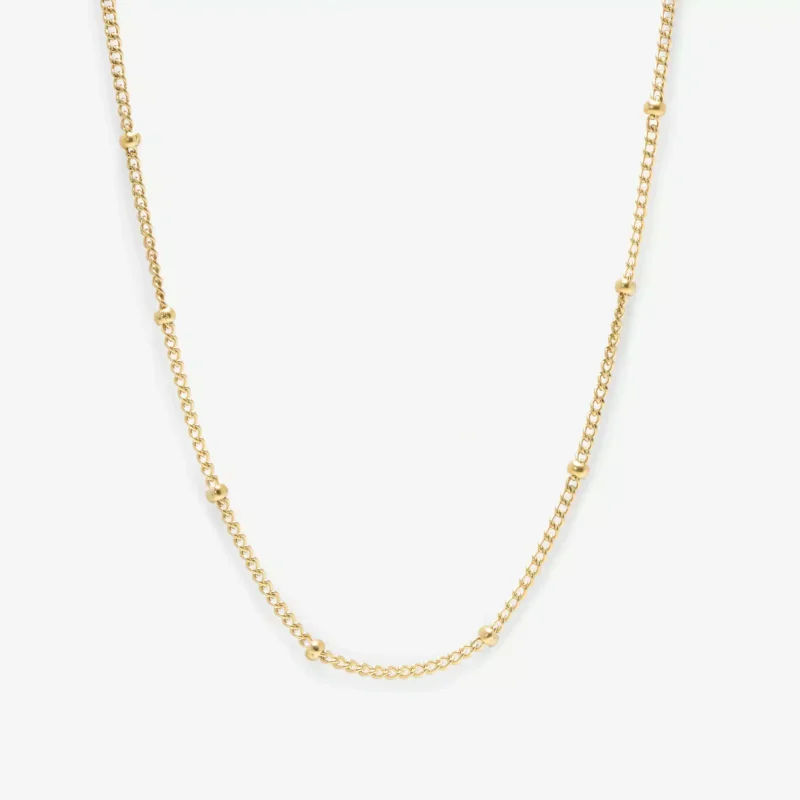
Satellite Bead Chain
Singapore Twist Chain
Rolo Chain