

You reach for the same necklace most mornings, layer in a couple of favourites, and rarely give any of it a second thought until something looks dull, a clasp gives way, or a chain comes out of the drawer in a knot. Most of the time the piece has not failed you. A few small habits have quietly worn it down, day after day, until the damage shows.
The good news is that the jewellery mistakes to avoid are easy to spot once you know them, and easier still to fix. A handful of changes to how you put pieces on, take them off and store them keeps everyday jewellery looking the way it did the day you bought it. None of it asks for special kits or fuss. It is mostly about order and habit, which is why these changes stick once you make them.
What are the most common jewellery mistakes?
The four that catch most people are storing pieces tangled together, spraying perfume straight onto a necklace or earrings, leaving plated pieces in chlorine or salt water without rinsing, and sleeping in dangly earrings. None of them feels like a mistake in the moment, which is exactly why they keep happening.
Each one has a simple fix, and none of them asks much of you. Most come down to the order you do things in and where a piece lives when it is off. Once you understand why each habit causes damage, the better way becomes obvious, and you stop having to think about it at all. The sections below take each one in turn.
Why does spraying perfume onto jewellery cause damage?
Perfume, hairspray and body lotion all leave a film on the surface of a piece. Sprayed directly, that film settles into links, around stones and along the back of a pendant, where it builds up and dulls the shine over time. The alcohol and oils in fragrance are the part to watch, and with some materials and coatings they can also speed up wear on the surface.
The fix is the order you get ready in. Spray your perfume, let it settle on skin for a minute, then put your jewellery on last of all. The same goes for moisturiser, suncream and hairspray: let them absorb or dry before a necklace or pair of earrings goes near them. It is a small change to a morning routine that keeps pieces clearer for far longer, and it costs you nothing but the order you reach for things.
If a piece does pick up a film of product, a gentle wipe with a soft, dry cloth at the end of the day lifts most of it before it sets. Make that wipe a habit and you head off the slow build-up that dulls a finish over months.
Is storing jewellery tangled really a problem?
It is one of the most common reasons fine chains get damaged. Necklaces left loose in a drawer or dropped into a shared pouch shift around every time the drawer opens, and that movement is what knots them together. Working a tight knot loose puts strain on the links, and a delicate chain can kink or snap in the process, often right at the point you are trying to save it.
Tangling does more than test your patience. Each time a chain rubs against other pieces it can scratch a finish, and a harder piece can mark a softer one stored alongside it. Keeping pieces apart protects the surface as much as it protects the links.
The habit that prevents it is quick. Do up the clasp on each necklace before you put it away, then lay it flat or hang it so it cannot move against anything else. A few hooks, a divided tray or individual pouches keep pieces apart and ready to wear. For the full method, see our guide on how to store jewellery you wear often.
What happens if you leave plated jewellery in chlorine or salt water?
Chlorine in a swimming pool and salt in the sea are both harsh on jewellery, and they are harsher still when a piece is left to dry with the water sitting on it. As the water evaporates it leaves the chemicals concentrated on the surface, and on plated or coated pieces that residue can sit against the finish and wear it down faster than ordinary daily use would.
If you swim in your jewellery, rinse each piece in clean fresh water afterwards and dry it with a soft cloth. That single step clears the chlorine or salt before it has a chance to settle and concentrate. Pieces made in 14k gold PVD over recycled stainless steel are designed to be worn in water, and a quick rinse and dry keeps them at their best.
The same thinking applies to the gym. Sweat carries salts that behave much like sea water on a finish, so a rinse and dry after a workout is worth the few seconds it takes if you have kept your jewellery on.
Why should you take dangly earrings out before bed?
Sleeping in dangly or hooped earrings is an easy habit to fall into and a hard one on the earrings. Through the night they catch on pillows and hair, which bends thin posts, pulls hooks out of shape and tugs at the piercing itself. Over weeks that adds up to bent metal, a misshapen hoop and, sometimes, a sore ear.
Small studs are usually comfortable to keep in, but anything that hangs or hoops is better off on the side before you lie down. Taking them out becomes second nature once it has a home: a dish by the bed or a hook on the dressing table means they come off without a second thought and are easy to find in the morning.
How do you keep everyday jewellery looking new?
Most of it comes down to three habits. Put jewellery on last when you get ready, so it stays clear of perfume and lotion. Give it a quick wipe with a soft cloth when you take it off, to lift the day's residue before it builds up. And store each piece so it cannot tangle or rub against anything else.
Choosing materials that suit your life helps too. Waterproof, tarnish-free pieces in coated stainless steel cope with showers, swimming and the gym, which takes the worry out of when to wear them. The metal is hypoallergenic, so it sits comfortably even on sensitive skin. Even so, a rinse and dry after chlorine or salt water keeps them looking their best. For a simple routine you can keep up, read our guide on how to care for jewellery you wear every day.
Frequently asked questions
What is the biggest mistake people make with jewellery?
Storing pieces loose and tangled together is one of the most damaging, because working knots out of fine chains strains the links and can break them. Doing up each clasp and storing pieces flat or hung prevents it.
Can perfume damage jewellery?
Sprayed directly, perfume leaves a film that settles into links and around pendants, dulling the surface over time. Put jewellery on after your perfume has settled on skin to avoid it.
Should I take my jewellery off to swim?
You can swim in waterproof, coated stainless steel pieces, but chlorine and salt are harsh if left to dry on the surface. Rinse each piece in fresh water and dry it with a soft cloth afterwards.
Is it bad to sleep in earrings?
Small studs are usually fine, but dangly or hooped earrings catch on pillows and hair overnight, which bends posts and hooks and pulls at the piercing. Take those out before bed.
How often should I clean everyday jewellery?
A quick wipe with a soft cloth when you take a piece off is enough for most days. It lifts the day's residue before it has a chance to build up and dull the shine.
Related pieces
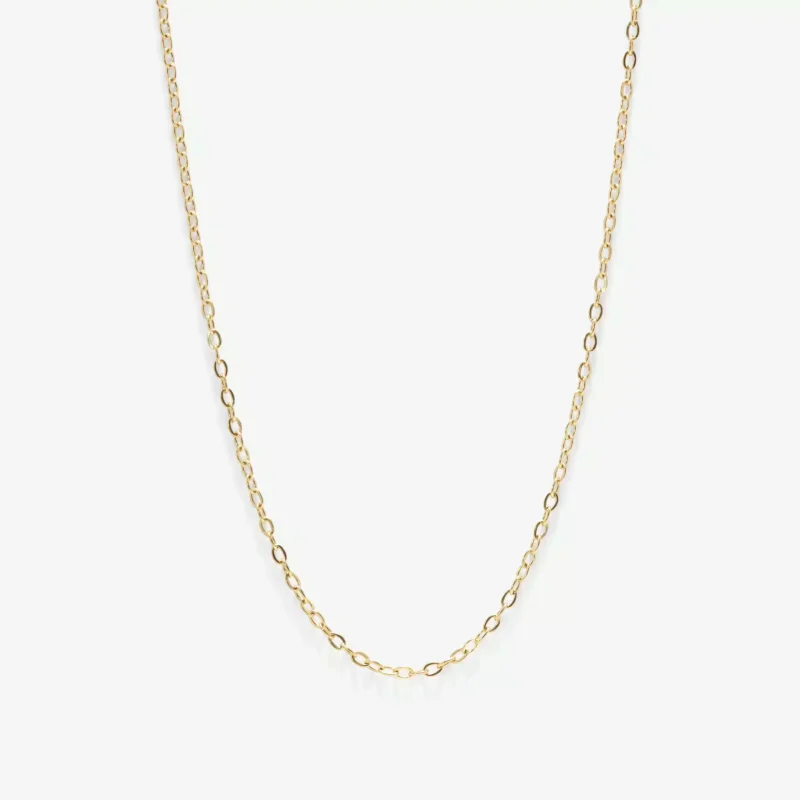
If you are building a collection you can wear and forget, our best sellers are made for daily life in waterproof, tarnish-free 14k gold PVD over recycled stainless steel. The Dainty Chain is an easy place to start, sitting comfortably at the collarbone and happy in the shower, at the gym or in the sea with a quick rinse and dry afterwards. Choose pieces that suit your routine and the everyday mistakes above stop mattering quite so much.