

If your earlobes go red, itchy or sore within hours of putting earrings in, you learn to brace for it. Plenty of people quietly give up on earrings altogether, convinced their ears simply cannot cope, when often the real issue is the metal touching them.
Choosing earrings for sensitive ears comes down to the material against your skin. The most comfortable options are hypoallergenic metals such as titanium, surgical stainless steel and high-karat gold, because they are far less likely to trigger a reaction. Nickel is usually the troublemaker, and once you know to avoid it, earrings tend to get a lot easier to live with.
What makes ears sensitive to earrings?
Sensitive ears are usually reacting to the metal touching them, not to earrings in general. The most common cause is a nickel sensitivity, where the immune system responds to nickel in the alloy and the skin around the piercing turns red, itchy or sore. Nickel is widespread in inexpensive earrings, which is why cheap pairs so often cause trouble.
Other factors play a part too. A piercing that is still healing, earrings worn for very long stretches, or backs done up too tightly can all leave ears tender even when the metal is fine. Working out whether it is the metal or the wear pattern is the first step to sorting it out.
A simple way to tell the two apart is to notice when the trouble starts. If a particular cheap pair brings on redness and itching within hours, while a hypoallergenic pair worn the same way feels fine, the metal is almost certainly the cause. If every pair leaves the lobe sore after a full day no matter the metal, the wear pattern or the weight is more likely to blame.
Which metals are best for sensitive ears?
For sensitive ears, look for hypoallergenic metals: titanium, surgical or 316L stainless steel, and high-karat gold such as 14k and above. These contain little or no nickel, so they are far less likely to provoke a reaction, and they are the materials most often recommended for people who react to ordinary earrings.
A sealed surface helps as well. A PVD coating bonds a fine layer of metal into a stainless steel base and seals it, which limits the contact between any underlying metal and your skin. On a hypoallergenic base, that gives you an earring that stays comfortable through everyday wear.
Why nickel is usually the problem
Nickel is the single most common cause of metal sensitivity, and it turns up in countless cheap earrings because it is inexpensive and hardens an alloy. Repeated contact through a piercing, where the metal sits in direct touch with broken skin, makes earrings one of the most likely pieces to bring on a reaction.
This is why the same person can wear a stainless steel necklace happily yet struggle with bargain earrings. The fix is to choose earrings whose stated material is nickel-free or nickel-safe, such as titanium, surgical stainless steel or high-karat gold.
What to look for when buying earrings for sensitive ears
Read the material description first. Look for named metals such as surgical stainless steel, titanium or solid gold, and treat colour-only labels like gold-tone with caution, since they often hide a nickel-bearing base. Words such as hypoallergenic and nickel-free are helpful, though the named metal matters most.
It is worth knowing that hypoallergenic is a description, not a guarantee, since there is no single legal standard behind the word. That is why the named metal carries more weight than the label. Titanium, surgical stainless steel and high-karat gold are dependable because of what they are made from, so a piece that names one of those is a safer bet than a piece that only promises to be gentle.
Check the posts and the finish too, because the post is what sits inside the piercing. A smooth, even post in a hypoallergenic metal with a sealed PVD finish is a good sign. Lightweight designs also help, as very heavy earrings can drag on the lobe and make it sore regardless of the metal.
If you are buying online and cannot feel the weight, the metal name and the style are your best guides. A small hoop or huggie in surgical stainless steel with a PVD finish ticks the boxes that matter for sensitive ears: a low-nickel material, a sealed surface and a close-sitting shape that stays light on the lobe. Saved alongside the description, those few details tell you most of what you need before anything arrives.
Comfortable styles for everyday wear
Style affects comfort as much as material. Small hoops and huggie earrings sit close to the lobe and move little, which many people find easier to wear all day than long, heavy drops. Studs are gentle too, as long as the backs are not fastened so tightly that they press on the skin.
Because sensitive ears do best with earrings you can leave in comfortably, a waterproof, tarnish-free finish such as 14k gold PVD on stainless steel is a practical choice. It holds its colour through showers and workouts, so you are not forever taking earrings in and out, which is often when irritation creeps in.
Starting small is sensible if your ears have a history of trouble. A single comfortable pair in a hypoallergenic metal, worn for a normal week, tells you far more than reviews can. If they sit happily through the day, you have found a material your ears tolerate, and you can build from there with confidence.
How to look after sensitive ears
Keep earrings and earlobes clean, and wipe posts before putting them in. If a new piercing is involved, give it time to settle and follow the aftercare advice you were given, since fresh piercings are tender by nature. Taking earrings out at night can give the skin a rest if it tends to get sore.
If your ears stay red, itchy or painful even with hypoallergenic metals, that is worth taking seriously. Persistent pain, swelling or a reaction that does not settle is a reason to see a professional such as a pharmacist, GP or your piercer for advice instead of pushing through it.
Frequently asked questions
What are the best earrings for sensitive ears?
Earrings made from hypoallergenic metals such as titanium, surgical stainless steel or high-karat gold are the most comfortable, because they contain little or no nickel. A sealed PVD finish over stainless steel helps further by limiting metal contact.
Why do my ears react to earrings?
The most common cause is a nickel sensitivity, where the skin reacts to nickel in the alloy and turns red, itchy or sore. A healing piercing or heavy earrings worn too long can also leave ears tender.
Is stainless steel good for sensitive ears?
Surgical 316L stainless steel is a strong choice for sensitive ears. It is low in nickel, resists tarnish, and holds a PVD coating well, which keeps the surface sealed and comfortable for everyday wear.
Are hoop or huggie earrings better for sensitive ears?
Small hoops and huggie earrings sit close to the lobe and move little, which many people find comfortable for all-day wear. The metal matters most, so choose a hypoallergenic material in whichever style you prefer.
What should I do if my ears stay sore?
If your ears stay red, itchy or painful even with hypoallergenic metals, see a professional such as a pharmacist, GP or your piercer. Persistent pain or a reaction that does not settle is worth proper advice.
Related pieces
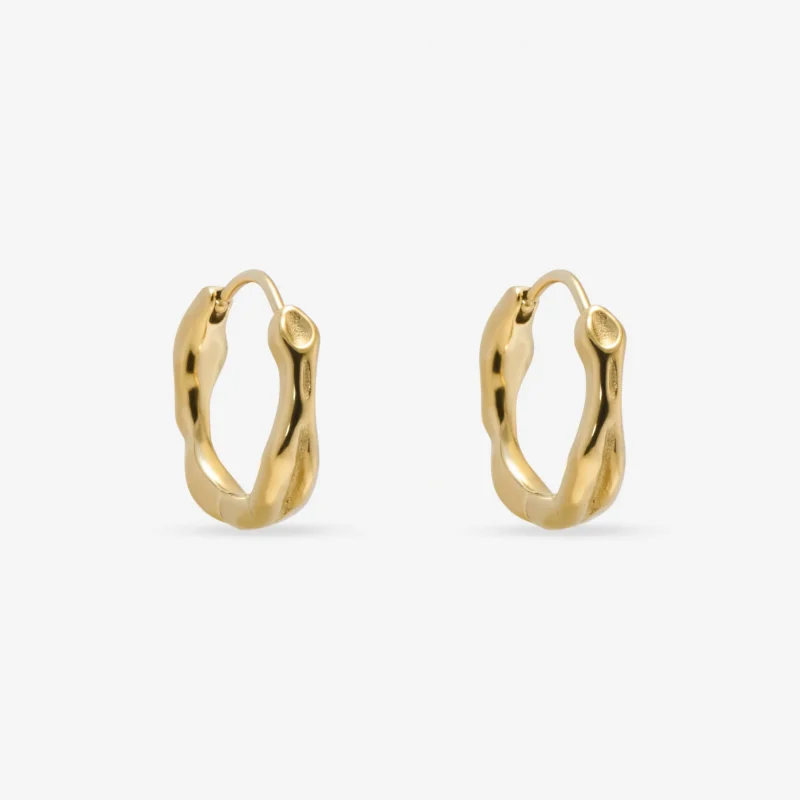
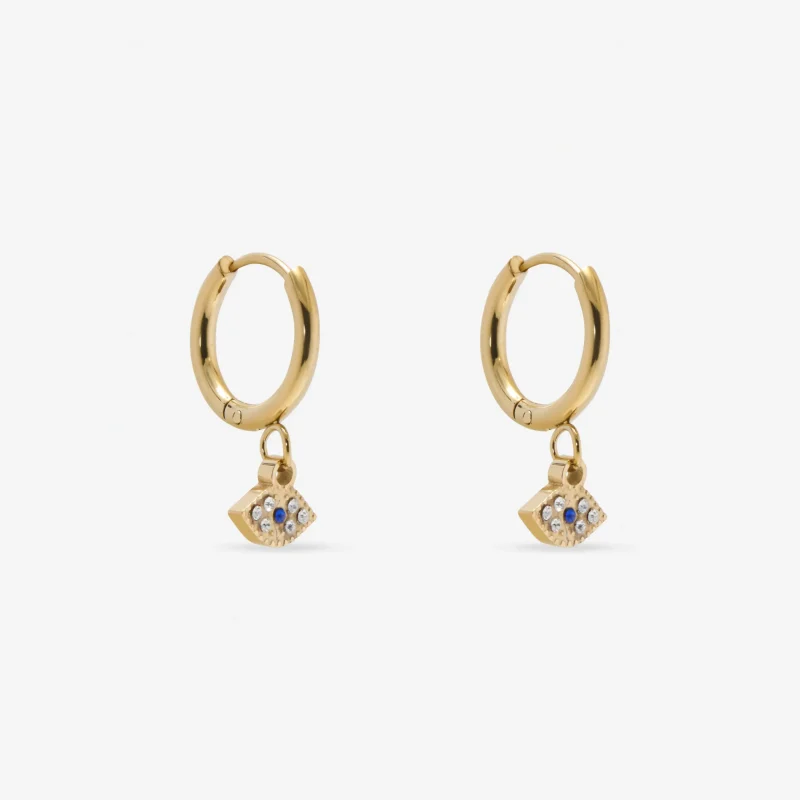
If you want earrings you can wear comfortably day to day, the Molten Hoop Earrings and the Evil Eye Huggie Earrings are made from recycled stainless steel with a 14k gold PVD finish. Both are low in nickel and sealed at the surface, and the close-sitting hoop and huggie shapes are easy to leave in through everyday wear.