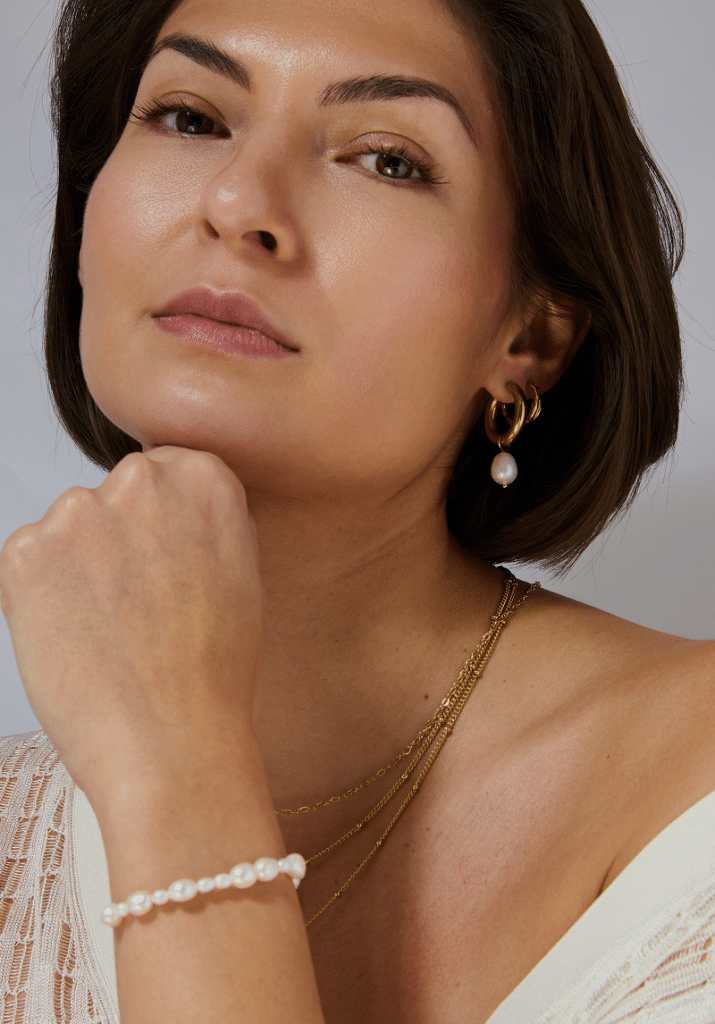



A fresh piercing is exciting, and it is also a small open wound that wants to be left alone for a while. That tension is what makes the choice of jewellery matter. For newly pierced ears, the safest jewellery is made from hypoallergenic, implant-grade metals such as titanium or surgical stainless steel, with nickel avoided. Because a new piercing needs time to heal, the earrings worn during that period should be left in as your piercer advises and chosen to limit irritation. Always follow the aftercare and healing times given by a professional piercer, and see a professional if anything looks or feels wrong. The guidance below is general, and your piercer's advice for your specific piercing comes first. When in doubt, ask them ahead of any general article, including this one.
What earrings should you wear after a piercing?
After a fresh piercing, wear the earrings your piercer fits and keep them in for the full healing period they recommend. These are usually implant-grade metals chosen to reduce the risk of a reaction while the skin heals. Changing the jewellery too soon, or swapping in unsuitable metal, is a common cause of irritation, so the timing matters as much as the metal. The initial jewellery is also usually a plain, smooth style that is easy to clean around while the piercing settles.
Healing times vary by piercing and by person, and only a professional can judge yours. Earlobes generally settle faster than cartilage, but the safe approach is the same: leave the original jewellery in until your piercer confirms the piercing has healed, then change to suitable pieces. Following their guidance, in place of a general timeline, is the sensible course, since a piercing that looks healed on the surface can still be healing underneath.
Which metals are best for new piercings?
The best metals for new piercings are implant-grade titanium and surgical stainless steel, because both are hypoallergenic and well tolerated by healing skin. These are the metals professional piercers most often use for initial jewellery. The aim is a material the body is unlikely to react to while the wound is open and sensitive, which rules out cheaper mixed alloys that can shed irritating elements.
Nickel is the metal to avoid. It is a common trigger for contact reactions, and many cheaper earrings contain it in the alloy or beneath a thin plating that wears through to expose it. If you have reacted to earrings before, nickel is the usual suspect, and choosing nickel-safe, hypoallergenic metals removes the most frequent cause. For more on which materials suit reactive skin, see jewellery for sensitive skin, which goes into the metals worth seeking out and avoiding.
What are hypoallergenic earrings?
Hypoallergenic earrings are made from metals chosen to be unlikely to cause an allergic reaction, which in practice means avoiding nickel and using well-tolerated materials such as titanium or surgical stainless steel. The word describes a lower likelihood of reaction, not a guarantee, since sensitivities differ from person to person. It is a useful guide when shopping, though it does not replace your own experience of what your skin tolerates.
Surgical stainless steel, particularly 316L, resists corrosion and does not readily release the elements that cause most reactions, which is part of why it is a common, comfortable everyday choice once a piercing has healed. A gold-toned PVD coating over stainless steel keeps the same hypoallergenic base while adding a hard, tarnish-resistant finish, suiting people who want the look of gold while keeping a reactive metal off the skin. For healing piercings, though, the initial jewellery should always be what your piercer fits.
When can you change your earrings?
You can change your earrings once the piercing has fully healed, and the only reliable way to know that is to follow your piercer's timeline and check with them if you are unsure. Changing too early can disturb the healing tissue, reintroduce irritation, or in some cases cause the piercing to close or become inflamed. Patience here saves trouble later, and a piercer can confirm whether the piercing is ready before you swap anything in.
When the time comes, change to clean, hypoallergenic earrings and handle the piercing with clean hands. If a piercing is sore, swollen, hot, or producing discharge at any stage, do not wait it out: see a professional piercer or a medical professional for advice. Discomfort when first wearing earrings has several causes, and you can read why earrings can hurt for the common ones, though anything that worries you is best checked in person.
Caring for a new piercing
Good aftercare comes down to following the routine your piercer sets and keeping the area clean. That usually means cleaning as instructed, leaving the area alone between cleans, and keeping the initial jewellery in place for the full healing period. Avoid turning or twisting the jewellery unless your piercer specifically tells you to, since older advice on this has changed and your piercer's current guidance is what to follow. Clean hands before any contact are a simple habit that prevents a lot of problems.
Be patient with water and products. Keep harsh chemicals, perfumes and hair products away from a healing piercing, and pat the area dry instead of rubbing. Once healed, hypoallergenic everyday earrings in titanium or surgical stainless steel are comfortable for regular wear. If you are ever unsure whether something is healing normally, a professional piercer is the right person to ask, and any sign of infection should be seen by a medical professional without delay.
Common mistakes with new piercings
A few habits cause most of the trouble. Changing the jewellery before the piercing has healed is the big one, since it disturbs tissue that is still repairing. Wearing cheap earrings that contain nickel is another, as the metal can trigger a reaction in an already sensitive piercing. Touching or twisting the jewellery with unwashed hands introduces bacteria, and sleeping heavily on a fresh piercing can press and irritate it. Each of these is avoidable with a little care.
The safe response to any worry is to ask a professional. Piercers deal with healing questions every day and can tell normal settling from a problem that needs attention. If a piercing shows signs of infection, such as spreading redness, heat, swelling or discharge, that is a reason to see a medical professional promptly. Following your piercer's aftercare and asking when in doubt keeps a new piercing on track. Most piercings heal smoothly when the routine is followed and the jewellery is left undisturbed.
FAQ
What earrings are best for newly pierced ears?
The earrings your piercer fits, kept in for the full healing period they advise. These are usually implant-grade titanium or surgical stainless steel, both hypoallergenic and chosen to limit irritation while the skin heals.
Which metals should I avoid in new piercings?
Avoid nickel, the most common trigger for contact reactions, and any cheap alloy or thin plating that may contain it. Stick to hypoallergenic, implant-grade metals such as titanium or surgical stainless steel for healing piercings.
When can I change earrings after a piercing?
Only once the piercing has fully healed, which varies by piercing and person. Follow your piercer's timeline in place of a general rule, and check with them if you are unsure. Changing too early can disturb healing.
Are hypoallergenic earrings safe for sensitive ears?
They are designed to be less likely to cause a reaction by avoiding nickel and using well-tolerated metals such as titanium or surgical stainless steel. This lowers the likelihood without guaranteeing it, since sensitivities differ. See a professional if you react.
Related pieces
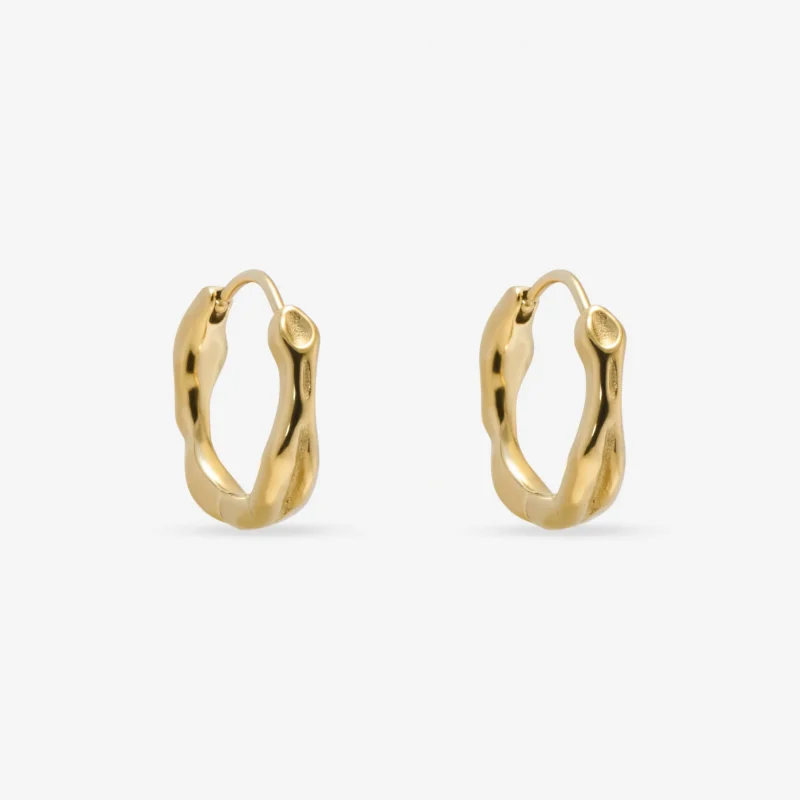
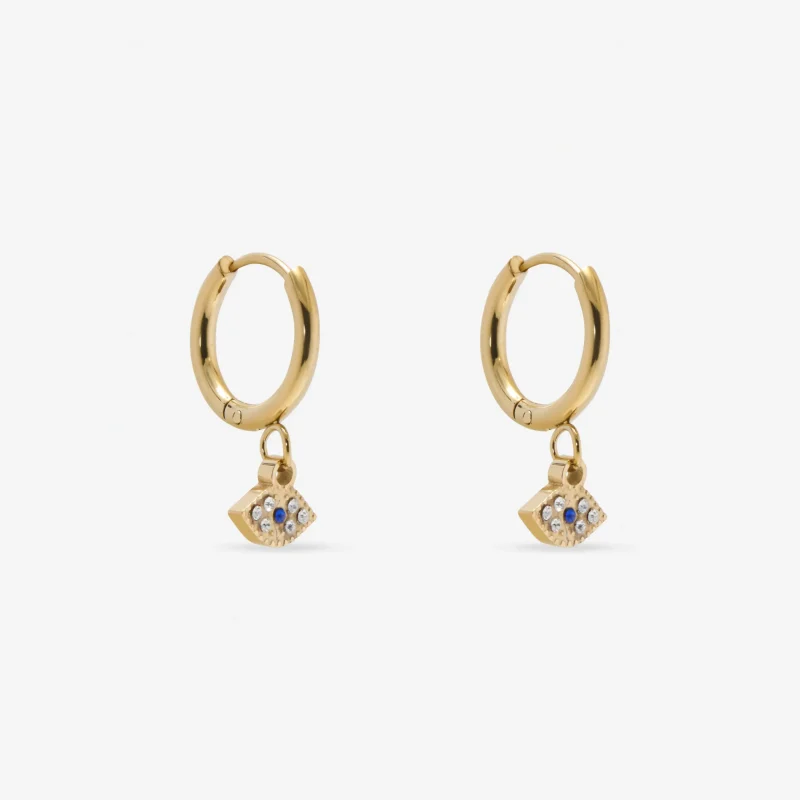
Once a piercing has fully healed and your piercer is happy, hypoallergenic everyday earrings are a comfortable choice for regular wear. The Molten Hoop Earrings and Evil Eye Huggie Earrings are made from recycled stainless steel with a 14k gold PVD coating: hypoallergenic, waterproof and tarnish-free. For initial healing, always wear what your piercer fits and follow their aftercare.