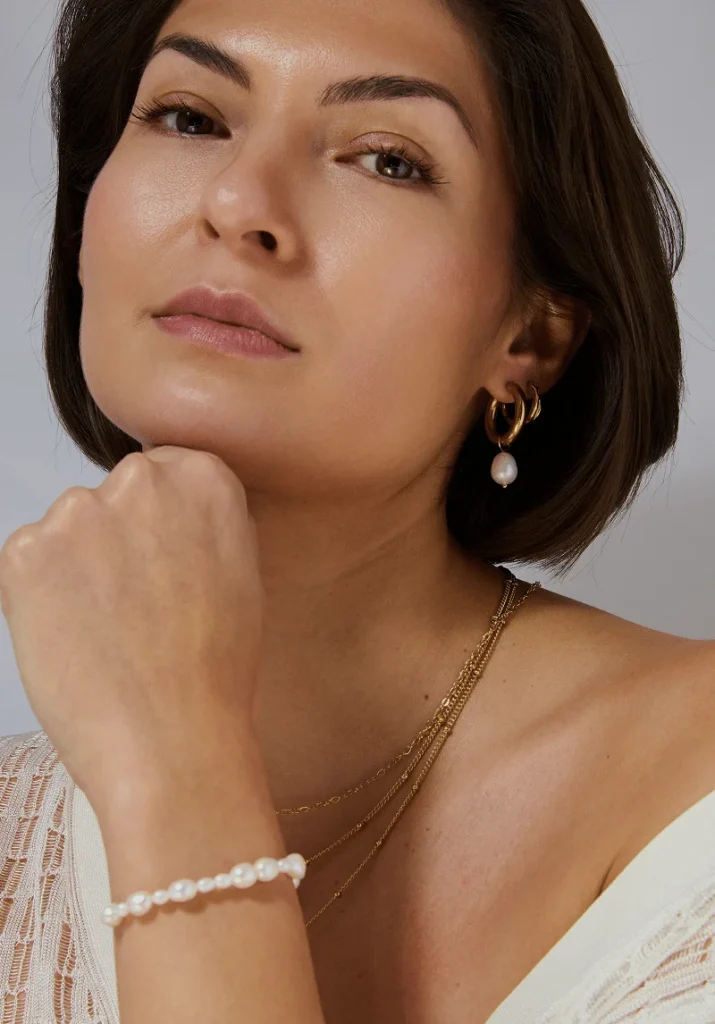


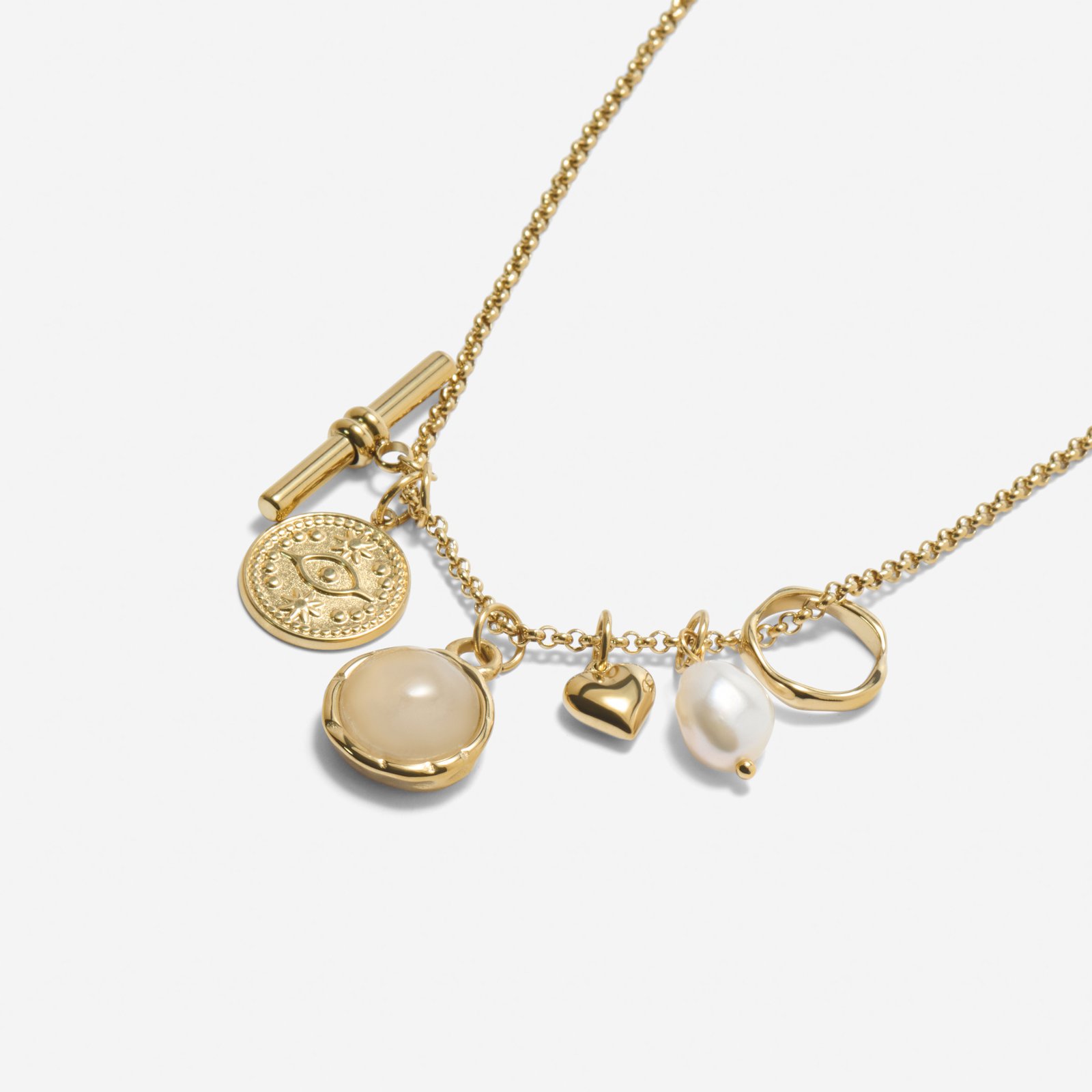
Most of us have a small object we reach for before something that matters, a coin in a pocket, a bracelet we never take off, a charm we touch without quite noticing. Jewellery has always been a natural home for that instinct, which is why so many of us wear a little luck close to the skin. The piece itself is ordinary metal and stone, and somehow it carries more than that.
The lucky jewellery meaning behind a piece usually comes down to a talisman: an evil eye, a horseshoe, a four-leaf clover, a coin or a charm. Across many cultures these symbols are believed to bring luck or protection. That belief is a long and popular tradition, not a proven fact, and understanding the meaning of each symbol helps you choose a piece that feels right for you.
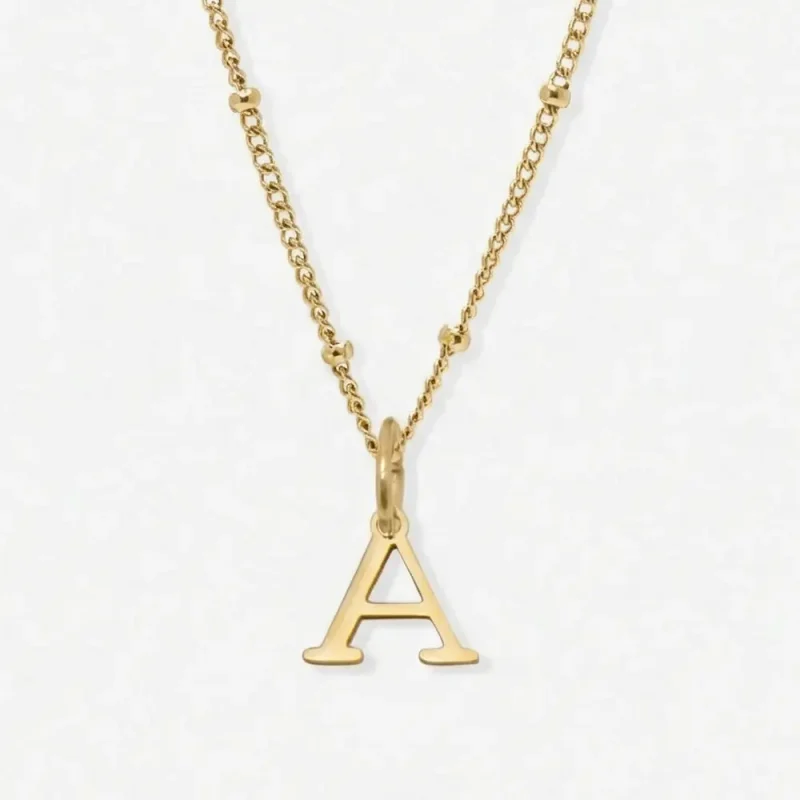
What does lucky jewellery actually mean?
Lucky jewellery means any piece worn in the hope that its symbol brings good fortune or keeps harm away. The meaning lives in the symbol and in the wearer’s intention, more than in the metal itself.
For some people that intention is sincere and tied to family or faith. For others it is gentler, a small daily reminder to stay hopeful and steady. Both readings sit comfortably together, and many wearers hold a bit of each. What matters is that the piece carries a meaning you find reassuring, worn close enough to notice when you want to.
The idea is also ancient. People have worn symbolic objects for luck and protection for thousands of years, long before anyone thought of them as fashion. A modern lucky charm on a fine chain is a continuation of that very old habit, dressed in a finish you can wear to work. The instinct behind it has barely changed.
Which symbols are seen as lucky?
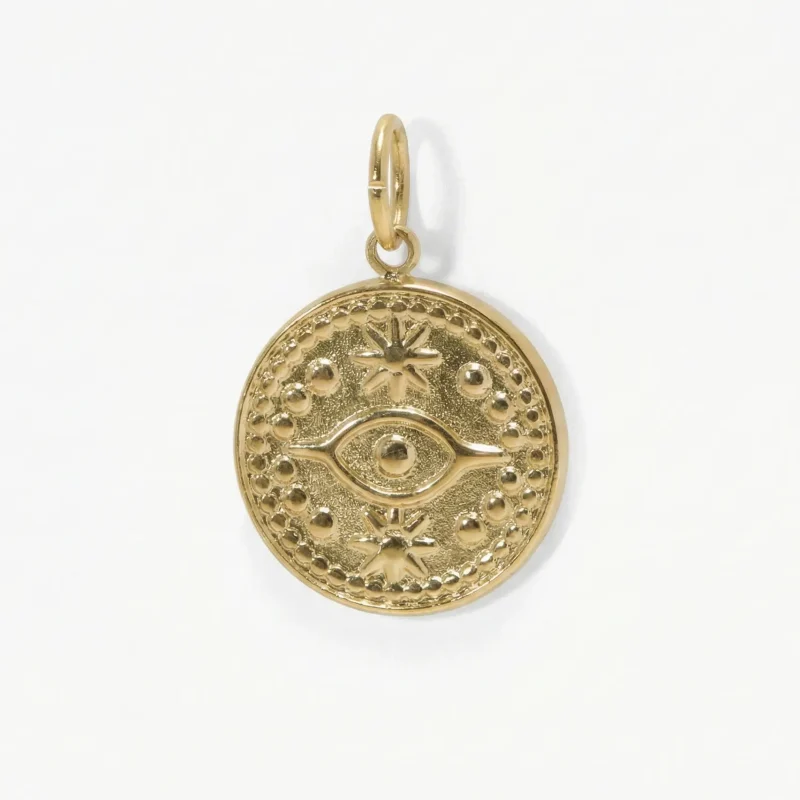
A handful of symbols turn up again and again across the world’s lucky charms. The evil eye is traditionally worn, in many cultures, as a charm believed to guard against envy and ill intent. The horseshoe is a long-standing emblem of good fortune in European folklore, and the four-leaf clover is widely associated with luck thanks to its rarity.
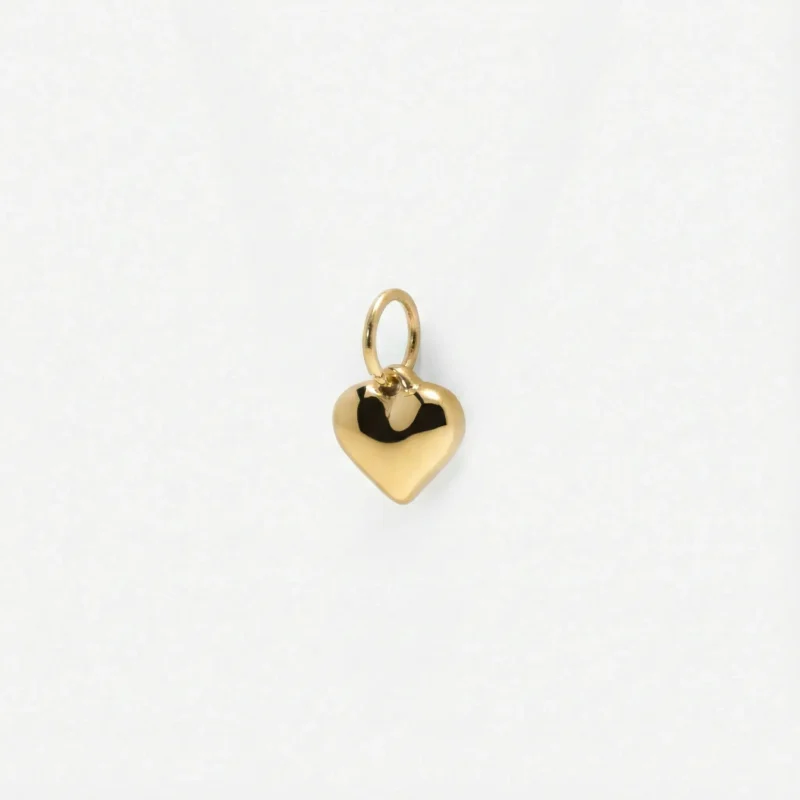
Coins appear in many traditions as symbols of prosperity, and charms more broadly have been worn for protection and good wishes for centuries. Hearts and stars sit alongside them, hearts for love and warmth, stars for hope and guidance. These associations are popular beliefs passed down over generations, so they are best treated as meanings you can choose to read into a piece. Our guide to the evil eye meaning goes deeper into one of the oldest of these symbols.
Different cultures favour different emblems, which is part of what makes lucky jewellery so varied. Some traditions lean on animals, others on numbers, colours or natural shapes. There is no single luckiest symbol, only the one that holds meaning for you, whether through your heritage, a story in your family or simply a motif you find quietly reassuring.
Why do people wear talismans?
People wear talismans for the reassurance they carry through an ordinary day. A talisman is an object believed to hold protective or lucky power, and wearing one keeps that intention close at a moment’s glance.
The appeal is partly practical and partly emotional. A small charm at the collarbone or wrist is a quiet companion, something to notice before an interview, a flight or a hard conversation. Many people find that the act of choosing and wearing a symbol does its own gentle work, focusing the mind and softening the nerves, whatever they believe about luck itself.
There is comfort, too, in continuity. A lucky piece worn through good days and difficult ones gathers a sense of having been there with you, so it starts to feel less like decoration and more like a small companion. That is why people so often keep the same charm for years and feel oddly unsettled the day they leave it at home.
Is lucky jewellery based on fact or belief?
Lucky jewellery rests on belief and tradition, more than on evidence. The idea that a horseshoe, a clover or an evil eye can change a person’s fortune is a cultural belief, widely held and warmly passed down, but not something that has been proven.
That honesty takes nothing away from the appeal. People wear lucky pieces for the meaning, the heritage and the reassurance they carry, much as they keep a photograph or a memento close. A symbol worn with intention can lift the mood and mark what you care about, and for most wearers that is meaning enough.
How do you choose a lucky piece that suits you?
Choose the symbol that speaks to you first, then the form you will actually wear. If protection is what you are after, an evil eye charm is a natural place to start. If you want warmth and love close to you, a heart charm carries that quietly. A piece chosen for a meaning you believe in tends to become a piece you never take off.
Think about placement too. A charm on a fine chain sits near the heart and layers well with other necklaces, while a bracelet keeps the meaning in view as you move. Pieces tied to strength and fresh starts can mark a new chapter, and our guide to jewellery that symbolises strength explores those meanings further.
It is worth thinking about who the piece is for, as well. Lucky charms make warm gifts, given at hopeful or slightly exposed moments such as a new job, a new home or a big trip. A charm chosen for someone carries a clear message: I am wishing you well, and I want you looked after. That is part of why these small pieces are given so often and kept so long.
How do you keep a lucky piece with you every day?
A talisman kept in a drawer looks after nothing, so the most useful thing is a piece you can live in. A waterproof, tarnish-free finish such as 14k gold PVD on recycled stainless steel holds its colour through showers, workouts and long days, so the charm stays with you through exactly the moments it is meant for.
Hypoallergenic pieces are worth choosing if your skin reacts easily, since a lucky charm tends to be worn constantly. Check the clasp and jump rings now and then, store the piece so it does not tangle with other chains, and otherwise simply wear it. The whole point of an everyday talisman is that you never have to take it off.
Frequently asked questions
What does lucky jewellery mean?
It means jewellery worn for the symbol it carries, in the hope of good fortune or protection. Common examples include the evil eye, horseshoe, four-leaf clover, lucky coins and charms.
Does lucky jewellery really work?
The belief that lucky jewellery brings fortune is a cultural and personal one, not a proven fact. People wear it for the meaning, heritage and reassurance it offers.
What is the luckiest symbol to wear?
There is no single answer, as different cultures favour different symbols. The evil eye, horseshoe and four-leaf clover are among the most widely recognised, so choosing one that speaks to you is a good guide.
What is the difference between a charm and a talisman?
A charm is a small decorative piece, often symbolic, while a talisman is an object believed to hold protective or lucky power. Many lucky charms are worn as talismans.
Will lucky jewellery tarnish with daily wear?
A 14k gold PVD finish on recycled stainless steel is waterproof and tarnish-free, so it holds its colour through everyday wear. Hypoallergenic pieces also suit skin that reacts easily.
Related pieces
If you would like to wear a little luck close, the Evil Eye Protection Charm carries a symbol long believed, across many cultures, to guard against envy, and the Chubby Heart Charm holds warmth and love on the same chain. Both are made from recycled stainless steel with a 14k gold PVD finish, so they hold their colour through daily wear.