

There is a kind of jewellery people reach for because it makes them feel held. A charm tucked under a shirt before a nerve-wracking day, a symbol given to someone setting off somewhere new, a piece worn quietly through a hard stretch: these are small gestures, and they go back a very long way. We choose them for how they feel as much as how they look.
Protection jewellery is jewellery worn as a guard against envy, bad luck or harm, and for the reassurance it brings. Symbols such as the evil eye, the hamsa and various talismans have long been worn across cultures for exactly this, though the meanings are cultural and personal, a matter of belief and tradition. That openness is part of why these pieces have stayed with us for thousands of years.
What is protection jewellery?
Protection jewellery is any piece worn with the intention of guarding the wearer, traditionally against envy, ill will, bad luck or harm. It usually carries a symbol that a culture has long associated with protection, and it is kept close on the body, on a chain at the chest, a charm at the wrist, or a small pendant under clothing.
The category is broad and crosses many traditions. It takes in the evil eye, the hamsa hand, religious and spiritual symbols, lucky charms and personal talismans of all kinds. What ties them together is the wearer's intention more than the exact shape. A piece becomes protection jewellery because of what it is meant to do for the person wearing it, which is why so many different symbols sit comfortably under the same idea.
Which symbols are worn for protection?
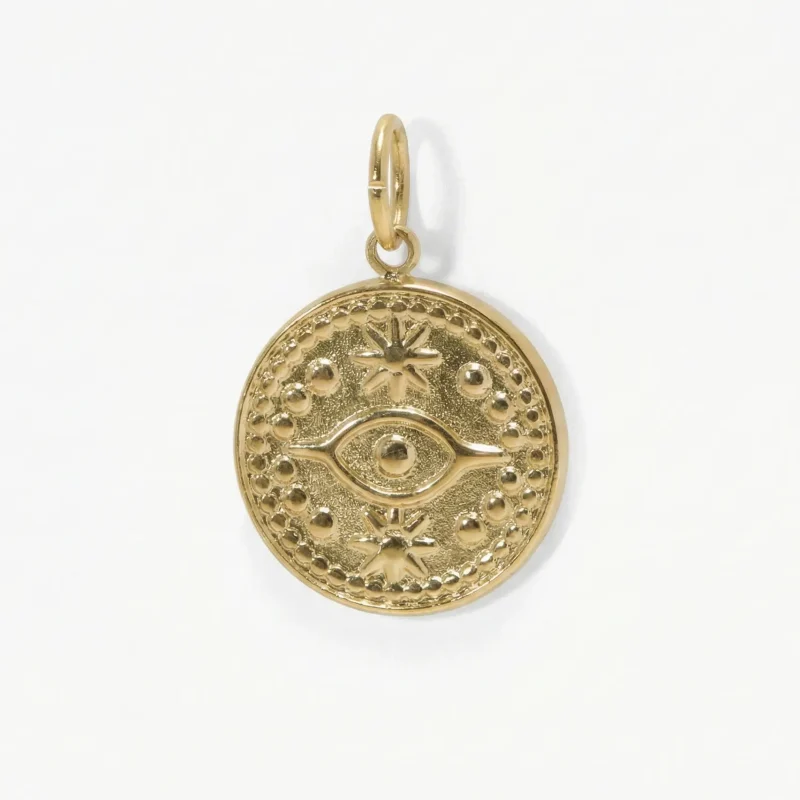
Several symbols turn up again and again. The evil eye, often a blue glass bead with concentric circles, is among the most familiar, traditionally worn to turn away envy and ill intent. If you want the full story behind it, our piece on the meaning of evil eye jewellery goes into the lore in detail. The hamsa, an open hand often shown with an eye at its centre, appears across the Middle East and North Africa and is also worn as a guard against harm.
Beyond these, people wear a wide range of protective symbols: spiritual and religious motifs, animals and natural forms tied to strength or luck, and personal talismans that mean something only to the wearer. Our guide to what jewellery symbols mean covers more of them. Each carries its own cultural background, and the same symbol can mean slightly different things in different places, so they are best understood as living traditions, not fixed rules.
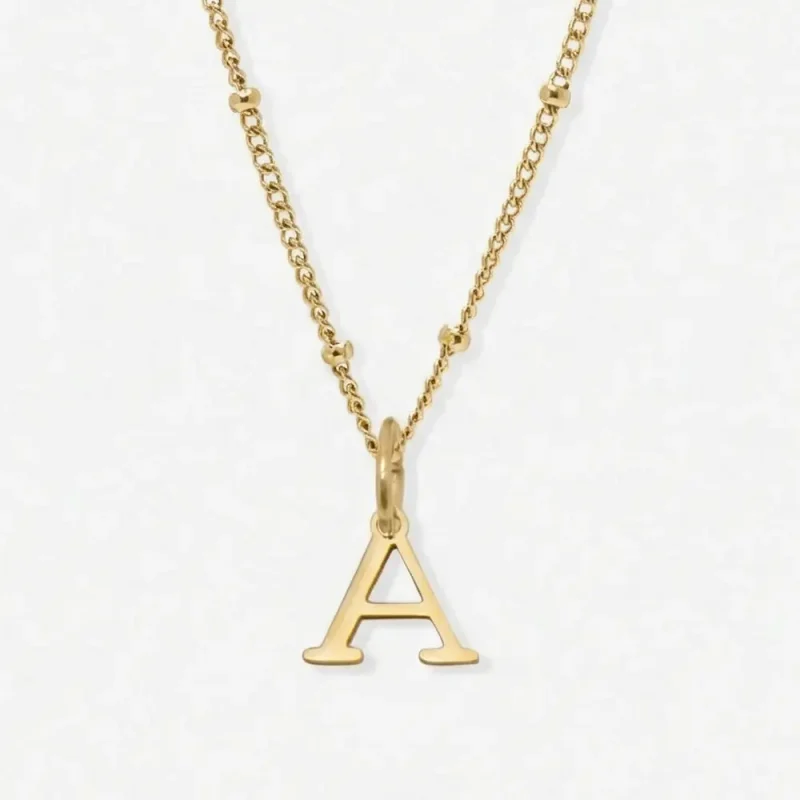
An initial or a name can work as a protective piece too, in a personal sense. Wearing the first letter of someone you love keeps them close through the day and acts as a small reminder of who you are carrying with you. Birthstones, four-leaf clovers, horseshoes and other lucky charms sit in the same family, each one chosen for the reassurance and good wishes it stands for in popular tradition. The shared idea across all of them is simple: a meaningful object, kept close, that helps the wearer feel watched over.
Why do people wear jewellery for protection?
People wear protection jewellery for a mix of reasons, and most wearers hold more than one at once. For some the meaning is genuinely spiritual or tied to faith and heritage, a belief passed down through family. For others it is gentler: a piece that offers reassurance and a sense of being looked after through ordinary days and difficult ones alike.
There is also a quieter, everyday reading. A protective charm can work as a small reminder, something you touch or catch sight of that helps you steady yourself, feel grounded, and let other people's opinions weigh a little less. None of these meanings is more correct than the others. The reassurance a piece brings is real to the person wearing it, whatever they take the symbol to mean, and that is usually the point.
Psychologists sometimes describe this everyday effect as the comfort of a familiar object, and most of us recognise it without needing a name for it. Touching a charm before a difficult conversation, or feeling it settle at the collarbone through a long day, can be genuinely calming. For many wearers that small, repeated reassurance is reason enough to keep a protective piece on, whatever they believe about the symbol behind it.
Where does protection jewellery come from?
The idea is ancient and appears across many cultures, belonging to no single one. Protective symbols and amulets have been worn around the Mediterranean, the Middle East, North Africa and South Asia for thousands of years, and historians trace written references to protective charms back through antiquity. The forms have changed with fashion, but the underlying impulse has stayed remarkably steady.
That long, shared history is why protection jewellery feels familiar even when the specific symbol is new to you. The belief that a worn object can guard its wearer, against envy in one tradition, against bad luck or harm in another, has surfaced independently in many places. Wearing one of these pieces today connects you, in a small way, to a very old human habit of keeping something meaningful close.
How do you choose protection jewellery that feels like yours?
Start with the symbol that speaks to you, whether that is an evil eye, a hamsa, or a more personal motif like an initial that stands for someone you want to keep close. The meaning matters more than the trend, so choose the piece you will reach for over the one that simply looks current. A symbol kept in a drawer looks after nothing, so the most useful choice is one that fits your everyday life.
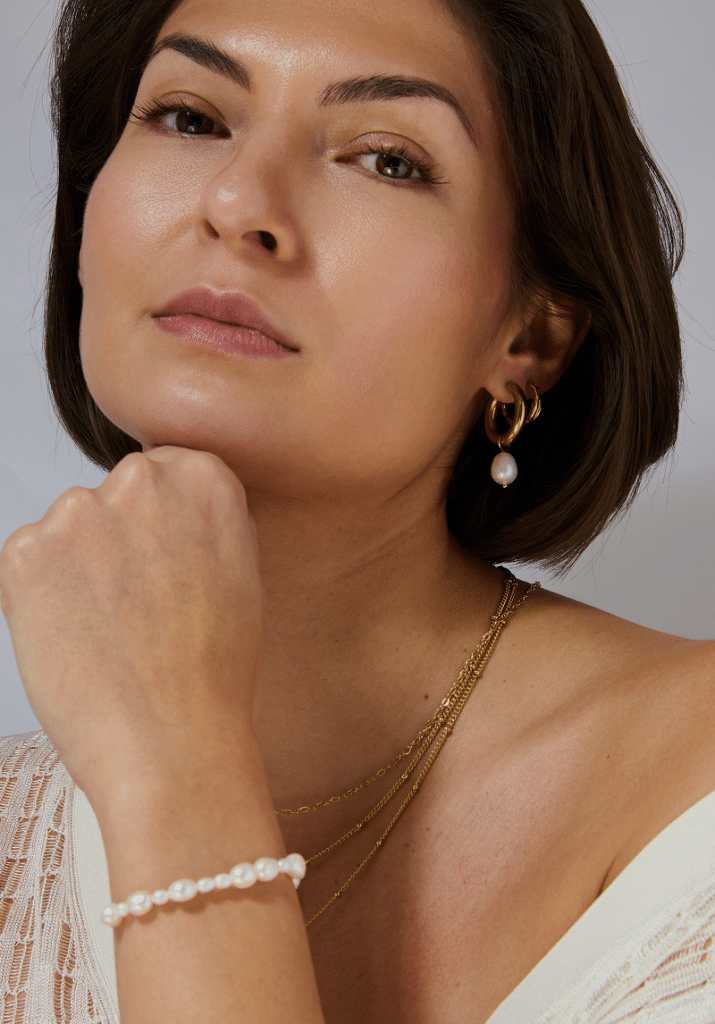
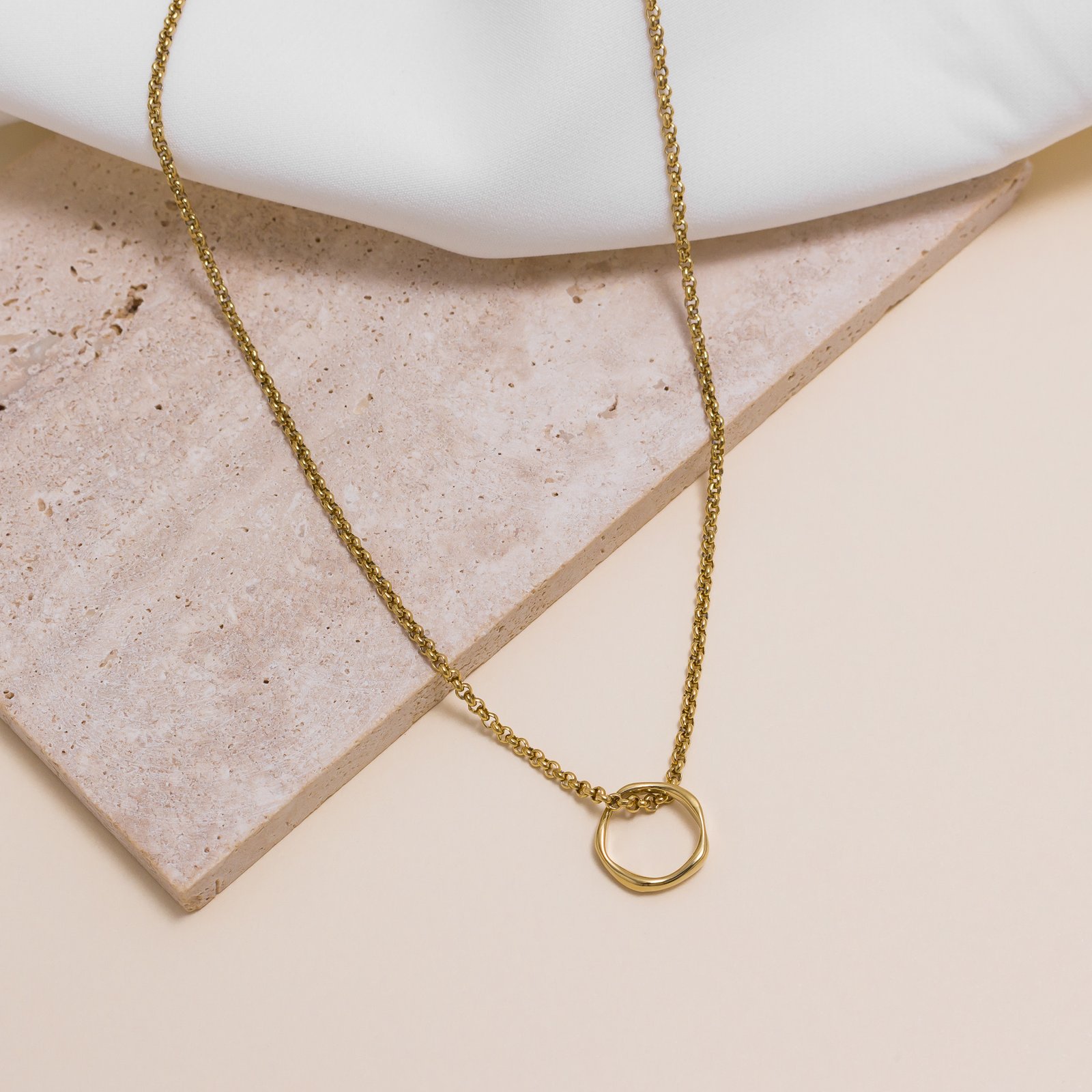
Because these are pieces made to be lived in, the material counts more than it first seems. A protective charm on a fine chain slips under a collar and layers easily, while a small pendant or bracelet keeps the meaning in view. A waterproof, tarnish-free finish such as 14k gold PVD on recycled stainless steel keeps its colour through showers, workouts and long days, and a hypoallergenic finish suits sensitive skin. The point of an everyday talisman is that you never have to take it off.
Protection jewellery also makes a thoughtful thing to give. Offered at a hopeful or slightly exposed moment, a new baby, a new home, a fresh start, a trip away, it carries a warmer message than most pieces: a wish to keep someone looked after from a distance. A small charm on a fine chain or an initial pendant makes that gesture easy for the person to wear every day, which is usually when these pieces mean the most. Choose the symbol that fits their story, and the meaning does the rest.
Frequently asked questions
What does protection jewellery mean?
Protection jewellery is worn as a guard against envy, bad luck or harm, and for the reassurance it brings. The meanings are cultural and personal, a matter of belief and tradition, and they vary from one tradition and wearer to the next.
Which jewellery symbols are worn for protection?
Common ones include the evil eye and the hamsa hand, along with religious and spiritual motifs, lucky charms and personal talismans. Each carries its own cultural background and can mean slightly different things in different places.
Does protection jewellery really work?
Protection jewellery has long been worn as a safeguard, though this is a cultural and personal belief, held as tradition more than fact. People wear it for the meaning and reassurance it offers as much as anything else.
Can anyone wear protection jewellery?
Yes. Protective symbols are worn widely across cultures and are generally seen as welcoming. Many people wear them simply for the meaning, the heritage or the quiet reassurance they bring.
Is protection jewellery a good gift?
It makes a thoughtful gift because it carries a caring message: a wish to keep someone looked after. It is often given at hopeful or uncertain moments, such as a new baby, a new home or a fresh start.
Related pieces
If the idea of keeping something protective close appeals, the Evil Eye Protection Charm on a fine chain is an easy way to carry that meaning every day, with all the lore of the evil eye behind it. For protection that is more personal, the Alphabet Necklace lets you wear an initial that stands for someone you want to keep near. Both are made from recycled stainless steel with a 14k gold PVD finish, so they stay waterproof, tarnish-free and gentle on sensitive skin through daily wear.