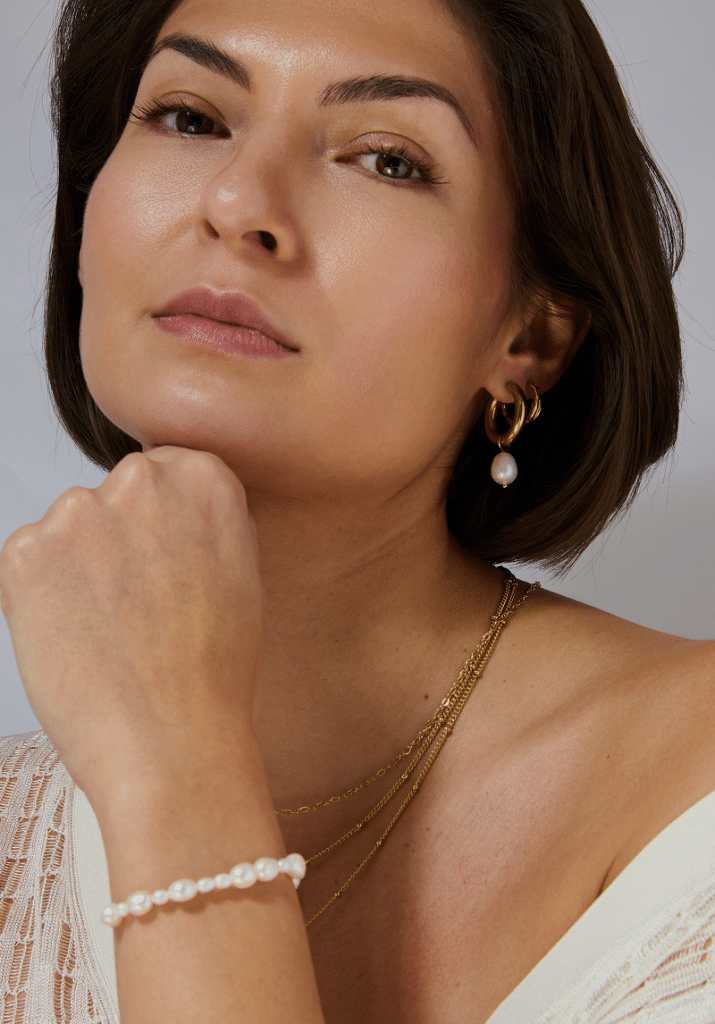


It is six o'clock, you are heading straight from the office to dinner, and there is no time to go home and start again. This is the moment day to night jewellery is made for. The trick is to keep the same base pieces and make one deliberate change, with no full swap.
Day to night jewellery works when each piece sits comfortably between casual and formal, so it reads correctly at a desk in the morning and at a table in the evening. The simplest method is to begin with restrained pieces during the day, then add a second necklace, a more present earring, or an extra layer once the sun is down. This guide covers what makes a piece travel well, how layering and finish shift the tone, and the one change that does most of the work.
What does day to night dressing ask of jewellery?
Day to night dressing means moving from one context to another using the same base clothing, adjusted with different pieces or different styling. The jewellery worn at work in the morning may not suit dinner with friends in the evening, yet changing the jewellery alone, without changing the clothing, can shift the formality and tone of a whole look.
This asks for jewellery that is versatile enough to work across contexts. A necklace worn for work should also hold up at a more social evening, which is possible when it sits in a space where it can do both jobs. Daytime jewellery tends to be more restrained and evening jewellery more expressive, though that is a tendency. Someone can wear the same pieces straight through and look right in both, as long as those pieces suit both.
The aim is to change jewellery between contexts only when the change genuinely improves the look in the new setting. Often the most useful thing you learn is that the change required is small.
Can most pieces really work for both work and evening?
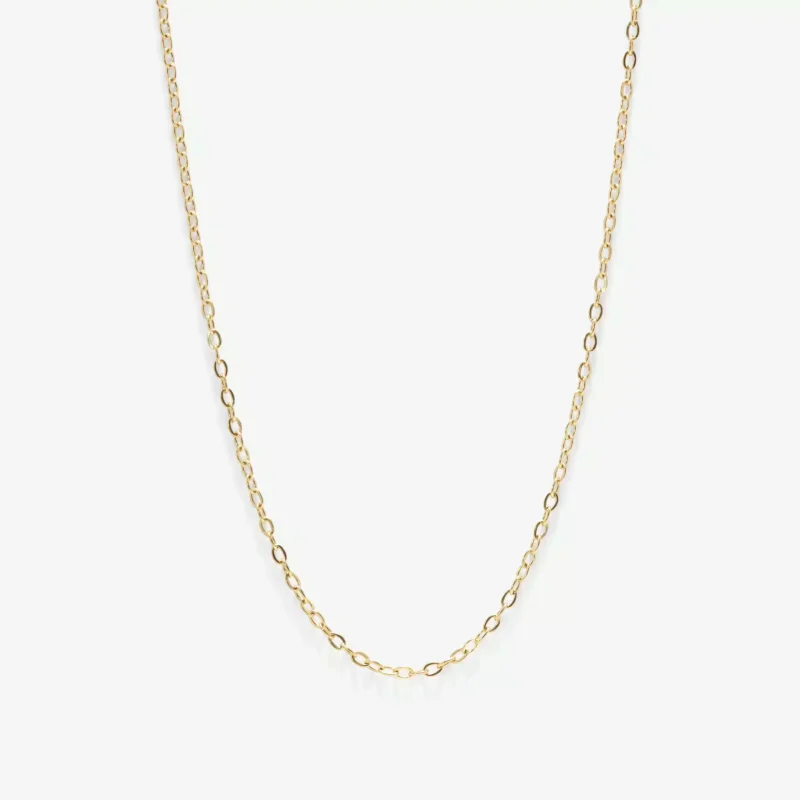
Most jewellery works across multiple contexts when it is styled for them. A simple gold necklace works at a desk, at a business dinner, and at a casual meal with friends. The same necklace looks different depending on the clothing around it and how the hair and makeup are done. The context changes while the necklace stays the same.
This flexibility is possible because few pieces are inherently formal or informal. A piece reads as formal or casual based on how it is worn and what it sits with. The same bracelet can look professional alone with a structured work outfit, then look dressier with evening clothes and a second piece beside it. Fine gold travels particularly easily, reading as quality and understatement at once.
Understanding this means a smaller, more versatile collection can do more than two separate sets. A handful of pieces flexible enough to cross contexts covers far more of real life than one wardrobe for day and one for night. The skill is in styling them differently depending on where the day is heading.
Which pieces travel from morning to evening most reliably?
The pieces that carry from morning to evening tend to share a quality that is easy to recognise: material quality paired with restraint, so they read as appropriate while staying free and unconstrained. They are coded for no single setting, which is what lets them move between settings.
Scale that is neither very small nor very large works across the widest range, reading as considered at work and as pleasingly understated in a social setting. A medium-small pendant or a fine chain with a small amount of design interest reads as complete in both. Material matters as much as scale. Fine gold and good pearl both look intentional while keeping an open quality, which is exactly the neutrality that travels.
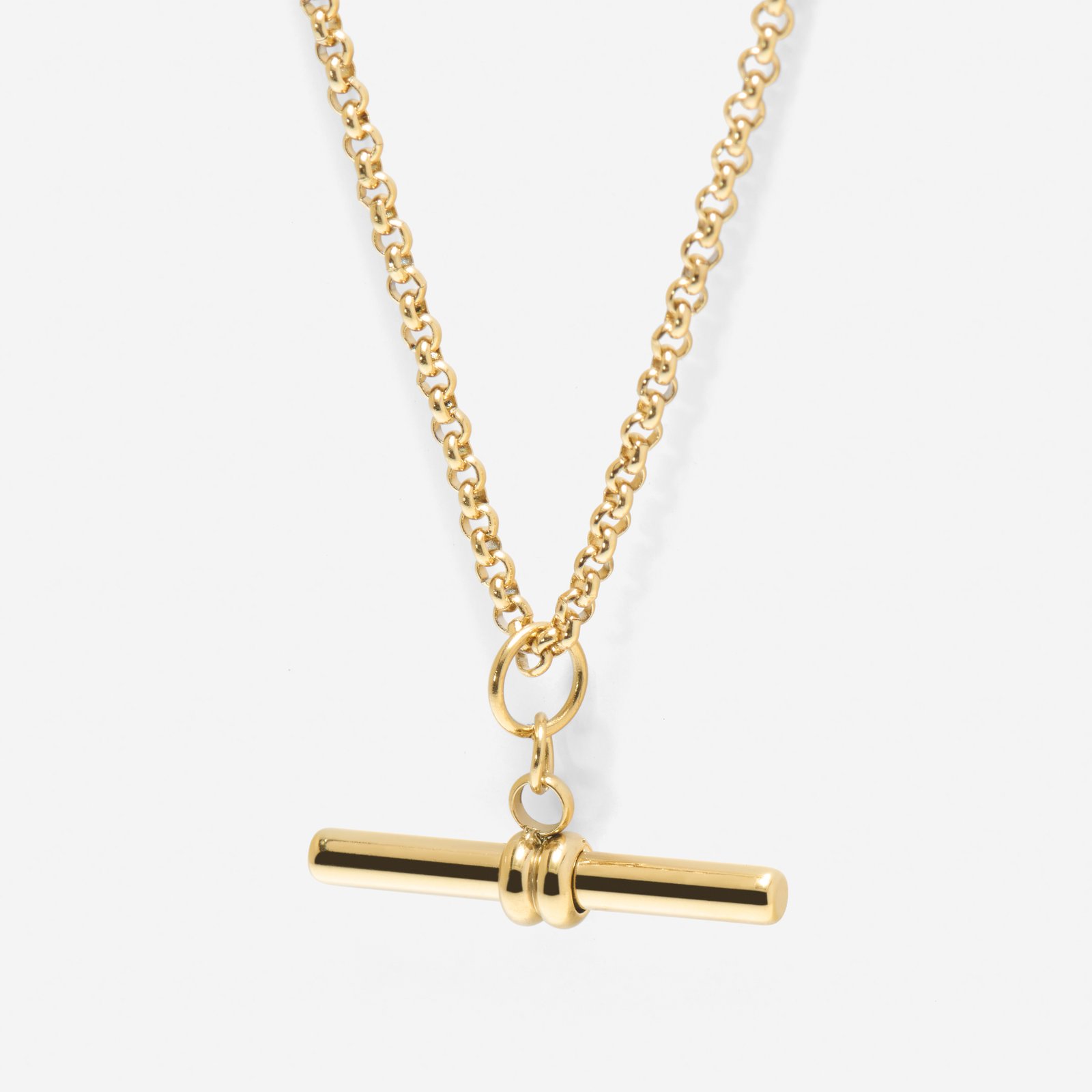
A degree of formal interest, kept simple, also helps. A plain chain can read as too spare for an evening, while a chain with texture or a small considered pendant reads as finished in both registers. The interest comes from the design itself, and design-led interest stays more contextually neutral than size-led impact. A piece like this means the daily jewellery decision is made once, correctly, and stays settled as the day moves on.
How does layering shift how formal a look reads?
Layering is one of the most direct tools for adjusting formality. A single necklace alone can read as casual and understated. The same necklace layered with a second, or worn alongside earrings and a bracelet, reads as more developed and more dressed. By adjusting how much is layered, the same pieces tune up or down.
For work, a single necklace and a subtle earring is usually enough. For the evening, a second necklace, an added bracelet, or a more visible earring builds the look while keeping everything that was already there. Layering works because it adds visual interest and weight, and more weight tends to read as more formal. A delicate, minimal combination can still be elegant unlayered, so this holds as a general principle.
The advantage of using layering this way is that every individual piece stays exactly where it is. A layer is added or removed for the context. That is far more practical than carrying a separate evening set and swapping everything over.
What single change does the most for a day to night look?
The most useful habit is changing one piece. Keep the same necklace and earrings through the day, then add a more substantial bracelet in the evening, or keep the bracelet and earrings and add a necklace. This needs less jewellery overall and is quicker to do.
It also looks more intentional. Changing an entire combination can read as jarring or overdone. Changing a single piece reads as a subtle shift in tone, the same person slightly more dressed for where the evening is going. The piece worth changing is usually the one with the most visual impact, often the necklace, because it covers more area.
Finish gives another quiet lever. A polished, high-shine surface reads as more formal and more precious, and a brushed or matte surface reads as more casual. A polished piece suits the evening, a matte one the day, and the same piece worn alone in the morning and layered at night moves between the two with the finish left untouched.
Why is a versatile base better than occasion sets?
Building a versatile base of pieces that work across contexts is more practical and more economical than owning complete sets for different occasions. A base might be a simple necklace that suits work and evening, a pair of earrings that are subtle while still refined, and a bracelet with enough substance to be seen while staying easy. These work alone or together, with casual or dressier clothing, by day or by night.
With a versatile base in place, adding occasion-specific pieces becomes optional. A more substantial piece can be brought in for a particular event as one addition to a base that already works, so anything added will sit well with what is there. This also tends to produce a more coherent personal style.
For most people this is more sustainable and more satisfying than occasion sets. It needs less jewellery, asks for fewer daily decisions, and usually looks more intentional because everything works together. The relief of knowing the jewellery already suits wherever the day goes is small each day and meaningful over years of wear.
Frequently asked questions
How do you take jewellery from day to night?
Keep your base pieces and make one deliberate change. Add a second necklace, swap a stud for a more present earring, or add a bracelet. One small addition shifts the tone with the rest of the jewellery left in place.
What jewellery works for both work and evening?
Pieces that are neither very small nor very large, in fine gold or good pearl, with a little design interest in place of heavy ornament. A fine chain with a small pendant, simple hoops, and a refined bracelet all read correctly in both settings.
Do I need different jewellery for day and night?
No. Most pieces are not inherently formal or casual; they read differently depending on what surrounds them. A versatile base worn through the day, adjusted by one layer or swap in the evening, covers both with a single collection.
Does a polished or matte finish look more formal?
A polished, high-shine finish reads as more formal and precious, and a brushed or matte finish reads as more casual. You can lean on this for day to night, or simply wear one versatile piece alone by day and layered by evening.
What is the easiest day to night swap?
Changing the piece with the most visual impact, usually the necklace. Adding or swapping it shifts a look more than changing earrings, because it covers more area and resets the overall balance.
Related pieces
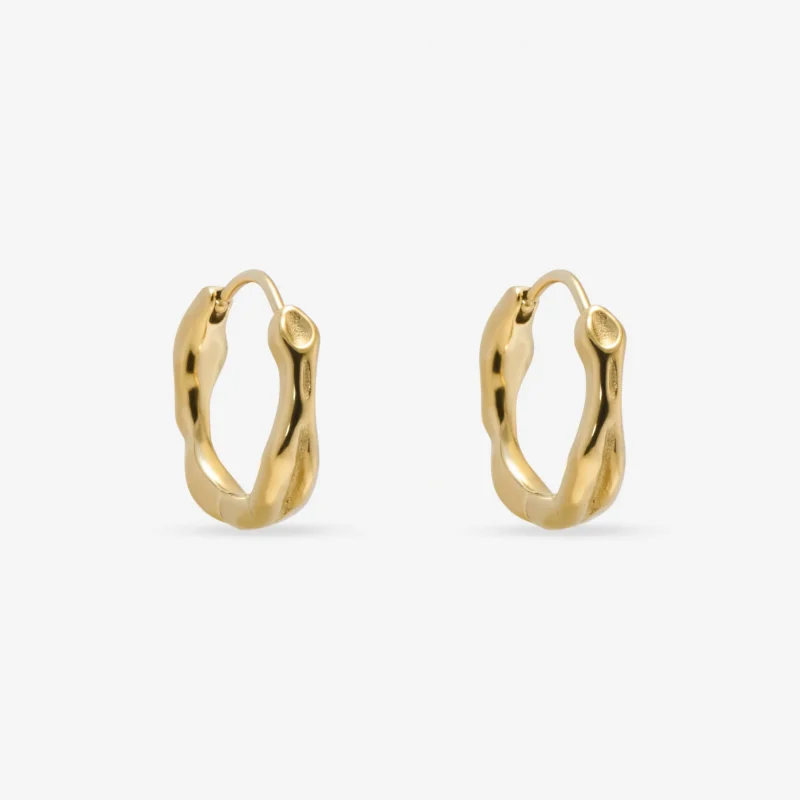
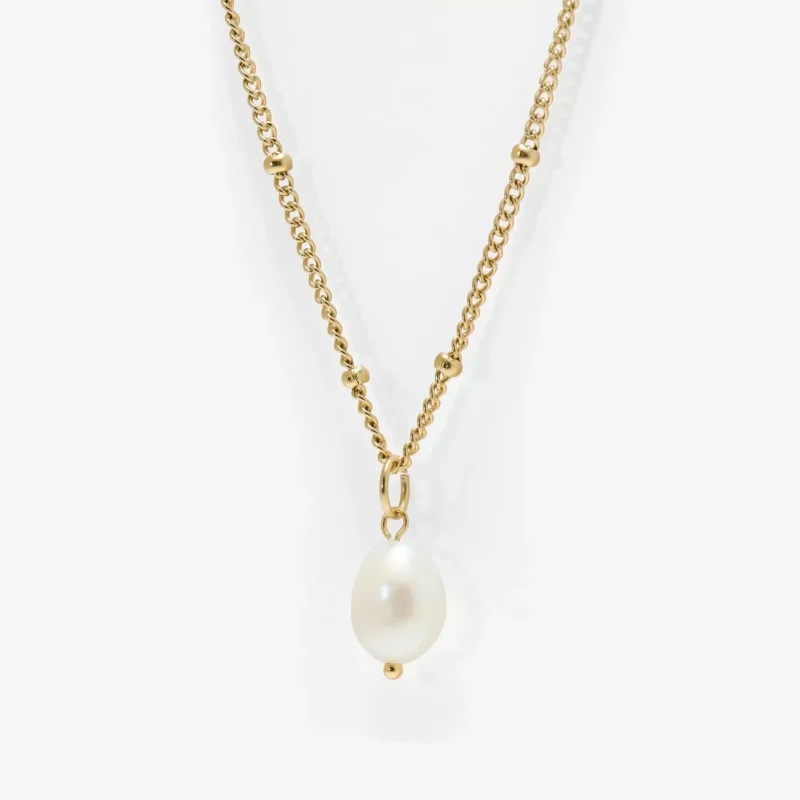
Molten Hoop Earrings sit at a scale that reads as considered at a desk and as pleasingly present in the evening, so they carry a look across the day with no swap needed. The Baroque Pearl Necklace adds the kind of restrained character that works alone for work and layers easily into a dressier evening combination. Both are made in recycled stainless steel with a 14k gold PVD coating, so they are waterproof, tarnish-free and hypoallergenic, which suits pieces worn straight through a long day and into the night.