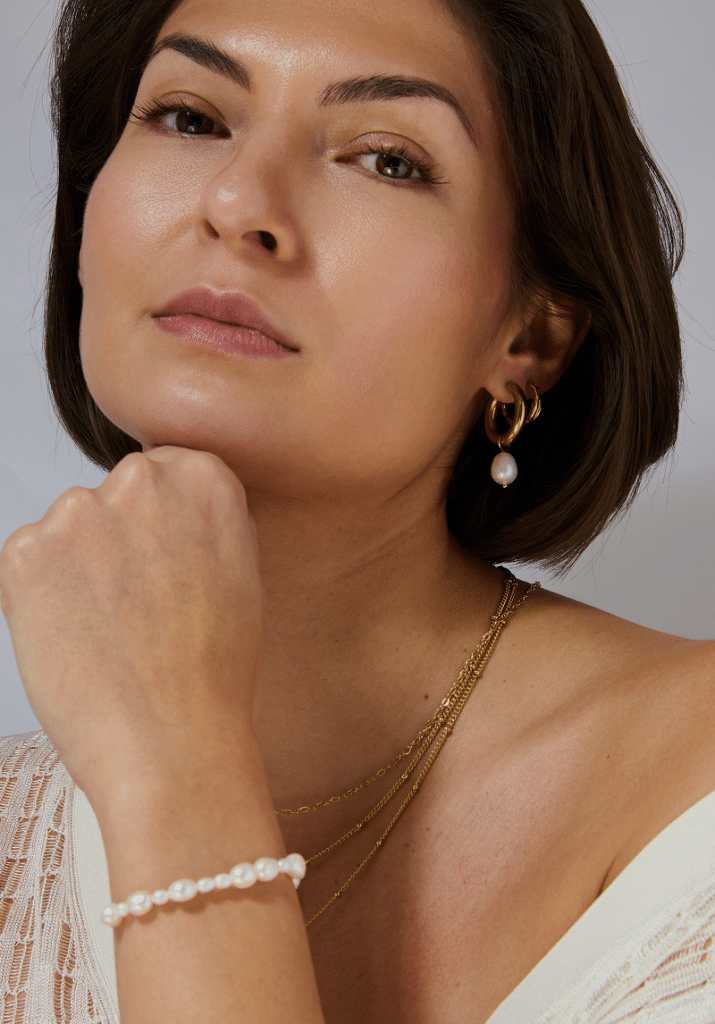


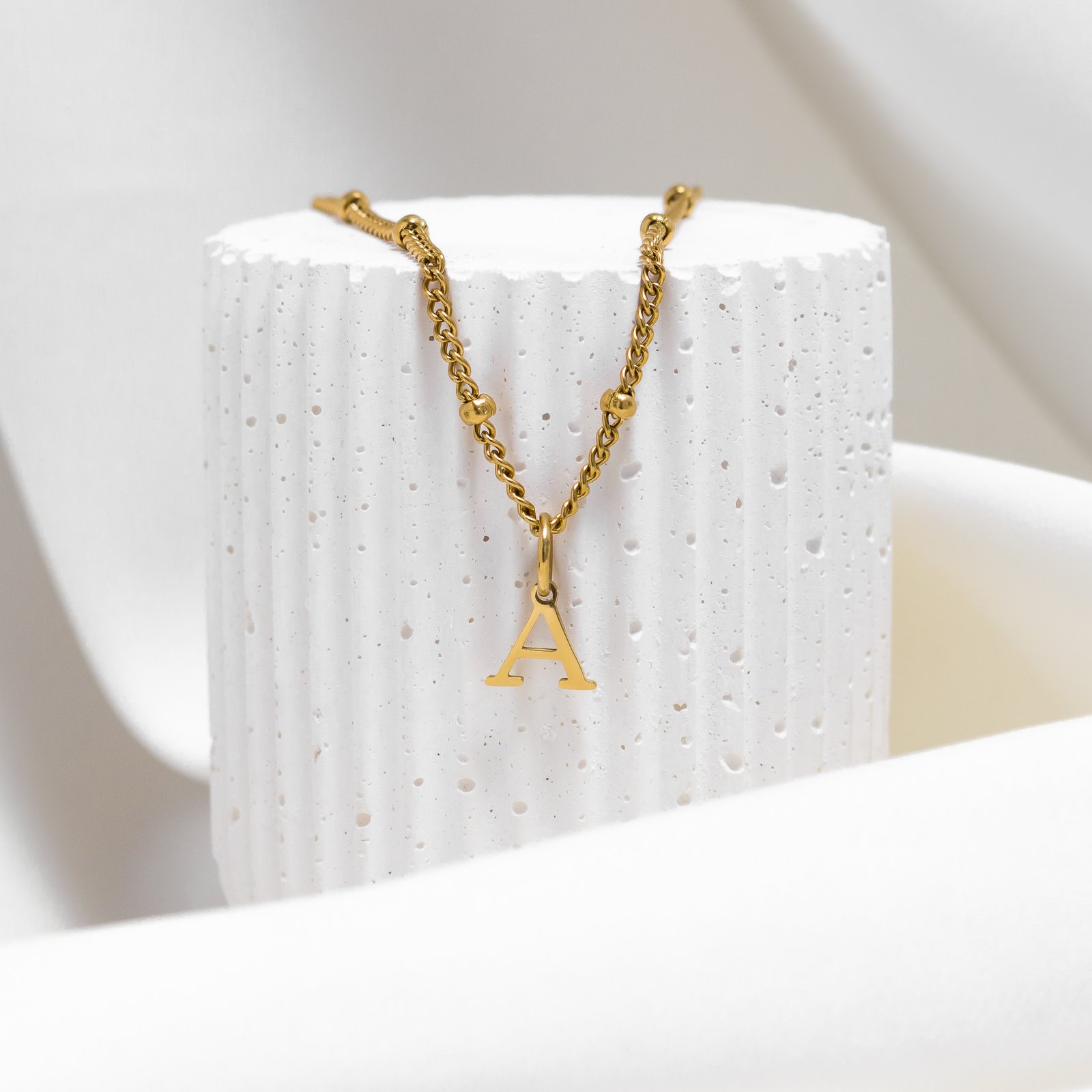
Standing at the counter, two pieces in front of you, the only obvious difference is a tiny stamp and a noticeable jump in price. One says 14k, the other 18k, and the assistant talks about purity and colour while you try to work out which actually matters for the way you live.
The short version of 14k vs 18k gold is this: 14k is 58.5 percent pure gold and harder wearing, while 18k is 75 percent pure gold with a richer colour but a softer make-up. Neither is simply better. The right choice depends on how the piece will be worn and what you want from it.
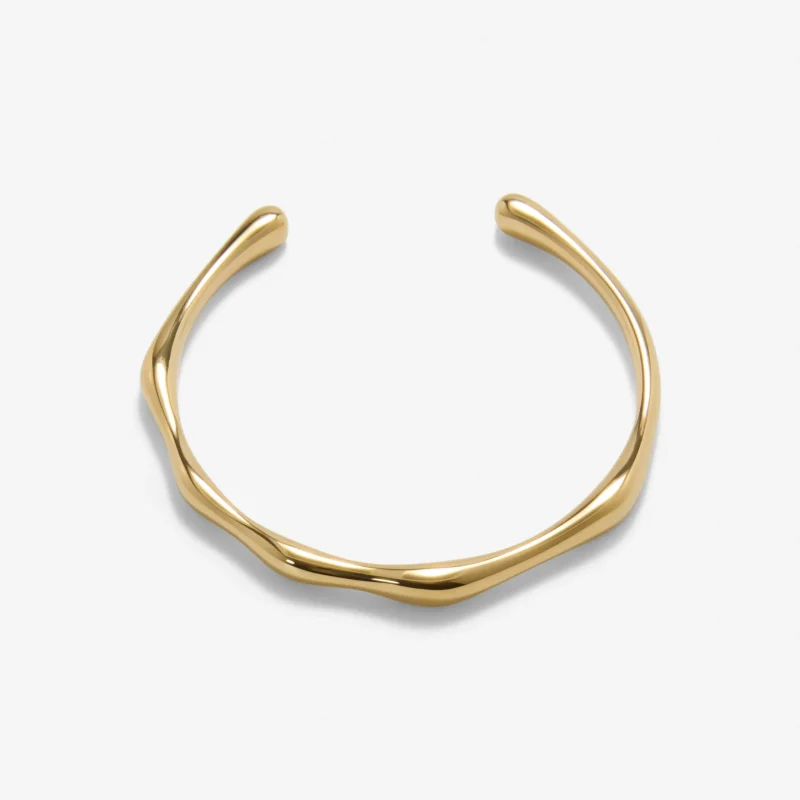
What do 14k and 18k actually mean?
The karat number tells you how much of the metal is pure gold. Pure gold is 24 karat, so the figures are a fraction of that. 14k gold is 58.5 percent pure gold, with the rest made up of other metals such as copper and silver. 18k gold is 75 percent pure gold, with a smaller share of those added metals.
Pure gold on its own is too soft for most jewellery, so it is mixed with other metals to make an alloy that holds its shape. The karat number is really a measure of that balance: more gold for colour and value, or more alloy for strength. That single ratio drives almost every practical difference between the two.
You will often see the percentages stamped as well, 585 for 14k and 750 for 18k, which is the same information written as parts per thousand. Both are widely used and hallmarked across the UK, so neither is unusual or hard to find. The choice between them is about fit for purpose more than availability.
Is 18k gold better than 14k?
18k gold is purer and has a deeper, warmer colour, which many people prefer for fine and special pieces. With three quarters pure gold, it carries more of gold's natural richness and a higher intrinsic value. For an heirloom or a piece meant to feel precious, that purity is a genuine draw.
The trade-off is hardness. Because 18k contains more soft pure gold and less strengthening alloy, it is more prone to scratches and dents than 14k. So 18k is the better choice for colour and value, while it asks for a little more care in daily life.
Whether that matters depends entirely on how hard the piece will be worn. A pendant that sits quietly at the collarbone takes far less punishment than a bangle that knocks against desks and door handles all day. The purer gold suits the gentler life.
Which is more durable, 14k or 18k gold?
14k gold is the more hard-wearing of the two. The larger proportion of alloy metals makes it harder and more resistant to the scratches, knocks and general wear that everyday pieces pick up. For a chain or earrings you wear most days, that durability is a real advantage.
18k, with more pure gold, is softer and marks more easily, which is why it often suits pieces worn less roughly. If you tend to be hard on your jewellery, or you want something that keeps its surface through constant wear, 14k generally holds up better over the years.
Hardness affects more than scratches. Softer 18k can bend or lose its shape more readily under pressure, while the firmer 14k alloy keeps its form. For fine chains and delicate settings that take daily strain, that extra firmness quietly extends a piece's life.
How does colour differ between 14k and 18k?
Colour is where the purity difference shows most clearly. 18k gold has a richer, more saturated yellow because three quarters of it is pure gold. 14k is a slightly paler, cooler yellow, since more of the mix is made up of other metals.
The gap is subtle and easy to miss until the two sit side by side. Many people find 14k's tone perfectly warm enough, especially for everyday pieces, while others prefer the depth of 18k for something they want to feel a little more luxurious.
The added metals also shape the colour in other ways. Rose and white golds get their tone from the alloy mix, and the same logic applies to yellow: the higher the karat, the closer the colour sits to pure gold. It comes down to taste as much as anything measurable.
Which gold is best for everyday jewellery?
For pieces you wear most days, 14k gold is often the more practical choice. It offers a warm gold colour with the hardness to survive daily life, which is why so many everyday chains, hoops and bracelets are made in it. 18k suits pieces you treat more gently or save for special wear.
Cost plays a part too. With less pure gold, 14k is generally more affordable than 18k of the same design, so it lets you buy a more substantial everyday piece for the same outlay. For jewellery that earns its keep through constant wear, that balance of price and toughness is hard to beat.
There is also a third route worth knowing. If you want the look of gold with the toughness to handle showers, swimming and the gym without fuss, a 14k gold PVD finish bonded onto recycled stainless steel gives a hard, waterproof, tarnish-free surface for everyday pieces. Our guide to PVD versus gold plating explains how that finish wears, and our piece comparing gold vermeil, plating and gold filled covers the solid-gold alternatives.
Should you choose solid gold or a gold finish?
It depends on what you want the piece to do. Solid 14k or 18k gold holds its value and can be passed on, which makes it a sound choice for special pieces and long-term keepers. The colour goes all the way through, so it never wears to reveal another metal beneath.
For everyday jewellery worn through water and movement, a 14k gold PVD finish on stainless steel is often the more carefree option. It is waterproof, tarnish-resistant and hypoallergenic, and the hard bonded surface copes with daily life without the care a softer solid-gold piece might need. Many people keep a little of both: solid gold for the pieces that matter most, and PVD on steel for the chain or hoops they wear without thinking.
Frequently asked questions
What is the difference between 14k and 18k gold?
14k gold is 58.5 percent pure gold and harder wearing. 18k gold is 75 percent pure gold, with a richer colour but a softer make-up that marks more easily.
Is 18k gold better than 14k?
18k is purer, with a deeper colour and higher value, which suits fine or special pieces. 14k is harder and more durable, which often suits everyday wear better. Neither is simply better.
Which is more durable, 14k or 18k gold?
14k gold. Its higher proportion of alloy metals makes it harder and more resistant to scratches and dents than the softer, purer 18k.
Does 18k gold look more yellow than 14k?
Yes. With more pure gold, 18k has a richer, warmer yellow. 14k is a slightly paler, cooler tone, though the difference is subtle unless the two are side by side.
What is the best gold for everyday jewellery?
14k gold is a popular everyday choice for its balance of warm colour and hardness. For waterproof, low-maintenance wear, a 14k gold PVD finish on stainless steel is another strong option.
Is 14k gold cheaper than 18k?
Usually, yes. With less pure gold, 14k generally costs less than 18k of the same design, which lets you buy a more substantial everyday piece for the same money.
Related pieces
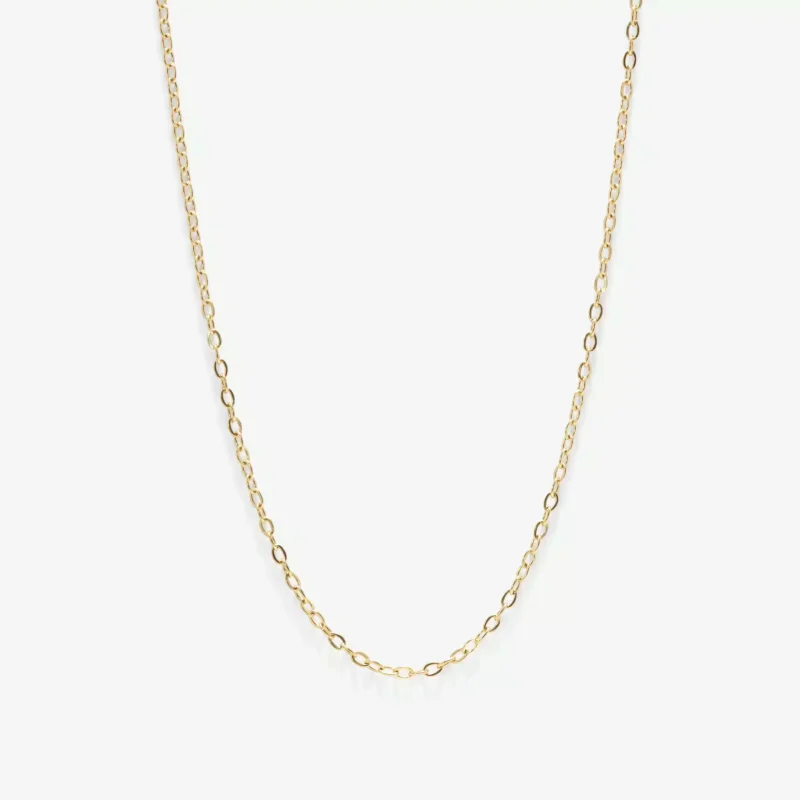
For a fine everyday chain with a warm gold tone and the toughness to be worn without thinking, the Dainty Chain uses a 14k gold PVD finish on recycled stainless steel, so it stays put through showers, workouts and long days.
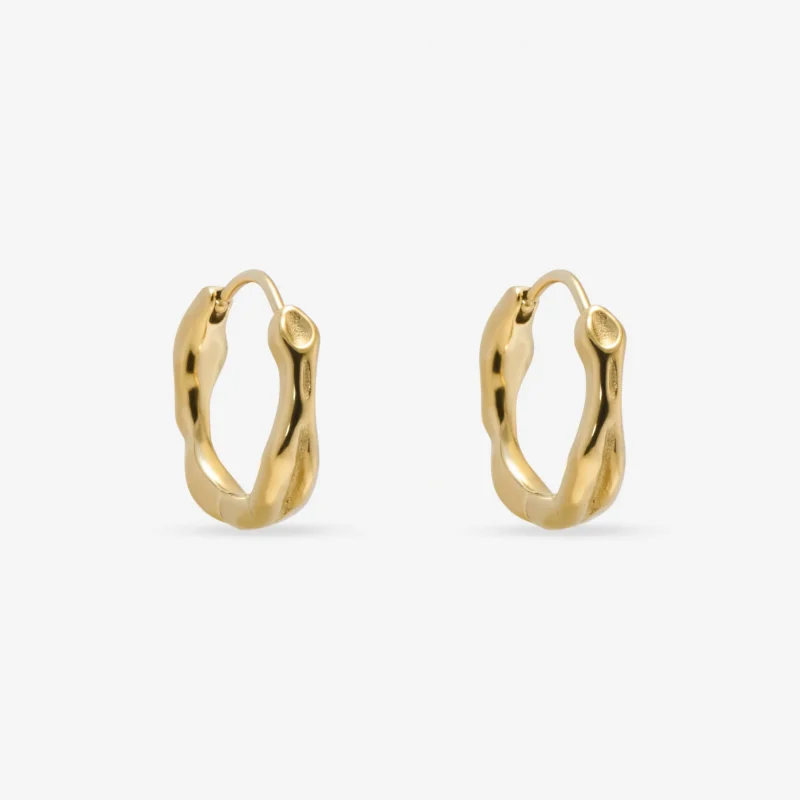
The Molten Hoop Earrings carry the same waterproof, tarnish-free finish in a smooth sculptural shape, an easy pair to keep in day to day and a good match for a layered everyday look.