

It is one of life's small disappointments: a piece you genuinely liked leaves a green smudge on your skin, and suddenly you are not sure you can wear it again. It happens to favourite chains, to bracelets, to the pieces you reached for most, which is partly why it stings.
So why does jewellery turn skin green? The short answer is copper. Most green marks come from copper in a metal reacting with the acids and moisture on your skin, forming green copper salts that transfer onto you. It is harmless, it washes off, and choosing the right materials stops it happening in the first place.
The simple reason jewellery turns skin green
The green colour is a chemical reaction between copper and your skin. Copper is a common ingredient in inexpensive jewellery alloys, and when it meets the natural acids, salts and moisture on your skin, it oxidises and forms green copper compounds. A little of that transfers to the skin underneath, which is the mark you see.
It is the same process that turns copper rooftops and statues green over time, just speeded up and on a tiny scale. The reaction is harmless to most people, and the stain rinses away with soap and water.
Two things have to come together for the mark to appear: a reactive metal, usually one containing copper, and the moisture and mild acidity of your skin. Take either away and the green largely disappears. That is why the same person can have one piece that marks badly and another that never does, and why choosing the metal carefully solves the problem at its source.
Which metals cause green marks?
Copper is the main offender, along with copper-heavy alloys such as brass and bronze that show up in cheap costume jewellery. Nickel can cause skin reactions too, though that tends to be redness and irritation, with no green tint.
Solid gold in lower karats contains some copper, which is why a little marking is occasionally seen there. Higher-karat gold, with more pure gold and less copper, marks far less. Surgical stainless steel and titanium are among the metals least likely to cause green marks, because they contain no reactive copper to speak of.
This is why the metal name on a listing matters so much. Two pieces can look identical in photographs and behave completely differently against the skin, purely because of what they are made from. A piece described simply as gold-tone tells you about the colour and nothing about the metal, while one described as 14k gold PVD over 316L stainless steel tells you it should stay clean. The description is your best clue before you ever put it on.
Why your skin and surroundings make a difference
The same piece can mark one person and not another, because skin chemistry varies. Sweat, the natural acidity of your skin, and how much your hands are in water all change how readily a reactive metal reacts. Warm, humid weather and exercise tend to bring marks out faster.
Lotions, perfumes and even some cleaning products add to it, since they leave a film that speeds the reaction along. This is why a piece might behave for weeks, then start marking during a heatwave or a sweaty stretch of training.
Worn plating: the sneaky cause
Plenty of green marks come from plating wearing through. Many affordable pieces are a thin layer of gold or silver over a reactive base metal. The coating looks fine at first, but it rubs away with wear, exposing the copper-rich metal beneath to your skin.
The coating thins first at the edges, the clasp and anywhere that rubs against clothing, which is exactly where the green starts. This is why a piece can seem perfect for a while, then suddenly begin marking once the plating gives way and the base metal makes contact.
You can often predict which pieces will go this way. A very low price with a gold-tone or gold-plated label and no named base metal is the classic profile. The plating may be only a few millionths of a metre thick, so on a piece you wear constantly it has little chance of lasting. The thinner the coating and the more reactive the metal beneath, the sooner the green appears. It is one reason the same design can cost a few pounds in one shop and far more in another: the difference is often in the base metal and how the surface is bonded, which is exactly what decides whether your skin stays clean.
Is green skin from jewellery harmful?
For most people the green stain is purely cosmetic. It is a harmless transfer of metal compounds onto the surface of the skin, and it cleans off with ordinary washing. It does not mean the piece is dangerous or that anything is wrong with your skin.
A reaction is a different matter. If a piece leaves you red, itchy, sore or blistered, that suggests a sensitivity, most often to nickel. If any reaction is persistent or uncomfortable, it is worth seeing a professional such as a pharmacist or doctor for advice.
How to stop jewellery turning your skin green
The most reliable fix is to choose materials that do not react. Surgical or 316L stainless steel, titanium and higher-karat gold all resist the copper reaction that causes green marks. A durable PVD coating over stainless steel seals the surface and limits any metal contact with the skin, so it stays clean through everyday wear.
A few habits help with pieces you already own. Put jewellery on after perfume and lotion, take it off before heavy sweating or swimming where you can, and dry it afterwards. A thin coat of clear barrier lacquer on the inside of a problem piece can buy time, though replacing it with a non-reactive material is the lasting answer.
It is also worth knowing that the same piece can behave differently from one season to the next. Warm, humid weather and the extra sweat that comes with summer or with training will bring marks out faster, while in cooler, drier months the very same chain may stay clean. If you only see green in the heat, the metal is the reason, and a non-reactive piece will see you through every season the same way.
Frequently asked questions
Why does jewellery turn my skin green?
Most green marks come from copper in the metal reacting with the acids and moisture on your skin, forming green copper salts that transfer onto you. It is harmless and washes off.
Is it bad if jewellery turns your skin green?
No, the green stain is a harmless cosmetic transfer that cleans off with soap and water. Redness, itching or a rash is different and may point to an allergy, often to nickel.
Which metals do not turn skin green?
Surgical stainless steel, titanium and higher-karat gold rarely cause green marks because they contain little or no reactive copper. A PVD finish over stainless steel also stays clean against the skin.
Why does my jewellery turn green only sometimes?
Skin chemistry, sweat, humidity, lotions and perfume all affect the reaction. A piece may behave for weeks, then mark during hot weather or after heavy sweating, or once thin plating wears through.
How do I stop jewellery turning my skin green?
Choose non-reactive materials such as stainless steel, titanium or higher-karat gold, look for a durable PVD finish, and apply perfume and lotion before putting jewellery on.
Related pieces
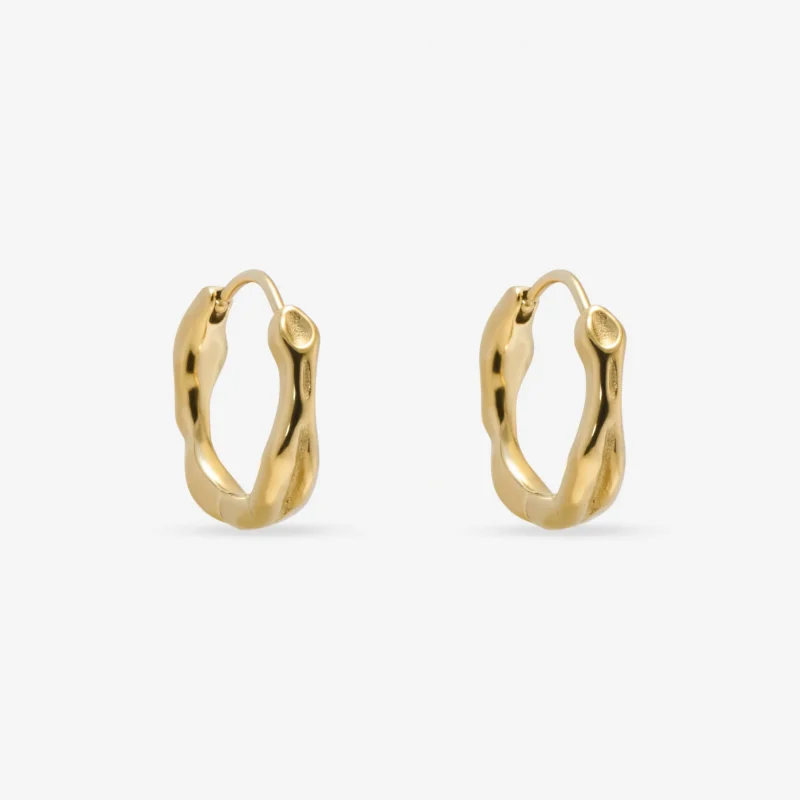
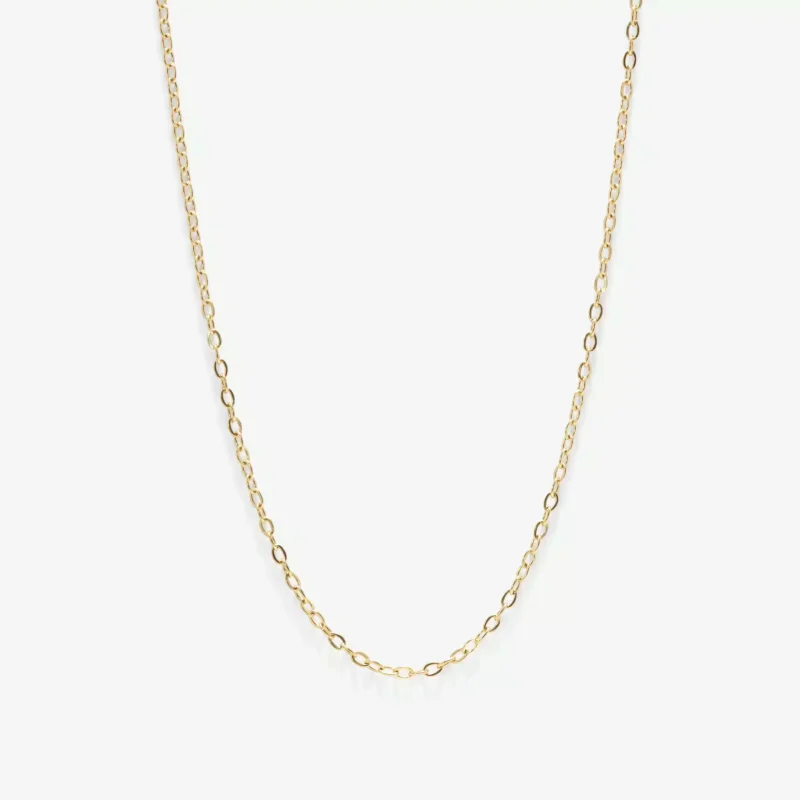
If green marks have put you off wearing jewellery close to the skin, the Molten Hoop Earrings and the Dainty Chain are made from recycled stainless steel with a 14k gold PVD finish. The sealed surface resists the wear that exposes reactive metals, so they hold their colour and stay clean through daily wear.