

You clip in a pair of earrings, feel fine for an hour, then notice the familiar itch creeping in by lunchtime. If that pattern sounds familiar, the good news is that you can usually prevent a jewellery allergy with a few practical choices. The short answer is to wear hypoallergenic metals, keep your pieces clean and dry, and give sensitive skin a little care around the points where metal sits against it. This guide walks through what causes a reaction in the first place, which metals are kinder to skin, and the small habits that let you wear jewellery day after day without the redness and itch.
What causes a jewellery allergy?
Most jewellery reactions come down to one metal: nickel. Nickel is the most common metal contact allergen, and it turns up in many cheaper alloys and in the base metals used under thin plating. When skin that is sensitive to nickel meets it for long enough, especially with warmth and moisture in the mix, the result is often redness, itching and small bumps where the piece sat. Earlobes, the back of the neck and the wrist are common spots because the metal stays in close contact there through the day.
A reaction can also build over time. Someone might wear a particular pair of earrings for months with no trouble, then start to react after repeated exposure. Sweat, water and friction speed the process along, which is why a piece that feels fine at a desk can become uncomfortable after exercise or a warm afternoon. Understanding the trigger makes prevention much simpler, because once you know nickel is usually the culprit, the choices that follow fall into place.
How do you prevent a jewellery allergy?
Preventing a jewellery allergy comes down to three things: the metal you choose, how clean and dry you keep it, and how long it stays against the skin. Start with the metal, because that is where most of the difference is made. Choosing a hypoallergenic option removes the trigger before it has a chance to act, which is far easier than treating irritation after it appears.
After that, simple habits do the rest. Take pieces off before swimming or a heavy workout where you can, since chlorine, salt water and sweat all sit between metal and skin and make a reaction more likely. Wipe jewellery with a soft cloth so oils and product residue do not build up on the surface. Dry your pieces and your skin properly before putting them back on. None of this takes long, and together it keeps the conditions that trigger reactions to a minimum. A useful habit is to make jewellery the last thing you put on in the morning, after moisturiser and perfume have settled, and the first thing you take off in the evening. That keeps lotions and sprays off the metal and shortens the time it spends against warm, damp skin.
Which metals are best for sensitive skin?
For sensitive skin, the kindest metals are the ones that contain little or no nickel and stay stable against the body. Nickel-free, hypoallergenic options include titanium, surgical or 316L stainless steel, and high-karat gold. These are widely recommended for people who react to other jewellery because they release very little, if any, of the metal that causes trouble. Surgical stainless steel in particular is a common choice for everyday pieces because it is hard-wearing and holds up to water and sweat.
A sealed PVD coating adds another layer of comfort. PVD, short for physical vapour deposition, is a process that bonds a fine layer of colour, such as 14k gold tone, onto the metal beneath. Because that surface is sealed and sits tight against the base, it limits how much the underlying metal touches the skin. Pieces made from recycled stainless steel with a 14k gold PVD coating bring those two ideas together: a low-reactivity base and a sealed surface, which is why they tend to suit sensitive skin. Our guide to jewellery for sensitive skin goes into more detail on what to look for.
How do you stop earrings irritating your ears?
Earrings sit in one of the most sensitive spots on the body, so they are often the first piece to cause trouble. To stop earrings irritating your ears, choose posts and hoops made from a hypoallergenic metal, keep both the earrings and your earlobes clean, and avoid leaving in a pair that has already started to feel sore. Give freshly washed ears a moment to dry before putting earrings back in, since trapped moisture makes irritation more likely.
The shape matters too. Lightweight hoops and snug huggie styles move less against the skin than heavy drops that tug at the lobe through the day, so there is less friction to aggravate a sensitive ear. If a particular pair always causes a problem, set them aside and switch to a hypoallergenic style. For more on comfortable everyday options, see our guide to earrings for sensitive ears.
How should you care for jewellery to avoid a reaction?
Clean, dry jewellery is far less likely to trigger a reaction than pieces left to gather sweat, soap and skincare. Wipe each piece with a soft, slightly damp cloth, then dry it before storing or wearing. Keep pieces in a dry spot away from steamy bathrooms where possible. A quick clean once a week is enough for most everyday jewellery, with a wipe after any heavy sweat or a swim. A simple routine works well: a soft cloth with a little warm water and mild soap, a gentle wipe over the piece, a rinse, then a thorough dry before it goes back on or into a box. Avoid harsh cleaners and abrasive cloths, which can scratch a coated surface and leave the metal beneath more exposed.
Letting skin breathe helps as well. If you wear the same pieces every day, the occasional break gives the skin underneath a chance to recover. Pay attention to how your skin responds and adjust as you go. Most people find that the combination of a hypoallergenic metal and a tidy care routine keeps reactions away entirely, so wearing jewellery becomes something you stop having to think about.
Frequently asked questions
How do you prevent a jewellery allergy?
Wear hypoallergenic metals such as titanium, surgical stainless steel or high-karat gold, keep your pieces clean and dry, and remove them before swimming or heavy sweat where you can. These steps remove the nickel exposure and the moisture that usually trigger a reaction.
What is the most common cause of a jewellery allergy?
Nickel is the most common metal contact allergen and the usual cause of jewellery reactions. It appears in many cheap alloys and base metals, and prolonged contact, often with sweat or water, brings on redness and itching in sensitive skin.
Is stainless steel jewellery good for sensitive skin?
Surgical or 316L stainless steel is widely recommended for sensitive skin because it contains little reactive metal and stands up well to water and sweat. A sealed PVD coating on top limits skin contact with the metal further, which suits people who react to other jewellery.
Can a jewellery allergy develop over time?
Yes. Skin can become sensitive after repeated contact, so a piece worn comfortably for months may start to cause irritation. Switching to a hypoallergenic metal usually settles things, since it removes the trigger.
When should I see a pharmacist or GP about a skin reaction?
If a reaction is severe, spreads, or does not clear after you stop wearing the piece, speak to a pharmacist or GP for advice. This article offers general guidance only and is no substitute for a professional assessment of persistent or worsening skin problems.
Related pieces
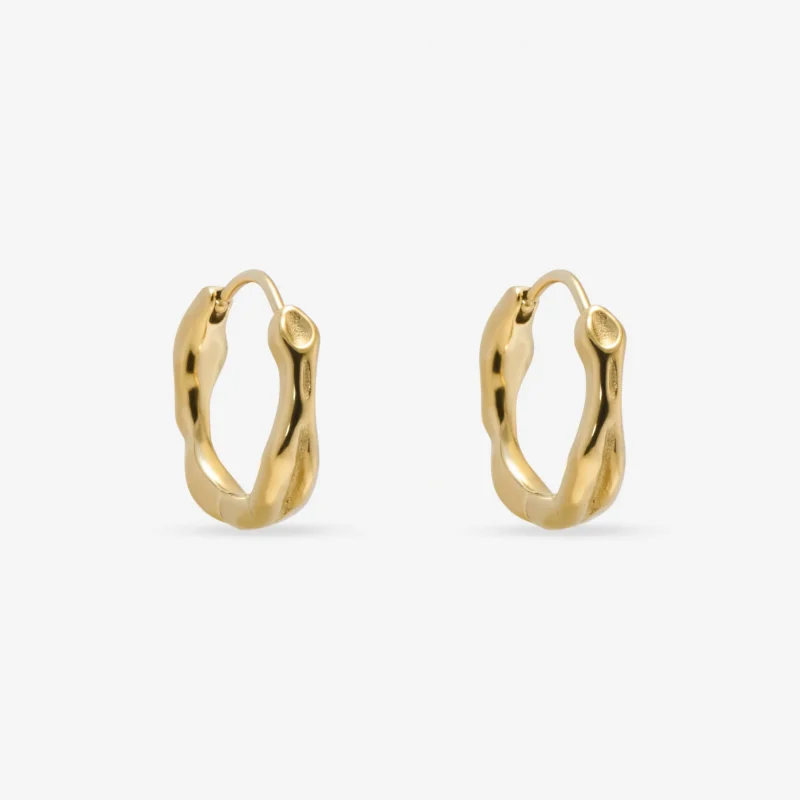
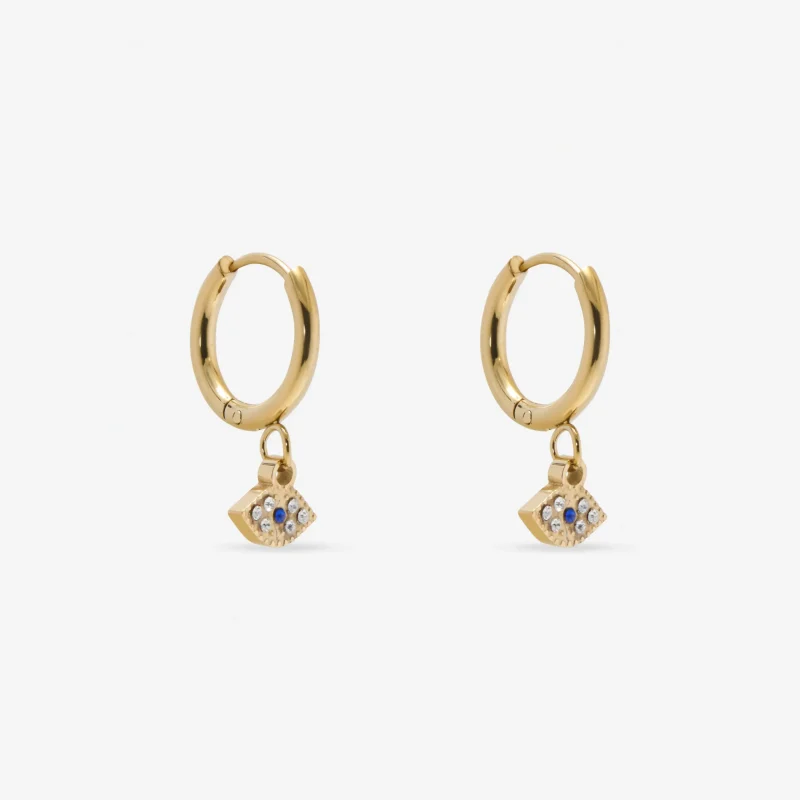
If you want everyday earrings that stay comfortable on sensitive ears, a lightweight, hypoallergenic style suits best. The Molten Hoop Earrings sit close and move little, so there is less friction through the day, and the Evil Eye Huggie Earrings hug the lobe in a snug, easy-to-wear shape for regular use. Both are made from recycled stainless steel with a 14k gold PVD coating, so they are waterproof, tarnish-free and skin-friendly, made to be worn every day.