

There is a small satisfaction in opening a drawer and finding your favourite pieces exactly as you left them: bright, untangled and ready to wear. It rarely happens by accident. A simple care kit, kept somewhere handy, is the quiet difference between jewellery that looks new for years and jewellery that slowly loses its shine.
A good jewellery care kit is refreshingly simple. The essentials are a soft microfibre cloth, mild soapy water, a soft brush, and somewhere to store pieces dry and separated. With those few things, and a short list of what to avoid, you can keep everyday jewellery looking its best with very little effort.
What should a jewellery care kit include?
Four things cover almost everything. A soft microfibre cloth is the most useful item of all, for wiping pieces clean and buffing them back to a shine without scratching. A small bowl of mild soapy water, made with a little gentle washing-up liquid, handles a gentle wash when a piece needs more than a wipe.
A soft brush, such as a clean, soft toothbrush, helps you reach into clasps and detailing where grime collects. Keep that brush just for jewellery, so it stays free of toothpaste, which is abrasive and best kept away from finishes. Finally, somewhere to store pieces dry and separated, whether a lined box, a pouch or a tray with compartments, keeps everything safe between wears. That is the whole kit, and it costs very little to put together.
How do you use a jewellery care kit safely?
For day-to-day care, a quick wipe with the dry microfibre cloth after wearing is usually enough. It lifts away the oils, sweat and traces of skincare that build up through the day and dull a finish over time. Done regularly, this one habit keeps most pieces looking fresh on its own.
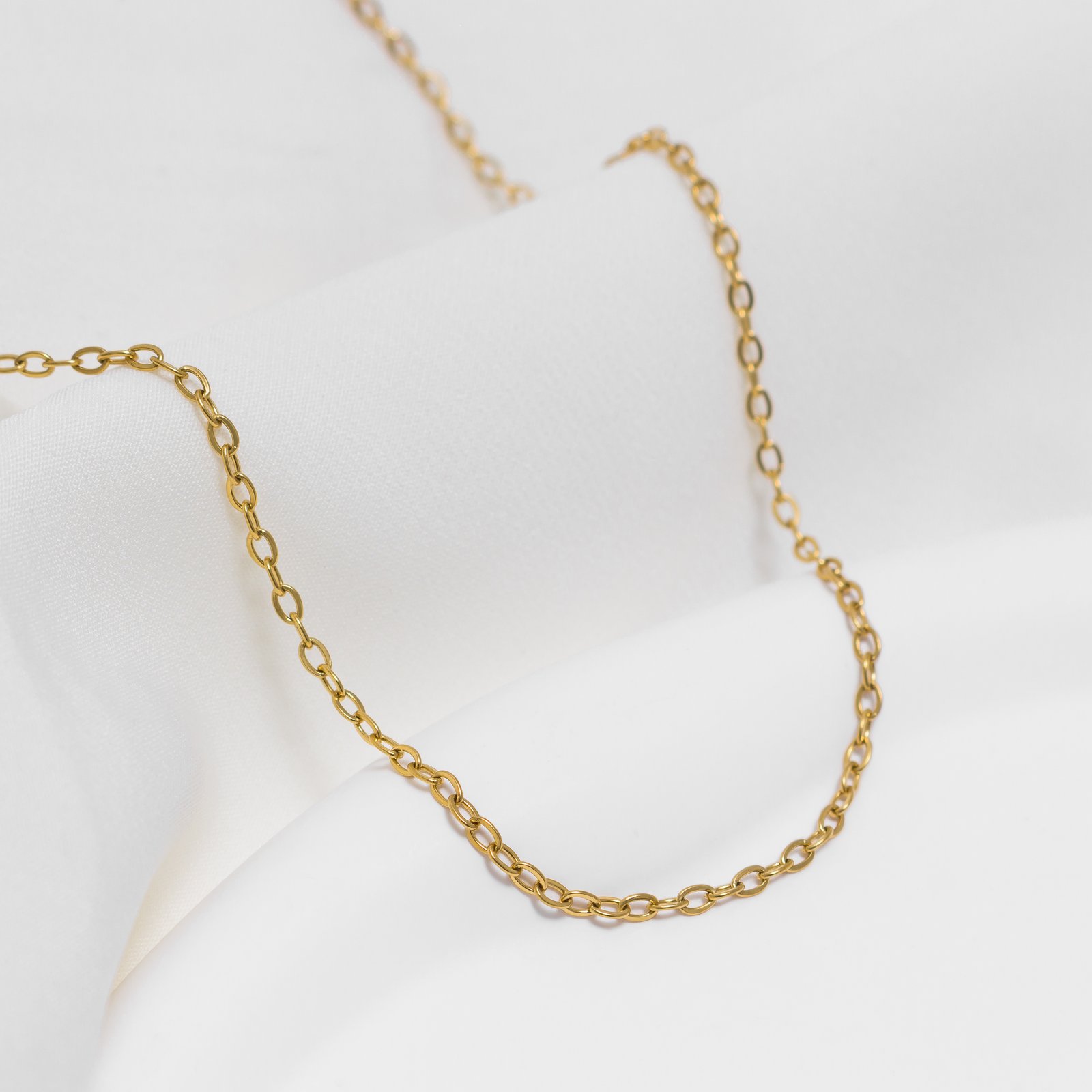
When a piece needs a proper clean, dip it briefly in the mild soapy water, work gently around any detailing with the soft brush, then rinse with clean water. As a worked example, a gold-tone chain that has lost a little of its brightness after a few weeks of daily wear comes back with a two-minute routine: a brief dip, a soft brush along the links and around the clasp, a rinse, and a careful dry. The important final step is drying: pat the piece completely dry with the microfibre cloth and let it air a moment before storing, since trapped moisture is what causes problems over time.
What should you avoid when cleaning jewellery?
A few things do more harm than good, especially on plated and PVD-finished pieces. Avoid abrasives of any kind, including scouring pads, abrasive cloths and toothpaste, because they scratch the surface and can wear through a finish. Stick to soft cloths and soft brushes only.
Harsh chemicals are the next thing to keep away, including bleach, strong household cleaners and chemical jewellery dips, which can damage finishes and react with metals. Ultrasonic cleaners are best avoided on plated and PVD pieces too, as the vibration can affect the coating. Mild soapy water and a gentle touch are all a quality everyday piece needs.
How often should you clean your jewellery?
A light, regular touch beats an occasional heavy clean. A quick wipe with the microfibre cloth after each wear, or every few wears, keeps the everyday build-up of oils and skincare from settling in, and takes only a moment. For pieces worn close to the skin all day, such as a chain or studs, that little-and-often habit does most of the work.
A proper wash in mild soapy water is something most pieces need only now and then, when they start to look dull or grimy in the detailing. There is no need to clean constantly, and over-cleaning with anything harsh does more harm than good. The aim is a gentle routine you will actually keep up, since regular light care is what keeps a piece looking its best year after year.
How should you store jewellery between wears?
Storage matters as much as cleaning. The two rules are dry and separated. Dry, because moisture is what encourages tarnish and dullness over time, so a piece should go away properly dried after wear or cleaning. Separated, so that pieces do not knock together, scratch one another or tangle into a knot in a shared compartment.
A lined jewellery box with sections works well, as do individual soft pouches, especially for travel. Hanging fine chains, in place of coiling them, helps prevent the tangles that test anyone's patience. An anti-tarnish strip tucked into a box is a useful extra for silver, as it absorbs the airborne sulphur that dulls the surface. Keeping everything somewhere cool and dry, out of direct sunlight, rounds off a storage routine that asks almost nothing of you.
Do you need different care for chains, earrings and bracelets?
The same simple kit covers all of them, with small differences in how you use it. Chains gather oils and skincare along their length and in the clasp, so a wipe down the full chain and a gentle brush around the fastening keeps them bright. Storing them flat or hung, in place of coiled, is the main thing that saves you from knots.
Earrings, especially studs and huggies, sit against the skin and behind the ear, where a little build-up can collect, so a quick wipe and an occasional gentle wash keeps them fresh and comfortable. Bracelets and bangles take the most knocks during the day, so they benefit from a regular buff with the soft cloth to keep their shine. In every case the routine is the same gentle one, just aimed at where each piece needs it.
Do tarnish-free pieces still need a care kit?
Even low-maintenance jewellery benefits from a little care, though it asks for much less. Pieces made from recycled stainless steel with a 14k gold PVD finish are waterproof and tarnish-free, so they hold their colour through showers and daily wear, while a regular wipe with a soft cloth keeps the everyday film of oils and skincare from dulling the shine.
The kit for these pieces is the simplest of all: the soft cloth for routine wiping, mild soapy water and a soft brush for the occasional deeper clean, and dry, separated storage. Skip the abrasives, harsh chemicals and ultrasonic cleaners, and a durable everyday piece will keep looking close to new for a very long time.
How do you build a jewellery care kit on a budget?
The reassuring part is how little a complete kit costs. Most of it you may already own: a microfibre cloth of the kind sold for glasses or screens, a clean soft toothbrush kept aside for the job, and a small bowl with a drop of gentle washing-up liquid. The one thing worth buying properly is storage, since a lined box with compartments or a set of soft pouches is what keeps pieces from scratching and tangling between wears. Put together this way, a kit that protects everything you own costs little more than a takeaway coffee, and it lasts for years. The value is in using it regularly, which matters far more than spending more on it.
Frequently asked questions
What should be in a jewellery care kit?
The essentials are a soft microfibre cloth, mild soapy water, a soft brush such as a clean toothbrush, and somewhere to store pieces dry and separated. These few items cover routine care for most everyday jewellery.
How do I clean jewellery at home?
Wipe pieces with a soft microfibre cloth for daily care. For a deeper clean, dip briefly in mild soapy water, brush gently with a soft brush, rinse with clean water and dry fully before storing.
What should I avoid when cleaning jewellery?
Avoid abrasives such as toothpaste and scouring pads, harsh chemicals like bleach and chemical dips, and ultrasonic cleaners on plated or PVD pieces. These can scratch surfaces or damage finishes.
How should I store jewellery?
Store pieces dry and separated, in a lined box with sections or in soft pouches, somewhere cool and dry away from sunlight. Hang fine chains, keeping them uncoiled, to prevent tangles.
Do tarnish-free pieces need cleaning?
Yes, lightly. Waterproof, tarnish-free pieces in stainless steel with a PVD finish hold their colour well, while a regular wipe with a soft cloth keeps oils and skincare from dulling the shine over time.
Related pieces
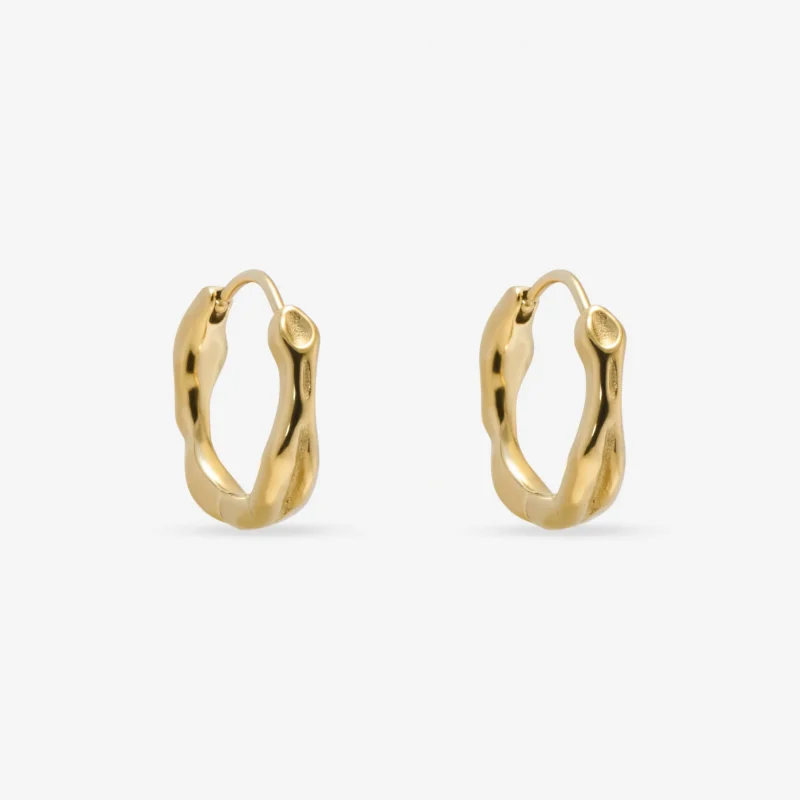
A simple care routine keeps everyday pieces looking their best, and our best sellers, the fine chains and smooth hoops, are made to take it in their stride.
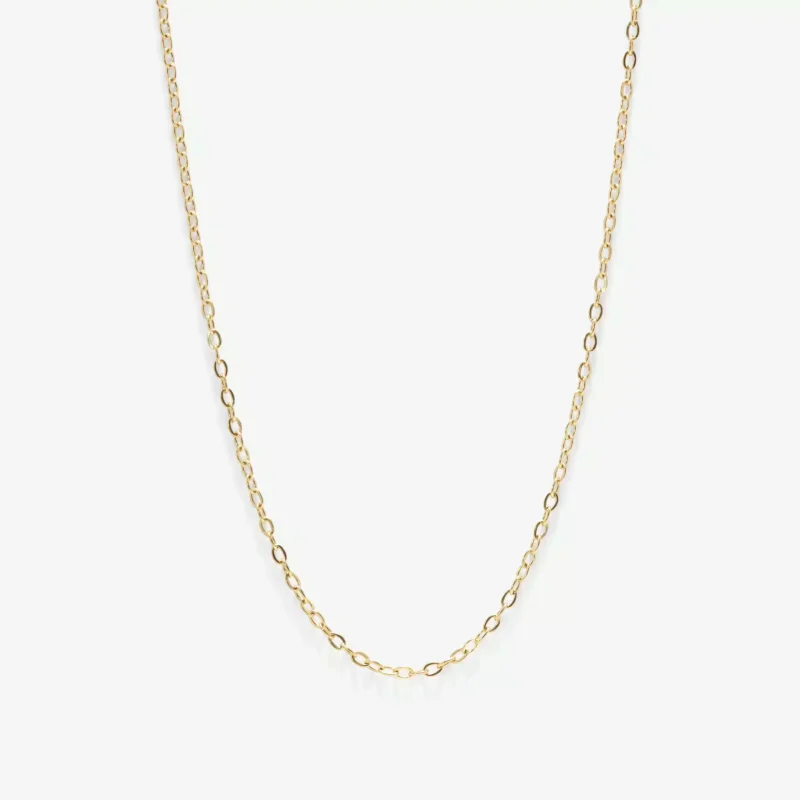
A Dainty Chain is a good place to start, made from recycled stainless steel with a 14k gold PVD finish so it is waterproof and tarnish-free, asking for little more than the occasional wipe with a soft cloth.