

If you have ever read the small print on a piece of everyday jewellery, a watch or even a surgical tool, you have probably seen the same code: 316L. It turns up so often that it is worth knowing what it actually means, because it explains why some jewellery stays bright through years of showers and swims while other pieces give up after a few weeks.
316L stainless steel is a low-carbon, marine or surgical grade steel whose chromium content resists corrosion. It is hypoallergenic, used in watches and medical implants, and it is the usual base for PVD-coated jewellery. In plain terms, it is a steel built to live in contact with water and skin without rusting or reacting, which is exactly what you want in jewellery you never take off.
What is 316L stainless steel, and what does the L mean?
Stainless steel is an alloy, mostly iron mixed with chromium and other metals. The 316 grade adds molybdenum, which improves its resistance to corrosion and pitting, especially from salt and moisture. That is why 316 is often called marine grade: it can cope with conditions that would corrode ordinary steel.
The L stands for low carbon. Keeping the carbon content low makes the steel more stable and less prone to a particular kind of corrosion, which is part of why 316L is the grade chosen for medical and high-wear uses. So 316L is, in short, a marine-grade stainless steel with low carbon, tuned for corrosion resistance and long life.
Why does 316L stainless steel resist corrosion?
The answer is the chromium. When chromium in the steel meets oxygen in the air, it forms a thin, invisible layer of chromium oxide across the surface. That layer is what makes the steel stainless: it shields the metal underneath from water and air, so it does not rust the way plain steel does. If the surface is scratched, the layer reforms on its own, which keeps the protection in place.
It helps to picture it as a self-healing skin. Ordinary steel rusts because there is nothing to stop water and oxygen reaching the iron. Stainless steel carries its own barrier built into the metal, and because that barrier rebuilds itself whenever it is broken, the protection lasts for the life of the piece and keeps holding firm as the surface meets daily wear.
The molybdenum in 316L strengthens that resistance further, particularly against salt. This is why 316L copes with sea spray and chlorinated pools, and why jewellery made from it can stay on in the shower, the sea and the pool. The same property that keeps a boat fitting from corroding keeps a chain from dulling on your skin.
Is 316L stainless steel hypoallergenic?
For most people, yes. Hypoallergenic means a material is unlikely to cause an allergic reaction. The most common metal allergy is to nickel, and although 316L does contain some nickel, that nickel is held within the steel and behind the chromium oxide layer, so very little reaches the skin. For the great majority of wearers, including many with sensitive skin, 316L causes no reaction.
This is why surgical and body-piercing tools are often made from it, and why it suits people who find cheaper metals leave a green mark or cause irritation. If you have a diagnosed nickel allergy it is always sensible to test a piece gently first, but 316L is widely regarded as one of the kinder metals for everyday wear.
It is also why so many people with a history of skin reactions to jewellery find they can wear steel-based pieces comfortably all day. The metal stays put, the skin stays calm, and the piece can be worn through sleep, exercise and water without a second thought.
Why is 316L stainless steel used in jewellery?
It brings together the qualities that everyday jewellery needs. It resists corrosion, so it stays bright through water and sweat. It is hard-wearing, so it copes with daily knocks. It is hypoallergenic, so it suits sensitive skin. And it holds a coating well, which matters for the gold-tone finish many people want.
That last point is key. 316L is the usual base for PVD-coated jewellery, where a thin, hard layer of colour is bonded onto the steel to give a lasting gold tone. The steel provides the strength and the skin-friendliness, while the PVD coating provides the colour, and the two together make a piece that looks like gold and behaves like surgical steel. Our guide to PVD jewellery explains how that coating is applied.
Using recycled stainless steel as the base adds another layer of sense to it. The steel keeps its full strength and corrosion resistance whether it is newly made or recycled, so a recycled 316L base gives the same performance with a smaller footprint. For everyday jewellery meant to last, that pairing of recycled steel and a hard PVD coating is hard to better.
How is 316L different from 304 stainless steel?
Both are common stainless steels, and both contain chromium. The main difference is the molybdenum in 316L, which gives it better resistance to corrosion, especially from salt and moisture. 304 is perfectly good for many household uses, but 316 is the grade chosen where corrosion resistance really counts, such as marine fittings, medical equipment and jewellery meant to be worn in water.
For everyday jewellery, that difference is what you are paying for. A piece made from 316L is built to survive the conditions jewellery actually faces, from hand washing to swimming, which is why quality everyday brands tend to specify it. If you want to dig deeper into how steel grades affect quality, our piece on whether stainless steel is good quality covers it in more detail.
How do you care for 316L stainless steel jewellery?
It asks very little. Because it resists corrosion and tarnish, a wipe with a soft cloth keeps it looking its best, and a gentle rinse removes anything that builds up. There is no need for the special polishes that silver or plated pieces sometimes require, since the steel does not tarnish in the way those metals do.
For PVD-coated pieces, the same gentle care protects the coating: avoid harsh abrasives and store pieces so they do not scratch against each other. Treated kindly, 316L jewellery keeps its strength and shine for years, which is the whole point of choosing it in the first place.
Frequently asked questions
What is 316L stainless steel?
316L stainless steel is a low-carbon, marine or surgical grade steel whose chromium content resists corrosion. It is hypoallergenic, used in watches and medical implants, and is the usual base for PVD-coated jewellery.
Is 316L stainless steel hypoallergenic?
For most people, yes. Any nickel it contains is held within the steel and behind the chromium oxide layer, so very little reaches the skin, which makes it a comfortable choice for sensitive skin.
Does 316L stainless steel rust or tarnish?
It resists rust and tarnish thanks to a self-renewing chromium oxide layer that shields the metal from water and air. This is why jewellery made from it can stay on in the shower and the sea.
What is the difference between 316L and 304 stainless steel?
Both contain chromium, but 316L also contains molybdenum, which gives it better resistance to corrosion from salt and moisture. That is why 316L is preferred for jewellery worn in water.
Why is 316L used in jewellery?
It resists corrosion, is hard-wearing and hypoallergenic, and holds a PVD coating well. Those qualities make it well suited to waterproof, tarnish-free everyday jewellery in a gold tone.
Related pieces
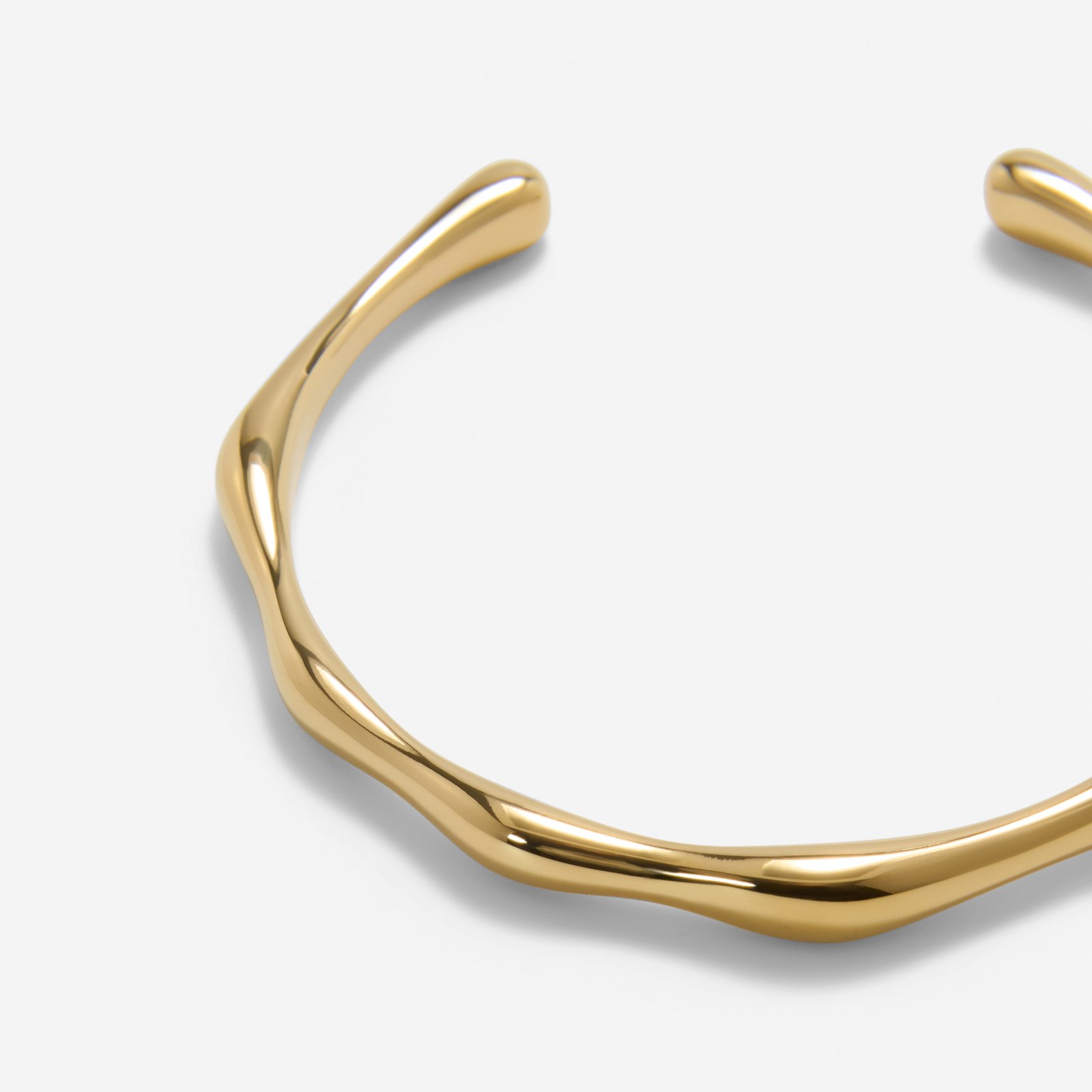
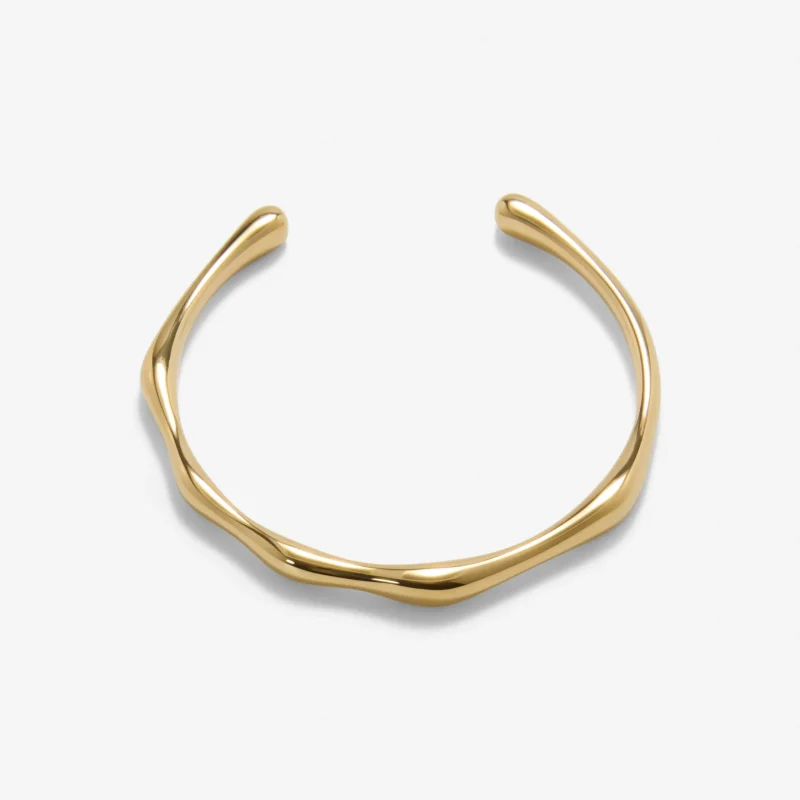
If you want to feel the quality of the material for yourself, the Molten Bangle shows off the smooth, solid finish that good steel allows, and our best sellers gather the everyday pieces people reach for most. All are made in waterproof, tarnish-free 14k gold PVD over recycled stainless steel, so they are built to be worn and not put away.