


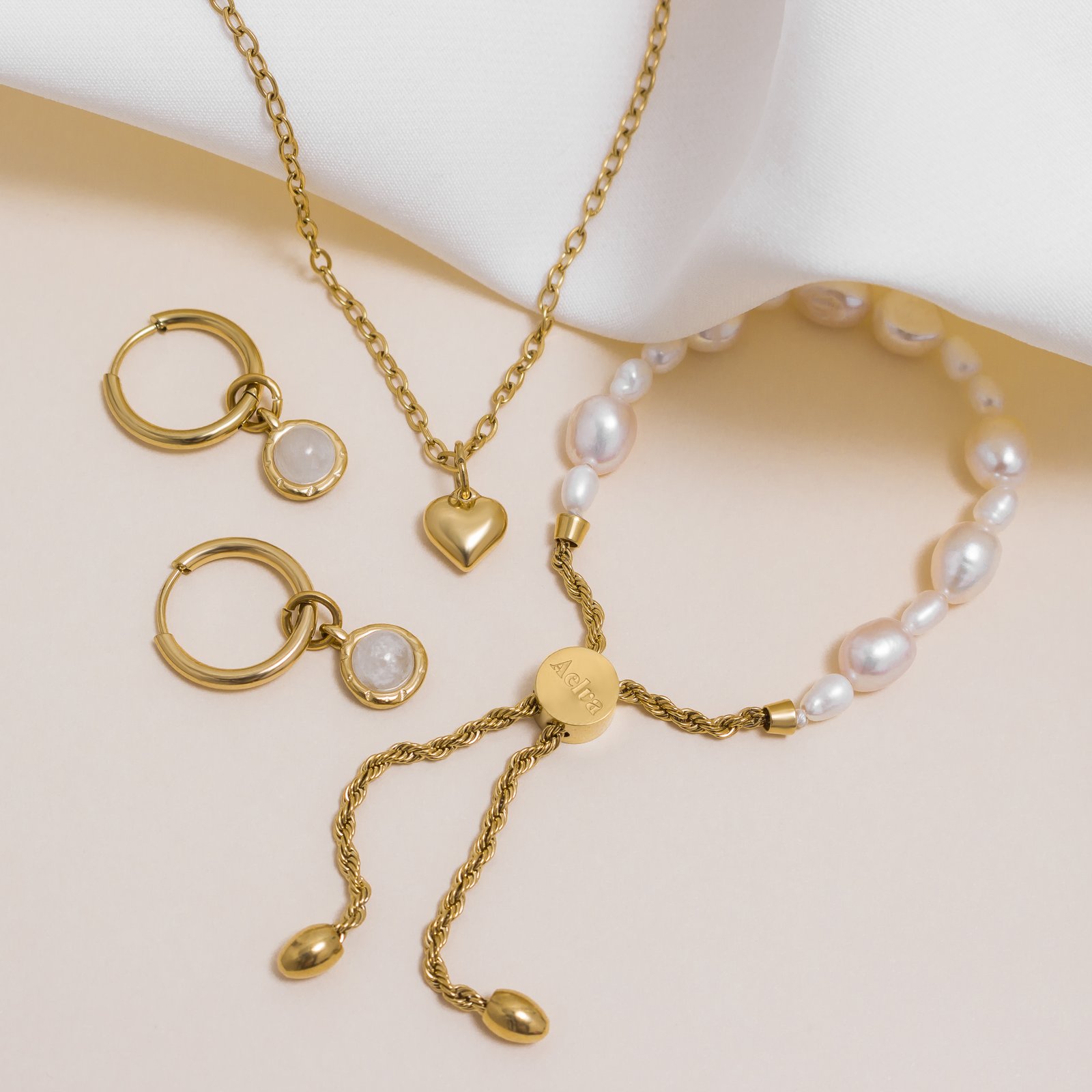
A favourite gold-tone chain spends its days catching everything we do, from moisturiser to perfume to the warmth of the skin it rests on. Over time that shows as a dullness, and the urge is to scrub it bright again. With gold-plated pieces, that urge is the thing to resist. The key to how to clean gold-plated jewellery is a soft cloth and mild soapy water, because the gold layer is thin and abrasives strip it away.
Done gently, cleaning keeps a plated piece looking its best for far longer. Done harshly, it takes the very gold you were trying to brighten. The routine itself is quick once you know it, and most plated pieces need nothing more than a soft cloth and a moment of attention. Here is the method that protects the finish, and the short list of things to keep well away from it.
How do you clean gold-plated jewellery at home?
Start with the gentlest method, which is usually all a plated piece needs. Add a drop of mild washing-up liquid to a bowl of lukewarm water, dip a soft cloth, and wipe the piece carefully along its length. For a chain, support it in your palm so you are not tugging at the links.
Rinse briefly under clean lukewarm water if you have used soap, keeping the time in water short, then pat the piece completely dry with a soft, lint-free cloth. Drying matters, since sitting damp works at the plating. That is the whole routine, and for most pieces it is enough to bring back the shine.
What should you avoid when cleaning plated pieces?
The list of things to avoid is short and worth remembering. Skip abrasives of any kind, including toothpaste, baking soda and silver-polishing cloths, all of which are designed to lift material from a surface and will lift the gold with it. Avoid ultrasonic cleaners too, as the vibration can loosen a plated finish.
Harsh chemicals such as bleach and strong household cleaners are best kept away, and so is prolonged soaking, since plating wears faster the longer it sits in water. The gentler the contact, the longer the colour lasts. For the wider picture across every metal, our guide on how to clean jewellery sets out what suits each material.
Does cleaning gold-plated jewellery differ from cleaning solid gold?
Yes, and it is worth knowing the difference. Solid gold is precious throughout, so it tolerates a more thorough clean and even, in many cases, a professional ultrasonic one. Gold-plated jewellery has only a thin layer of gold on the surface, which means the same treatments that suit solid gold can strip a plated piece. The safest routine for anything plated stays gentle: a soft cloth and mild soapy water, and nothing harsher.
If you are not sure whether a piece is solid or plated, treat it as plated, since the gentle method is safe for both. The same caution applies to PVD-coated stainless steel, where the colour is bonded into the metal and lasts well, though abrasives can still mark the surface. When in doubt, soft and mild is the rule that protects every gold-tone finish.
How do you clean a gold-plated chain?
Chains need a little patience because grime gathers in the links. Lay the chain flat in your palm, work along it with a soft, damp cloth, and pay attention to the sections that sit against the back of the neck, where skincare and sweat collect. A soft, clean make-up brush can help lift residue from between fine links without scratching.
Once it is clean, dry the chain fully and lay it flat or hang it so it does not knot. Take care around the clasp, where small parts can trap residue and stiffen over time, and work gently so nothing is bent out of shape. Cleaning little and often keeps a chain brighter than the occasional deep clean, and it is far kinder to the plating, since each clean asks very little of the finish.
What if cleaning does not bring back the shine?
If gentle cleaning leaves a piece still looking dull, it may be tarnish on the exposed base metal or the plating itself beginning to wear, which goes deeper than surface grime. Tarnish on a plated piece should still only be wiped gently, never polished with an abrasive, as our guide on how to fix tarnished jewellery explains by metal.
Where the gold layer has genuinely worn through at points of friction, gentle cleaning is the safe limit at home, and a re-plating service is the only way to restore the original colour. This is part of why many people choose PVD-coated stainless steel for everyday wear, since its colour is bonded into the metal and holds up to daily life with very little upkeep.
How do you keep gold-plated jewellery looking new?
Prevention does more than any clean. Put plated pieces on last, after perfume, hairspray and moisturiser have dried, and take them off before showering, swimming or exercising. Wipe them with a soft cloth after wear so skincare and sweat are not left to sit overnight.
Store each piece somewhere dry and separate, in a lined box or a soft pouch, so the surfaces are not rubbing together. These small habits keep a gold-tone piece looking close to new and mean the cloth and soapy water are all you ever reach for.
How often should you clean gold-plated jewellery?
Little and often beats the occasional deep clean. A quick wipe with a soft, dry cloth after each wear lifts away the skincare, perfume and perspiration that dull a piece over time, and it takes seconds. A gentle clean with mild soapy water every few weeks, or whenever a piece looks tired, is plenty for everyday jewellery.
How often you need the soapy-water clean depends on how the piece is worn. A chain worn daily against the skin gathers more residue than a pair of earrings worn now and then, so let the look of each piece guide you. The aim is to keep residue from building up, since that build-up is what dulls the gold-tone surface and tempts people towards the harsher cleaning that strips plating.
Between cleans, the storage habits matter just as much. A dry, lined box or a soft pouch keeps humidity and friction away from the finish, so the cloth and soapy water are all you ever need to reach for.
Frequently asked questions
How do you clean gold-plated jewellery?
Use a soft cloth with mild soapy water, wipe gently, rinse briefly if needed, then pat completely dry. Avoid abrasives and ultrasonic cleaners, which strip the thin gold layer.
Can you use toothpaste or baking soda on gold-plated jewellery?
No. Both are abrasive and will wear away the plating. Gold-plated pieces should only be wiped gently with a soft cloth and mild soapy water.
How do you clean a gold-plated chain?
Lay it flat in your palm and wipe along it with a soft, damp cloth, paying attention to the links that sit against the skin. Dry it fully and lay it flat to avoid knots.
Can you use an ultrasonic cleaner on gold-plated jewellery?
It is best avoided. The vibration can loosen a plated finish, so stick to a soft cloth and mild soapy water for plated pieces.
How do you keep gold-plated jewellery from fading?
Put it on last and take it off before water, wipe it after wear, and store it dry and separate. Keeping plated pieces out of prolonged water and chemicals slows fading the most.
How often should you clean gold-plated jewellery?
A quick wipe with a soft cloth after each wear, plus a gentle clean with mild soapy water every few weeks or when a piece looks dull, is plenty for everyday pieces.
Can you use jewellery cleaning solution on gold-plated pieces?
It is safest to avoid commercial dips and solutions, which are often too harsh for thin plating. A soft cloth with mild soapy water is the gentlest and most reliable option.
Related pieces
For an everyday piece that asks little of you, the Dainty Chain wipes clean in seconds and keeps its colour through daily wear, and the rest of our best sellers are made the same way. Each is waterproof and tarnish-free, finished in 14k gold PVD over recycled stainless steel, and hypoallergenic for sensitive skin.