

You have probably read the words on a product page and wondered how much to trust them. Tarnish-free jewellery is jewellery made from metals that resist the chemical reaction behind tarnish, so it keeps its colour through normal wear. In practice the term describes strong resistance under everyday conditions, usually from solid stainless steel, high-carat gold, or a PVD coating, with quality and care setting where that resistance ends.
What does tarnish-free mean?
Tarnish-free means a piece that holds its colour because the metal resists oxidation and sulphur reaction, the two processes that cause tarnish. Tarnish is a chemical reaction: a metal surface reacts with oxygen to form an oxide, or with sulphur compounds in the air, skin and cosmetics to form a sulphide. The dark film on old silver is silver sulphide. A tarnish-free piece is built from a material where that reaction barely happens.
The term is a practical descriptor that sits short of an absolute guarantee. It describes how a material behaves under ordinary, moderate wear. The same piece will hold up differently depending on conditions and care, so the claim is best read as strong resistance for the life of the material, with the details depending on what the piece is made from.
It also helps to separate tarnish from rust. Rust is iron reacting with oxygen and water. Tarnish covers the surface discolouration of jewellery metals such as silver and copper. A material can resist tarnish without being pure gold, which is where stainless steel and PVD coatings come in.
Does tarnish-free jewellery exist?
Tarnish-free jewellery exists in the practical sense, though no metal is chemically immune under every condition. Solid stainless steel and high-carat gold genuinely resist tarnish under most conditions, and that is enough to wear them daily for years without darkening. The honest framing is strong, reliable resistance, with quality and care setting the limit.
Solid gold is the classic example. Pure gold is inert enough to resist reaction with oxygen and sulphur, which is why it has held its colour in jewellery for centuries. Most gold jewellery is an alloy, so the resistance tracks the carat. An 18-carat piece at 75 per cent gold keeps most of that inertness; the copper, silver and zinc in lower-carat alloys are more reactive.
Stainless steel reaches tarnish resistance by a different route. Its chromium content forms a stable, self-repairing oxide layer that seals the surface, a process called passivation. The layer reforms when scratched, wherever oxygen reaches it. A PVD coating on stainless steel adds a hard, chemically stable surface on top, so the piece resists tarnish from both the coating and the steel beneath. The result holds its finish for roughly two to five years of daily wear, and longer with care.
Tarnish-free vs waterproof: what's the difference?
Tarnish-free is about chemistry; waterproof is about water exposure. A tarnish-free piece resists the oxidation and sulphur reaction that dulls reactive metals. A waterproof piece keeps its colour and structure through showering, swimming and sweat. The two often overlap, because the same materials tend to deliver both.
Stainless steel with a PVD coating is the clearest case of overlap. It resists tarnish because the steel and the coating are both chemically stable, and it handles water because stainless steel is corrosion-resistant and effectively waterproof. So a single piece in this material can be described accurately as both tarnish-free and waterproof. If you want the water side in full, what waterproof jewellery really means covers the practical limits.
The two claims can also come apart. A solid silver piece kept dry and stored well might be sold as suitable for water, yet it will still tarnish chemically over time. A sealed costume piece might survive a splash while the base metal underneath stays reactive. Reading both claims against the actual base metal is the way to tell which one holds.
Why some metals resist tarnish and others don't
The dividing line is how readily a metal reacts. Reactive metals give up their surface electrons easily and form compounds quickly, so they tarnish. Stable metals resist the reaction, so they keep their colour. Silver and copper are reactive. Gold and stainless steel are stable.
Silver is the most reactive of the common jewellery metals. Sterling silver, 92.5 per cent silver with 7.5 per cent copper, reacts with sulphur compounds to form silver sulphide, the dark tarnish it is known for. The copper in the alloy speeds the process. Brass and copper behave the same way, oxidising and sometimes leaving a mark on skin.
Conditions still matter for every metal. Humidity drives the reaction because water helps the chemistry along. Chlorine in pools and cleaning products is aggressive towards base metals and finishes. Skin chemistry varies, so the same piece can darken quickly on one person and stay bright on another. This is why tarnish-free is always read against real conditions, and why rinsing a piece after the pool or saltwater extends the life of its finish.
Can you keep tarnish-resistant pieces looking new?
Tarnish-resistant materials keep their colour with little effort, and a light routine keeps them at their best. For stainless steel and PVD-coated steel, the main thing that dulls the look is surface residue. Soap, shampoo, lotion and the salts in sweat leave a film that flattens the shine while the metal underneath stays sound. A wipe with a soft, dry cloth lifts most of it.
Water care is simple for these materials. They handle showering, swimming and sweat, and the one habit worth keeping is a fresh-water rinse after the pool or the sea, since chlorine and salt are more aggressive than tap water over time. Patting a piece dry afterwards stops mineral spots from forming as the water evaporates.
Reactive metals such as silver ask for more. Storing them in a sealed bag or airtight box slows the reaction by limiting their contact with air and moisture, which can push the time before tarnish shows from months into years. Keeping them cool and dry, and away from perfume and cleaning products, slows it further. A solid gold or PVD piece needs none of this, which is part of why these materials suit everyday wear.
How to read a tarnish-free claim accurately
Read the claim against the base material first. A description that names solid stainless steel, a PVD coating, or a high gold carat is relying on genuine chemistry. A claim that avoids naming the base metal is usually leaning on the surface alone, which wears thin over time.
Ask three questions of any piece: what is the base material, what is the surface treatment if there is one, and what conditions is the claim meant to cover. For a plated piece, tarnish-free often refers to a top-coat or to how the base metal performs once the plating thins, so the honest lifespan is the life of the coating. For a solid material, the claim rests on the metal itself.
The reliable shorthand: solid stainless steel and high-carat gold resist tarnish under most conditions, and PVD on stainless steel combines that resistance with a hard protective layer. Silver, brass and lower-carat gold are more reactive and benefit from careful storage. Understanding why jewellery tarnishes in the first place makes these labels easy to judge.
FAQ
What does tarnish-free mean?
It means a piece made from metals that resist the oxidation and sulphur reaction behind tarnish, so it keeps its colour through normal wear. The term describes strong resistance under everyday conditions, with quality and care setting the limit.
Does tarnish-free jewellery exist?
Yes, in the practical sense. Solid stainless steel, high-carat gold, and PVD-coated steel genuinely resist tarnish under most conditions. No metal is chemically immune under every condition, so quality and care still set the limit.
What is the difference between tarnish-free and waterproof?
Tarnish-free is about resisting the chemical reaction that dulls metals. Waterproof is about handling water from showering and swimming. Stainless steel with a PVD coating delivers both, so a single piece can be described as both.
Is stainless steel jewellery really tarnish-free?
Stainless steel resists tarnish strongly because its chromium content forms a stable, self-repairing oxide layer. With a PVD coating it holds its finish for roughly two to five years of daily wear, and longer with occasional wear and care.
Why does my tarnish-free jewellery still dull sometimes?
Surface residue from soap, lotion and sweat can leave a finish looking flat even while the metal resists tarnish. A wipe with a soft cloth, and a rinse after the pool or saltwater, usually restores the brightness.
Related pieces
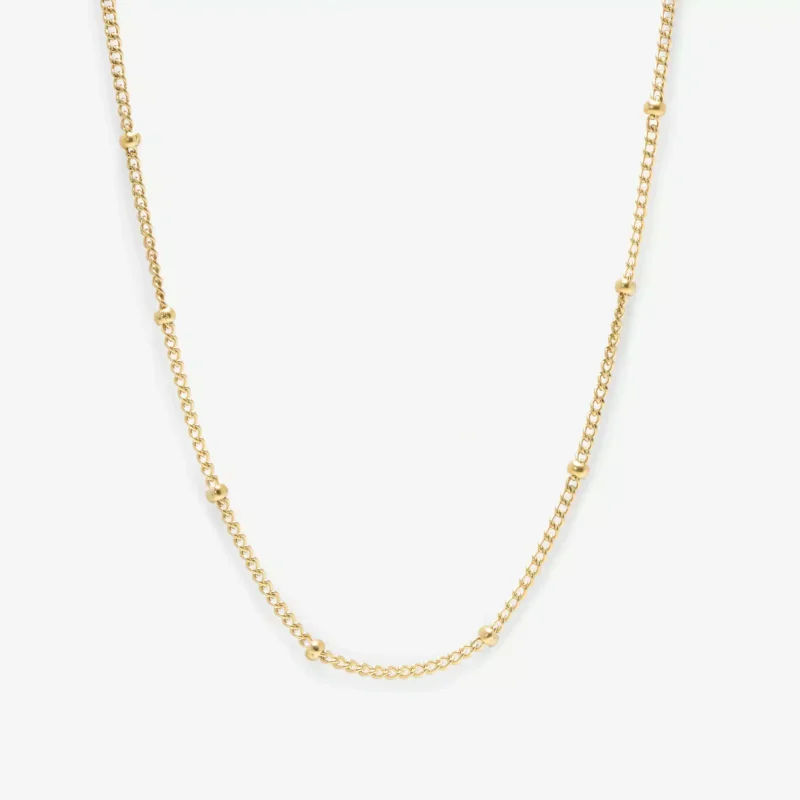
Satellite Bead Chain
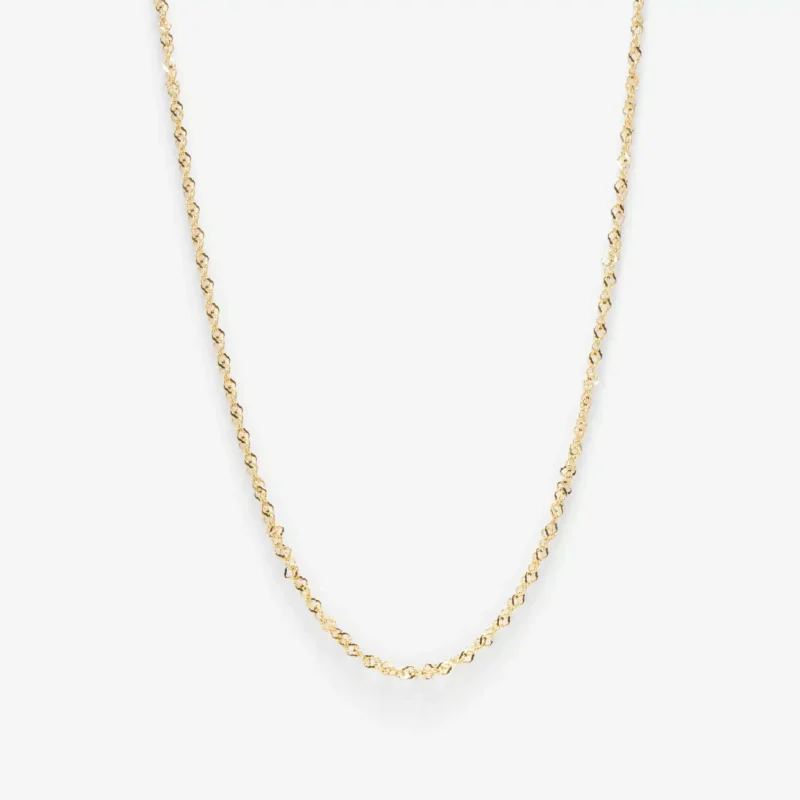
Singapore Twist Chain