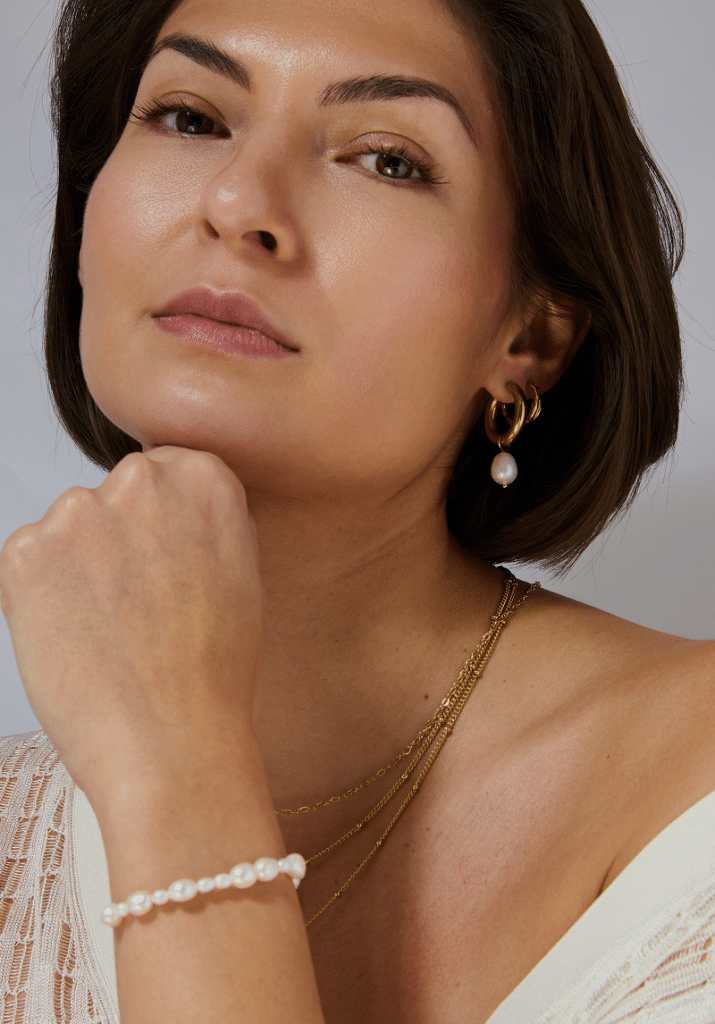


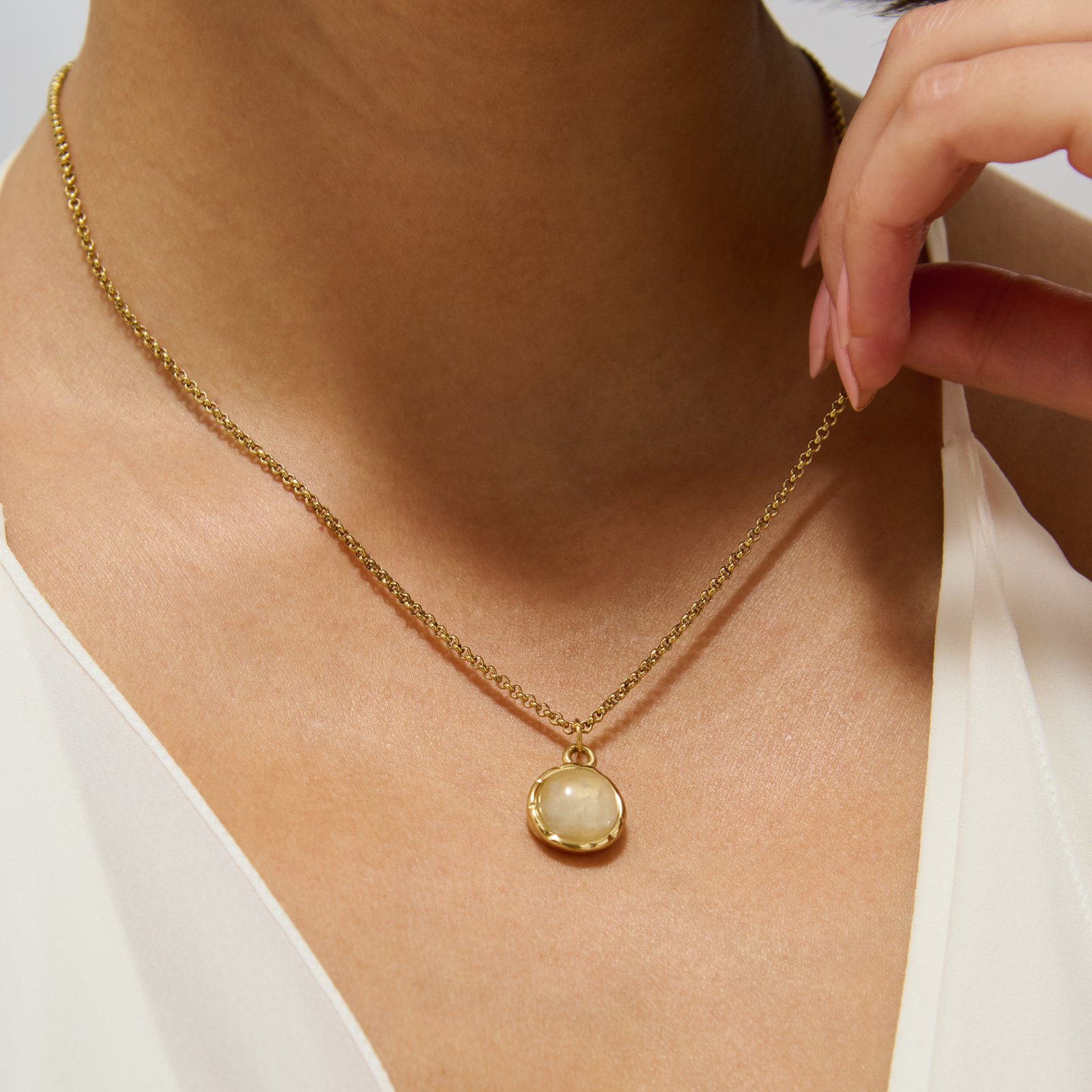
There is a small relief in never taking something off. No clasp to undo at the sink, no piece left on the edge of a bathroom shelf, no decision each morning about whether today is a day for it. Jewellery you can wear all the time is built to stay on through sleep, showering, swimming, and the gym without the finish wearing off or the piece failing.
The combination that makes this possible is recycled stainless steel with a gold PVD coating: a metal that resists corrosion, a coating bonded to the surface, and a hypoallergenic build that sits comfortably against skin for days at a stretch. Choosing pieces to this standard changes what you buy and what you get to stop thinking about once you own it.
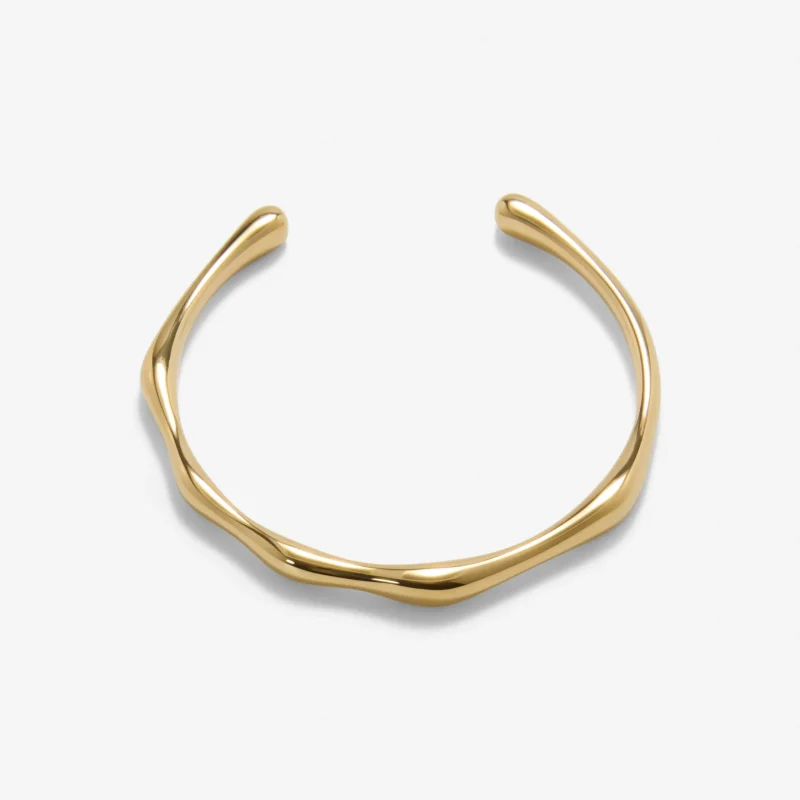
What makes jewellery you can wear all the time?
Most jewellery is made to be taken off at night, before a shower, or before exercise, because most jewellery is not built for constant contact with water, sweat, and friction. Continuous wear asks for a specific set of qualities. The metal has to resist corrosion and tarnish. Any coating has to be bonded into the surface so it stays put through friction. The closure has to hold under movement and sleep. And the piece has to be comfortable enough that, after a few weeks, you stop noticing it is there.
Recycled stainless steel with a 14k gold PVD coating meets these conditions. Stainless steel is a corrosion-resistant base, and PVD, physical vapour deposition, bonds the gold-toned layer into the surface at a molecular level, so it holds up far better than a thin plated flash. The result is a piece you can keep on in the shower, in the pool, and through a workout, with a finish that stays even through months of use.
Can you shower and swim in everyday jewellery?
You can shower and swim in jewellery made from stainless steel with a PVD coating, and daily showering sits well within what it handles. Soap, shampoo, and body wash leave residue that can dull a finish over time, so an occasional rinse and wipe keeps the colour looking clean. The piece itself is unaffected by the water.
Swimming asks slightly more. Chlorine and saltwater are more aggressive than tap water, and over long, repeated exposure they put more pressure on any finish. A quick rinse in fresh water after the pool or the sea is enough to manage this. Sweat and heat from the gym or a sauna are well within range for the same materials, which is part of what makes them suited to an active day.
Why material choice decides whether constant wear works
The metal against your skin decides whether a piece can be worn around the clock. It has to avoid corroding, irritating skin, or leaving marks. That rules out several metals that are fine for occasional wear. Copper, for example, oxidises readily and can leave green marks during continuous contact. Standard plated jewellery is the other weak point: a thin gold flash over brass can wear through within months, and once the base metal shows, the piece looks tired and may irritate sensitive skin.
Hypoallergenic stainless steel avoids the common triggers, which matters when a piece is in contact with skin for days at a time. Even minor irritation that you could tolerate for a few hours becomes a problem after weeks. Surface finish plays a part too. A smooth, even finish sits comfortably and does not catch on fine hairs or fabric, and a coating bonded into the steel keeps that finish stable through daily friction. The combination of the right metal and a properly bonded coating is what separates pieces you can genuinely live in from pieces that become uncomfortable or damaged.
How constant wear changes your relationship with a piece
Wearing something continuously changes how you perceive it. For the first few days you are aware of its weight and temperature. After a few weeks that awareness fades, and you move through the day without registering the piece at all. This is a deeper familiarity than you build with jewellery you take off most nights, where there is always a moment of putting it on and taking it off that keeps the piece slightly separate from you.
With constant wear that separation goes. People who have worn a necklace or bracelet for years often say they feel slightly off without it, even for a few minutes. The piece marks time, and you start to remember stretches of your life partly by what you were wearing. For anyone newer to jewellery, this is often how the habit forms: once a first piece settles in and stays comfortable, the question shifts from whether to wear jewellery to whether to take this particular piece off.
How to choose jewellery you never take off
Choose for your real life, the one you actually live. If you work with your hands, exercise hard, or are in and out of water, a delicate piece that looks lovely in the shop may struggle through your actual days, so weight the structure and the materials over the surface look. Pick pieces in recycled stainless steel with a gold PVD coating, described as waterproof and hypoallergenic, so the claim is backed by what the piece is made of.
Look at the closure and the joints. These are the high-stress points where a finish wears first and where a weak clasp eventually fails, so a secure, well-finished closure matters more on a piece you never remove. Hoop earrings with a snug fitting that sits flush stay put through sleep and movement, and a fine chain at a length that does not bounce or catch stays comfortable across a long day. Then match light care to heavy wear: rinse after the pool, wipe off soap residue, and store the piece dry when it does come off. The pieces that work for constant wear tend to be simple, well-made, and quiet, which is also why they slip so easily into everyday styling.
Building a low-maintenance everyday set
A small, settled selection takes the daily decision off the table. Three to five pieces that already work together, a couple of necklaces at different lengths, a pair of hoops, and one wrist piece, mean every morning combination is one you already trust, so there is no styling problem to solve before you leave the house. Keeping them where you can reach them easily makes the habit stick.
Low maintenance also covers upkeep. Materials that resist tarnish under normal wear, closures that work without fiddling, and simple forms that are easy to wipe clean ask almost nothing of you over the years you own them. That ease is the point. The decision is made once, the pieces stay on, and jewellery stops being something you manage and becomes something you simply have.
FAQ
Can you shower with jewellery you wear all the time?
Yes, when it is made from stainless steel with a gold PVD coating. Daily showering is well within range. Rinse off soap and shampoo residue now and then to keep the colour looking clean.
Can you swim in waterproof everyday jewellery?
Yes. Stainless steel with PVD handles swimming. Chlorine and saltwater are more aggressive than tap water over long exposure, so rinse the piece in fresh water afterwards.
Does jewellery you never take off tarnish?
Stainless steel and PVD-coated steel strongly resist tarnish, because tarnish is a chemical reaction that mainly affects silver and copper-based metals. The finish thins only very slowly through physical wear.
Is it safe to sleep in everyday jewellery?
Yes, if the piece is built for it: a secure closure, a smooth finish, and a comfortable, snug fit that does not catch or shift. Hypoallergenic stainless steel suits skin contact over long stretches.
What is the most low-maintenance everyday jewellery?
Pieces in recycled stainless steel with a gold PVD coating. They resist tarnish, handle water and sweat, and need only an occasional rinse and wipe in place of regular polishing.
Related pieces
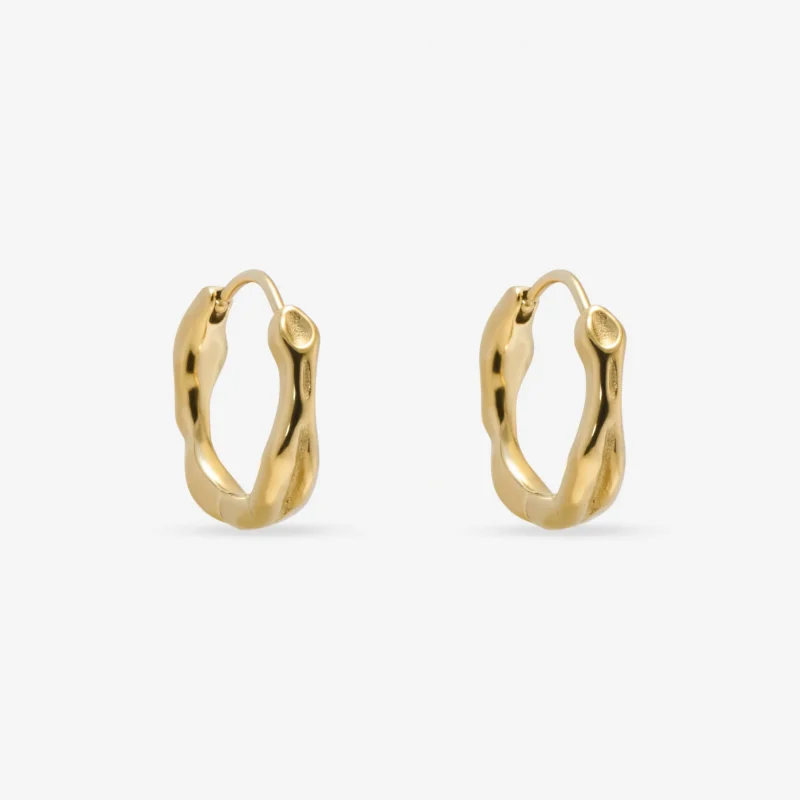
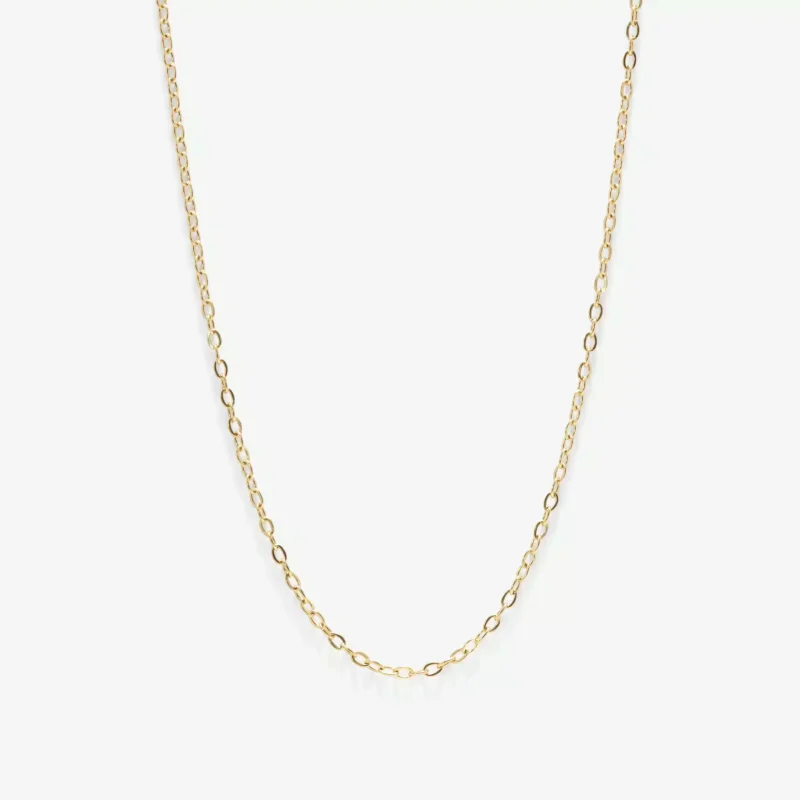
Molten Hoop Earrings sit snug against the ear and stay put through sleep, showers, and a workout, which makes them an easy first piece to never take off. The Dainty Chain rests comfortably at the collarbone at a length that does not catch or bounce, so it settles in for days at a time. Both are made in recycled stainless steel with a 14k gold PVD coating, so they are waterproof, tarnish-free, and hypoallergenic, built for the kind of constant wear that turns jewellery into something you simply have on.