

Standing at the jewellery counter, or hovering over two tabs late at night, the choice often comes down to a quiet practical question. Which of these will still look good after a year of real wear, and which one fits the life you actually lead? Two materials that come up again and again are stainless steel and sterling silver.
In the stainless steel vs sterling silver jewellery comparison, the short version is this: stainless steel is harder, tarnish-resistant, hypoallergenic and lower in cost, which suits everyday wear, while sterling silver is a precious metal that is softer, can tarnish and be polished back, with a heritage many people love. The right choice depends on how you intend to wear it.
What is the difference between stainless steel and sterling silver?
Sterling silver is a precious metal, an alloy that is 92.5 per cent pure silver mixed with other metals, usually copper, for strength. That 92.5 figure is where the hallmark 925 you see stamped on silver pieces comes from. It has a soft, bright white shine and a long tradition behind it, which is part of its appeal. Being a precious metal, it carries an inherent material value that steel does not.
Stainless steel is an alloy built mainly from iron and chromium, with the grade used in jewellery, 316L, also called surgical-grade steel, prized for being hard and corrosion-resistant. It is the same family of metal used in watches and medical implants. So one is a soft precious metal with history, and the other is a hard modern alloy built for endurance.
Which is more durable for everyday wear?
Stainless steel is the harder of the two, which makes it better at standing up to daily life. Its hardness helps it resist scratches and keep its shape, so a piece holds its look through knocks, water and constant wear. This is why it suits jewellery you want to put on and forget about.
Sterling silver is softer, so it is more prone to scratches and small dents over time, and the brightness can dull as it tarnishes. Many people enjoy that lived-in patina and the fact that silver can be polished back to a shine. If you would rather keep upkeep to a minimum, though, the harder steel asks less of you day to day.
Does sterling silver tarnish, and does stainless steel?
Sterling silver does tarnish. Over time it reacts with sulphur and moisture in the air and on the skin, which dulls the surface and can darken it. Things like perfume, hairspray and even some lotions can speed that up, which is why a silver chain worn daily often needs a polish sooner than one kept for occasions. The good news is that this is reversible: a polishing cloth or a gentle clean brings the shine back, and many owners simply factor that upkeep in.
Stainless steel is tarnish-resistant. The chromium in the alloy forms a protective layer that slows the reaction with air and moisture right down, so it holds its look through showers, sweat and humidity with little fuss. If a low-maintenance finish is your priority, steel has the clear edge here. You can read more about why metals tarnish in our dedicated guide.
Which is better for sensitive skin?
Surgical-grade stainless steel is hypoallergenic and stable, which makes it a reliable choice for sensitive skin and ears. Skin reactions to jewellery are often caused by nickel leaching out of lower-quality metal, and the 316L grade is stable enough that this is far less likely under normal wear.
Sterling silver is generally well tolerated too, though it is alloyed with other metals, and very occasionally the copper or trace nickel content can bother particularly reactive skin. For anyone who has reacted to jewellery before, surgical-grade steel is usually the safer starting point, which is one reason it is so common in body-safe settings.
How do the two compare on look and feel?
On the wrist or at the neck, the two have a different character. Sterling silver has a soft, cool white brightness that many people associate with classic jewellery, and over the years it develops a gentle patina that some wearers come to prefer. Its softness also means it can be worked into fine, detailed designs that catch the light in their own way.
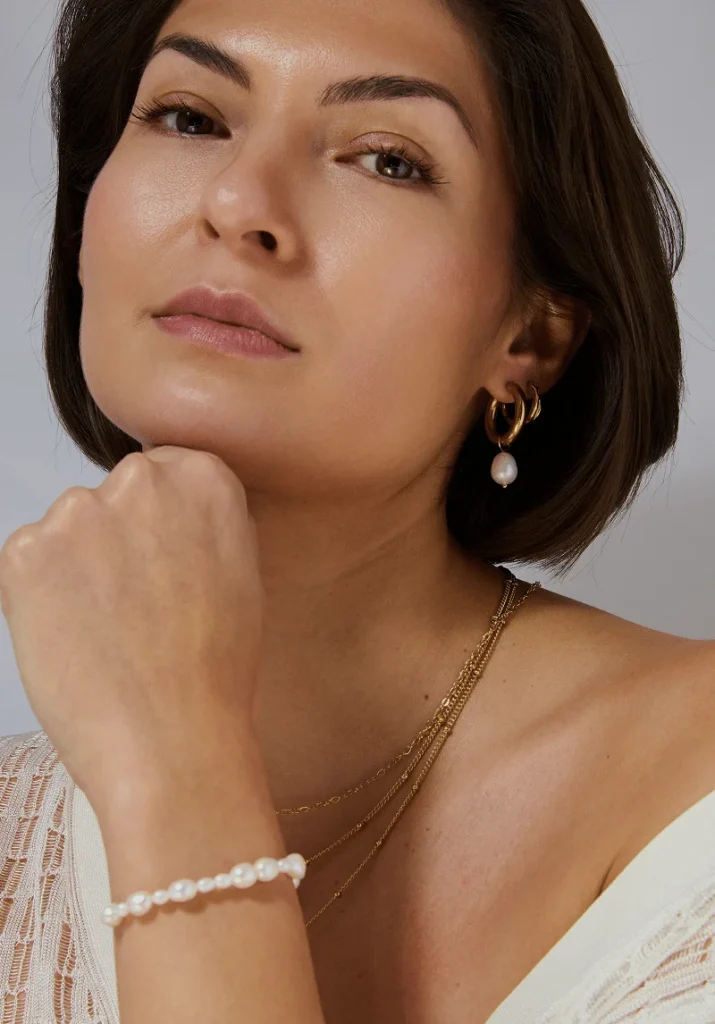
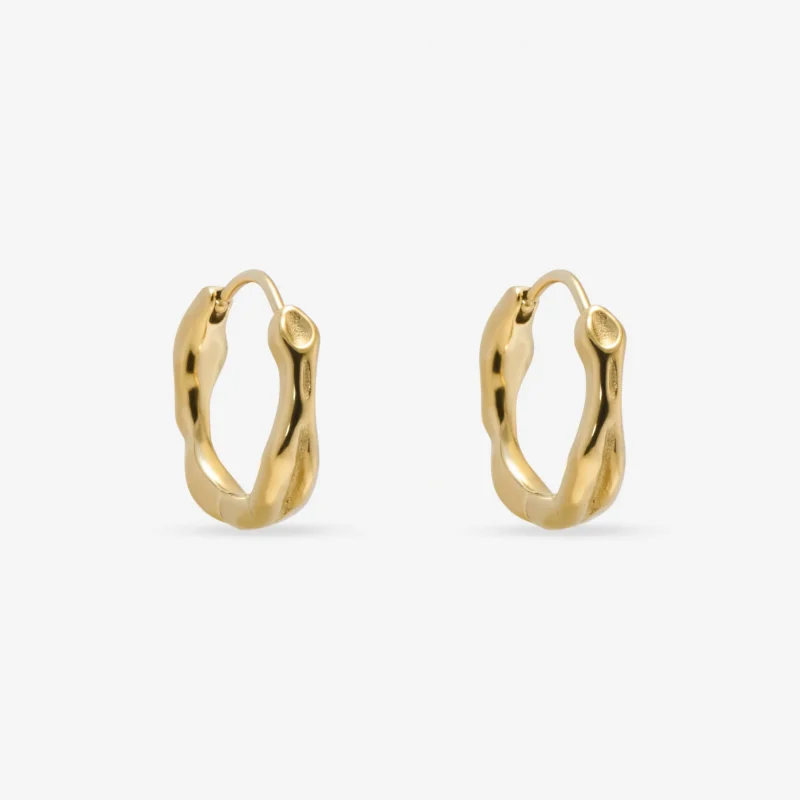
Stainless steel has a slightly cooler, denser feel, and its hardness lets it hold a crisp, clean shape and a bright polish for longer. With a 14k gold PVD finish it takes on a warm gold tone, in place of the white of silver, which opens up a different look entirely. Picture two everyday chains worn side by side for a year: the silver one carries a soft patina and the marks of daily life, while the gold-tone steel keeps the even, just-bought finish. For anyone who wants the appearance of gold with the toughness of steel, that finish is a large part of the appeal, and it stays even through daily wear.
Which offers better value, and how do you choose?
Sterling silver costs more, because it is a precious metal with intrinsic material value, and that value is part of what you are buying. Stainless steel generally costs less while offering greater hardness and tarnish resistance, so for everyday durability per pound it is hard to beat. With a 14k gold PVD finish, steel can also give a warm gold tone that holds up well to wear.
Choosing comes down to intent. If you want a precious metal with heritage and you are happy to polish it now and then, sterling silver rewards that care. If you want a hard-wearing, low-maintenance piece you can shower, swim and sleep in, stainless steel with a gold PVD finish fits everyday life with the least fuss. Many people own some of each and reach for steel on the busy days.
Can you wear stainless steel and sterling silver together?
Mixing the two is straightforward, and plenty of people do it on purpose. A warm gold-tone steel piece sitting alongside a cool silver one gives a layered, mixed-metal look that feels considered, and the two materials wear well together because neither transfers colour to the other. The practical point to remember is upkeep: the silver will want an occasional polish to stay bright, while the steel will keep its finish with a wipe, so a stack that pairs them simply means giving each piece the small bit of care it asks for. Worn this way, you get the heritage of silver and the easy durability of steel in one look.
A sensible way to decide is to keep silver for the pieces you treasure and are happy to look after, and reach for steel for the everyday ones you want to stop thinking about. That way each metal does what it does best: silver brings its precious-metal character to the pieces you save, while steel quietly handles the daily wear that would test a softer metal over time.
Frequently asked questions
Is stainless steel or sterling silver better?
It depends on how you wear it. Stainless steel is harder, tarnish-resistant, hypoallergenic and lower in cost, which suits everyday wear. Sterling silver is a precious metal with heritage, softer, and can tarnish and be polished back.
Does sterling silver tarnish?
Yes. Sterling silver reacts with sulphur and moisture over time, which dulls and darkens it. The tarnish is reversible with a polishing cloth or gentle clean, so the shine can be restored.
Does stainless steel tarnish like silver?
No. Stainless steel is tarnish-resistant thanks to a protective chromium layer, so it holds its look through water, sweat and humidity with little upkeep, while sterling silver needs occasional polishing.
Which is better for sensitive skin, steel or silver?
Surgical-grade 316L stainless steel is hypoallergenic and very stable, making it a reliable choice for reactive skin. Sterling silver is usually well tolerated, though its alloy content can occasionally bother very sensitive skin.
Is stainless steel cheaper than sterling silver?
Generally yes. Stainless steel costs less while being harder and more tarnish-resistant, so it offers strong everyday value. Sterling silver costs more because it is a precious metal with intrinsic material value.
Related pieces
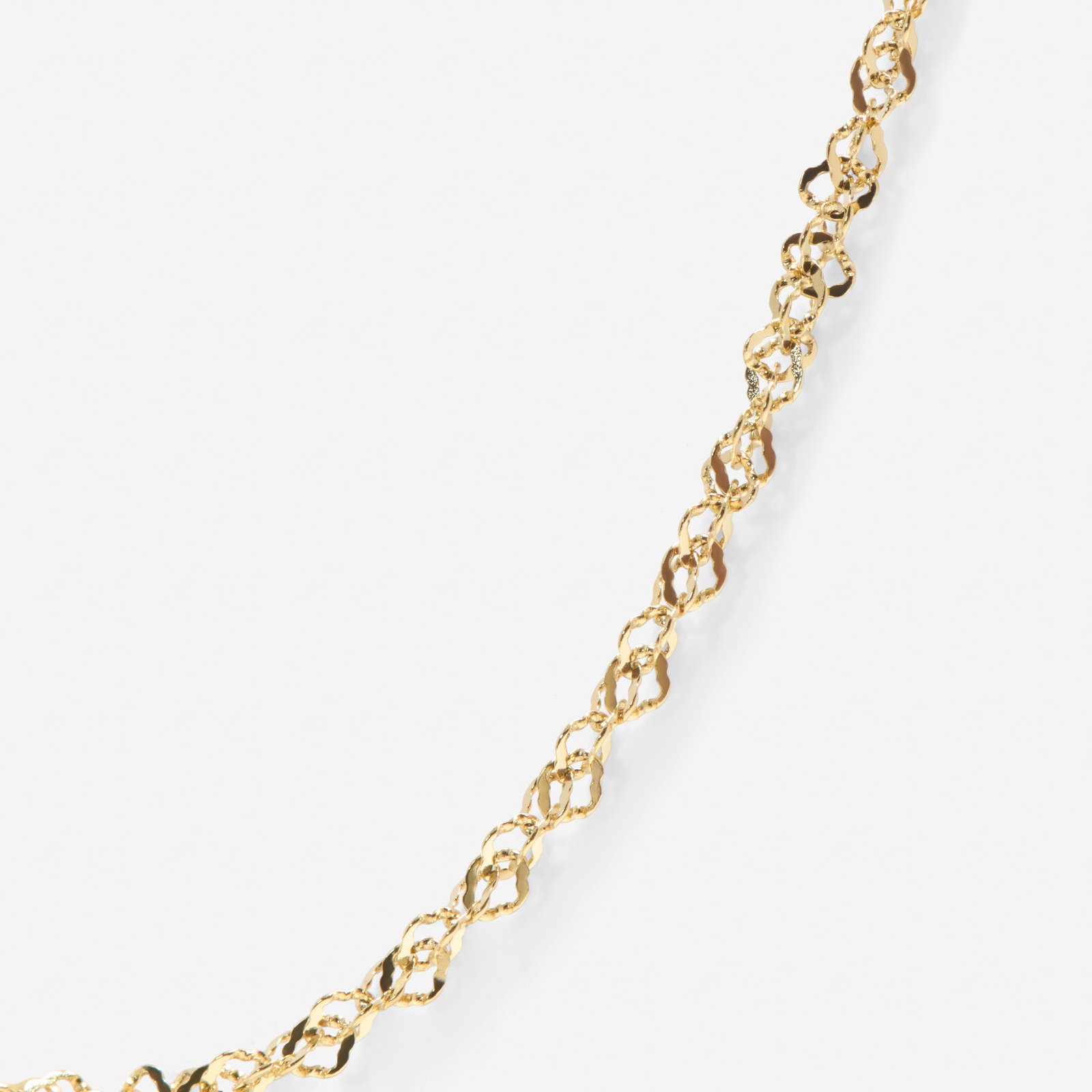
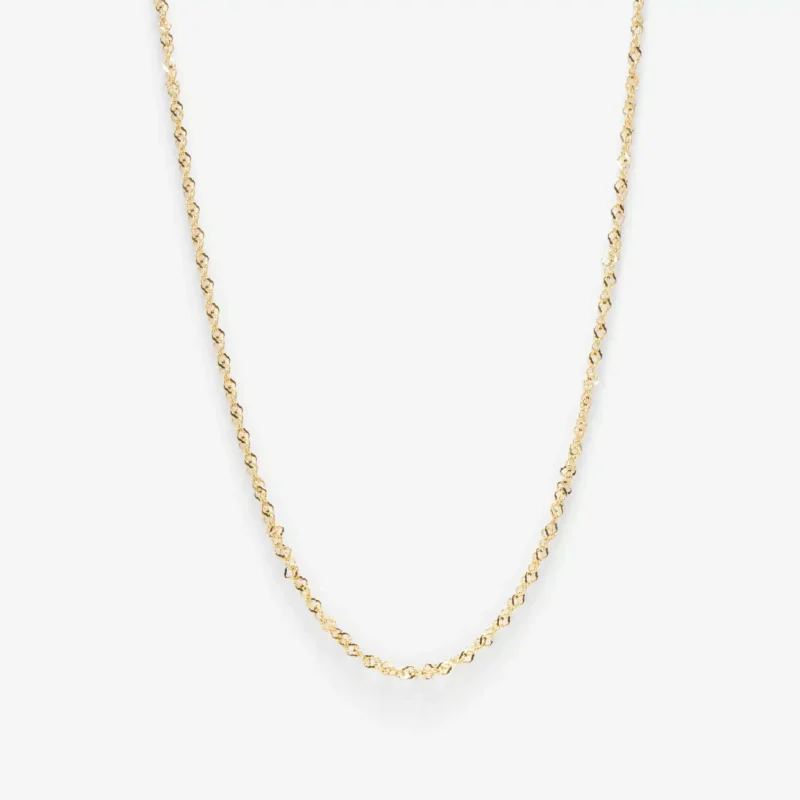
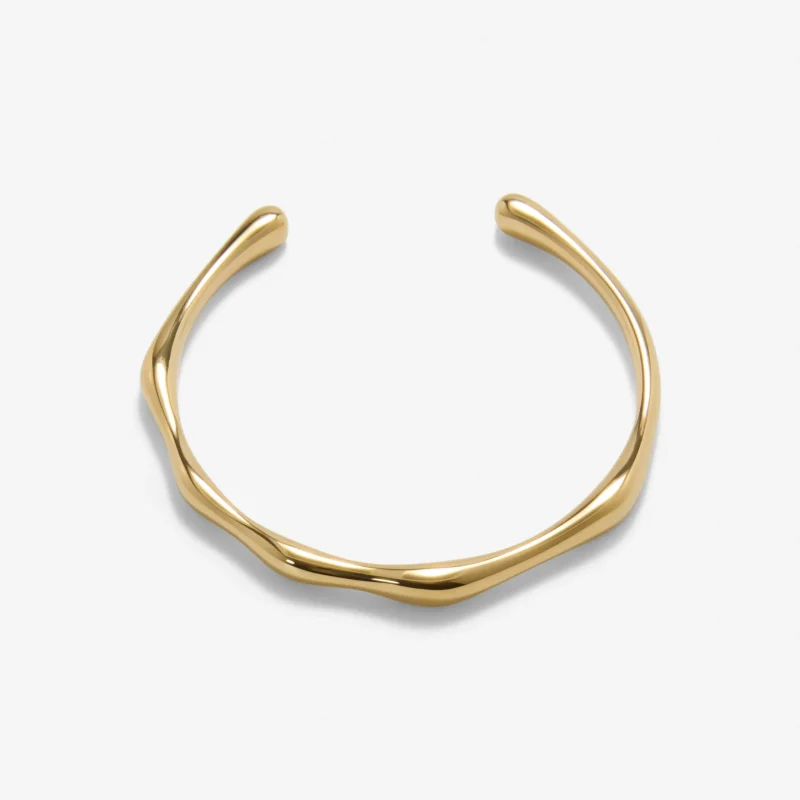
If a hard-wearing everyday metal suits your life, a Singapore Twist Chain gives a fluid, light-catching gold-tone look, while a Molten Bangle adds smooth, weighty presence at the wrist.
Both are made from recycled stainless steel with a 14k gold PVD finish, so they are waterproof, tarnish-free and gentle on sensitive skin, ready for showers, workouts and long days with the upkeep kept to a wipe.