


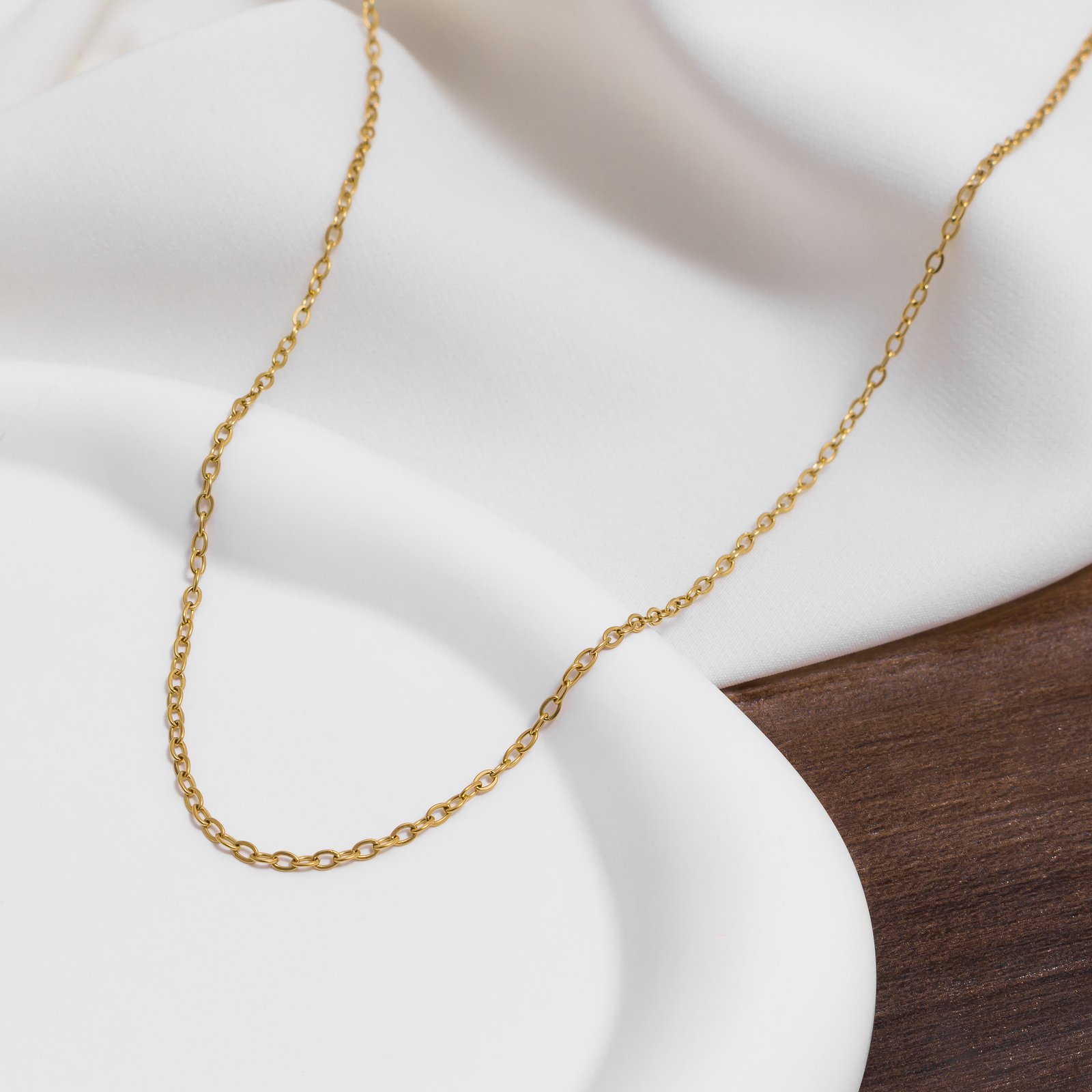
You take off a chain or a bracelet and find a faint green mark left behind on your skin. It is harmless, but it is annoying, and it can put you off a piece you otherwise like. The way to stop jewellery turning skin green is to choose metals that resist the reaction, mainly quality stainless steel and PVD-coated pieces, and to keep your jewellery clean and dry so the conditions that cause the mark never get going. This guide explains why the green appears, which materials avoid it, and the simple habits that keep both your skin and your jewellery looking as they should.
Why does jewellery turn your skin green?
Green skin marks usually come from copper. Many cheaper alloys contain copper, and when it meets the acids and moisture naturally present on skin, a small chemical reaction takes place and leaves a green deposit behind. Warm weather, sweat, lotions and water all speed it up, which is why the mark often shows after a hot day or a workout. The colour is a surface stain that washes off, and it is not a sign of anything harmful.
The other common cause is worn plating. When a thin gold or silver layer wears through, the base metal underneath is exposed, and if that base contains copper or similar alloys, it can react with the skin in the same way. So a piece that behaved well when new can start to mark the skin once its surface has worn. Our guide on why jewellery turns skin green goes deeper into the chemistry behind it.
How do you stop jewellery turning your skin green?
The most reliable way to stop jewellery turning skin green is to wear metals that do not react with skin in the first place. Quality stainless steel and PVD-coated pieces resist the green mark because they contain little or no exposed copper and keep a stable surface against the body. Once the reactive metal is out of the equation, the stain has nothing to form from, so the problem stops at the source instead of needing to be managed afterwards.
Care habits handle the rest. Keep pieces clean and dry, since moisture and skin oils are part of what drives the reaction. Take jewellery off before swimming or heavy sweat where you can, and wipe it down afterwards. Let pieces dry fully before you put them away or wear them again. These small steps reduce the warmth and moisture that any reaction depends on, and they keep coated surfaces in good condition for longer. It also helps to take pieces off before applying hand cream, sun cream or perfume, since those products sit on the skin and can speed the copper reaction along on lower-quality metals. Storing pieces separately so they do not rub against each other keeps a coated surface intact, which matters most for the pieces that touch the skin all day.
Which metals do not turn your skin green?
Metals that resist green marks are the ones with little or no reactive copper at the surface. Quality stainless steel is a strong everyday choice because it is stable, hard-wearing and stands up to water and sweat without leaving a stain. High-karat gold and titanium are also unlikely to mark the skin, since they contain little or no copper to react. The pieces that cause trouble tend to be cheap alloys and thinly plated items where copper sits at or near the surface, and those are also the ones most likely to lose their colour quickly. Silver can sometimes leave a darker mark for a different reason, as it tarnishes, though that is a separate matter from the copper-driven green.
A PVD coating adds a dependable barrier. PVD, short for physical vapour deposition, bonds a fine layer of colour, such as 14k gold tone, tightly onto the metal beneath, sealing the surface so skin meets the coating instead of any reactive base. Pieces made from recycled stainless steel with a 14k gold PVD coating combine a stable base with that sealed top layer, which is why they resist the green mark through daily wear. Our explainer on PVD coating covers how the process works and why it lasts.
Does stainless steel jewellery turn skin green?
Quality stainless steel does not turn skin green. It contains little reactive copper and keeps a stable surface against the body, so it resists the reaction that causes the stain. This is one reason surgical and 316L stainless steel are popular for everyday pieces that stay on through washing, exercise and weather.
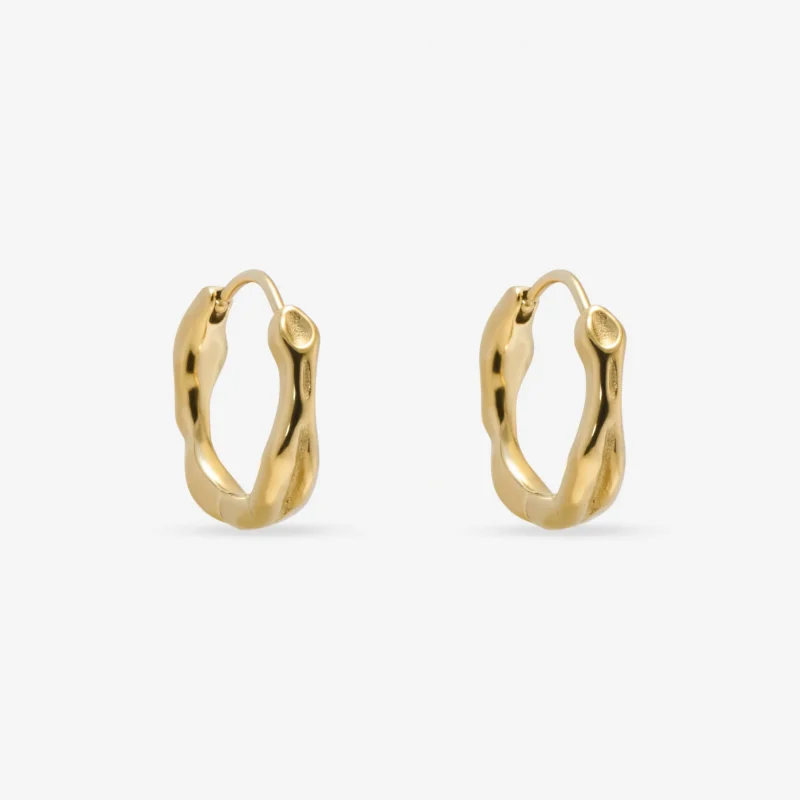
Grade and finish make the difference. Well-made 316L stainless steel behaves very differently from the mixed alloys in cheap fashion jewellery, where copper can sit close to the surface. A PVD coating on top of stainless steel seals things further, so a coated chain or pair of hoops keeps both its colour and a clean line against the skin. When you want a piece that never leaves a mark, a named steel grade with a PVD finish is the combination to look for.
How do you care for jewellery to keep skin clear?
A light, regular routine keeps both your skin and your pieces in good shape. Wipe each piece with a soft, slightly damp cloth, then dry it before wearing or storing. Use a little mild soap and warm water for a deeper clean, rinse, and dry thoroughly. Keep jewellery somewhere dry and away from a steamy bathroom, and put it on after skincare and perfume have settled so products do not build up on the surface.
Choosing well at the start does most of the work. With quality stainless steel and a PVD finish, the reaction that causes a green mark has little to act on, so a quick wipe now and then is usually all a piece needs. That is the appeal of waterproof, tarnish-free jewellery: you can wear it through ordinary days and keep your skin clear without much thought at all. A useful rule of thumb is to judge a piece by what it is made from and how its surface is finished, since those two things decide whether a green mark ever appears. Once you settle on stainless steel with a sealed coating, the issue tends to drop off your radar entirely.
Frequently asked questions
How do I stop my jewellery turning my skin green?
Choose metals that resist the reaction, mainly quality stainless steel and PVD-coated pieces, and keep them clean and dry. With little or no exposed copper, the green stain has nothing to form from, so it stops at the source.
Why does jewellery turn my skin green?
It usually comes from copper in cheap alloys reacting with the acids and moisture on your skin, or from worn plating exposing a copper-bearing base metal. The green is a harmless surface stain that washes off.
Does stainless steel jewellery turn skin green?
Quality stainless steel does not turn skin green, as it contains little reactive copper and keeps a stable surface. Surgical or 316L stainless steel, especially with a PVD coating, resists the stain through everyday wear.
Is it bad if jewellery turns my skin green?
No, the green mark is a harmless surface stain caused by a copper reaction, and it washes off with soap and water. If skin also becomes itchy or sore, that points to irritation instead of staining, and a pharmacist or GP can advise.
What jewellery does not turn your skin green?
Quality stainless steel, high-karat gold, titanium and PVD-coated pieces resist green marks because they have little or no exposed copper. Recycled stainless steel with a 14k gold PVD coating is a dependable everyday option.
Related pieces
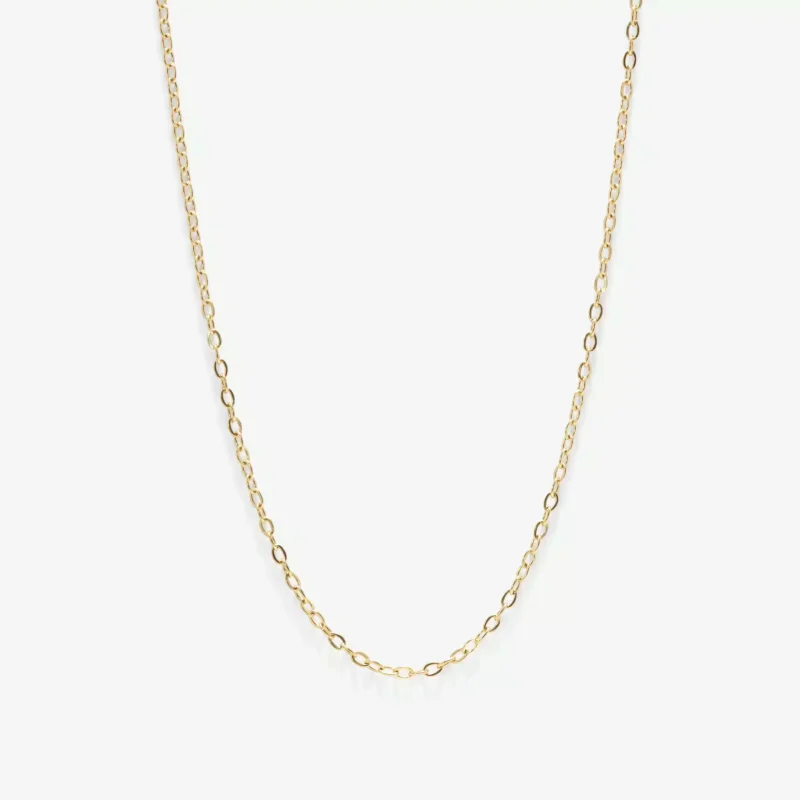
If you want a chain you can wear every day without a green mark, look for a stable base and a sealed surface. The Dainty Chain rests neatly at the collarbone and is made to stay clean against the skin through ordinary wear. Our best sellers carry the same build, made from recycled stainless steel with a 14k gold PVD coating, so they are waterproof, tarnish-free and skin-friendly, with no brass or copper underneath to leave green marks.