

The word sustainable now sits on more jewellery than ever, and it is fair to wonder how much of it is real. Sustainable jewellery in the UK usually means pieces made to lower their impact across their whole life: recycled metals where possible, durable construction so they are replaced less often, responsible packaging, and lower-impact finishing. No single feature makes a piece sustainable. The honest measure is the full picture, and the most useful question to ask is how long a piece will last, because the longer it is worn, the less often anything new has to be made. That makes durability and sustainability two sides of the same point, and it gives you a practical test to apply before any purchase.
What makes jewellery sustainable?
Jewellery becomes more sustainable when several choices line up: the materials, how long the piece lasts, how it is finished and how it is packaged. Recycled metals reduce the demand for newly mined material. Durable construction keeps a piece in use for years. A lower-impact coating produces less waste than traditional methods. Responsible packaging cuts what ends up in the bin. Each choice helps, and together they shape the real footprint of a piece over its life.
It helps to be wary of claims that rest on a single word. A piece described only as eco-friendly, with nothing said about materials, durability or process, gives you little to judge. The clearer signals are specific: a named recycled metal, a stated finish, a sense of how long the piece is built to last. Specifics are easier to trust than a label, and they tell you more about what you are actually buying than a green-sounding word on the tag.
Why does longevity matter for sustainability?
Longevity matters because the most sustainable piece is often the one you already own and keep wearing. Every replacement carries the footprint of new material, manufacturing and shipping, so a piece that lasts five years instead of one quietly avoids several rounds of that impact. Durability is one of the most direct ways jewellery lowers its footprint over time, and it costs nothing extra to value it when you buy.
This is where material choice and sustainability meet. A hard-wearing base with a bonded finish stays presentable for years, while a thin coating over a reactive base wears through within months and gets thrown away. Buying for durability and buying responsibly point in the same direction, which is why what makes jewellery last is worth understanding before any purchase, and why why cheap jewellery costs more is as much an environmental point as a financial one.
What are recycled metals in jewellery?
Recycled metals are reclaimed from existing sources and refined for reuse instead of being freshly mined. Stainless steel is well suited to this, since it can be recycled and still meet the same grade for new pieces. Using recycled stainless steel reduces the pull on newly extracted ore, and the metal performs identically to non-recycled steel of the same grade, so quality holds. A recycled-steel piece is as hard and corrosion-resistant as one made from virgin material.
Mining new metal is resource-heavy in water, land and chemicals, so reclaiming material is one of the clearer ways to lower the impact at the start of a piece's life. Recycled content works best alongside durability: a recycled-metal piece that also lasts for years delivers on both fronts, while a recycled piece that falls apart quickly undoes much of the benefit. The two qualities are strongest together, since a long life is what lets the recycled material do its work.
Is PVD coating a lower-impact finish?
PVD is a lower-waste finishing process than traditional electroplating. Physical vapour deposition works in a vacuum chamber, turning the coating material into a vapour that bonds to the metal at a molecular level. The process avoids much of the liquid chemical waste that electroplating generates, and the hard, durable finish it produces lasts longer, so pieces need replacing less often. The cleaner process and the longer life both count toward a smaller footprint.
The durability and the lower-impact process reinforce each other. Because a PVD finish on stainless steel resists abrasion and tarnish, the piece stays in use for years and survives long after a thin plating would have worn through. A finish that generates less waste to apply and keeps a piece wearable for longer fits the longevity argument at the heart of sustainable jewellery, and it also happens to suit waterproof everyday wear.
How to choose sustainable jewellery in the UK
Start with materials and durability. Look for recycled metals named on the listing, a hard-wearing base such as 316L stainless steel, and a bonded finish like PVD that holds up to daily wear. A piece built to last is doing the heavy lifting on sustainability before any other claim. Ask about packaging too, since responsible, minimal packaging is part of the wider footprint and tells you something about how the maker thinks.
Treat broad claims with healthy scepticism and favour specifics you can check. Be cautious of unverified certifications and vague green wording, and lean on concrete facts: the metal, the finishing process, the expected life of the piece. A maker who can state these clearly is giving you the information to judge for yourself, which is more useful than any single badge. Buying fewer pieces and keeping them longer remains the most sustainable habit of all, whatever the label says. Worn for years, a well-made piece earns back the resources that went into it many times over, which a quickly discarded one never does.
Is gold-tone steel a sustainable choice?
Recycled stainless steel with a gold PVD coating brings together several of the points above in one piece. The base is a recycled metal, which lowers demand for newly mined ore. The PVD finishing process generates less liquid waste than electroplating. The combination is durable enough to stay in use for years before any thought of replacement. Each factor is modest on its own, and together they add up to a piece with a smaller footprint than a cheap plated equivalent that is thrown away and rebought.
It also suits the way many people actually wear jewellery, which is daily and through water. A finish that survives showers, swimming and sweat does not get retired early, so it keeps doing its job and avoids the waste of frequent replacement. The most environmentally sound piece is the one that stays on, and a hard-wearing, waterproof finish makes that the easy default.
FAQ
What is sustainable jewellery?
Sustainable jewellery is made to lower its impact across its whole life: recycled metals where possible, durable construction so it is replaced less often, lower-impact finishing, and responsible packaging. No single feature makes a piece sustainable; the full picture does.
Is recycled jewellery as good as new?
Yes. Recycled metals such as stainless steel can be refined to the same grade as newly mined material and perform identically, so quality holds. The benefit is reduced demand for freshly extracted ore.
Why does jewellery longevity help the environment?
Every replacement carries the footprint of new material, manufacturing and shipping. A piece that lasts five years instead of one avoids several rounds of that impact, so durability is one of the most direct ways jewellery lowers its footprint.
Is PVD coating eco-friendly?
PVD generates less liquid chemical waste than traditional electroplating and produces a durable finish that lasts longer, so pieces are replaced less often. The lower-waste process and the longer life both support a smaller footprint over time.
Related pieces
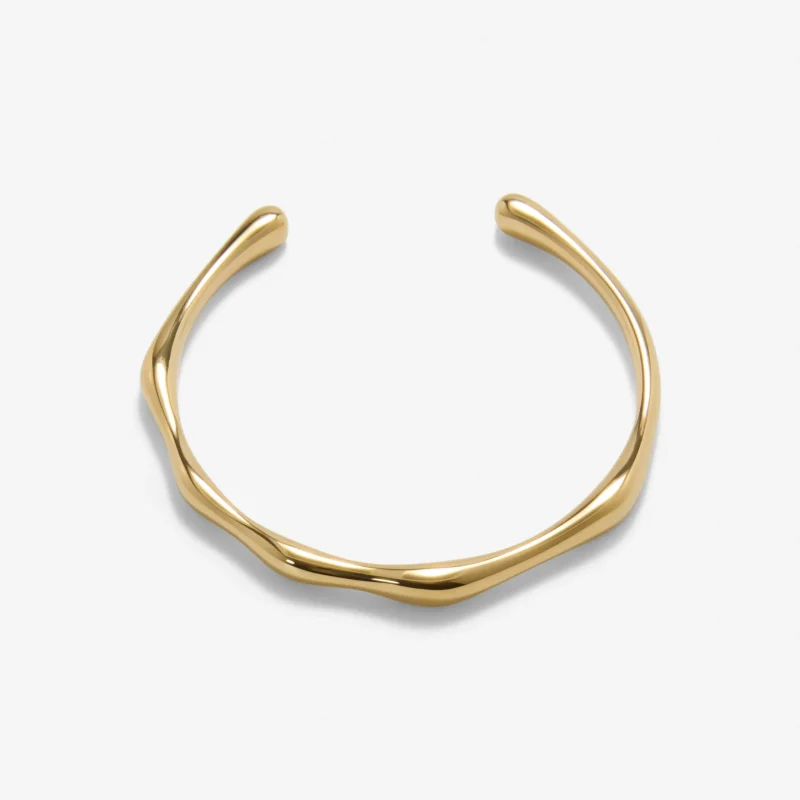
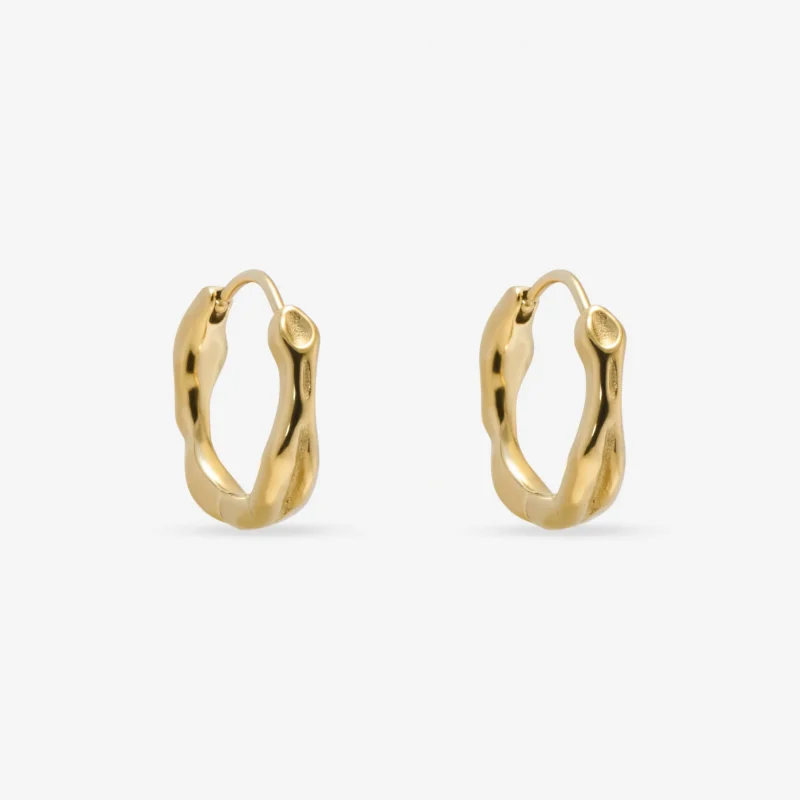
A sustainable piece is one made from recycled material, built to last, and finished with a lower-impact process. Our best sellers and the Molten Bangle are made from recycled stainless steel with a 14k gold PVD coating: waterproof, tarnish-free and hypoallergenic, built to hold their colour and shape through years of daily wear so they stay in use and avoid being replaced.