

You reach up to adjust a pair you have worn happily for years and there it is, a small ache at the lobe that was not there last week. It is a familiar moment, and usually a fixable one. If your earrings hurt, the most common reasons are a nickel allergy, earrings that are too heavy, backs done up too tightly, a piercing that has not fully healed, or simple skin sensitivity. Most sore earlobes come down to the metal, the weight, or the fit, and changing one of those usually settles things. This guide walks through each cause in turn and how to ease it, with a note on when to see a professional. It is general guidance and not a diagnosis, so any pain that lingers should always be checked by someone qualified.
Why do my earrings suddenly hurt?
Earrings that suddenly hurt usually point to one of a few things: an allergy to the metal, a piece that is too heavy, a back fastened too tightly, a piercing that is still healing, or a reaction in sensitive skin. Working through these one at a time will usually find the cause.
A reaction can appear even with earrings you have worn before, since a metal sensitivity can develop over time. If a familiar pair starts to itch, redden, or feel sore after years of comfortable wear, the metal is a likely culprit. Note when the pain started and what you were wearing, as that often points straight to the cause.
Where the pain sits is another clue. Soreness right at the piercing hole points to the metal or to a piercing that is still healing, while an ache across the whole lobe more often points to weight or a back done up too tightly. Matching the type of pain to the likely cause saves a lot of guesswork.
If the pain comes with heat, swelling, discharge, or a piercing that feels hot to the touch, treat it as a possible infection and see a professional piercer or your GP instead of waiting it out.
Can a nickel allergy make earrings hurt?
Yes, nickel allergy is the most common reason earrings irritate the ears. Nickel is used in many cheap alloys and earring posts, and for people sensitive to it, contact triggers an itchy, red, sometimes sore reaction known as contact dermatitis.
The fix is to switch to a metal that releases very little nickel. Hypoallergenic options include surgical stainless steel and titanium, both of which suit most sensitive ears. Recycled stainless steel with a gold PVD coating is a practical everyday choice, since the coating adds a sealed barrier between the skin and the metal beneath.
If you react to most earrings, nickel is the likely thread, and choosing nickel-free, hypoallergenic pieces is the single most useful change. You can read more in our guide to jewellery for sensitive skin.
A metal allergy can develop at any point, even with earrings you have worn comfortably for years, so a new reaction does not mean the earrings themselves have changed. Once a sensitivity appears it tends to stay, which is why moving to hypoallergenic pieces across the board is the lasting fix.
Can heavy earrings cause sore earlobes?
Yes, heavy earrings are a frequent cause of sore earlobes. The weight drags down on the piercing through the day, which strains the lobe and can leave it aching, stretched, or tender at the hole.
Large hoops and big drop earrings are the usual offenders. Switching to lighter pieces for daily wear, and saving heavier designs for shorter stretches, gives the lobe a rest. A light hoop or a small huggie in recycled stainless steel keeps the look while sparing the lobe the load.
If a lobe is already sore from weight, give it a break from earrings for a day or two and let it settle before going back to lighter pieces.
Stretching of the piercing hole over time is a related issue with heavy earrings worn often. Keeping daily earrings light, and choosing a balanced design that sits evenly, protects the lobe over the long term.
Can earring backs be too tight?
Yes. A back pushed on too tightly presses the front and back of the earring against the lobe with no room for the skin, which can leave it pinched, sore, and unable to breathe. This is a common and easily missed cause.
The earlobe needs a little space around the post. Slide the back so it sits snug while leaving the lobe room. For studs that sit very tight, easing the back off by a millimetre often brings quick relief.
Sleeping in tight-backed studs makes this worse, since the pressure continues all night. Loosening the backs before bed, or switching to a comfortable hinged huggie, can help.
Could my piercing not be fully healed?
A piercing that has not fully healed is a common reason earrings hurt, especially in the first weeks and months. Lobe piercings often take six to eight weeks to settle, and cartilage piercings take considerably longer, sometimes many months.
Changing earrings too soon, or wearing heavy or low-quality pieces while healing, can irritate a piercing that is still settling. Stick to simple, hypoallergenic jewellery and handle the area as little as possible until it has healed. Our guide to caring for newly pierced ears covers this in more detail.
If a newer piercing stays sore, swollen, or hot, or produces discharge, see a professional piercer or your GP. Avoid forcing jewellery in or out of a piercing that is painful or inflamed.
How do you stop earrings from hurting?
To stop earrings hurting, work through the likely causes: switch to a hypoallergenic metal if you suspect an allergy, choose lighter pieces if weight is the issue, loosen tight backs, and give a healing or sore piercing a rest.
For everyday comfort, pieces made from recycled stainless steel with a gold PVD coating help on two fronts: they are hypoallergenic, so they suit sensitive ears, and a small huggie or light hoop keeps the weight off the lobe. Keeping earrings and the piercing clean, and storing pieces dry, also reduces irritation.
If pain, swelling, or signs of infection do not settle after these changes, or if they get worse, see a professional piercer or your GP. Persistent or severe symptoms need proper assessment from a professional, so please do not push through them.
Working through the causes in order usually solves the problem quickly. Start with the metal and the weight, since those account for most sore ears, then check the fit and the state of the piercing. If none of those changes helps, a professional can look more closely.
Frequently asked questions
Why do my ears hurt when I wear earrings?
Usually because of a metal allergy, earrings that are too heavy, backs fastened too tightly, or a piercing that has not fully healed. Identifying which one applies, and changing it, normally settles the soreness.
How do I know if I am allergic to my earrings?
Signs of a metal allergy include itching, redness, and soreness around the piercing, often worse with cheaper metals containing nickel. Switching to hypoallergenic surgical stainless steel or titanium usually clears it. See a GP if a reaction is severe or persistent.
What earrings are best for sore or sensitive ears?
Lightweight, hypoallergenic pieces are best. Surgical stainless steel, titanium, and recycled stainless steel with a gold PVD coating suit most sensitive ears, and a small huggie or light hoop keeps weight off the lobe.
How do I stop my earlobes hurting from earrings?
Switch to lighter, hypoallergenic earrings, loosen any tight backs, and rest the lobe if it is already sore. Keep earrings and the piercing clean. If pain or swelling continues, see a professional piercer or GP.
When should I see someone about painful earrings?
See a professional piercer or your GP if you have persistent pain, swelling, heat, or discharge, or if a piercing feels hot or looks infected. These need proper assessment by a professional.
Related pieces
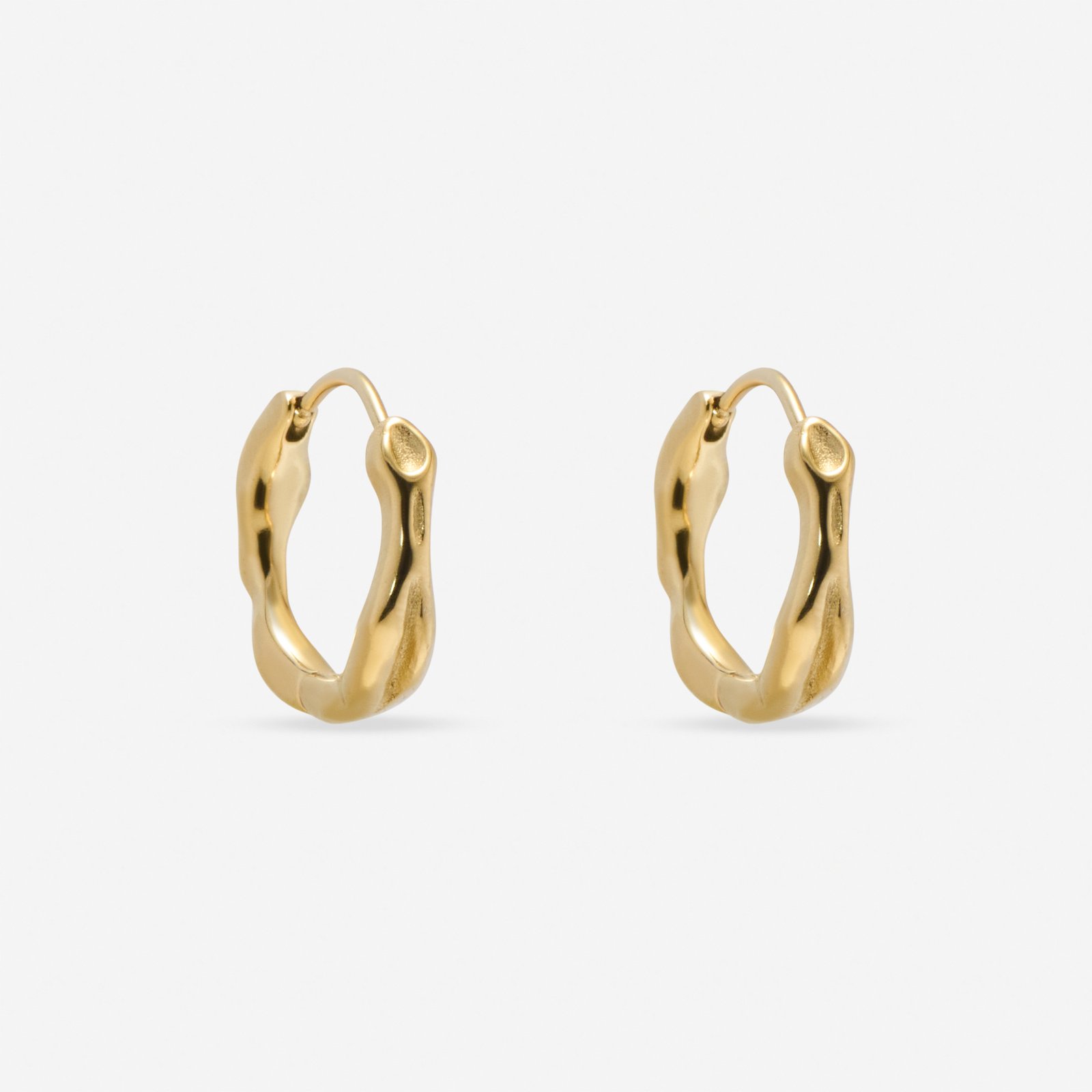
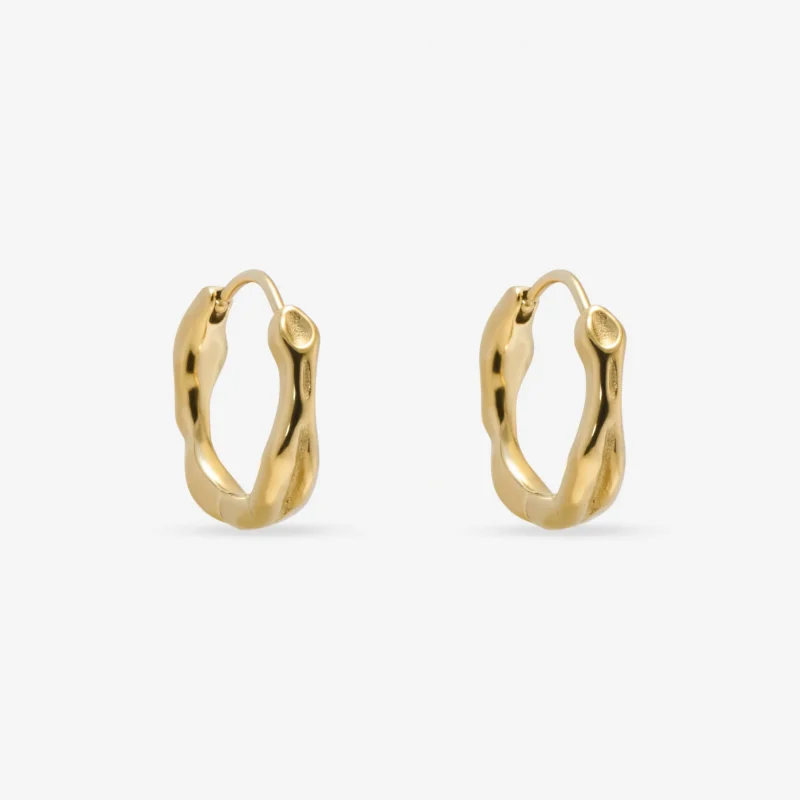
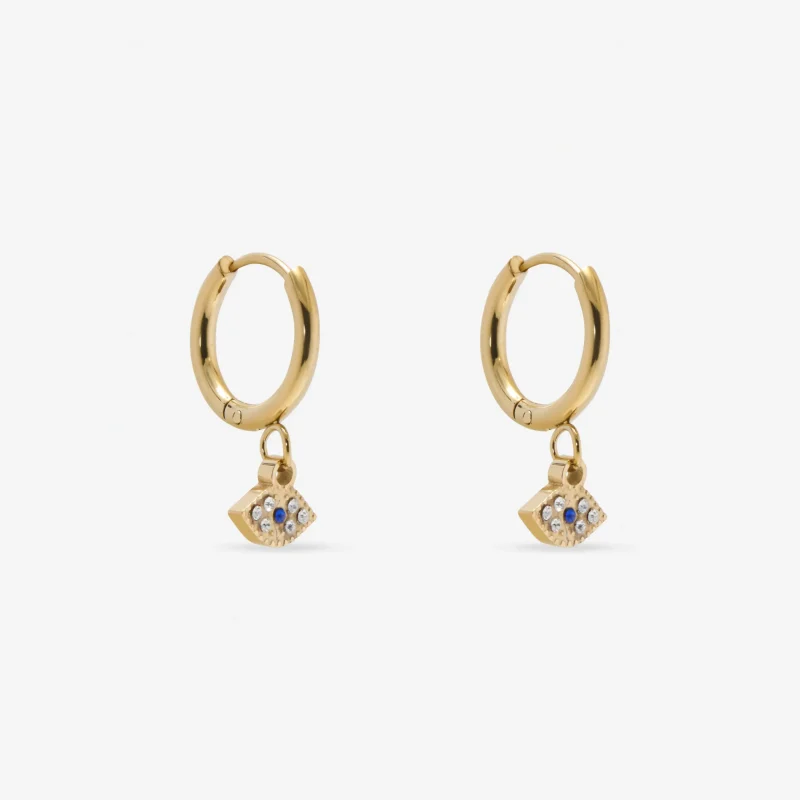
For everyday comfort, a light pair in hypoallergenic materials makes a real difference. The Molten Hoop Earrings keep a clean hoop look at a weight the lobe barely registers, and the Evil Eye Huggie Earrings sit close and snug for all-day and overnight wear. Both are made from recycled stainless steel with a 14k gold PVD coating: hypoallergenic, waterproof and tarnish-free, so they suit sensitive ears and hold their colour through daily wear.