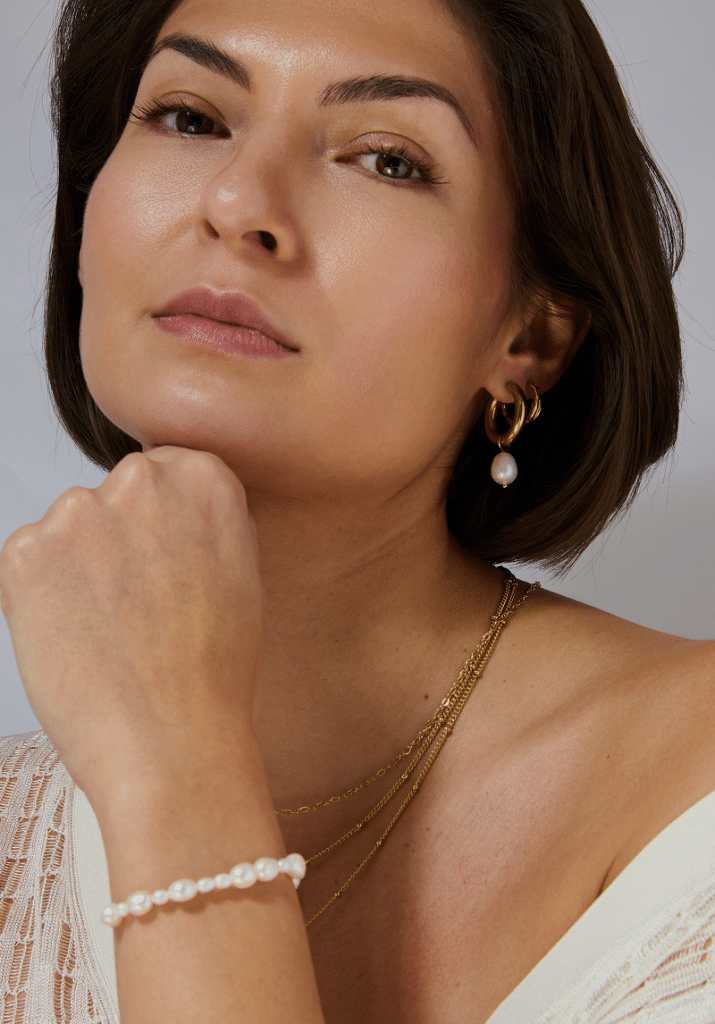


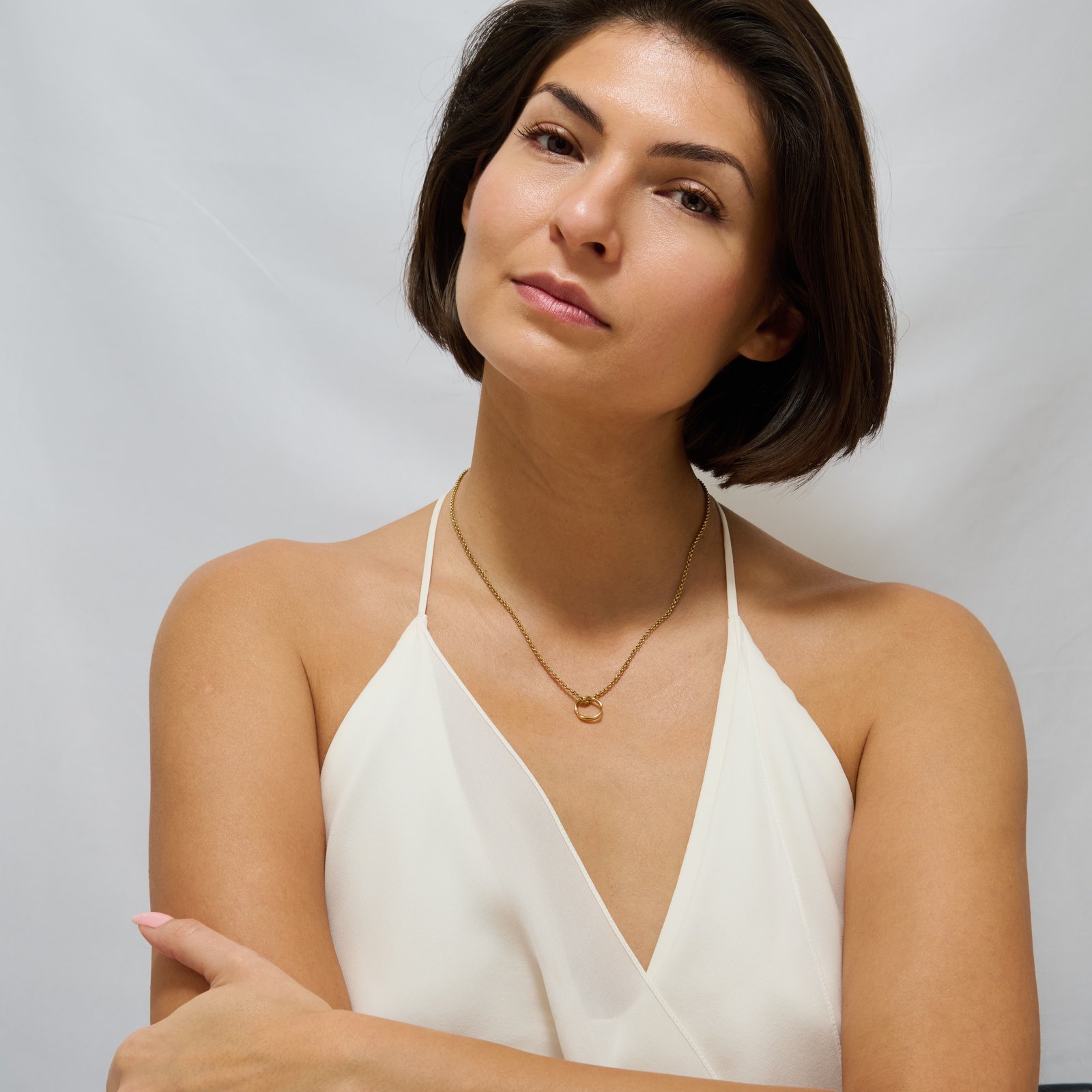
There is a particular kind of piece that only the wearer fully understands: a thin chain or a small pendant, worn through a hard season and kept on long after it passes. Jewellery that symbolises strength is usually quiet like that, chosen as a private reminder of something the wearer is carrying. A difficult period survived, a commitment held, a quality they want to keep. The same instinct sits behind jewellery chosen to mark a new beginning. This guide looks at why people reach for jewellery at moments of change, how a worn piece can shape how you feel, and how to choose something that holds its meaning.
Why do new beginnings make people want a physical marker?
A significant change creates a need to mark it. A new job, a new city, the end of one relationship or the start of another, a year of recovery: these moments generate a feeling that something should be done to acknowledge them. For many people, jewellery becomes that acknowledgement.
The harder part is keeping the connection alive as the new life turns routine. A new beginning is easy to feel acutely in the moment. A piece worn from the start of a new chapter becomes a physical record of that threshold, a daily reminder of the choice that was made or the change that was endured.
Marking a change with a concrete act is widely thought to help people process the emotional reality of it. Buying a piece of jewellery to mark a new beginning is one form of that marking. It says, plainly, that the change is real, and gives the wearer something to return to.
What does it mean to wear jewellery as a private symbol of strength?
Some jewellery is chosen to communicate to others; some is chosen for reasons that stay entirely private. A piece worn as a symbol of strength usually belongs to the second kind: a thin chain, a small pendant, a plain pair of earrings, worn for what they do internally. The object's meaning is held in its relationship to the wearer, more than in its appearance.
This is a widespread pattern. Across cultures and circumstances, people report owning pieces that serve this private function, chosen as reminders of a personal commitment or a hard period they came through. The subtlety is often deliberate. The more understated the piece, the more its meaning belongs to the wearer alone.
Much of the conversation about jewellery focuses on what it signals to others. There is also a presentation we make to ourselves. Wearing a piece that reminds you of your own resilience is a form of that inward presentation, a daily assertion directed at your own sense of who you are.
Can a piece of jewellery actually affect how you feel?
There is reason to think it can. The clothes and accessories we put on are believed to influence our own psychological state, independent of how others see us. The idea is sometimes called enclothed cognition: what you wear can shape how you think and feel, because an item carries a symbolic meaning alongside the physical experience of wearing it, and the item calls forward the states associated with it.
This gives a plausible account of why a piece worn as a private emblem of strength can work. It is symbolic, and it quietly summons the quality it stands for. A related idea in psychology points the same way: brief reminders of personally important values are believed to help buffer people against stress. A piece worn as a quiet emblem of something that matters acts as a continuous, low-level reminder of that kind, keeping a connection to a stable sense of what you stand for. It works as a gentle prompt, and it makes no claim to remove difficulty.
Why can a subtle piece carry more weight than a bold one?
Privately meaningful jewellery has a quality that can seem back to front: the smaller and quieter the piece, the more weight it can carry. A bold piece announces itself, so its significance is available to everyone in the room. A quiet piece keeps it close, and the disproportion between what others see and what the wearer knows can itself be a source of steadiness.
There is a practical side too. A piece worn as a private talisman tends to be worn more consistently than one kept for display. It accompanies the wearer through difficult conversations, exhausting days and private moments, where it builds a different kind of relationship than a piece reserved for occasions. Restraint in form also tends to mean durability, since a small, well-made pendant on a fine chain can go through almost any situation without drawing attention.
That consistency is part of what makes a daily piece effective. Steady environmental cues are thought to be among the more reliable ways to hold a psychological state over time. A piece worn every day works as exactly this kind of cue: an unobtrusive prompt that returns you to the understanding of yourself you want to keep.
How does jewellery mark personal growth that no one else sees?
Growth rarely announces itself as it happens. It is usually recognised in retrospect, through the evidence of behaving differently now compared with some earlier point. A person's sense of self is understood to form and reform across a lifetime, moving through exploration toward a settled new self-understanding.
These shifts are often internal, with no outward sign: the decision to stop seeking approval from a particular source, or the resolution that follows a period of genuine difficulty. Internal milestones can be harder to honour than external ones, precisely because they leave no obvious marker. A piece of jewellery can serve that function, giving the change a small, visible presence in daily life.
There is a familiar behaviour here, sometimes called self-gifting: buying something for yourself in a deliberate, ceremonial way. What separates it from a casual purchase is intention. The same necklace bought on impulse and bought deliberately to mark something you reached carries a different weight, and self-gifts tend to be kept longer because the meaning is present from the start.
How do you choose a piece when the path ahead is uncertain?
New beginnings are often complicated by not knowing exactly what you are beginning, only that the previous chapter is over. Trying to find a symbol that captures a change of unknown direction can feel impossible. One answer is to choose something that represents readiness. A piece that feels grounded, simple and solid says, in effect, that you are here and ready, while leaving the destination open.
Another answer is to choose without overthinking. A piece that appeals, that feels right in the hand and on the body, is a valid choice whether or not it precisely symbolises the change. Meaning accumulates through wearing. A piece bought at the start of something new gathers the associations of the new life itself, so a decade later it carries the whole chapter.
For a piece meant to hold this kind of meaning, favour the qualities that travel well. Visually quiet, materially durable pieces age most gracefully: a fine chain, a small pendant with a form that means something to you, a pair of earrings in a quality material. Recycled stainless steel with a 14k gold PVD coating suits a daily piece worn through change, since it is waterproof, tarnish-free and hypoallergenic. Choose something you can picture still reaching for once you arrive.
Frequently asked questions
What jewellery symbolises strength?
Often a small, understated piece worn daily as a private reminder, with no need to make a bold statement. Its meaning comes from the wearer's own association with it, so a simple pendant or fine chain can carry it as well as any overt symbol.
What jewellery represents a new beginning?
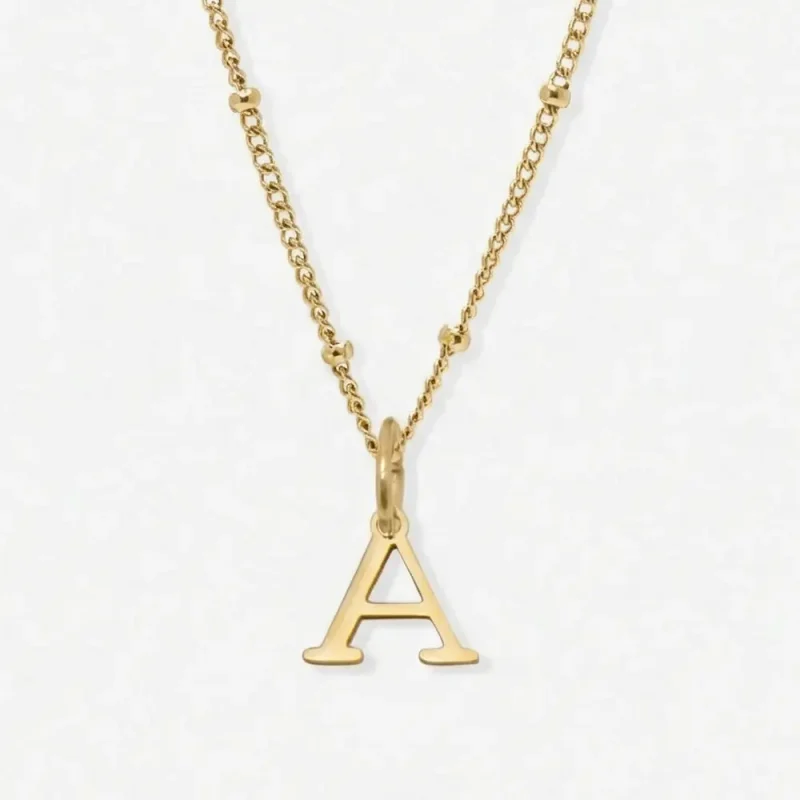
Pieces with a sense of openness work well, including celestial forms like stars and moons, your own initial, or a simple, clean piece. The key is that it is chosen and worn from the start of the new chapter, so it gathers meaning over time.
Why do people buy jewellery to mark personal change?
Marking a change with a concrete act helps people process it. Jewellery is lasting, personal and worn forward, so it keeps a transition present in daily life long after the moment itself has passed.
Can wearing a piece of jewellery really affect how I feel?
Quite possibly. A piece carrying a meaning you have given it can act as a quiet reminder of a value or quality, which is believed to support a steadier psychological state. It works as a gentle prompt, and it does not claim to remove difficulty.
How do I choose meaningful jewellery for change when I feel uncertain?
Choose something grounded and simple that represents readiness without naming a fixed direction, or simply choose a piece that feels right. The meaning will build as you wear it, so a durable, everyday piece is a sound choice.
Related pieces
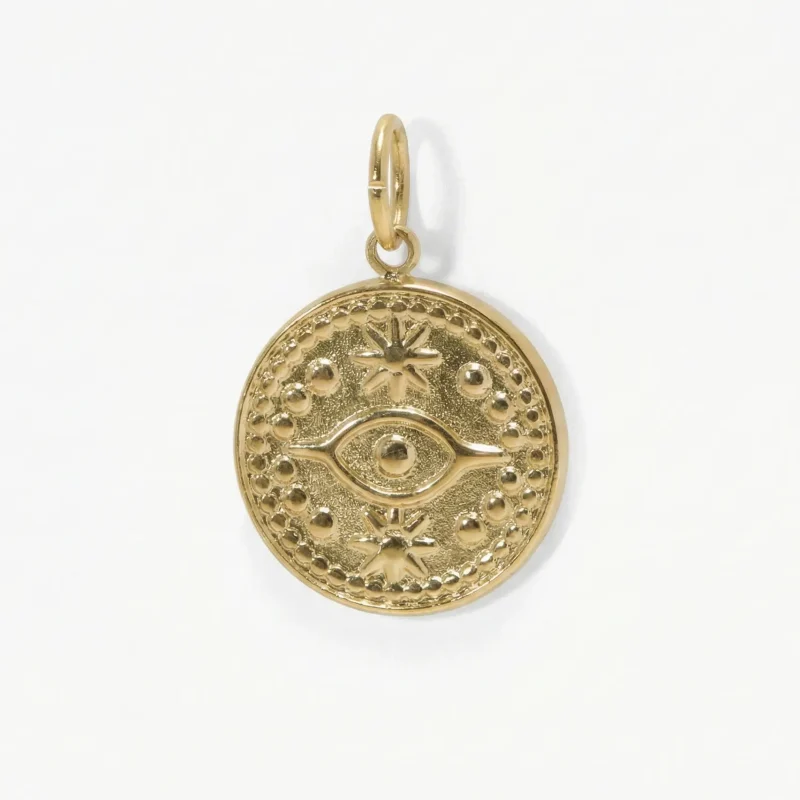
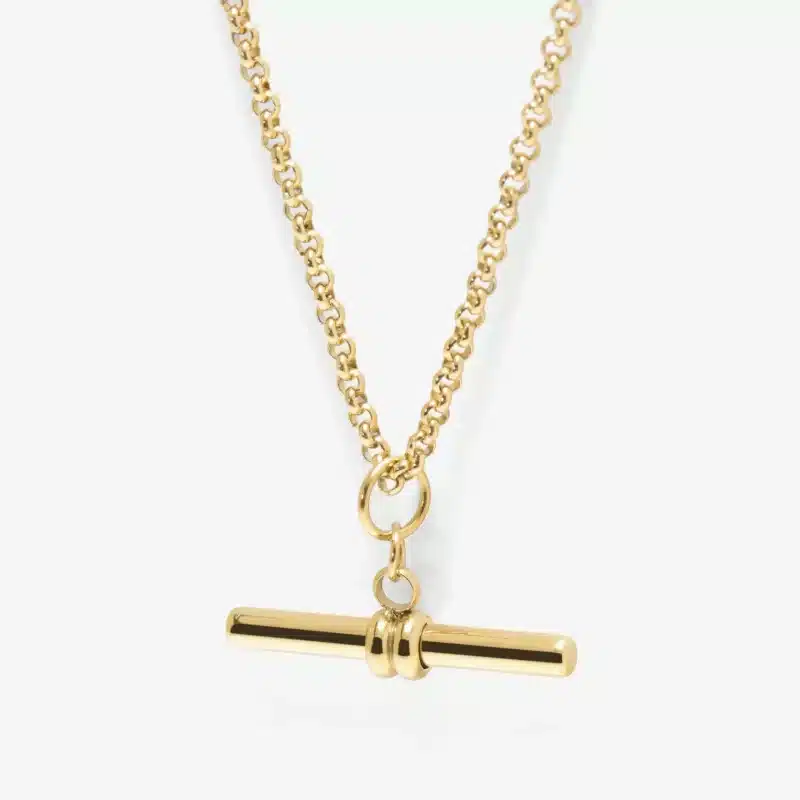
The Evil Eye Protection Charm carries an old protective symbol and works as a quiet, private reminder worn through ordinary days, which suits a piece chosen to mark resilience. The T-Bar Necklace is a clean, simple design with a sense of openness, well suited to marking a new beginning and gathering meaning as the new chapter unfolds. Both are made in recycled stainless steel with a 14k gold PVD coating, so they are waterproof, tarnish-free, and hypoallergenic, which matters for a piece meant to be worn every day through change.